

Running cable outdoors or below grade usually starts with a simple question: how do I protect the wire without overcomplicating the install? Liquid-tight flexible conduit, PVC whip kits, and split loom tubing each solve a slightly different problem, from backyard lighting to garage sub-panels and AC condenser hookups. I pulled together ten options that cover the diameters, lengths, and use cases most DIYers and pros actually run into, so you can match the right conduit to the job instead of guessing at the hardware aisle.
A Quick View Of The Lineup
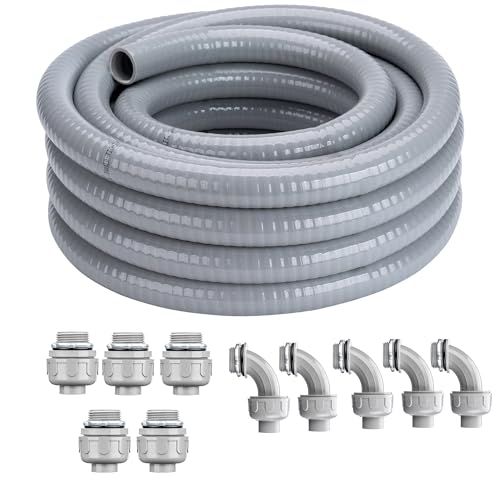
Geowaky 1/2 Inch 150 FT Liquid-Tight Conduit Kit
Geowaky 1/2 Inch 100 FT Liquid-Tight Conduit Kit

Wocloer 1/2 Inch 6Ft Power Whip Assembly Kit
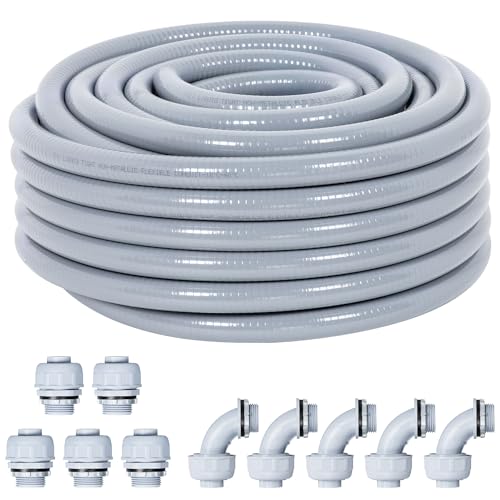
Neoaider 1/2 Inch 100FT Liquid Tight Conduit Kit

Ohhose 25 Ft Liquid-Tight Conduit Kit, 1/2 Inch
Geowaky 3/4 Inch 100 FT Liquid-Tight Conduit Kit

Feotech 3/4 Inch 25 FT Liquid-Tight Conduit Kit

Wocloer 1-1/2 Inch 25 FT Liquid-Tight Conduit Kit

Geowaky 2 Inch 25 FT Liquid-Tight Conduit Kit

YesBes 40 FT Split Wire Loom Tubing, 1 Inch
More On The Choices That Made The List
Big-yard projects usually run out of conduit before they run out of ambition, and this 150-foot coil from Geowaky is built for exactly that scenario. The 1/2-inch trade size covers most low-voltage lighting and 120-volt branch runs, and the non-metallic flexible jacket bends around landscaping without kinking. Compared to the shorter 100-foot Geowaky listed below, this one gives you a single continuous run rather than a coupling in the middle.
You get straight and 90-degree fittings in the box, which trims a hardware-store trip down to almost nothing. For most backyard lighting layouts, that is enough length and enough connectors to finish the job in one afternoon.
Useful Strengths
- 150-foot continuous run avoids mid-pull couplings
- Non-metallic jacket resists corrosion and won’t conduct stray current
- Flexible body routes easily around corners and tree roots
- Included straight and angle fittings cover most layout needs
Things To Consider
- A full 150-foot coil is heavy and awkward to wrestle solo
- 1/2-inch diameter limits you to smaller-gauge conductors
Who It Suits Best
Homeowners planning a single long outdoor run from one side of the yard to the other will appreciate the extra length and bundled fittings.
Consider Something Else When
Short retrofit jobs in a crawlspace may be easier with the Neoaider 1/2 Inch 100FT Liquid Tight Conduit Kit, which stays lighter and more flexible in tight quarters.
The 100-foot Geowaky kit is the more approachable sibling of the 150-foot coil above, and for many first-time installers it is the right amount of conduit to commit to. The same non-metallic PVC jacket keeps it lightweight and corrosion-resistant, so even one person can unroll it without snapping the tubing.
For most patio lighting or small shed sub-feed projects, 100 feet is plenty of runway, and the included straight and angle connectors mean you can mock up the run before buying extras.
Why It Works Well
- Manageable coil weight for solo installers
- Non-conductive jacket adds a margin of safety around landscaping
- Flexible enough to bend around porch posts and railings
- Fittings included so first-timers aren’t left guessing
Worth Noting
- Only 1/2-inch diameter, so multi-conductor pulls will need a wider option
- Not rated for direct burial unless paired with the right fittings
Made For
DIYers tackling a single-zone outdoor lighting or shed power run who want enough length to finish without a leftover coil.
Look Elsewhere When
Installers running several conductors through one path may find the Feotech 3/4 Inch 25 FT Liquid-Tight Conduit Kit a more comfortable fit for branch circuits.
Most AC condensers, hot tubs, and pool pumps reach the disconnect box through a short pre-built whip rather than raw conduit, and this Wocloer kit ships ready to terminate. It pairs a 6-foot PVC conduit section with 10 AWG conductors, which is the typical wire size (American Wire Gauge, a standardized wire thickness system where lower numbers mean thicker wire) for 240-volt equipment circuits.
For homeowners wiring a mini-split or replacing a cracked whip, having the conductors pre-cut and the connectors pre-fitted removes a surprising amount of friction. The 7.5-foot wire length gives you slack to land cleanly at the disconnect.
The Case For It
- Pre-cut 10 AWG conductors match most 30-amp equipment runs
- 6-foot conduit body with 7.5-foot wire leaves termination slack
- Antioxidant PVC jacket holds up to outdoor UV and condensation
- Connectors and O-ring seals included
Trade Offs
- Only 6 feet long, so longer equipment runs will need extensions
- Color-coded conductors are convenient but must still be checked against local code
Right Fit For
Homeowners hooking up an AC condenser or hot tub disconnect who want a pre-wired whip instead of buying conduit and wire separately.
Skip It When
A general-purpose landscape lighting job benefits more from a continuous coil like the Geowaky 1/2 Inch 150 FT Liquid-Tight Conduit Kit.
Neoaider markets this kit at the installer’s nightmare scenario: tight joist bays, crawlspace corners, and retrofits where you cannot swing a full rigid pipe. The virgin PVC body is noticeably lighter than metallic conduit, and the smooth interior helps wires glide without snagging on burrs.
For most homeowners finishing a basement or running a new outlet to an island, this kit feels closer to a garden hose than to industrial piping. It ships with five straight and five 90-degree connectors, which is more than enough for a complex routing job.
A Few Highlights
- Lighter than metal conduit, easier to carry up a ladder
- Smooth interior pulls wire without snagging
- Ten fittings cover tight multi-corner routing
- Flexible enough for shallow burial or surface mounting
Honest Caveats
- Plastic jacket can deform if kinked sharply in cold weather
- 1/2-inch trade size still limits conductor count
Key Specs
Who Should Grab It
DIYers fishing wire through joist bays or crawlspaces who need a flexible, lightweight run and enough fittings to handle awkward bends.
A Better Fit Elsewhere
A direct-burial landscape project is better served by the Ohhose 25 Ft Liquid-Tight Conduit Kit, which is built to handle soil contact.
When the run leaves the house and heads into the dirt, you want a conduit that does not flinch at moisture, oil, or UV. Ohhose’s 25-foot kit is built around an antioxidant PVC body that resists corrosion, wear, and acid exposure, and the spec sheet explicitly calls out direct-burial use.
Compared to the longer Geowaky coils above, this 25-foot length keeps the project manageable: enough material for a single garden circuit or a path-light loop, without a heavy spool taking over the garage.
Good Reasons To Consider
- Rated for direct burial and UV exposure
- Resists oil, water, and acid splash
- Smooth interior speeds wire pulls
- Seven connectors included for layout flexibility
Minor Gripes
- Only 25 feet, so longer runs require joining or buying a second kit
- Burial depth and warning tape still depend on local code
Best Suited To
Homeowners running a dedicated outdoor circuit, such as a garden outlet or low-voltage transformer feed, who want a conduit approved for soil contact.
Not Your Match When
A multi-room indoor retrofit has a friendlier fit with the Neoaider 1/2 Inch 100FT Liquid Tight Conduit Kit, which is lighter and more flexible indoors.
Step up to 3/4-inch trade size and the same 100-foot Geowaky formula suddenly has room for multiple conductors instead of just one circuit. The wider interior makes this the right pick for projects that need a hot, neutral, and ground running together, or a separate feed for an outbuilding sub-panel.
For most homeowners, the jump from 1/2-inch to 3/4-inch is the moment a single-circuit run becomes a multi-circuit run. The non-metallic jacket and included fittings keep the install process identical to the smaller kit.
The Helpful Details
- 3/4-inch interior accepts two or three conductors comfortably
- Same flexible non-metallic build as the 1/2-inch Geowaky kits
- 100-foot coil balances length with manageable weight
- Straight and angle fittings included in the box
Points To Keep In Mind
- Larger diameter means slightly fewer feet per coil weight ratio
- Overkill for single-circuit landscape lighting
Whose Shelf It Belongs On
Installers running two or three conductors through one path, like a multi-zone lighting loop or a shed feed, will find this size hits the sweet spot.
Reach For A Different Pick When
Service-entrance scale projects call for the Wocloer 1-1/2 Inch 25 FT Liquid-Tight Conduit Kit, which moves far more conductor capacity per pull.
The Feotech kit is the short, stout sibling of the Geowaky 3/4-inch roll above, and the spec that sets it apart is wall thickness: 3 mm versus the thinner walls most flexible PVC ships with. That extra material reads as rigidity in hand, and translates to better crush resistance once it is buried or mounted along a vehicle pathway.
For most garage sub-panel feeds or short stub-outs from a house wall to an outdoor disconnect, 25 feet is enough. The package includes five straight and five angle fittings, which is generous for the length.
The Practical Payoff
- 3 mm wall thickness adds crush and impact resistance
- 3/4-inch interior fits multiple conductors
- Ten fittings included for tight or branching layouts
- Compact 25-foot coil fits in a small truck bed or cart
Less-Strong Areas
- Heavier wall thickness slightly reduces flexibility on tight bends
- Shorter length means more couplings on long projects
Feature Snapshot
Perfect Match For
Homeowners running a short, heavy-duty branch circuit to a garage, shed, or hot tub disconnect who want thicker walls than typical flex offers.
Swap It Out When
Long continuous runs benefit from the Geowaky 3/4 Inch 100 FT Liquid-Tight Conduit Kit, which avoids mid-pull couplings.
Most residential conduit stops at 3/4-inch, so a 1-1/2-inch kit is a noticeable step up. Wocloer targets the project where you are feeding a detached garage, a sub-panel, or a backup generator inlet, and you simply need the room to pull four conductors comfortably.
The 25-foot length is deliberate: short enough to handle on a single ladder, long enough to clear a foundation wall and stub up at the equipment pad. Ten pipe straps also ship in the box, which means you do not have to chase down hangers separately.
Features That Help
- 1-1/2-inch interior fits four-conductor feeder pulls
- Antioxidant PVC resists corrosion in damp locations
- Ten pipe straps included for mounting
- Short coil length is easier to position than 100-foot rolls
Potential Drawbacks
- 25 feet is short for longer service runs
- Larger diameter needs wider bend radius in trenches
Who Will Love This
Homeowners running a feeder to a detached garage or sub-panel who need the capacity for multiple large-gauge conductors.
Where A Sibling Pick Shines
Single-circuit landscape work is more comfortably served by the Geowaky 1/2 Inch 150 FT Liquid-Tight Conduit Kit, which is lighter and more flexible.
At 2-inch trade size, you have moved past residential branch circuits into service-entrance territory. This Geowaky kit is sized for high-amperage feeders, where four large conductors plus a neutral need to slide through one path without crowding the interior wall.
For most homeowners this is overkill, but for anyone wiring a small workshop, an EV charging sub-panel, or a generator inlet, the 2-inch diameter becomes the path of least resistance. The kit ships with the same non-metallic flexible construction as the smaller Geowaky rolls, plus straight and angle fittings.
Notable Upsides
- 2-inch interior handles large-gauge feeder conductors
- Non-metallic jacket avoids corrosion in damp service areas
- Short 25-foot coil is manageable on a service truck
- Fittings included for stub-out terminations
Where It May Fall Short
- Larger bend radius requires more trench width
- Overkill for typical lighting and outlet circuits
Core Details
Built With In Mind
Homeowners and light-commercial installers running a high-amperage feeder for an EV charger, generator, or workshop sub-panel.
Another Choice May Suit
Standard 120/240-volt residential circuits are easier with the Geowaky 3/4 Inch 100 FT Liquid-Tight Conduit Kit, which costs less and bends tighter.
Split loom tubing is a different animal from liquid-tight conduit, but it earns its place on this list for anyone tidying up a garage, basement, or engine bay. The YesBes tubing is slit along one side, so you can press existing wires into the channel without disconnecting them, which is the whole point for retrofits.
For most homeowners, this is the product you reach for when the wire run is already in place and just needs protection from abrasion, pets, or vibration. The polyethylene body tolerates engine-bay heat when kept away from the exhaust manifold.
A Favorable Mix
- Split design installs over existing wires
- 1-inch inner diameter fits several low-voltage conductors
- 40-foot length covers most garage or basement runs
- Heat-tolerant polyethylene for under-hood use
Practical Considerations
- Not liquid-tight, so outdoor or burial use is not appropriate
- Split seam can gap under sharp bends
Who Should Grab It
Homeowners and hobbyists organizing existing wire runs in a garage, workshop, or vehicle who need abrasion protection without rewiring.
Skip It When
A new outdoor circuit that needs moisture protection is better served by the Ohhose 25 Ft Liquid-Tight Conduit Kit, which is rated for soil and weather.
What To Weigh Before Choosing Underground Conduit
Match The Conduit To The Environment
Liquid-tight flexible conduit is a non-metallic PVC jacket designed to keep moisture out while still bending around obstacles. For most backyard and below-grade work, non-metallic is the right call: it does not corrode, does not conduct stray current, and is light enough for one installer to handle. Match the trade size to the conductor count, because undersized conduit makes wire pulls harder and may violate fill limits in some jurisdictions.
Decide Between Coils And Stub-Outs
Long coils (100 or 150 feet) win when you need a continuous run from one end of a property to the other, since every coupling is a potential snag point. Shorter kits (25 feet) shine for stub-outs from a wall to a disconnect, or for small dedicated circuits where a heavy coil would just slow you down. Pulling wire through a long, tight run depends on smooth interior walls and a flexible jacket that does not kink under tension.
Plan For Burial And Termination
Direct-burial jobs need a conduit body rated for soil contact and resistance to oil, acid, and UV, which rules out basic indoor flex. Termination matters just as much: liquid-tight fittings with proper gaskets are what actually keep water out at the junction box, so a kit that ships with matched fittings saves a trip to the hardware store. For high-amperage feeders, step up to 1-1/2-inch or 2-inch trade size so the conductors have room to move and dissipate heat.
Things Worth Knowing Before You Commit
Pitfalls Shoppers Hit
The most common mistake is treating any flexible PVC as automatic outdoor material, when only specific constructions are rated for direct burial and UV. Another trap is buying a 1/2-inch coil for a multi-conductor run, then discovering the fill is too tight to pull cleanly. Always match the conduit trade size to the wire count before you unroll anything.
Where The Extra Money Goes
Paying more for thicker walls, larger diameters, or pre-wired whips usually buys you either more conductor room or a kit that ships with enough fittings to finish the job. The upgrade shows up in fewer couplings, fewer hardware-store trips, and longer service life in harsh environments. If the run is short and the conductors are small, a basic 25-foot kit will do the same job at lower cost. If the run is long, the wires are large, or the trench stays wet, the upgrade usually pays for itself in saved labor.
