

Choosing the right 110 To 30 Amp Adapter Generator can save a lot of guesswork at the campsite, beside a trailer, or during temporary power setups. The real challenge is matching plug shape, outlet count, and circuit limits without ending up with a cord that fits the outlet but not the gear you want to run. That’s why the right pick depends on whether you need a simple household split, a locking generator connection, or a sturdier outdoor adapter with extra protection.
Quick Look At The Shortlist

MECMO 30 Amp to 20 Amp 110V RV Distribution Adapter

30 Amp to 110V 20 Amp RV Distribution Adapter

30 Amp to 110V Adapter Generator Power Cord

30 Amp to 110 Outdoor Generator Adapter Power Cord
30 Amp to 110 Outdoor Generator Adapter Power Cord

30 Amp to 110 Outdoor Generator Adapter Power Cord
MECMO Shore Power NEMA L5-30P to 5-15/20R RV Generator Adapter
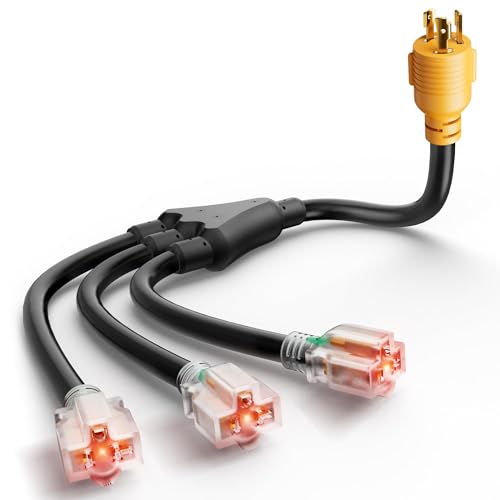
MECMO Shore Power NEMA L5-30P to 3X 5-15R/5-20R RV Generator Adapter
More Details On Our Top Picks
The three-outlet layout makes this MECMO option feel practical for RV use, especially beside a setup that needs a few household plugs at once. The TT-30P male plug, a 30-amp RV-style connection, feeds three 5-15R or 5-20R sockets, so you can split power across small appliances instead of hunting for extra adapters.
Its 30A, 125V rating translates to a 3750-watt ceiling on the input side, while the outlets are rated for 15A or 20A household gear. That balance suits campers, tailgaters, and temporary outdoor setups, though the trade-off is simple, each downstream device still needs to stay within its own limit.
Strong Points
- Three household sockets help you run several small items from one RV-style source.
- Lighted outlets make it easier to spot power status in dim campsites or garages.
- The 30-amp TT-30P plug suits common RV receptacles and compatible generator setups.
- The simple, short adapter layout keeps storage easy in a glove box or trailer bin.
Things To Consider
- It’s a splitter, so you still need to manage load across the connected devices.
- The household-style sockets suit light to moderate gear better than heavy tools.
Feature Snapshot
Who It Suits Best
Campers and RV owners who need a tidy way to split one 30-amp source into several regular outlets will get the most from it.
Where A Sibling Pick Shines
MECMO Shore Power NEMA L5-30P to 5-15/20R RV Generator Adapter suits you better when you want a straight locking generator connection without the triple-outlet layout.
This EXCELFU splitter follows the same general idea as the MECMO triple-outlet adapter, but it leans into a lighted end and a slightly more generator-friendly setup. Plugging into a TT-30P outlet gives you three household-style sockets, which helps on a weekend RV trip where phones, fans, and small gear all want a turn.
The stated 3750-watt capacity refers to the input side, while the sockets accept 15A or 20A plugs. That makes it a sensible match for modest loads, though a stacked setup can still get messy fast, so organization matters as much as outlet count.
Upsides
- Lighted end helps you confirm a powered connection at a glance.
- Three outlets reduce the need to juggle extra adapters around the RV.
- Works with 15-amp and 20-amp household plugs for flexible everyday use.
- The compact layout stores easily beside other trailer accessories.
Minor Gripes
- Like other splitters, it asks you to keep an eye on total load.
- The household sockets are better suited to smaller devices than bulky tools.
- The short adapter form keeps things neat, but it does not add reach.
Core Details
Who Will Love This
RV owners who want a compact splitter for light household gear will find the format especially practical.
Look Elsewhere When
MECMO 30 Amp to 20 Amp 110V RV Distribution Adapter fits better for you if you want the same three-outlet idea with a more explicit triple household emphasis.
Compared with the TT-30P RV splitters above, this EXCELFU cord uses a NEMA L5-30P twist-lock plug, which is the locking style commonly found on some generators and shore-power setups. That twist-lock design helps the connection stay seated more securely during temporary power use, especially when the cord might get nudged around.
Three 5-20R or 5-15R outlets give you familiar household access without adding a bulky box. For most backup-power scenarios, that keeps the setup tidy, though you still need to respect the 15-amp and 20-amp limits on the devices you connect.
Best Bits
- The locking plug adds a firmer connection than a basic straight-blade end.
- Three household outlets let you split power across several small loads.
- The cord style suits portable generator setups and temporary power use.
- The compact format is easier to route than larger outlet blocks.
Points To Note
- The twist-lock fit depends on matching the right generator inlet.
- You’ll want to keep the cord organized during storage so the connectors stay tidy.
Details At A Glance
Built With In Mind
You get the most out of it in portable power setups where a secure generator connection matters more than a long cord run.
Another Choice May Suit
LAZMUMI’s 30 Amp to 110 Outdoor Generator Adapter Power Cord with Circuit Breaker makes more sense for you if you want a protection-focused cord rather than a simple three-outlet splitter.
LAZMUMI shifts the focus toward an outdoor cord with a four-prong locking input, and that matters for generator owners who want a more anchored connection style. The short 1.5-foot length keeps the adapter close to the source, which is handy beside a generator pad or in a utility area where excess cord just gets in the way.
The four 5-20R female outlets are a step up in spread from the three-outlet options earlier in the list. That extra socket count helps in camp setups or backup-power spots where a few small devices need to run together, though the compact cord still calls for sensible load management.
Bright Spots
- Four household outlets give you more connection points than the three-way splitters.
- The 1.5-foot length helps keep the hookup tight and tidy.
- Dust protection caps suit outdoor storage between uses.
- The locking plug style works well in generator-focused setups.
Areas To Watch
- The short cord limits placement flexibility around a larger work area.
- Outdoor use still calls for basic connector care and dry storage after use.
- The extra outlet count can tempt you to connect more than the circuit should carry.
Quick Facts
Right Fit For
Generator owners who want a short outdoor adapter with more outlets and a locking feed will find this format appealing.
Swap It Out When
LAZMUMI’s 30 Amp to 110 Outdoor Generator Adapter Power Cord, 3 Prong Locking 30 Amp to 15 Amp Generator Cord fits you better if your source uses a three-prong twist-lock inlet instead of the four-prong style.
This LAZMUMI cord keeps things simple with a three-prong locking NEMA L5-30P input and three 5-20R female outlets at the far end. The lighted end is useful in a dim garage or campsite, because it gives you a quick visual cue that the adapter is seated and live.
Its 1.5-foot length makes it easy to place near the generator without a lot of slack underfoot. That short span works well for neat setups, though it’s less forgiving in layouts where the outlet sits farther from the equipment.
Positives
- Lighted end helps you confirm power at a glance.
- Three outlets give you room for a few small devices at once.
- Short length keeps the adapter easy to stow and route.
- The locking plug suits generator hookups that call for a firmer connection.
Small Caveats
- The short body keeps it tidy, but not especially flexible in placement.
- Three sockets still require sensible load distribution across connected gear.
Feature Card
The Right Fit
You’ll like this most in compact generator setups where short reach and a lighted end matter more than maximum outlet spread.
Where A Sibling Pick Shines
LAZMUMI’s 30 Amp to 110 Outdoor Generator Adapter Power Cord with Circuit Breaker suits you better if you want added breaker control instead of a simple lighted split.
What sets this LAZMUMI cord apart from the earlier short generator options is the circuit breaker, a resettable safety device that interrupts flow when demand gets too high. That extra layer of control is useful in backup-power situations where you want a more attentive adapter rather than a plain splitter.
The NEMA L5-30P twist-lock input matches the locking style many generator owners already know, and the three 5-20R outlets keep the output side straightforward. The trade-off is a bit less simplicity in day-to-day handling, since a breaker-equipped cord asks for a little more attention than a basic pass-through adapter.
What We Like
- The built-in breaker adds a useful control point for temporary power runs.
- Three household outlets keep the cord versatile for small loads.
- The locking plug helps the connection stay seated during use.
- ETL listing gives you a clearer sense of third-party evaluation on the product page.
Worth Noting
- The extra breaker hardware makes it a touch less bare-bones than the simpler cords.
- You’ll want to understand the reset behavior before relying on it in a busy setup.
- Like any multi-outlet cord, it still depends on sensible load planning.
Technical Sheet
Who Should Grab It
You’ll appreciate it most in generator setups where a breaker is more useful than absolute simplicity.
Not Your Match When
EXCELFU’s 30 Amp to 110V Adapter Generator Power Cord is the easier fit for you if you want a plain three-way splitter without the added breaker hardware.
This MECMO adapter is the cleanest straight-line option in the group, because it focuses on a single L5-30P locking source and a pair of standard 5-15R or 5-20R household sockets. The 30A, 125V, 2500-watt rating keeps it firmly in the realm of modest household loads, which is exactly where many shore-power and RV hookup jobs land.
Compared with the triple-outlet cords earlier in the list, this one feels simpler and easier to manage. That simplicity helps in marina setups or RV storage bays where you want a direct connection without extra branching, though you do give up the flexibility of a third outlet.
Positives
- The locking input helps the cord sit firmly on compatible sources.
- Two household outlets suit basic shore-power and RV accessory use.
- The 2500-watt rating is clear and easy to plan around.
- The simpler layout makes it easier to pack and keep organized.
- It works well for routine hookup tasks where you want fewer moving parts.
Points To Note
- Two outlets are enough for basics, but not as flexible as a three-way adapter.
- Marine or RV storage still benefits from keeping the plug ends clean and covered.
Spec Overview
Who It Suits Best
RV and marine users who want a straightforward locking adapter for ordinary household loads will find it especially practical.
Where Another Pick Fits Better
MECMO Shore Power NEMA L5-30P to 3X 5-15R/5-20R RV Generator Adapter suits you better if you need one more socket for a busier docking or campsite routine.
Closing out the list, this MECMO shore-power adapter gives you the same L5-30P locking input style as the previous pick, but it opens into three household sockets instead of two. That extra outlet is handy in a marina berth or RV parking spot where you want to power a few small devices without reaching for another splitter.
The 5-15R and 5-20R receptacles make it broadly compatible with common household plugs, and the 30-amp locking source keeps the feed stable for those lighter loads. The honest read is that it works best for organized, modest power needs, not for crowded setups with multiple demanding appliances.
Highlights
- Three outlets provide more flexibility than the two-socket shore-power adapter above.
- The locking input suits RV and marina power sources that need a secure fit.
- Compatible with both 5-15R and 5-20R plug styles.
- Works well for small accessories, chargers, and light household equipment.
Ongoing Considerations
- The extra socket does not change the need to keep total load in check.
- More outlets can mean more cords to organize around the campsite or dock.
Core Details
Whose Shelf It Belongs On
You’ll want this most if your routine calls for a locking source and three regular outlets in one compact adapter.
Reach For A Different Pick When
EXCELFU’s 30 Amp to 110V 20 Amp RV Distribution Adapter is the better fit for you if you want the TT-30P RV-style input instead of a generator-side locking plug.
How To Choose The Right 110 To 30 Amp Adapter Generator
Match The Plug Before Anything Else
The first decision is mechanical, not electrical. A TT-30P, L5-30P, and L14-30P are different plug shapes, and each one fits a different source.
That matters because a cord can look close and still be wrong for your outlet. RV owners, marina users, and generator owners usually need to start with the exact inlet on the power source, then narrow down the outlet style you want on the other end.
Count The Outlets With Real Use In Mind
More sockets sound helpful, but they only matter when your actual gear needs them. A two-outlet adapter suits a simple shore-power setup, while a three- or four-outlet design makes more sense for a campsite with chargers, fans, and small accessories.
The trade-off is organization. More outlets can also mean more cords on the ground, so a clean short adapter often feels easier to live with than a sprawling splitter.
Respect The Rating On The Cord
These adapters often step from a 30-amp source down to standard 15-amp or 20-amp household plugs. That doesn’t mean the full output side can ignore limits, because each connected device still needs to stay within its own rating.
For backup power or RV use, the safest habit is to think in terms of total demand rather than outlet count. That’s where the more cautious cords, including the breaker-equipped LAZMUMI model, earn their place.
Choose Length, Lighting, And Protection For The Setting
Short 1.5-foot cords keep a generator area tidy, while lighted ends help in low-light storage bays and campsites. Dust caps are worth noticing too, since outdoor storage tends to leave exposed connectors looking tired faster than indoor gear.
Higher-end models add small conveniences like breaker protection or more outlets. Those extras cost more for a reason, and they matter most when you use the adapter often, move it between sites, or want a little more control over the setup.
What To Weigh Before You Commit
Wrong Turns To Avoid
A common slip-up is focusing on the number in the title and ignoring the plug shape. Another is assuming every 30-amp adapter suits every generator or RV, which is how mismatches happen.
Keep the plug type, outlet style, and cord length in the same line of sight before you decide. That simple check saves a lot of second-guessing once the gear is already in your storage bin.
The Upgrade Payoff
Spending more in this category usually gets you a breaker, a locking connector, better outlet spread, or more thoughtful outdoor protection. Those details matter most in repeat-use setups where the adapter lives near a generator, dock, or trailer door.
Basic cords still make sense for occasional use. The higher tier earns attention when you want the hookup to feel more controlled and less improvised.
Frequently Asked Questions
What Does A 110 To 30 Amp Adapter Generator Do?
It bridges a 30-amp source to standard household-style outlets or plug patterns. That lets you connect smaller gear to RV, marine, or generator power sources.
Do You Need A Twist-Lock Plug?
You need one only when your power source uses that style, such as L5-30P or similar locking inlets. A straight-blade source calls for a different adapter shape.
How Many Devices Can You Run At Once?
That depends on the adapter’s outlet count and the load of each connected device. A three- or four-socket adapter still needs careful load planning.
Why Do Some Adapters Have Lighted Ends?
A lighted end gives you a quick visual cue that the connection is active. That’s useful in dim garages, docks, or campsite evenings.
Is A Short Cord Better Than A Long One?
A short cord keeps a generator area neat and reduces clutter near the source. A longer run helps only when you need extra placement flexibility.
Closing Thoughts
The right 110 To 30 Amp Adapter Generator comes down to fit first, then outlet count, then the little details that make daily use less annoying. A short locking cord suits generator work, a triple-outlet splitter fits RV life, and a breaker-equipped model gives you a bit more control where that matters. You do not need the most complicated option on the page, just the one that matches your source and your routine. Once those two things line up, the rest gets much easier.
