

I’ve watched a TV die from a lightning surge that walked straight through the wall socket. It only takes once. The right surge protector for your TV setup doesn’t just add outlets; it absorbs the kind of voltage spike that quietly cooks circuit boards inside expensive panels. I put this list together for anyone setting up a living room, a den, a home theater, or a workshop with a screen that deserves better than a bare outlet.
A Closer Look At The Lineup

CCCEI 12 Gauge Long Extension Cord, 50FT

NANOLAKE Surge Protector Power Strip, 4800J

Anker Power Strip, 900J Surge Protector

Anker Power Strip 2100J Surge Protector
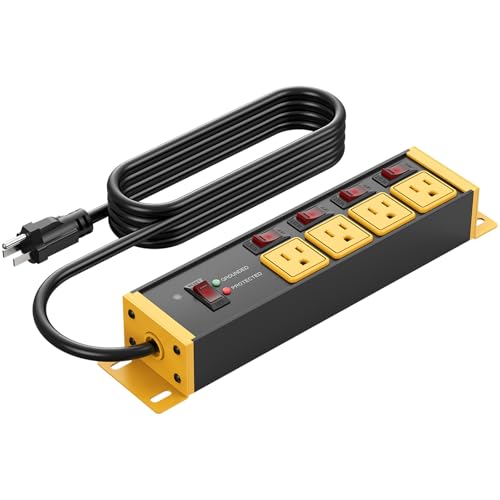
CCCEI 12 Gauge Heavy Duty Surge Protector, 6FT

CCCEI Magnetic Heavy Duty Surge Protector, 6FT
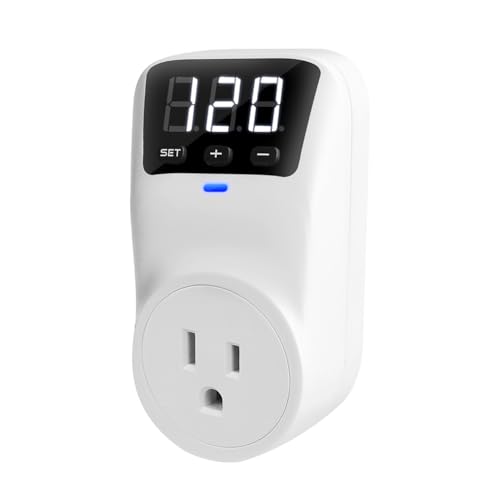
Treybair Appliance Surge Protector Voltage Stabilizer

Treybair 1800J Single Outlet Wall Mount
Treybair Smart Surge Protector Voltage Stabilizer

Treybair Surge Protector with USB Type-C
Why These Options Stand Out
This is the cord you reach for when the wall outlet is on the wrong side of the room. The 12-gauge, 50-foot build is built for serious loads, rated at 15 amps, 125 volts, and 1875 watts, with a flat 5-15P plug that hugs the baseboard rather than sticking out into traffic.
Eight outlets and an integrated switch make it easy to power a full entertainment setup, and the dedicated circuit breaker lets you cut power to everything at once. The bright yellow jacket is hard to miss, which is a quiet safety win in a workshop or garage.
Where It Excels
- Reach: a 50-foot run removes most extension-cord gymnastics behind entertainment centers.
- Load handling: the 12-gauge conductor (a wire thickness that carries high current safely) supports heavy appliances without voltage drop.
- Visibility: the yellow cord is easy to spot, reducing trip hazards in low-light rooms.
- Single-point control: one master switch handles every outlet at once.
Things To Consider
- Length adds clutter: 50 feet is generous, but bundling extra cord behind furniture can look messy.
- Industrial aesthetic: the bright yellow and rugged jacket may not match a clean living-room setup.
Who It Suits Best
Homeowners with a TV far from any wall outlet, or anyone outfitting a garage, basement, or workshop with a screen on the other side of the room.
Where Another Pick Suits Better
For a clean home-theater install where cable length matters less, the NANOLAKE Surge Protector Power Strip, 4800J delivers more outlets in a tidier package.
If your TV shares a power strip with a receiver, a console, a soundbar, and a streaming box, this is the unit that earns its place. Eighteen widely spaced AC outlets and four USB ports (two USB-A and two USB-C with 20W PD) cover an entire rack without adapter crowding.
The 4800-joule rating, which measures how much sudden energy the protector can absorb before failing, is among the higher numbers you’ll see in this category, and the grounded and protected LED lights tell you at a glance whether your gear is shielded. Mounting tabs on the back make it easy to hide behind a media console.
A Strong Showing
- High joule rating: 4800J gives serious headroom for sensitive electronics.
- USB-C PD 20W: a single cable fast-charges a phone or tablet alongside the TV gear.
- Spacing: wide outlet gaps handle chunky plugs and wall warts without overlap.
- Mountable design: keyhole slots on the back let you clean up cable runs.
Worth Noting
- Size: with 18 outlets, the housing is long and demands media-console space.
- Specialized fit: overkill for a single-screen setup with no accessories.
Feature Snapshot
Made For
Anyone running a full entertainment center with a TV, sound system, gaming console, and streaming devices on a single protected circuit.
Look Elsewhere When
Shoppers who only need to protect one screen should consider the Treybair 1800J Single Outlet Wall Mount instead, which is built specifically for that.
Anker leans into compactness here. The slim housing holds eight AC outlets plus two USB-C and two USB-A ports, with the USB-C1 port capable of 35W fast charging for a small laptop or a phone. The 900-joule rating is lower than the NANOLAKE’s, so this is built for steady home use rather than heavy industrial loads.
Compared to the larger CCCEI long cord, this fits comfortably on a media shelf or a small desk. It’s the strip I’d reach for in a bedroom TV setup or a studio apartment where space counts.
Real-World Strengths
- Compact footprint: easy to tuck behind a smaller TV stand.
- 35W USB-C output: handles phone, tablet, and small laptop charging.
- Anker build: the brand’s reputation for reliability in charging gear carries over.
Trade Offs
- Lower joule rating: 900J is fine for routine spikes but offers less headroom than the NANOLAKE.
- Outlet spacing: not as generous as the NANOLAKE’s wide-spaced layout.
Right Fit For
Anyone building a tidy media corner in a smaller space who still wants USB-C charging on the same strip.
Consider Something Else When
For higher joule absorption across many devices, the NANOLAKE Surge Protector Power Strip, 4800J offers far more protection.
This is the family-room workhorse. Twelve AC outlets, one USB-C port at 20W, and two USB-A ports cover a TV, a soundbar, a console, and a couple of phones simultaneously. The 2100-joule rating sits comfortably in the middle of the pack, balancing protection and price.
Compared to the slimmer Anker 900J model, this one trades compactness for capacity. The 8-point safety system includes fire resistance, overload protection, and temperature control, which matters when the strip sits behind a console running warm for hours.
Useful Highlights
- Outlet count: 12 AC outlets handle a full family-room media stack.
- 20W USB-C: fast-charges an iPhone from zero to half in roughly 26 minutes.
- Safety layered in: surge, overload, temperature, and fire-resistance features all in one.
Points To Keep In Mind
- Footprint: longer than the 900J Anker, so plan a spot behind the console.
- Single high-output port: only one USB-C delivers 20W; the others are slower.
Quick Facts
Best Suited To
Family living rooms with a TV, sound system, and a couple of devices that need both plug-in power and USB charging on the same unit.
A Better Fit Elsewhere
For a single-screen bedroom setup, the Anker Power Strip, 900J Surge Protector delivers a smaller, tidier option.
This is the short-cord cousin of the 50-foot CCCEI. Four outlets sit along a 6-foot 12-gauge cord, and each outlet has its own 20-amp circuit breaker (an automatic switch that cuts power when current exceeds safe levels), so a single tripped outlet doesn’t kill the others.
It’s also rated for 20-amp outlets (5-20R and 6-20R), which is one step above standard household circuits. The wall-mountable housing makes it a natural fit for a workshop bench or a garage TV.
What Stands Out
- Independent breakers: isolate a fault to one outlet without losing the rest.
- 20-amp outlets: handles heavier tools and equipment.
- Wall-mountable: stays out of the way on a vertical surface.
Honest Caveats
- Few outlets: only four receptacles limits what you can plug in at once.
- Industrial styling: not the most polished look for a living-room setup.
Who Will Love This
Anyone powering high-draw tools or a garage TV setup where independent circuit control is worth more than outlet count.
Swap It Out When
For entertainment-focused living rooms, the Anker Power Strip 2100J Surge Protector offers more outlets and USB ports.
Same four-outlet layout as the previous CCCEI, but the back of the housing has a built-in magnet that snaps onto any iron surface, which is a small detail that completely changes how you place it. On a steel shelving rack or a metal cabinet, this stays put without screws or brackets.
The individual 20-amp switches and the master switch add a layer of control the previous model already offered, and the orange jacket keeps the cord visible in a busy workspace.
The Good Stuff
- Magnetic mount: sticks to metal surfaces without hardware.
- Master and individual switches: cut everything or one outlet at a time.
- 20-amp rating: matches higher-draw equipment without tripping.
Where It Is Less Suited
- Limited reach: the magnetic mount only works on iron or steel surfaces.
- Four outlets: restricts how many devices can run simultaneously.
Whose Shelf It Belongs On
Anyone with a steel tool cabinet or a metal workshop rack who wants a strip that stays put without drilling.
Reach For A Different Pick When
If you need the same heavy-duty build without the magnet, the CCCEI 12 Gauge Heavy Duty Surge Protector, 6FT uses a wall-mount design instead.
This is where the list shifts from outlet expanders to a different category: voltage-stabilizing protectors. The Treybair unit actively corrects over- and under-voltage conditions in the 80V to 140V range, plus spikes and dips, rather than just clamping the worst surges.
The UL94V-1 fireproof rating means the housing resists flame spread, and the wall-mount format keeps the cord off the floor. If your home suffers from brownouts or unstable utility power, this is the kind of insurance a TV deserves.
A Few Strong Suits
- Active stabilization: corrects sustained low or high voltage, not just spikes.
- Fireproof housing: rated UL94V-1 for flame resistance.
- Wall mount: keeps the unit secure and out of foot traffic.
Things To Weigh
- Single-outlet style: limited to one device at a time.
- Specialty use: valuable in unstable power areas, redundant where grid power is steady.
Built With In Mind
Homeowners in regions with frequent brownouts, voltage drops, or unstable utility power who want protection that goes beyond basic surge clamping.
Not Your Match When
If your power is reliable and you need to plug in a TV plus several accessories, the NANOLAKE Surge Protector Power Strip, 4800J covers that side of the room.
Single-outlet protectors like this one are made for people who care about one appliance and nothing else. The 1800-joule rating absorbs serious surges, the audible alarm chirps when voltage drifts out of safe range, and the unit cuts power above 130V or below the lower safety threshold automatically.
Voltage delay recovery means the unit waits a moment before restoring power after a fault, which protects compressors and sensitive electronics. Plugging a fridge or a big TV directly into this gives that appliance its own dedicated line of defense.
Notable Upsides
- Audible alarm: alerts you when voltage moves into a problem zone.
- Automatic cutoff: cuts power the moment voltage crosses safe limits.
- Single-outlet focus: all protection goes to one critical appliance.
Some Limits To Know
- One plug: not for setups with multiple devices.
- Audible chime: in quiet rooms, the alarm may be more attention-grabbing than desired.
Technical Highlights
The Right Fit
Anyone who wants a single critical screen or appliance, like a living-room TV or a fridge, on its own dedicated protective circuit.
Skip It When
For a multi-device entertainment stack, the NANOLAKE Surge Protector Power Strip, 4800J handles far more at once.
The “smart” in the title is the real-time monitoring display. You can watch the actual incoming voltage on the front panel instead of guessing, which is genuinely useful in homes where the grid wavers between afternoon and evening. The industrial-grade polymer housing is rated for fire resistance and the unit corrects over- and under-voltage in the same 80V to 140V range.
It’s a wall-mount, single-outlet design like the earlier Treybair, but with that live readout as the main draw. For tech-focused households that like to see what’s happening, the display alone is worth the upgrade.
Standout Benefits
- Live voltage display: shows incoming voltage at a glance.
- Wide correction range: stabilizes 80V to 140V input.
- Fire-resistant polymer: industrial-grade housing for long-term safety.
Potential Drawbacks
- Single outlet: only protects one appliance.
- Display draw: the live readout adds a small always-on component.
Perfect Match For
Anyone in an area with unstable grid voltage who wants to see the actual numbers instead of relying on a hidden indicator light.
Where A Sibling Pick Shines
For simpler single-appliance protection without the live display, the Treybair 1800J Single Outlet Wall Mount covers the basics at a more accessible tier.
The list closes with another Treybair entry that combines voltage stabilization with USB-C charging. The LED display shows the current voltage, the housing meets the UL94V-1 fireproof standard, and the active correction handles over- and under-voltage in the 80V to 140V range.
Where it stands out from the rest of the Treybair lineup is the inclusion of USB-C alongside the protected outlet, which makes it useful for a TV corner where you also want to charge a phone or run a small streaming stick.
Points In Its Favor
- Combined features: voltage display plus USB-C in a single wall-mount unit.
- Fireproof build: rated UL94V-1 for flame resistance.
- Wide correction range: handles 80V to 140V incoming power.
Room For Improvement
- Single protected outlet: limited device count on the voltage-corrected side.
- Specialty fit: redundant in homes with very stable utility power.
Essential Details
Who Should Grab It
Anyone who wants voltage stabilization plus USB-C charging in a single compact wall-mount unit for a TV plus a phone or small accessory.
Another Choice May Suit
For pure voltage monitoring without USB-C, the Treybair Smart Surge Protector Voltage Stabilizer keeps things focused on the live display.
What To Weigh Before Choosing A Surge Protector For Your Tv
Joules, Outlets, And The Protection Gap
Joules measure how much energy a protector can absorb before it stops working. Higher is better, and for a TV with attached gear I look for at least 1000J as a floor. Outlets matter too, but more is only useful if you actually use them. A 12-outlet strip that powers two devices wastes the rest behind a console. For most living rooms, the sweet spot is 8 to 12 outlets plus a couple of USB ports.
Voltage Stabilization Vs Basic Surge Clamping
Basic surge protectors only react to spikes. Voltage stabilizers actively correct sustained over- and under-voltage, which matters more in regions with brownouts or aging grid infrastructure. If your lights dim when the AC kicks on, the stabilizers in the Treybair lineup are worth a closer look. If your power is steady, a standard surge protector gives you plenty.
Cord Length, Mounting, And Daily Use
A 50-foot cord solves problems that a 6-foot cord cannot, but it also creates cable clutter. Wall-mountable units like the CCCEI models or the Treybair stabilizers keep cords off the floor and out of foot traffic. Magnetic mounting, on the sixth pick, is a quiet upgrade in any workshop with metal surfaces, and the magnet snaps the strip exactly where you need it.
Matching The Strip To The Setup
Single-screen bedrooms, family living rooms, and workshop benches have different needs. A 4800J strip with 18 outlets is overkill for one TV, and a single-outlet stabilizer is too limiting for an entertainment rack. Match the strip to the gear you actually plug in, and leave room for one or two extras.
Smart Shopper Notes For Tv Surge Protection
Pitfalls Shoppers Hit
A common slip is treating joule rating like a permanent shield. Every surge event takes a small bite out of the rating, and after a few major storms the protector can be functionally exhausted without any visible sign. Another trap is assuming a power strip is automatically a surge protector: basic strips without a joule rating listed offer no real protection. Always check the joule number on the spec sheet, and check the manufacturer’s stated maximum spike voltage too. Finally, daisy-chaining two strips together to reach a distant outlet is unsafe and against electrical code, no matter how convenient it seems.
Where The Extra Money Goes
Higher-tier models earn their keep through three main upgrades. First, higher joule ratings absorb bigger events and last longer before degrading. Second, voltage stabilization, like the Treybair lineup offers, protects against sustained conditions a basic clamp cannot. Third, better housing materials like the UL94V-1 fireproof rating or independent circuit breakers add fault isolation that budget strips skip. When the gear on the other end costs four figures, those upgrades start to look like a reasonable insurance premium.
Frequently Asked Questions
How Many Joules Do I Need For A Tv?
For a single modern TV, look for at least 1000J. For a TV with a sound system, console, and streaming devices on the same strip, 2000J or higher gives more headroom and a longer service life.
Do Surge Protectors Wear Out Over Time?
Yes. Each absorbed surge reduces the protector’s capacity. After a few major spikes or several years of use, the unit may not clamp effectively anymore. Replacing the protector every few years, or immediately after a known large surge like a lightning strike, is the standard recommendation.
Can One Surge Protector Cover A Tv And A Refrigerator?
Most power strips are not rated for the sustained draw of a refrigerator compressor. If you want both on a single protected line, use a heavy-duty strip rated for 20 amps, like the CCCEI workshop models, and confirm the total draw stays within the strip’s rated capacity.
What Is The Difference Between Joules And Clamping Voltage?
Joules measure total energy absorbed before failure. Clamping voltage is the threshold at which the protector kicks in, and lower numbers mean the protector reacts to smaller spikes. Both matter: high joules for durability, low clamping voltage for sensitivity.
Is A Voltage Stabilizer Worth It For Stable Grid Power?
In areas with steady utility power, a basic surge protector is usually enough. A stabilizer adds value when you see flickering lights, frequent brownouts, or sensitive equipment that benefits from consistent voltage.
Closing Remarks
A TV is the kind of purchase you want to think about once and enjoy for years, and the same goes for the surge protector behind it. Pick the joule rating that matches your setup, decide whether you need voltage stabilization, and make sure the strip fits the space behind your console. The right choice here is the one you stop thinking about after installation.
