

Solar power looks simple until you need the right setup for a cabin, an RV, a home outage, or a weekend away from the grid. The seven picks below cover very different jobs, from compact carry-along units to heavier systems built for longer backup windows. You’ll see where panel count, battery chemistry, inverter output, and portability change the whole ownership experience. That makes it easier to match the system to your space, your load, and how often you actually use it.
Quick Look At Our Top Picks

ZeroKor Portable Power Station 40W Solar Panel

Renogy 400 Watt 12 Volt 4 Panel Kit

Jackery HomePower 3000 and 2x200W Solar Panels

Jackery Solar Generator 300 and 40W Solar Panel

ECO-WORTHY 1200W 24V 5.52KWH Lithium Battery Solar System
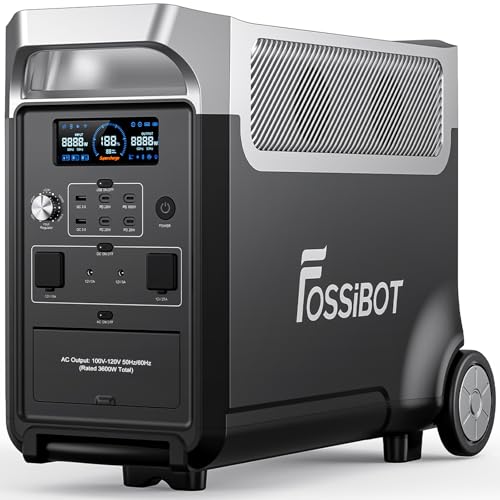
FOSSiBOT F3600 Portable Power Station
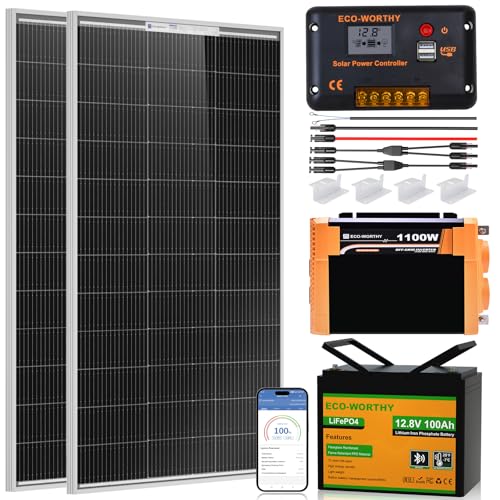
ECO-WORTHY 200 Watt 12V Complete Solar Panel Starter Kit
More Details On Our Top Picks
The ZeroKor bundle leans small and practical, which matters for tailgate use, a compact RV shelf, or a closet stash for outage backup. A 146Wh battery pack keeps the footprint modest, and the included 40W panel adds a simple solar entry point without turning setup into a project.
That scale also defines the trade-off, because you are not looking at a house-scale reserve here. For charging phones, small lights, and similar gear, the format makes sense, and the portable AC outlet adds flexibility that many pocket-sized power banks do not offer.
Strong Points
- Small enough for carry-and-store use.
- Included panel lowers the barrier to solar charging.
- AC outlet support broadens what you can plug in.
- 146Wh capacity suits short trips and brief outages.
Things To Consider
- The capacity suits light loads, not extended household backup.
- Portable solar gear usually asks for careful cable storage to avoid wear.
- Owners of higher-draw devices will need a larger system.
Feature Snapshot
Who It Suits Best
Weekend campers, casual travelers, and apartment dwellers with basic backup needs fit this format well.
A Better Fit Elsewhere
Jackery Solar Generator 300 and 40W Solar Panel suits travelers who want a lighter carry and cleaner output for small electronics.
This Renogy kit is built around a more traditional off-grid architecture, so it feels closer to a foundation than a carry-along gadget. Four 100W panels, a 40A MPPT controller, and the included mounting and cable pieces give you a clearer path for a 12V system in an RV, shed, or small cabin.
The MPPT controller, or maximum power point tracking controller, helps the array work more efficiently as light conditions shift. That matters more in mixed weather than a bare panel bundle, although the larger parts count means you’ll want to plan your roof or ground layout before installation day.
Highlights
- Four-panel layout gives you a cleaner starting point for a 12V build.
- MPPT control helps the system stay productive across changing light.
- Included brackets and cables reduce the number of separate parts to source.
- Bluetooth support is useful for checking system behavior without standing beside the hardware.
Worth Noting
- The component count asks for more planning than a plug-and-carry unit.
- Roof or rack space needs to be measured carefully before mounting.
- It fits a 12V setup, so pair it with the right battery bank and inverter.
Feature Card
Who Should Grab It
RV owners and small off-grid builders who want a structured 12V setup will get the most from this kit.
Swap It Out When
ECO-WORTHY 200 Watt 12V Complete Solar Panel Starter Kit works better for a simpler first build that includes battery and inverter in one bundle.
Household backup changes completely once you move into this size class. The 3072Wh battery and 3600W AC output give you room for larger essential loads, and the pair of 200W panels means the system starts with a more serious solar foundation than the smaller Jackery 300 above.
LFP, or lithium iron phosphate, battery chemistry is valued for stable long-term use and a more conservative ownership profile than older portable battery types. The honest read is that this size and output level suit preparedness-minded homes, small workshops, and RV setups that need a wider margin than a travel-only unit can provide.
Upsides
- Large battery capacity supports longer backup windows.
- 3600W AC output opens the door to more demanding household loads.
- Two 200W panels create a stronger solar starting point.
- LFP battery chemistry fits frequent cycling better than many lighter-duty packs.
- Works for home, RV, and emergency planning without feeling cramped.
Small Caveats
- The size is more storage-heavy than the compact items above.
- More capacity usually means more weight and a less casual move from room to room.
- This level makes the most sense with a clear backup plan, not as a casual weekend accessory.
Quick Facts
Built With In Mind
Homeowners and RV users who want a serious backup reserve will appreciate the scale here.
Look Elsewhere When
FOSSiBOT F3600 Portable Power Station fits you better when expandability matters more than a fixed two-panel package.
Weight changes the way you use a solar generator, and this Jackery leans into portability with a 7.5 lb body and an integrated handle. That makes it easy to tuck into camping bins, haul to a cabin, or keep in the trunk for travel power without feeling like you packed a brick.
Its 300W rated output, 600W surge peak, and pure sine wave AC outlet make it a cleaner fit for sensitive electronics than a bare-bones outlet box. For long-haul road trips or campground stops, the mix of two AC outlets, USB-C PD, USB-A, and a car port covers a practical spread of everyday devices.
Reasons To Buy
- Very light for its class, which helps during travel and camping.
- Pure sine wave AC output is a better match for electronics with tighter power needs.
- Multiple port types give you flexibility across phones, cameras, drones, and laptops.
- Integrated handle keeps carry and storage simple.
Areas To Watch
- The 292Wh capacity is sized for shorter sessions, not whole-day household backup.
- At this scale, managing expectations around larger appliances matters.
- Travel use is easy, but the unit still deserves careful cable packing to avoid scuffs.
At A Glance
Best Suited To
Campers, road-trippers, and anyone who wants a light emergency power box for electronics will make the most of this model.
Where A Sibling Pick Shines
ZeroKor Portable Power Station 40W Solar Panel suits you better for a smaller backup bundle at home or in a bag.
This ECO-WORTHY system is aimed at a fixed off-grid build rather than casual portable use. Six 195W panels, two 280Ah lithium batteries, a 60A MPPT controller, and a 3000W pure sine wave inverter point to a serious setup for cabins, workshops, or remote properties.
The capacity profile is the key story here, because 5.52kWh is the kind of reserve that changes daily planning, not just emergency planning. Compared with the smaller Renogy kit, this package is closer to a complete power backbone, although the scale also means installation planning and physical space matter a lot more.
Plus Points
- Large battery reserve supports longer off-grid use.
- Six panels offer a broad solar array from the start.
- 3000W inverter opens the door to more demanding household loads.
- 24V architecture suits more serious fixed installations.
- Good fit for remote properties that need a fuller power stack.
Room For Improvement
- The system asks for committed space and installation planning.
- It makes less sense as a move-around solution.
- Owners usually need to think through mounting, cable runs, and storage before purchase.
Technical Sheet
The Right Fit
You get the most value here in a cabin, remote workshop, or large fixed build that calls for a real power reserve.
Another Choice May Suit
Renogy 400 Watt 12 Volt 4 Panel Kit works better for a smaller 12V starting point with less installation weight.
The FOSSiBOT F3600 sits in the same serious-capacity lane as the Jackery HomePower 3000, but it leans harder into outlet count and expansion headroom. Five AC outlets, 3600W output, and a 3840Wh LiFePO4 battery give you a strong base for garage use, off-grid living, and backup roles that need multiple devices at once.
Expandability is the detail that separates it from the more fixed units in this roundup. A system that can scale to 11520Wh gives you a path for later growth, although that also means the upfront decision carries more planning around space, charging habits, and how much reserve you really want to own.
Bright Spots
- Five AC outlets make multi-device setups easier.
- 3840Wh battery capacity gives you a large starting reserve.
- LiFePO4 chemistry suits repeated cycling in backup roles.
- Expandable design helps the system grow with your needs.
- Well matched to garages, homes, RVs, and off-grid spaces.
Honest Caveats
- The scale asks for a dedicated storage spot.
- Planning gets more serious once you start thinking about future expansion.
- Heavier class power stations are less casual to move than travel units.
Core Details
Perfect Match For
You fit this unit best in a garage, home backup setup, or RV where extra outlets and future expansion matter.
Reach For A Different Pick When
Jackery HomePower 3000 and 2x200W Solar Panels makes more sense for a household that wants a more fixed, panel-forward backup package.
This ECO-WORTHY kit reads like a practical first step into off-grid power. Two 100W panels, a 30A charge controller, a 100Ah lithium battery, and a 1100W inverter give you the main ingredients in one package, which helps reduce the guesswork that can slow down a first build.
Compared with the larger ECO-WORTHY 1200W system, this one is much easier to place, manage, and understand. It fits RV owners and small off-grid projects that need a tidy setup for lights, basic appliances, and modest daily power rather than a heavy long-duration reserve.
Best Bits
- Complete kit format is friendlier for a first solar setup.
- 100Ah lithium battery gives the system a solid core for modest use.
- 1100W inverter covers a useful spread of lighter appliances.
- Two panels keep the array manageable on smaller roofs or mounts.
Minor Gripes
- The power ceiling stays in the starter category.
- Owners who expect higher appliance loads will outgrow it faster.
- Like most kit builds, careful wiring and mounting matter for long-term reliability.
Details At A Glance
Whose Shelf It Belongs On
First-time solar builders, RV owners, and small off-grid tinkerers get the best match here.
Skip It When
ECO-WORTHY 1200W 24V 5.52KWH Lithium Battery Solar System suits you better once your power needs move past starter-level capacity.
How To Choose The Right Solar Power Systems
Match Capacity To Daily Load
Battery capacity, usually measured in watt-hours or kilowatt-hours, tells you how much stored energy you have on hand. A small travel unit works for phones, tablets, and a few lights, while a larger home backup system makes sense once you want to keep more essential appliances running. The trade-off is simple: more reserve usually means more weight, more space, and more planning.
You get a cleaner match by listing the devices you actually care about, then comparing their draw to the system’s output limit. That approach keeps you from overbuying a giant box for a tiny use case, or underbuying a unit that struggles the first time you plug in a real appliance.
Check Output And Port Mix
AC output is the inverter side of the system, the part that turns stored power into standard household-style electricity. Pure sine wave output, which closely mimics smooth grid power, matters for many electronics and motor-driven items. For laptops, cameras, and sensitive gear, that detail is worth paying attention to.
USB-C, USB-A, car ports, and multiple AC outlets change day-to-day convenience in a real way. A travel setup benefits from flexible ports, while a garage or cabin build cares more about total AC capacity and how many things can run together without overload.
Think About Panels, Controller Type, And Expansion
Solar panels determine how quickly the system can recover after use, but panel count is only part of the story. MPPT controllers, which track the panel’s most efficient operating point, generally help more than basic controllers when light changes through the day. That’s useful in mixed weather and partial shade.
Expansion matters too, especially for off-grid homes and RV owners who start small and grow later. A modular kit is easier to modify, while a fixed bundle is easier to understand on day one. Your best match depends on whether you want a compact setup now or a system that can scale later.
Choose By Portability Or Permanence
Portable power stations work best for travel, short outages, and storage in tight spaces. Larger panel-and-battery systems suit sheds, cabins, and home backup plans where setup effort is part of the deal. The honest read is that convenience and permanence rarely show up in the same box at the same size.
Maintenance also changes with the format. Carry units need clean cable management and sensible storage, while fixed systems need attention to mounting, ventilation, and wire routing. Pick the shape that matches your space first, then narrow by output and capacity.
A Quick Reality Check Before You Commit
Mistakes Worth Dodging
Many shoppers focus on panel wattage and forget the battery, inverter, or controller. That leaves you with a system that looks large on paper but cannot support the devices you actually use.
Another common miss is ignoring physical space. Roof area, cabinet depth, cable length, and storage location matter just as much as the headline capacity.
The Upgrade Payoff
Higher-tier systems usually cost more because they include larger batteries, stronger inverters, more panels, and better control hardware. You also tend to get more flexibility, which helps once your power needs are no longer light and occasional.
The upgrade is worth it when you want longer outage coverage, more appliance support, or a system that can grow with your setup. For occasional camping, though, the extra scale can be more burden than benefit.
Frequently Asked Questions
What size solar power system works for a camper van?
A compact power station or a modest 12V kit usually fits better than a large home backup setup. Your appliance list matters more than the label on the box.
Are LFP batteries better for regular backup use?
LFP, or lithium iron phosphate, is commonly chosen for repeated cycling and long-term backup planning. That makes it a strong fit for homes, garages, and RVs that see frequent use.
Do I need MPPT for a small solar kit?
MPPT controllers help the system work more efficiently as light changes, which is useful even in smaller builds. They are especially helpful where weather or shade changes during the day.
Can a portable power station run household appliances?
Some can run light appliances, but the inverter output sets the real limit. A compact unit is better for electronics and short bursts than for large appliances.
What matters more, battery capacity or panel wattage?
Both matter, because storage and recharge speed work together. A large battery with tiny panels can feel slow to recover, while a small battery with strong panels may recharge quickly but still run out sooner.
Final Thoughts
You get the cleanest result by matching the system to your real routine, not to the biggest number on the page. ZeroKor and Jackery 300 suit lighter travel use, while Jackery HomePower 3000, FOSSiBOT F3600, and the ECO-WORTHY off-grid kits serve far more serious backup plans. Renogy lands in the middle for structured 12V builds, especially when you want a modular path. Keep capacity, output, and space aligned, and the right setup becomes much easier to spot.
