

Solar setups feel simple until you need the right battery for a cabin, a van, a porch light, or a backup desk station. The eight picks below cover very different needs, from compact AA cells for outdoor lights to larger LiFePO4 packs for RVs and home storage. You’ll also see a solar charger for compatible doorbells and a portable power station for travel or outage prep. That spread matters, because the right match saves space, setup time, and a lot of second-guessing.
Quick Look at the Shortlist

dumfume 24V 100Ah LiFePO4 Battery

MINRISE Solar Power Bank 40000mAh

JiajaX Ni-MH AA 600mAh Solar Batteries 4-Pack

Howardly Ni-MH AA 1.2v 600mAh Solar Battery 12-Pack

Anker SOLIX C300 Portable Power Station with 60W Panel

ECO-WORTHY 200W 12V Solar Panel Starter Kit
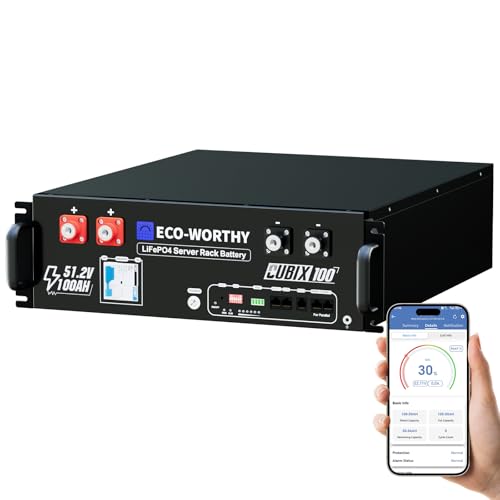
ECO-WORTHY Cubix100 48V 100Ah LiFePO4 Battery

Ring Solar Charger for Battery Doorbell
More Details On Our Top Picks
A 24V LiFePO4 pack fits the jobs that never feel small, like RV house power, marine setups, or a steady off-grid bank. The built-in 100A BMS, a battery management system that controls charging and discharge behavior, helps keep the pack operating within its intended range, and the low-temperature protection adds a useful layer for colder storage areas.
The trade-off is size and commitment, because this kind of battery makes more sense in a fixed system than in a grab-and-go setup. For you, that’s a strong match for a trailer, cabin, or solar shed where steady output matters more than portability.
Strong Points
- 2560W output suits heavier draws in a built-in system.
- 15,000-plus cycle claim points to long service life on paper.
- Low-temperature protection adds peace of mind in cooler spaces.
- LiFePO4 chemistry usually brings stable daily use for solar storage.
Small Caveats
- It fits installation-minded users better than casual portable use.
- Large capacity also means more planning around mounting and wiring.
- You’ll want to match the system voltage carefully before setup.
Feature Snapshot
Who Should Grab It
You’re the right fit if your solar setup stays parked in one place and needs dependable storage for RV, marine, or cabin use.
Reach For A Different Pick When
MINRISE Solar Power Bank 40000mAh suits commuters and travelers better, since it’s built for pocketable charging rather than a fixed electrical system.
Built-in cables change the feel of a power bank fast, because you don’t have to fish around for the right cord in a bag. The 40,000mAh capacity, which is the battery’s stored energy reserve, suits long travel days, camping weekends, or a stash-and-forget emergency drawer.
The added flashlight feature and USB-C in and out support make it a flexible carry piece, though the larger body will feel less pocket-friendly than a smaller bank. For everyday commuting, that trade-off is fine, but you’ll notice the bulk more than with a slim charger.
Positives
- Built-in cords reduce cable clutter in a backpack or carry-on.
- USB-C input and output give you more charging options.
- 20W PD, or Power Delivery, supports faster top-ups for many phones.
- Flashlights add practical use during camping or outages.
- Large capacity helps you stretch charge cycles across a long day.
Points To Note
- Its size makes it less comfortable in a jacket pocket.
- Owners who prefer minimal gear may find the built-in cords unnecessary.
Core Details
Built With In Mind
You’ll like this most if you travel often, camp lightly, or want a single backup charger for several devices.
Swap It Out When
Ring Solar Charger for Battery Doorbell makes more sense for a fixed doorway setup, since it serves a mounted device rather than handheld charging.
Outdoor path lights and garden fixtures usually need a simple, dependable AA cell, not an oversized battery spec sheet. These 1.2V Ni-MH cells arrive pre-charged, and the low self-discharge design means they’re built to hold onto stored energy better than basic rechargeables left sitting in a drawer.
The 600mAh capacity is modest, which is exactly why this set suits smaller solar lamps rather than hungry devices. For a neat yard layout, that smaller size can be a strength, since replacement stays easy and familiar.
What We Like
- Pre-charged cells are ready for a quicker first install.
- AA size fits many common solar light housings.
- Low self-discharge helps them sit through cloudy stretches better.
- Compact size keeps replacements simple and familiar.
Areas To Watch
- Capacity suits smaller fixtures more than demanding electronics.
- Four-pack format may feel light for a large yard with many lamps.
- You’ll want to check housing length, since AA slots vary a little.
Details At A Glance
Whose Shelf It Belongs On
You’re in the right spot if you maintain a few outdoor solar lights and want a straightforward AA replacement.
A Better Fit Elsewhere
Howardly Ni-MH AA 1.2v 600mAh Solar Battery 12-Pack suits larger yards better, especially when several lamps need the same refresh at once.
The 12-pack format makes this a sensible replacement stash for yards with several solar fixtures. Since these are pre-charged Ni-MH AA cells, you can usually swap them into many common outdoor lights without turning the task into a weekend project.
Compared with the JiajaX four-pack, this one is better suited to a property with lots of lamps or a rotation of aging cells. The honest read is simple, though, you gain convenience from quantity more than from a different battery profile.
Bright Spots
- Twelve cells help cover multiple lights in one purchase.
- Pre-charged design shortens the first replacement step.
- Standard AA size keeps compatibility broad across yard fixtures.
- Good fit for routine maintenance across a larger outdoor setup.
Honest Caveats
- You may not need this many cells for a small patio.
- Like any AA rechargeables, keeping spares organized matters.
Technical Sheet
Right Fit For
You’ll appreciate this pack most if you manage a yard, driveway, or garden with lots of matching solar lights.
Another Choice May Suit
JiajaX Ni-MH AA 600mAh Solar Batteries 4-Pack is easier for a smaller setup, especially when you only need a handful of cells.
The C300 lands in a sweet spot for people who want a portable power station without hauling a bulky backup box. Its 288Wh LiFePO4 battery gives you a practical reserve for phones, lights, and small gear, while the included 60W solar panel makes the whole setup feel more complete out of the box.
The 140W two-way fast charging feature matters because it can shorten wait times both for charging the station and drawing from it, although real-world convenience still depends on the devices you plug in. For camping, weekend cabins, or a desk-side outage kit, it feels measured rather than oversized.
Highlights
- Included solar panel simplifies a starter solar setup.
- LiFePO4 battery chemistry suits repeated charging over time.
- 300W output handles small electronics with less fuss.
- Peak 600W headroom helps with brief surges from some gear.
- Compact format is easier to store in a vehicle or closet.
Worth Noting
- It’s still a small station, so heavy appliances stay out of scope.
- Panel placement matters, since solar input works best in clear sun.
Feature Rundown
Perfect Match For
You’ll get the most from this set if you want a portable, solar-ready backup for camping, short outages, or a compact home office.
Look Elsewhere When
ECO-WORTHY Cubix100 48V 100Ah LiFePO4 Battery fits larger backup systems better, especially for stationary storage with a much bigger energy reserve.
This kit speaks to the person who wants the main parts together instead of sourcing panels, a charge controller, a battery, and an inverter one piece at a time. With 200W of solar panels, a 30A charge controller, a 50Ah lithium battery, and a 600W inverter, it gives a new RV or off-grid project a clear starting point.
The upside is simplicity, while the trade-off is that the included components are sized for modest loads rather than large household use. For a camper trailer or weekend off-grid project, that balance is often the point.
Upsides
- Starter-kit format cuts down on part matching.
- Included battery and inverter save extra setup steps.
- 30A controller suits a small 12V solar system.
- Good entry point for RV and cabin projects.
Minor Gripes
- The 600W inverter limits larger appliance use.
- Kit-style setups still need careful wiring and placement.
- You may outgrow the system as your power needs rise.
At A Glance
The Right Fit
You’re the right match if you’re putting together a first RV or off-grid system and want the basics in one package.
Where A Sibling Pick Shines
dumfume 24V 100Ah LiFePO4 Battery suits a heavier fixed install better, especially when your system already exists and needs deeper storage.
Server-rack style storage makes sense when your solar setup has moved beyond hobby scale. With 48V, 100Ah, and 5120Wh of storage, this Cubix100 targets larger home backup and off-grid systems that need serious reserve capacity rather than a portable compromise.
Bluetooth and WiFi support add monitoring convenience, which matters more once your battery bank lives in a dedicated utility space. Compared with the smaller Anker C300 or the 24V dumfume battery, this one belongs in a more committed, stationary power plan.
Reasons To Buy
- 5120Wh storage suits larger backup plans.
- 48V format is designed for more substantial solar systems.
- Bluetooth and WiFi support add monitoring convenience.
- Server-rack layout works well in a utility room or cabinet.
- Listing includes multiple compliance references for system planning.
Room For Improvement
- This is far more battery than a simple portable setup needs.
- Rack-style installation calls for space and a more deliberate install.
- It makes sense best where the rest of the system is already built around it.
Quick Facts
Built With In Mind
You’re the right fit if your solar setup feeds a home backup bank, an off-grid system, or a dedicated power room.
Skip It When
Anker SOLIX C300 Portable Power Station with 60W Panel is the easier route for camping, travel, or smaller emergency kits.
A doorbell charger is a narrow product, but that’s exactly why it earns a place here. This solar panel is built for compatible Ring Battery Doorbell models, and the improved charging capacity aims to stretch the time between manual charges when it gets steady direct sunlight.
The secure mounting bracket and weather-resistant build make it easier to place on an entryway than a loose panel. You’ll get the best results on a wall that sees plenty of sun, and that’s the real trade-off, because shaded porches rarely help much.
Best Bits
- Designed specifically for compatible Ring battery doorbells.
- Improved solar charging capacity supports longer intervals between charges.
- Mounted panel keeps the setup tidy near the doorway.
- Weather-resistant construction suits outdoor entry use.
Softer Spots
- Sun exposure matters a lot for steady performance.
- It only fits the listed doorbell models.
- Shaded entries may need more frequent manual charging.
Feature Card
Who Will Love This
You’re the best fit if your compatible Ring doorbell sits on a sunny front wall and you want fewer charge breaks.
Not Your Match When
MINRISE Solar Power Bank 40000mAh is the better pick for travel or general device charging, since it isn’t tied to a mounted doorbell.
How To Choose The Right Solar Power Batteries
Match Chemistry To The Job
LiFePO4, or lithium iron phosphate, suits deeper cycling and stationary storage, which is why the dumfume and ECO-WORTHY batteries lean that way. Ni-MH works better for small solar lights, where a compact AA cell needs to fit an existing slot and recharge often without fuss. The right chemistry depends on the load, not just the label.
Size The Capacity To Daily Use
Capacity tells you how much energy the battery can hold, whether that’s 600mAh in a tiny outdoor lamp cell or 5120Wh in a rack battery. Small garden lights need modest reserves, while RV owners and home backup setups want far more headroom. Oversizing raises cost and space use, while undersizing creates constant charging pressure.
Look At Charging Path And Output
Portable banks and power stations work best when the charging input and output fit your habits. A built-in cable bank helps on trips, a 140W two-way charger helps around the house, and a solar charger for a doorbell works best on a bright wall. That practical fit matters more than a flashy number on the box.
Think About Installation And Maintenance
Loose AA cells are simple to swap, yet larger batteries need mounting space, ventilation planning, and cable discipline. A wall-mounted doorbell panel asks for sunlight and a steady bracket, while a rack battery asks for more deliberate system planning. Choose the format that matches how much hands-on setup you’re ready to handle.
Things Worth Knowing First
Wrong Turns To Avoid
A common mistake is matching the battery to the brand name first and the device second. Solar lights, portable banks, doorbell chargers, and stationary storage all solve different problems, so a broad search term can hide a poor fit.
Another trap is overlooking physical size. A 48V rack battery and a 4-pack of AA cells live in completely different worlds, and the space around the battery matters just as much as the chemistry inside it.
The Case For Spending Up
Higher-tier models usually cost more because they pack larger storage, smarter monitoring, sturdier housings, or more involved hardware. The ECO-WORTHY Cubix100, for example, adds Bluetooth and WiFi support, while the Anker station includes a solar panel and a stronger fast-charging setup.
That extra spend tends to make sense for regular use, fixed installs, or backup plans that need more than a light-duty reserve. For a porch light or a casual travel bag, the simpler option often covers the need more cleanly.
Frequently Asked Questions
What kind of solar battery fits outdoor lights best?
AA Ni-MH cells usually fit many common fixtures and keep replacement easy. The JiajaX and Howardly packs are the most direct matches here.
Does a bigger mAh number always mean a better choice?
Not always, because the battery still needs to fit the device and the load. A small solar lamp can do better with a modest AA cell than with an oversized pack.
What’s the difference between a solar charger and a power bank?
A solar charger for a doorbell helps one mounted device keep its charge. A power bank stores energy for phones, tablets, and other portable gear.
Which pick suits a first RV solar setup?
The ECO-WORTHY 200W 12V Starter Kit is the clearest starting point. It gathers the key parts into one package for a modest off-grid build.
Why choose LiFePO4 over other battery types?
LiFePO4 fits frequent charging and stationary storage very well. That makes it a strong match for RV banks, backup stations, and home solar storage.
Closing Thoughts
The best solar setup starts with the job in front of you, not the biggest spec sheet in the group. A small patio light, a travel charger, an RV bank, and a home backup rack all ask for different things, and this roundup reflects that spread. Match voltage, size, and format to the space you actually have, and the choice gets much easier. Once that part lines up, the rest tends to feel refreshingly straightforward.
