

Whole-home backup gets easier to sort out once you stop chasing vague power claims and start matching capacity, output, and expansion to your own home. The picks below cover compact travel units, roomier home-backup stations, and a few heavier-duty choices for outages that last longer than an evening. You get a clearer path whether you want to keep essentials running, support a fridge and lights, or build toward a more serious backup setup. The right match depends on how much you want to power at once, how often you expect to move it, and whether solar charging is part of your plan.
Quick Look At The Shortlist

Jackery Explorer 2000 v2 Portable Power Station 2042Wh 2200W AC Output

EF ECOFLOW DELTA Pro Portable Power Station 3600Wh

Jackery HomePower 3000 with 2x200W Solar Panels 3072Wh

Jackery HomePower 3600 Plus Portable Power Station 3584Wh

Jackery Solar Generator 300 with 40W Solar Panel 292Wh

OUPES Mega 1 Solar Generator with 100W Panel 1024Wh

Jackery HomePower 3600 Plus with 2x200W Solar Panels 3584Wh
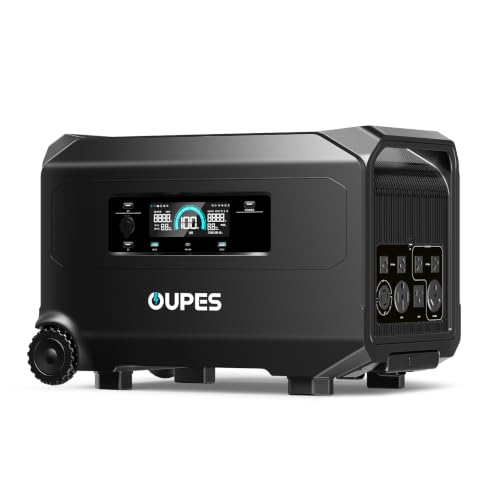
OUPES Guardian 6000 V2 Portable Power Station 4608Wh
More Details On Our Top Picks
The Explorer 2000 v2 sits in that useful middle ground where whole-home backup starts feeling practical instead of theoretical. With 2,042Wh of storage and 2,200W of AC output, it suits a fridge, lights, routers, and a few small appliances during an outage.
Its LiFePO4 battery, a lithium iron phosphate pack known for stable cycle life, also makes sense for a home unit that may sit charged for long stretches. The trade-off is size and weight, so this is better for a fixed spot in the house than for regular hauling.
Strong Points
- 2,042Wh capacity gives you room for essential circuits, not just phone charging.
- 2,200W AC output handles many household basics without feeling undersized.
- LiFePO4 chemistry suits long-term backup use better than smaller entry-level packs.
- USB-C PD up to 100W helps a laptop or modern tablet charge at useful speed.
Things To Consider
- Solar panels are optional, so the full setup takes extra planning.
- It still feels like a serious station, not a grab-and-go model.
- The listing leans toward outage use, so it’s less compact than the travel-oriented picks below.
Key Specs
Who It Suits Best
Homeowners who want a dependable mid-to-large backup station for outages, weekend preparedness, or a dedicated utility room setup should look here first.
A Better Fit Elsewhere
Jackery HomePower 3600 Plus Portable Power Station 3584Wh makes more sense for you if your home backup needs push past the 2,042Wh class and you want more expansion room.
The DELTA Pro stands out for sheer headroom, and that matters in a home where outages can mean more than one circuit staying alive. With 3,600Wh of storage and 3,600W AC output, it has a larger starting point than the Jackery Explorer 2000 v2, plus room to expand up to 25kWh.
That kind of scaling helps you plan in stages, not all at once, which is handy for households that want to start with essentials and build from there. The trade-off is that the bigger footprint makes it feel closer to equipment than a portable gadget, so most people will keep it in one place.
What We Like
- 3,600Wh gives you a stronger base for household backup planning.
- 3,600W AC output opens the door to heavier everyday loads.
- Expandable capacity up to 25kWh gives you serious growth room.
- Fast charging support helps reduce downtime between outages.
- The larger platform suits homes that may need more than just a few lights.
Worth Noting
- The larger system asks for more storage space than smaller units.
- Its scale can feel excessive for light camping or occasional travel.
- Accessory planning matters, especially once you start thinking about full home coverage.
Feature Snapshot
Who Will Love This
You benefit most here when you want a house-first power station that can grow along with your backup plan.
Another Choice May Suit
Jackery HomePower 3000 with 2x200W Solar Panels 3072Wh is a better match for you if you want a bundled solar starting point rather than an expandable base unit.
This bundle earns attention because the solar panels are already part of the package, which removes a layer of guesswork for home backup planning. With 3,072Wh of storage, 3,600W AC output, and a 7,200W surge rating, it gives you a strong base for appliance starts and short-term outage support.
Compared with the Explorer 2000 v2, it steps into a more serious home role while keeping the kit more ready-made than the expandable EcoFlow. That balance is useful for a household that wants a cleaner path from box to backup, though the bundled format also leaves less room to customize the solar side later.
Highlights
- Two 200W solar panels come with the package, which simplifies setup.
- 3,072Wh gives you meaningful storage for essential household loads.
- 3,600W AC output supports a wider range of home equipment.
- 7,200W surge rating helps with brief startup spikes from some appliances.
- The bundle format can save you time that would otherwise go into matching separate parts.
Small Caveats
- The bundled layout is less flexible than buying the power station and panels separately.
- It still needs a sensible storage plan, especially in smaller utility spaces.
- For very light use, the size may feel more serious than necessary.
Details At A Glance
Built With In Mind
You get the most value here as a homeowner who wants a prebuilt solar backup package for outages and RV-style flexibility.
Where A Sibling Pick Shines
EF ECOFLOW DELTA Pro Portable Power Station 3600Wh makes more sense for you if expansion to a much larger system matters more than a bundled panel set.
The HomePower 3600 Plus looks built for households that want more than a single-night buffer. Its 3,584Wh battery and 3,600W AC output put it close to the EcoFlow in basic output, while expansion up to 21kWh gives you a more gradual path to a bigger system.
Because the solar panels are optional, you keep some flexibility in how you assemble the setup, which can help around a garage, workshop, or dedicated backup corner. The trade-off is that you need to choose the panel side yourself, so the system asks a little more planning than the bundled Jackery HomePower 3000.
Upsides
- 3,584Wh capacity gives you a strong starting point for home backup.
- 3,600W AC output supports a broad mix of household equipment.
- Expansion to 21kWh leaves room for a larger long-term setup.
- Optional panel pairing lets you shape the system around your space.
Areas To Watch
- Solar panels are not part of the base listing, so the complete setup takes more coordination.
- The unit makes the most sense in a fixed location rather than on the move.
- Owners who want a ready-made bundle may prefer the HomePower 3000 package.
Core Details
Right Fit For
You suit this pick best when you want a sizable backup station and prefer to choose your solar add-ons separately.
Where Another Pick Fits Better
Jackery HomePower 3000 with 2x200W Solar Panels 3072Wh works better for you if you want the panels included from the start.
The Solar Generator 300 is the easy-to-lift option in this lineup, and that matters more than it sounds like for travel days or short utility jobs. At 7.5 pounds, it stays friendly for camp packing, while the 292Wh battery and 300W AC output keep the focus on smaller electronics rather than home-scale appliances.
That makes it quite a different sort of pick from the larger HomePower models above. You get a pure sine wave AC outlet, which means the output waveform is shaped to suit sensitive electronics better than rougher alternatives, but the trade-off is obvious, because this is not the unit for a fridge or a big appliance run.
Best Bits
- 7.5-pound weight keeps daily carrying and car packing simple.
- Two AC outlets, USB-C PD, USB-A ports, and a car port cover a small gear stack.
- Pure sine wave AC output is a sensible touch for electronics.
- The included solar panel makes the package more self-contained.
Room For Improvement
- The small capacity suits short backup jobs, not whole-house support.
- 300W rated output limits the kinds of appliances you can run.
- You may outgrow it quickly once your home backup plan gets more ambitious.
Feature Rundown
Whose Shelf It Belongs On
You fit this pick best when you want a light, simple backup source for camping, travel, or a few devices during a brief outage.
Skip It When
Jackery HomePower 3600 Plus Portable Power Station 3584Wh is the better route for you if your goal is actual home backup rather than a portable starter unit.
The Mega 1 tries to cover a lot of ground in a fairly compact class, and its spec sheet explains why. You get 1,024Wh of LiFePO4 storage, 2,000W of output, 13 ports, built-in MPPT, app control, and a 100W solar panel in the box, so it speaks to people who want function without building every piece separately.
The 36-minute path to 80% charge is the kind of number that matters in a busy house or work corner, though it still won’t replace the larger HomePower units for deep outage coverage. The honest read is that this suits the owner who wants faster turnaround and more ports, not the one trying to carry a mini utility room in one box.
Reasons To Buy
- 13 ports give you flexibility for mixed device charging.
- Built-in MPPT helps the solar side stay more efficient on paper.
- App control adds convenience for monitoring and setup.
- 2,000W output reaches beyond the small travel class.
- Included 100W panel makes the package more complete out of the box.
Minor Gripes
- It still sits below the larger home-backup stations in raw storage.
- App features add convenience, but they also mean more setup steps.
- The package is feature-heavy, so the learning curve may feel steeper than simpler units.
Technical Sheet
The Right Fit
You suit this model best when fast recharge, app control, and plenty of ports matter more than huge storage.
Look Elsewhere When
EF ECOFLOW DELTA Pro Portable Power Station 3600Wh is the better fit for you if whole-home backup scale matters more than feature density.
This version of the HomePower 3600 Plus matters because the solar panels are bundled, which makes the setup feel more complete from the first day. With 3,584Wh of storage, 3,600W AC output, and expansion up to 21kWh, it overlaps heavily with item four, but the included 2x200W panels tilt it toward people who want fewer moving parts in the decision.
That makes it a strong fit for family backup planning, especially where you want a power station that can stay parked in one place and still feel useful across seasons. The trade-off is simple, the system is bulkier than the light picks, so it’s not the one you carry around casually.
Positives
- The bundled solar panels reduce the amount of separate hardware you need to source.
- 3,584Wh capacity supports a serious home backup role.
- 3,600W AC output lines up well with common essential appliances.
- Expansion to 21kWh offers a clear growth path.
Points To Note
- The full package takes more storage room than the lighter travel picks.
- It makes more sense as a fixed backup station than as a mobile companion.
- Bundled panels help convenience, but they also narrow your flexibility a bit.
Core Details
The Right Fit
You belong with this pick when you want a ready-to-use home backup package with solar already in the box.
Swap It Out When
Jackery HomePower 3600 Plus Portable Power Station 3584Wh is the better match for you if you want the same core unit but plan to choose your own solar panels.
The Guardian 6000 V2 is built for more demanding home backup work, especially where higher-voltage support matters. It offers 4,608Wh of storage, 6,000W of output, 120V/240V output, native RV plugs, transfer-switch readiness, and expansion up to 41kWh, which puts it in a very different lane from the compact Jackery 300.
That combination makes sense in a garage, utility area, or larger property where you want a backup system that can shoulder heavier loads. The catch is that this level of capability comes with more complexity, so it suits a more committed setup than a casual emergency kit.
Bright Spots
- 4,608Wh storage gives you a substantial reserve for home backup.
- 6,000W output supports a much broader load range.
- 120V/240V output adds flexibility for more demanding household needs.
- Expansion to 41kWh gives you major growth room.
- Native RV plugs and transfer-switch readiness make the platform feel purpose-built.
Honest Caveats
- It is more system than simple portable station, so planning matters.
- The bigger setup makes the most sense in a fixed home location.
- Its capability can outgrow the needs of smaller households quickly.
At A Glance
Who Should Grab It
You fit this pick best when you want a high-capacity home backup station that can support more demanding electrical needs.
A Better Fit Elsewhere
Jackery Explorer 2000 v2 Portable Power Station 2042Wh is the smarter choice for you if your backup needs stay closer to essentials and you want a simpler, smaller unit.
How To Choose The Right Solar Generators For Whole House
Start With The Load You Actually Need
The first number to watch is watt output, which tells you how much power the unit can supply at once. A fridge, a modem, a few lights, and a laptop ask for a very different setup than a sump pump, microwave, or window unit.
Capacity, measured in watt-hours or Wh, matters just as much because it tells you how long the stored energy can last. A larger battery stretches outage time, but it also pushes the unit toward a heavier, more fixed installation.
Match Expansion To Your House Plan
Expandable systems help you start with essentials and add more storage later, which suits households that want a phased backup plan. That is where models like the EcoFlow DELTA Pro and OUPES Guardian 6000 V2 stand apart from smaller, simpler stations.
The trade-off is that expansion only helps when you actually expect to grow into it. A compact unit with a sensible solar panel bundle can be the sharper choice for a smaller home or a household that only needs short outage coverage.
Look At The Solar Side, Not Just The Box
A generator without a solar panel bundle still works, but the full setup takes more effort to piece together. Bundled panels make ownership simpler, especially for homeowners who want the system ready faster and with less guesswork.
MPPT, short for maximum power point tracking, is another term worth knowing because it helps the unit use solar input more effectively. It matters most in real daylight use, where panel performance changes with angle, clouds, and time of day.
Think About Where It Will Live
Size and weight shape day-to-day satisfaction more than many shoppers expect. A 7.5-pound travel model is easy to move, while a large 240V-ready station is better left in a garage, utility room, or basement corner.
That practical difference often matters more than the spec sheet headline. The right home-backup pick should feel easy to store, easy to reach, and easy to live with during a long outage.
Things Worth Knowing First
Wrong Turns To Avoid
Some shoppers focus on capacity alone and miss the output limit, which can leave a large battery unable to support the appliance you want most. Another common miss is forgetting the panel side of the setup, then ending up with a station that needs more pieces than expected.
Storage space matters too, especially for bigger units. A power station that looks manageable online can feel awkward in a small hall closet or crowded utility shelf.
What The Higher Tier Buys
Higher-tier models usually cost more because they give you larger batteries, stronger AC output, and more room for future expansion. You also tend to get extra ports, faster recharge paths, or higher-voltage support, which all matter once a house needs more than a basic emergency buffer.
That extra spend makes the most sense when the unit will stay in service for home backup, not just occasional travel. For lighter use, a smaller bundled kit often gives you a cleaner fit with less complexity.
Frequently Asked Questions
How much capacity do you need for home backup?
For essentials only, a mid-size station can cover lights, internet, and a few small appliances. A larger house with longer outages usually needs a much bigger reserve.
Is LiFePO4 better for a backup power station?
LiFePO4, or lithium iron phosphate, is valued for steady long-term ownership in this category. It suits a home unit that may stay charged and ready for long stretches.
Do solar panels matter for whole-house use?
They matter a lot if you want a backup plan that can recharge during daylight. Without panels, you depend on grid charging or another charging source.
What output rating should you watch first?
Watch AC output first, because that tells you what the unit can run at one time. Surge output matters too for appliances that need extra startup power.
Should a whole-house solar generator stay portable?
Not always, because bigger capacity usually brings more size and weight. Many homes get better results from a station that lives in one practical spot.
Closing Thoughts
Your best match comes down to how much of the home you want to keep running, how long you expect outages to last, and whether you want solar panels bundled or separate. The compact Jackery Solar Generator 300 fits travel and short backup jobs, while the OUPES Guardian 6000 V2 is built for a much more serious setup. For many households, the sweet spot lands with the Jackery HomePower 3000 bundle or the EcoFlow DELTA Pro, since both balance capacity with real home-use flexibility. Choose the scale that matches your space, then let the rest of the setup follow.
