

Power cuts feel minor until the fridge warms up, phones drain, and the modem goes dark. You need a setup that fits your space, your outage habits, and the devices you actually keep running. That’s what this roundup is built to sort out, from compact carry-friendly units to large home-backup systems with serious output.
Some of these picks suit apartment storage and occasional use, while others are better for long outages, RV trips, or a whole-home backup plan. You’ll see where capacity, AC output, battery chemistry, and panel pairing matter most, so your shortlist makes sense before you ever compare specs side by side.
Quick Shortlist For Faster Comparison

Jackery Explorer 2000 v2 Portable Power Station 2042Wh

EF ECOFLOW DELTA Pro 3600Wh Portable Power Station

Jackery HomePower 3000 and 2x200W Solar Panels 3072Wh

Jackery HomePower 3600 Plus Portable Power Station 3584Wh

Jackery Solar Generator 300 and 40W Solar Panel 292Wh

Jackery HomePower 3600 Plus with 2X 200W Solar Panels 3584Wh
BLAVOR Portable Power Station 1600W 1024Wh
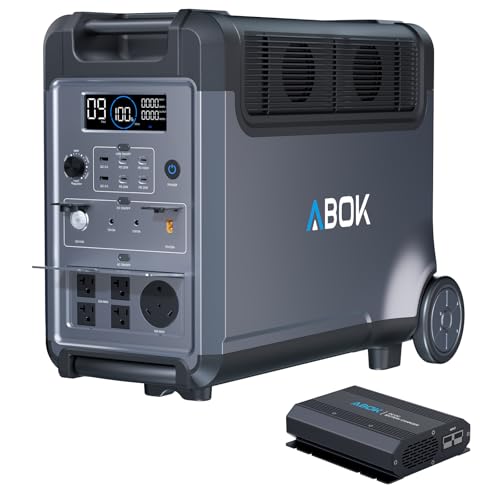
ABOK Ark3600 Portable Power Station 3840Wh
More Details On Our Top Picks
That 2042Wh battery size gives you a useful middle ground, big enough for essential home electronics without jumping straight into bulky whole-house territory. The 2200W AC output also matters, because it gives you more headroom for everyday appliances than the smaller camping-first units in this roundup.
The lithium iron phosphate, or LiFePO4, battery chemistry is the part that tends to appeal to long-term planners, since it’s built for repeat cycling rather than occasional use only. You’ll appreciate that balance most during short outages, apartment backup, or a garage shelf setup where storage and reliability both matter.
What We Like
- The 2042Wh capacity gives you room for more than just phones and a modem.
- 2200W AC output supports a broader mix of household gear than entry-level units.
- USB-C PD at 100W is handy for modern laptops and fast top-ups.
- LiFePO4 battery chemistry usually suits owners who want a steadier long-term backup plan.
Small Caveats
- At this size, it makes more sense as a home standby unit than a grab-and-go carry piece.
- You’ll still need to think through charging strategy, especially during repeated outage days.
- The solar panel is optional, so the full solar setup may take extra planning.
Feature Snapshot
Who It Suits Best
Backup-focused households that want a sizable but still manageable power station will get the most from this Jackery.
A Better Fit Elsewhere
EF ECOFLOW DELTA Pro 3600Wh Portable Power Station suits you better when your home load is heavier and you want more expansion headroom.
This one sits on the bigger, more serious end of the shortlist, with 3600W AC output and 3600Wh of storage. In most homes, that combination makes it a strong match for people who want more breathing room for appliances, tools, and longer outage windows.
The expandable design is the part that changes the conversation, because you’re not locked into the base setup. Compare that to the Jackery Explorer 2000 v2, which feels more self-contained, and you can see why this model suits a more ambitious backup plan.
Upsides
- 3600W output gives you more room for demanding household loads.
- 3600Wh storage is a strong starting point for longer interruptions.
- The expandable design fits households that expect needs to grow over time.
- Fast charging can matter a lot in a home where turnaround time is part of the plan.
Points To Note
- This is substantial gear, so storage and placement matter more than with smaller units.
- The larger feature set makes it a more deliberate purchase than a casual backup buy.
- Expansion is useful, but only worth paying for when you can actually use the added scale.
Details At A Glance
Who Will Love This
Homeowners building a larger backup system, or anyone expecting longer outages, will get the most value from this ECOFLOW unit.
Where A Sibling Pick Shines
Jackery HomePower 3000 and 2x200W Solar Panels suits you better when you want a more bundled home-backup setup out of the box.
The bundled solar panels set this apart right away, because you’re not starting from a bare power station. For people who want a home-backup setup that feels more complete on arrival, that’s a real advantage over the panel-optional Jackery Explorer 2000 v2.
The 3072Wh battery and 3600W AC output put it firmly in serious home-use territory, while the 7200W surge rating gives it extra headroom for brief startup loads. That matters most during outages that involve refrigeration, routers, lighting, and a few larger appliances all at once.
Strong Points
- The included 2x200W panels simplify the start of a solar-backed setup.
- 3072Wh capacity gives you a strong energy reserve for home essentials.
- 3600W AC output covers a more demanding mix of devices and appliances.
- 7200W surge room helps with brief power spikes from some equipment.
- The LFP battery type is a good match for repeated backup use.
Softer Spots
- Because the panels are part of the package, the system takes up more room than a station-only setup.
- The size makes sense for home use, but less so for frequent moving.
- You’ll want a clear storage spot for the panels and cables, not just the power unit itself.
Core Details
Made For
Households that want a more complete backup package, rather than a station-plus-extra-purchases plan, will get the most from this Jackery.
Another Choice May Suit
EF ECOFLOW DELTA Pro 3600Wh Portable Power Station suits you better when expandable storage matters more than the bundled solar panels.
This version leans into scale, with 3584Wh of storage and 3600W AC output in a package built for more serious home backup. The expandable path up to 21kWh is the key detail, since it gives you room to grow without replacing the base unit.
Compared with the HomePower 3000 bundle, this one leaves the solar panel choice open, which may suit you better when you already have panels or want to build the system a certain way. The trade-off is obvious, you get more flexibility, but less instant completeness.
Bright Spots
- 3584Wh storage gives you a large starting point for home backup.
- 3600W AC output supports a broad spread of household equipment.
- The expansion ceiling makes this a long-term planning piece.
- LFP battery chemistry fits repeat-use backup routines well.
Areas To Watch
- Panels are optional, so the system may need extra planning before it’s fully ready.
- This size makes more sense near a fixed storage spot than in a frequently rearranged room.
- Expansion is appealing, but the added hardware only matters for households that will actually grow into it.
Spec Overview
The Right Fit
Households that want a larger base station with room to expand later will get the most out of this Jackery.
Swap It Out When
Jackery HomePower 3000 and 2x200W Solar Panels suits you better when you want solar panels included from the start.
This is the smallest and lightest pick here, which is exactly why it belongs in a home-backup roundup. At 7.5 lb, it’s easy to carry from room to room, toss into a camping bin, or keep near a desk for short-term power needs.
The 292Wh battery and 300W rated output make its limits clear, so it’s best for phones, laptops, cameras, drones, and smaller gear. The included 40W panel helps, though the honest read is that this is more of a portable helper than a full outage solution.
Best Bits
- 7.5 lb weight keeps it easy to move and store.
- The built-in handle design helps with quick carrying between spaces.
- Pure sine wave AC output is a useful detail for sensitive electronics.
- Multiple ports let you spread power across several small devices.
- The included panel makes the basic solar setup less complicated.
Room For Improvement
- The battery size is modest, so this is not the right choice for extended home backup.
- At 300W rated output, it’s better for lighter loads than big appliances.
- Owners who need a true whole-room backup will likely outgrow it fast.
Feature Rundown
Who Should Grab It
Camps, travel kits, and occasional blackout backup use are the sweet spot for this Jackery.
Reach For A Different Pick When
BLAVOR Portable Power Station 1600W suits you better when you want a more serious mid-size backup reserve.
You get the same 3584Wh and 3600W backbone as the panel-optional HomePower 3600 Plus, but with the solar hardware already included. That bundled approach is appealing for anyone who wants fewer separate choices and a more straightforward path to a working home-backup system.
It also changes storage and setup expectations, because you’ll need room for both the station and the panels. For households that want a more complete package and don’t mind the footprint, that’s a fair trade.
Positives
- The included 2x200W panels reduce the number of separate pieces you need to source.
- 3584Wh gives you a substantial base for home backup.
- 3600W AC output supports more demanding appliances and devices.
- The all-in-one style setup suits households that want less guesswork.
Honest Caveats
- The system takes more storage space than a station-only route.
- Panels add handling and placement considerations, especially in tight garages or closets.
- The larger package makes the product feel more fixed in place than portable.
Quick Facts
Built With In Mind
Families and home planners who want a ready-made solar backup package will appreciate this Jackery more than a bare-bones station.
Look Elsewhere When
Jackery Explorer 2000 v2 Portable Power Station 2042Wh suits you better when you want a smaller footprint and simpler storage.
The built-in solar panel gives this BLAVOR a different feel from the Jackery options, because the charging concept is folded into the unit itself. For home backup, that can simplify the basic setup, especially in a space where you don’t want to juggle extra gear.
The 1024Wh battery and 1600W output place it in the mid-size zone, which suits common household essentials better than tiny travel stations. You may find that balance useful for outages, RV use, or a spare power source that still fits on a shelf.
Reasons To Buy
- The built-in solar panel trims down some of the setup clutter.
- 1024Wh is a useful middle step between tiny portable units and large home systems.
- 1600W AC output gives you more flexibility than entry-level models.
- LiFePO4 battery chemistry fits regular backup routines better than older styles.
Things To Consider
- The built-in-panel design is convenient, but it also means the unit is less modular.
- It sits below the larger Jackery and ECOFLOW picks for raw storage and output.
- Owners who want a large expansion path will probably want a bigger system.
At A Glance
Perfect Match For
Households that want a modest but meaningful backup unit with built-in solar convenience will get the most from this BLAVOR.
Where Shoppers Go Wrong
Jackery HomePower 3600 Plus Portable Power Station 3584Wh suits you better when the backup plan needs much more stored energy.
ABOK brings a lot of practical utility to the table: 3840Wh of storage, 3600W output, and 15 outlets. That combination makes sense for homes that need to spread power across several devices at once, not just keep one or two essentials alive.
The UPS function with a 10ms transfer time is the feature that stands out most for a home setup, because it speaks to fast switchover during interruptions. In plain terms, UPS means uninterruptible power supply, and that kind of handoff matters most for equipment that doesn’t like a long pause when power drops.
What We Like
- 3840Wh storage gives you a deep reserve for home backup use.
- 3600W output is strong enough for a broad spread of gear.
- 15 outlets make it easier to split power across multiple devices.
- UPS support adds a useful layer for sensitive home electronics.
- The expansion path to 11520Wh gives the system long-range potential.
Minor Gripes
- With this much capacity and outlet count, the unit is a more committed home installation than a casual portable pick.
- The feature depth may be more than you need for short, occasional outages.
- Expansion only makes sense when you genuinely need that much stored power.
Technical Sheet
Who Will Love This
Homes that need many connected devices and a serious reserve will get the most from this ABOK system.
Skip It When
Jackery Solar Generator 300 and 40W Solar Panel 292Wh suits you better when compact portability matters more than high outlet count.
How To Choose The Right Solar Generators For Home Backup
Start With The Loads You Actually Need
Begin with the appliances and electronics you want to keep running during an outage. A modem, phone chargers, and a few lights need a very different setup from a refrigerator, space heater, or sump pump.
Battery capacity, measured in watt-hours, tells you how much energy sits in reserve. AC output tells you how much power the unit can deliver at once, and that number matters just as much as storage.
Match The Battery Style To Your Routine
LiFePO4, or lithium iron phosphate, is a battery chemistry often chosen for repeated use and steadier long-term planning. That matters for home backup because you may charge and discharge the system far more often than a weekend-camping unit.
Smaller households that only need emergency coverage for short outages can live with less capacity. Larger homes, or homes with frequent interruptions, usually benefit from a bigger battery and more output headroom.
Think About Charging And Expansion
Solar panel bundles reduce setup friction, while panel-optional models give you more freedom to build the system your own way. The trade-off is simple, convenience now versus flexibility later.
Expansion support also changes the picture. A unit that can grow from a starter system into a much larger backup plan is often worth more to households that expect changing needs.
Storage, Noise, And Placement Matter Too
These power stations are not all equally easy to tuck away. A compact unit fits a shelf or closet more easily, while larger systems usually deserve a garage corner, utility room, or dedicated spot.
Noise and maintenance are also part of ownership. Solar generators stay friendlier than fuel-based options for indoor-adjacent storage, but cables, panels, and outlet access still need room to breathe.
Things Worth Knowing First
Common Shopping Slip Ups
A common mistake is chasing battery size without checking AC output. That leaves you with a big reserve that still struggles to run the device you care about most.
Another is buying a panel-optional station and assuming the rest of the system will somehow assemble itself. Home backup works better when you map the full path from charging to storage to placement first.
What The Higher Tier Buys
Higher-tier systems usually cost more because they bring larger batteries, higher output, more outlets, and better expansion paths. You’re paying for headroom, not just size.
That extra spend tends to make sense for households with longer outages, multiple critical devices, or a strong desire to scale over time. For lighter backup needs, a smaller station can be the smarter use of space and money.
Frequently Asked Questions
How Much Capacity Do You Need For Home Backup?
That depends on how many devices you want to run and for how long. A modem and lights need far less storage than a refrigerator or multiple appliances.
What Does LiFePO4 Mean?
LiFePO4 stands for lithium iron phosphate, a battery chemistry often used in power stations. It’s valued for regular backup use and long-term planning.
Do Solar Panels Need To Come With The Unit?
No, but included panels make setup simpler. Optional panels give you more freedom to choose the charging setup that fits your space.
Why Does AC Output Matter So Much?
AC output tells you how much power the station can send out at one time. That number helps determine whether it can run the appliance you care about.
Is A Portable Power Station Enough For A Whole House?
For most homes, a portable power station covers essentials rather than every circuit. Larger expandable models come closer, but full-house planning still takes careful load matching.
Closing Thoughts
For Solar Generators For Home Backup, the right choice starts with a simple question: do you want emergency coverage, or do you want a serious backup system that can grow with your home? The Jackery Explorer 2000 v2 keeps things compact and sensible, while the ECOFLOW DELTA Pro and ABOK Ark3600 push much harder for bigger households. Add in the bundled Jackery systems and the BLAVOR mid-size option, and you’ve got a range that fits very different outage habits. Pick the amount of power you’ll actually use, and the rest gets much easier.
