

Car charging gets simple fast when your laptop, phone, and a couple of accessories all need power at once. This roundup focuses on inverter shapes that make sense for commutes, road trips, camping setups, and workdays away from a wall outlet. You’ll see compact plug-in units, higher-capacity choices, and a battery-powered option for people who want a different setup. The goal is to help you match outlet count, USB type, and wattage to the way you actually travel.
The Shortlist At A Glance


Giandel Pure Sine Wave Power Inverter 300Watt
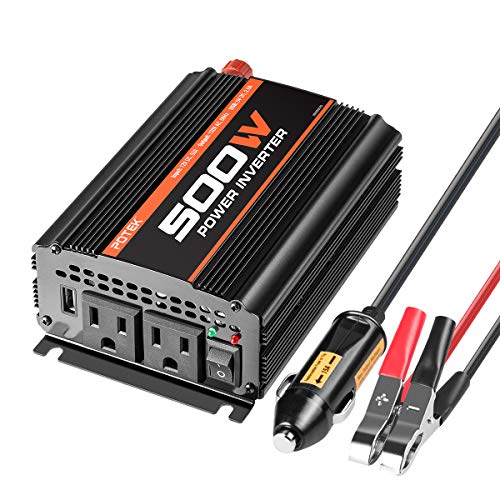
POTEK 500W Power Inverter
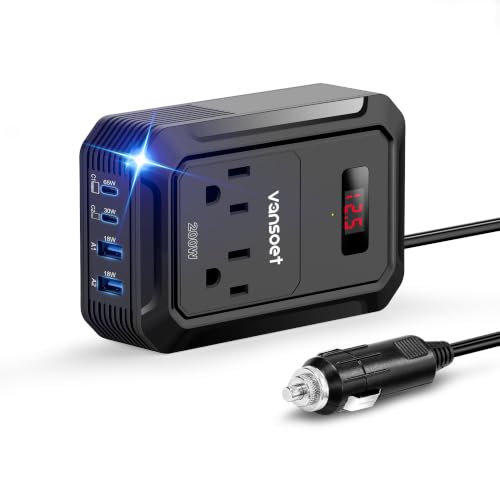
vansoet 200W Car Power Inverter

POTEK 750W Car Power Inverter

EGO POWER+ Portable Inverter PAD5000


Pro Chaser 400W Power Inverters for Vehicles
More Details On Our Top Picks
That extra wattage matters most in a packed vehicle, where a laptop is only part of the load. Three AC outlets plus both USB-C and USB-A keep chargers from fighting over space, and the cigarette-lighter ports add another layer of flexibility. For road crews, campers, and anyone keeping a work kit alive on the move, it reads like the most expansive option in this group.
The trade-off is size and intent, because a 1000-watt inverter makes more sense for fuller travel setups than for a single notebook on a short commute. The LED screen also helps you keep an eye on what’s happening without guessing, which is useful in a truck cabin or base-camp setup. It’s a bit like carrying a larger toolbox than you need for every job, handy when the day gets messy.
Strong Points
- Three AC outlets give you room for a laptop brick, a small appliance, or another AC accessory without constant swapping.
- USB-C at 30W is useful for newer phones and many compact notebooks, while USB-A at 24W covers older accessories.
- The extra cigarette-lighter ports help in vehicles where you juggle dash gear, charging cables, and travel electronics.
- The LED screen is useful in a moving vehicle, since you can check status without fumbling around the cabin.
- Best for bigger travel kits, especially in a truck or camping setup with more than one power-hungry item.
Things To Consider
- For a solo laptop charge, this is more inverter than you need, so the footprint may feel larger than necessary.
- More outlets can invite cable clutter, which matters in a small car interior.
- Higher-capacity units usually make more sense when you’re comfortable managing multiple devices at once.
Feature Card
Who It Suits Best
You’ll get the most out of this in a truck, camper, or road-trip rig where several devices need power at once.
Where A Sibling Pick Shines
Giandel’s Pure Sine Wave Power Inverter 300Watt suits desk-slim laptop use better for commuters who want a smaller, cleaner-feeling setup.
Pure sine wave means the inverter outputs a smoother AC form, which is often preferred for sensitive electronics and some charging bricks. That makes this Giandel model a calm, tidy match for someone working from a car seat or airport pickup lane with a laptop and tablet in rotation. Compared with the YSOLX unit, you give up sheer port volume, but you get a cleaner, simpler setup.
The 300-watt ceiling keeps expectations realistic, and that’s part of the appeal for everyday laptop charging. Two AC outlets plus USB-C PD 30W and QC 3.0 USB cover the common mix without turning the dash into a cable nest. For most commuters, the honest read is that this is the more polished choice when you care about the character of the power as much as the number of sockets.
What We Like
- Pure sine wave output is a better match for sensitive gear than rougher wave types.
- USB-C PD 30W helps many phones and smaller notebooks charge efficiently.
- Two AC outlets keep the setup simple without crowding the dash.
- Compact 300-watt class makes sense for daily laptop and tablet charging.
- Good fit for shared travel use where you want a neater, less bulky footprint.
Room For Improvement
- The lower wattage leaves less room for power-hungry accessories.
- Two AC outlets are enough for basics, though not for a bigger travel kit.
- You may outgrow it faster than the larger YSOLX or POTEK 750W options.
Core Details
Who Should Grab It
You’re the best match for this if your setup is mostly a laptop, a phone, and maybe one other accessory in a sedan or crossover.
Another Choice May Suit
POTEK’s 500W Power Inverter suits travelers who want more overhead for mixed devices without stepping all the way up to the YSOLX 1000 Watt Power Inverter.
Midrange power often lands in the sweet spot for road use, and this POTEK model reflects that nicely. Two AC outlets and 2A USB ports give you enough flexibility for a laptop, a phone, or a small camera charger without pushing into oversized territory. Compared with the Giandel unit, it feels less focused on cleaner output and more on plain utility.
That simplicity helps in a family car or work vehicle where people just want plugs that do the job. The 500W rating gives you more breathing room than the 300W class, though it still stays well below the bigger 750W and 1000W picks. For most mixed-use trips, that middle position keeps the setup easy to understand.
Highlights
- 500W capacity gives you more headroom than the smaller commuter-style options.
- Two AC outlets handle a laptop charger and a second accessory without constant swapping.
- 2A USB ports are handy for older phones and basic accessories.
- Good everyday fit for road trips where you want simple plug-and-play power.
Points To Note
- Two AC sockets are enough for basics, though not especially generous.
- USB output is functional, but it is less modern than the USB-C choices above.
- For high-drain gear, the 750W POTEK offers a more comfortable margin.
Details At A Glance
Best Suited To
You fit this best if you want a steady middle-ground inverter for a sedan, SUV, or work truck with no need for a lot of extra frills.
Skip It When
vansoet’s 400W Car Power Inverter is a better match for people who want newer USB-C charging in a smaller, more road-trip-friendly package.
This one leans hard into portability, which makes sense for short commutes and light travel. Two AC outlets plus a rare mix of PD 65W, PD 30W, and QC 18W USB charging gives you a lot of charging variety from a small plug-in unit. For a laptop bag, phone, and tablet, that combination is more flexible than the POTEK 500W model above.
The 200W cap keeps the profile modest, so you’re choosing convenience more than heavy lifting. That’s fine for everyday carry, but it’s not the right lane for power-hungry accessories or large multi-device setups. The honest read is that this feels well thought out for people who value a tidy dash over raw output.
Reasons To Buy
- Small footprint makes it easier to keep in the car without crowding the console.
- PD 65W is a strong USB-C option for many laptops and fast-charging phones.
- Dual AC outlets still leave room for a charger and another plug-in item.
- Good fit for daily use where you want a travel-friendly, simple inverter.
Areas To Watch
- 200W leaves little room for anything beyond light electronics.
- For longer camping setups, the larger YSOLX or POTEK units make more sense.
- A compact body can also mean less flexibility for cable management in tight spaces.
Feature Rundown
Right Fit For
People who travel light and want a compact inverter for a laptop, phone, or tablet will get the cleanest fit here.
Swap It Out When
Giandel’s Pure Sine Wave Power Inverter 300Watt makes more sense for travelers who want a gentler power profile with a little more overall headroom.
For heavier travel loads, this POTEK feels like the step up that gives you breathing room. The 750W rating sits high enough for multi-device use without jumping all the way to the YSOLX 1000W class, which can be more than you need in a normal car. Dual AC outlets and 2A USB ports keep the layout familiar, so you’re not learning a new setup.
The trade-off is that more capacity usually comes with more bulk, and that’s the honest compromise here. It suits people who want a little extra margin for road gear, not just a phone charger and a laptop brick. In a camping or work-van scenario, that extra reserve feels practical rather than flashy.
Upsides
- 750W offers a stronger cushion for mixed travel gear than the smaller options.
- Dual AC outlets keep the charging routine straightforward.
- 2A USB ports handle everyday accessories with no fuss.
- Good middle step for people who want more capacity without jumping to a much larger inverter.
Small Caveats
- More capacity can mean a larger footprint in the vehicle.
- USB ports are useful, though they are not as up to date as the USB-C picks.
- For lighter use, the 300W Giandel or 200W vansoet may feel easier to live with.
Spec Overview
The Right Fit
This suits you best if your vehicle carries more than a notebook and a phone, especially on longer drives or camping trips.
Where A Sibling Pick Shines
YSOLX’s 1000 Watt Power Inverter is the better choice for shoppers who need more outlets and a higher ceiling for larger travel setups.
This one stands apart because it leans into a battery-platform style setup rather than a standard car plug arrangement. The 400W rating makes it a fit for people already invested in the compatible ecosystem, especially on a jobsite or at a tailgate where portability matters. Compared with the car-powered POTEK and vansoet units, it trades plug-in simplicity for a more modular setup.
The note about the battery and charger being separate matters, because that changes the real cost of ownership and the way you plan storage. Still, the shape of the unit is appealing for people who already own matching gear and want a quiet, portable power source. In that scenario, it feels less like an accessory and more like part of the kit.
Best Bits
- 400W output is enough for many laptop charging situations and light devices.
- Battery-platform format adds flexibility outside a vehicle.
- Works well for users already committed to the matching tool ecosystem.
- Portable form is handy for tailgates, jobsite use, or quick carry-out setups.
Worth Noting
- Battery and charger are separate, so you need the rest of the setup in place.
- This is less straightforward than a plug-in inverter for casual car charging.
- For pure vehicle use, the Giandel or vansoet car models may be simpler.
Technical Sheet
Built With In Mind
You’re the right fit here if you already own the matching battery system and want a portable power source away from the car.
Look Elsewhere When
vansoet’s 400W Car Power Inverter for Vehicles suits drivers who want a simpler plug-in solution without managing a battery platform.
This vansoet lands in the middle in a useful way, because it blends laptop-friendly power with a sensible mix of ports. You get dual AC outlets, USB-C PD 30W, a second USB-C at 15W, and USB-A/C options, which is a nice spread for a family car or a shared road trip. Compared with the 200W vansoet model, this one gives you more room for a few extra gadgets.
That balance makes it easy to recommend for people who dislike overbuying but still want a little margin. The downside is that it still belongs in the moderate-power lane, so it won’t replace the bigger YSOLX or POTEK 750W units for heavier travel use. For many everyday trips, though, that restraint is exactly what keeps it practical.
Bright Spots
- 400W capacity gives you enough space for a laptop and companion devices.
- USB-C PD 30W is a practical feature for newer phones and compact notebooks.
- Dual AC outlets help keep the charging routine flexible.
- Good middle-ground choice for people who want more than a tiny plug-in inverter.
Softer Spots
- It still sits below the larger 500W, 750W, and 1000W units for bigger travel gear.
- More port options can still mean more cable management in a busy cabin.
- For cleaner output and a more specialized feel, the Giandel unit has the edge.
Feature Card
Whose Shelf It Belongs On
You’ll like this most if you want an all-around car inverter for family travel, errands, and laptop use without stepping up to a heavier-duty unit.
Reach For A Different Pick When
POTEK’s 750W Car Power Inverter suits travelers who regularly carry more power-hungry gear and want extra reserve.
Port variety is the headline here, and it’s easy to see why this one matters for a device-heavy commute. The dual AC outlets, USB-A QC 18W, and USB-C PD 65W give you a wide spread for phones, tablets, and laptop charging without forcing you into a single cable style. Compared with the vansoet 400W model, this Pro Chaser leans harder into higher-end USB-C output.
The 400W ceiling keeps it in a familiar class, so the appeal comes from the charging mix rather than raw brute force. That makes it a smart look for people who travel with newer devices and want fewer compromises at the dash. The honest caveat is that more features also mean more to think about, so it suits organized setups better than minimalist ones.
Plus Points
- USB-C PD 65W is strong for many laptops and fast-charging phones.
- Dual AC outlets keep traditional chargers in play.
- USB-A QC 18W adds another useful layer for mixed gear.
- Good fit for commuters who carry several modern devices at once.
Honest Caveats
- The 400W rating is useful, though it’s still not a heavy-duty class.
- More ports usually mean more planning around cable placement.
- For a simpler, smaller road-trip setup, the 200W vansoet is easier to live with.
Core Details
Who Will Love This
You’re a strong match here if your car usually carries a laptop, phone, and a couple of modern accessories that all want USB-C support.
Where Shoppers Go Wrong
Giandel’s Pure Sine Wave Power Inverter 300Watt suits people who care more about a cleaner power profile than about stacking the highest USB-C wattage.
How To Choose The Right Power Inverters For Laptop
Match Wattage To The Real Load
Laptops vary more than people expect, and the inverter has to handle the charger, not just the computer itself. A 200W or 300W unit can suit a single laptop and phone, while 500W and up makes more sense once you add tablets, camera batteries, or a second device. The bigger numbers are useful, but they also tend to mean a larger unit, more cable management, and a setup that belongs in a truck or travel van more than a compact sedan.
Choose The Right Output Style
Pure sine wave output means the inverter creates a smoother AC form, which matters most for sensitive electronics and some charger bricks. Modified-style units can still work well for many laptops, but the smoother option usually feels safer for people carrying expensive gear or a mixed device kit. That difference is less about hype and more about fit, because your use case decides whether cleaner power is worth the extra spend.
Count Ports, Then Count Cables
Many shoppers fixate on wattage and then run into a practical problem, which is not enough places to plug everything in. USB-C, USB-A, and AC outlets all solve different charging jobs, and the right mix depends on whether you’re charging modern notebooks, older phones, or both at once. Two AC outlets can be enough for a simple travel day, while three outlets plus USB-C makes more sense for family trips or shared work vehicles.
Think About Vehicle Fit And Storage
Plug-in car inverters are easiest to live with because they stay close to the dash and are simple to stow. Larger inverter bodies often bring more power and more flexibility, yet they can be awkward in small cabins or cluttered center consoles. For daily commuting, a compact unit with decent USB-C output usually feels calmer to use, while road-trippers and campers often appreciate the extra reserve of a bigger box.
Things Worth Knowing Before You Choose
Wrong Turns To Avoid
It’s easy to overbuy wattage and end up with a unit that takes up more space than your travel routine needs. Another common miss is ignoring the output mix, then realizing your laptop cable wants USB-C while the inverter only offers older USB-A ports. Cable length, outlet count, and cabin space matter just as much as the headline wattage.
Storage is another detail that gets overlooked, especially in smaller vehicles. A tidy inverter that tucks away cleanly often gets used more often than a larger one that lives under the seat because it’s inconvenient to keep out.
When Paying More Pays Off
Higher-tier models usually cost more because they give you more output headroom, more port variety, or a smoother power form. That matters for travelers who run several devices at once, work from the road, or use electronics that feel better on cleaner AC. The upgrade makes sense when the inverter becomes part of your daily setup instead of an emergency backup.
There’s also value in better layout and easier ownership, not just raw capacity. A more capable unit can reduce the number of adapters you carry, which keeps your vehicle less tangled and your charging routine quicker. That’s where the extra spend feels justified rather than decorative.
Frequently Asked Questions
Can a car inverter charge a laptop safely?
Yes, a properly matched inverter can power many laptop chargers through AC or USB-C. The key is matching the inverter’s output to the charger’s demand and connector type.
How much wattage do you need for laptop charging?
Many laptop chargers sit comfortably in the lower wattage range, so 200W to 400W often covers basic use. Bigger setups with more devices usually benefit from 500W or higher.
Is pure sine wave worth it for laptops?
It often makes sense for sensitive electronics and gives you a smoother AC form. For a simple laptop-only setup, it can be a useful refinement rather than a necessity.
Why do some models offer USB-C and AC together?
That mix lets you charge newer devices directly over USB-C while still keeping standard wall-style plugs available. It’s a practical setup for travel because not every device uses the same cable.
What matters more, wattage or port count?
Both matter, but the right answer depends on how many devices you carry. A high-wattage unit with too few outlets can still feel limited, while a lower-wattage model with the right ports may fit your routine better.
Closing Thoughts
The best fit depends on how you travel, not just what you charge. A commuter usually gets more value from a compact 200W to 400W unit with the right USB-C port, while a truck or camping setup can justify the extra breathing room of a 750W or 1000W model. You’ll be happiest with the inverter that matches your device mix, your cabin space, and how often you actually live on the road. Keep it practical, and the right choice tends to feel obvious.
