

A single wall outlet isn’t enough for most modern rooms. Between monitors, chargers, lamps, power tools, and kitchen appliances, the right surge protector turns one socket into a safe, organized hub. I’ve put together ten outlet surge protectors that cover everything from a tidy desk setup to a sprawling garage workshop, and I’ll walk you through the trade-offs so you can match the right gear to your space.
The Essentials At A Glance

CCCEI 12 Gauge Long Extension Cord, Yellow, 50FT

CCCEI Heavy Duty Power Strip with USB Ports, 10 Outlets
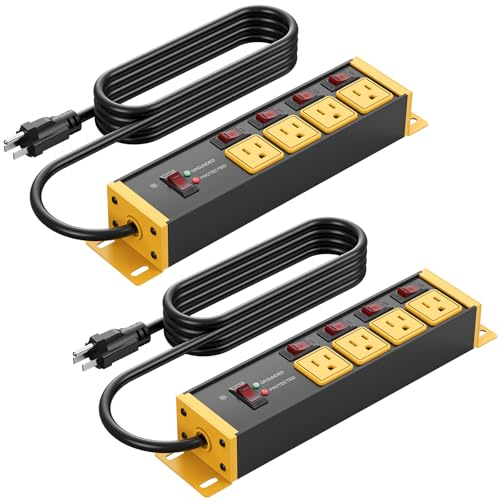
CCCEI 2-Pack Heavy Duty Surge Protector, 12 Gauge, Yellow, 4FT

NANOLAKE Surge Protector 4800J, 18 Outlets, 10FT
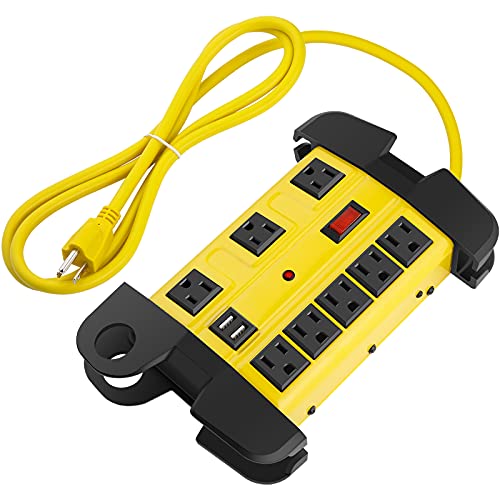
CCCEI Heavy Duty Surge Protector with USB, Yellow, 6FT
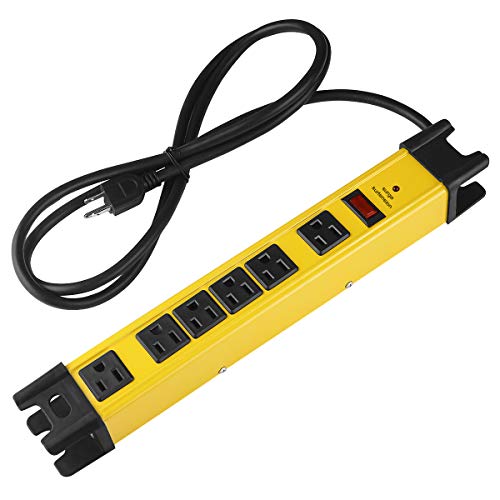
CCCEI Heavy Duty Surge Protector Power Strip, Yellow, 6FT

CCCEI Long Heavy Duty Metal Power Strip, 16 Outlets, 4FT

CCCEI Magnetic Heavy Duty Power Strip, 8 Ports, Yellow, 15FT

Anker Power Strip, 900J Surge Protector, 35W Max

CCCEI 12 Gauge Long Extension Cord with Individual Switches, 50FT
A Closer Look At Each Pick
Few products solve the “my wall outlet is 40 feet away from my workbench” problem like a 50-foot cord. The 12-gauge wire (a thicker gauge that handles sustained current with less voltage drop over distance) carries the rated 15 amps comfortably, so a table saw or space heater won’t make the cable sag or run hot.
Eight outlets and a built-in breaker give this strip the feel of a small power station. The bright yellow jacket also matters: in a cluttered shop it’s the easiest cord to avoid stepping on. For anyone running tools across a driveway or staging lights for an event, the length alone removes a daily frustration.
Well-Handled Touches
- 12-gauge, 50-foot cord reaches far outlets without throttling power
- Eight outlets let you run a full tool cluster from one source
- Integrated circuit breaker trips before overload becomes a hazard
- Bright yellow jacket is easy to spot on busy shop floors
Things To Consider
- 50 feet of cord is heavy and takes real effort to coil neatly
- No USB ports means phones still need their own wall adapter
- Larger gauge cord is stiffer than lighter-duty options, so it won’t lay flat in tight corners
Feature Snapshot
Who Will Love This
Homeowners with detached workshops, event stylists running outdoor setups, and anyone tired of unplugging one tool to plug in another.
Look Elsewhere When
The CCCEI Heavy Duty Power Strip with USB Ports is a better fit for a desk-bound user who wants phone-charging built in rather than a long outdoor run.
Where the first pick runs long, this one stays put. The grey metal housing and 5-foot cord feel right at home under a monitor arm or mounted along a desk back panel. Ten AC outlets plus a pair of USB ports mean a single strip powers a laptop, monitor, speakers, phone, and a lamp without adapter sprawl.
The wall-mountable design also makes it easy to lift the strip off the floor, which is the kind of small thing that keeps a clean office actually clean. Compared with the 50-foot workhorse above, this is the model I picture on a homework station or a coworking desk where the priority is density, not distance.
Useful Strengths
- Two built-in USB ports remove the need for a separate phone charger block
- Metal shell handles the daily bumps of an active workspace
- Wall-mountable body keeps cords off the floor
- Compact 5-foot cord fits neatly behind most desks
Worth Noting
- USB ports share 2.1A output, so fast-charging a tablet and phone at once takes longer than some modern hubs
- Grey finish shows dust more visibly than darker metal options
Right Fit For
Remote workers, students, and small-business owners who want a single tidy strip powering an entire desk.
Consider Something Else When
The NANOLAKE 4800J Surge Protector is the better call for anyone with an expensive home theater or PC rig who needs stronger surge protection than a desk-focused strip offers.
Most of these picks assume a single strip solves a single problem. This two-pack admits the truth: a lot of households need surge protection in more than one room at once. Garage plus laundry room, workshop plus kitchen island, basement plus office: two strips cover all of it for less than buying individually.
Each strip uses 12-gauge wire, individual outlet switches, and a 20-amp breaker. The switches are quietly useful: a router that needs to stay on while a lamp gets cut off is a small daily convenience. Compared with the single 50-foot pick above, this trade-off is reach for redundancy.
What Earns Its Place
- Two strips in one purchase solve multi-room power needs at once
- Individual switches let you cut power to one device without unplugging
- 20-amp breaker handles slightly higher draw than many competing strips
- 12-gauge cord stays cool under sustained loads
Trade Offs
- 4-foot cord is short for bench layouts that span a wall
- Yellow finish and industrial look may clash with living-room decor
Whose Shelf It Belongs On
Busy households and DIYers running tools in multiple spaces who would otherwise need to buy two separate strips anyway.
Skip It When
The CCCEI 12 Gauge Long Extension Cord with Individual Switches is the smarter pick for a single big workspace that needs reach plus per-outlet control in one strip.
Where most strips in this roundup list surge protection as a feature, NANOLAKE makes it the headline. A 4800-joule rating measures how much energy the strip can absorb before its protection components burn out, and that number is several times higher than the metal-housed shop picks below. Pair that with eighteen AC outlets and four USB ports, and you have a strip designed for a serious setup.
The flat plug tucks behind a desk or media cabinet without bending the cord, and the LED indicators give a quick read on whether the protection is still active. For home offices with a desktop PC, monitors, and audio gear, the surge rating alone is often worth the upgrade. For a kid’s homework desk, it is overkill.
Why It Works Well
- 4800-joule rating absorbs larger spikes than typical home strips
- Two USB-C ports with PD (Power Delivery) 20W charge laptops and tablets directly
- Eighteen wide-spaced AC outlets accept bulky wall warts without blocking neighbors
- LED protection indicators confirm the strip is still shielding gear
A Few Limitations
- Larger footprint needs intentional desk or shelf space
- More features raise the cost compared with basic shop strips
Feature Snapshot
Best Suited To
Gamers, content creators, and home-office owners running expensive electronics who want stronger surge absorption than entry-level strips deliver.
Reach For A Different Pick When
The Anker Power Strip with 35W USB-C charging fits a tighter home-office budget where the joule rating matters less than fast laptop charging.
This strip sits in the middle of CCCEI’s lineup and earns its keep by doing a little of everything. Eight AC outlets cover a charger, a work light, a small compressor, and a radio without forcing trade-offs. Two USB ports at 2.1A cover a phone or wireless earbuds case on the same bench.
The yellow aluminum shell and 15-amp breaker give it the same shop-ready feel as the 50-foot pick above, just in a more compact body. For a garage workbench where a router, drill, and dust collector rotate in and out, the on/off switch plus reset button is the practical control panel most people actually want.
Notable Gains
- Mix of eight AC outlets and two USB ports covers tools and devices
- Reset-style breaker restores power after a trip without replacing fuses
- Aluminum housing takes shop abuse better than plastic
- Wall-mountable body keeps the bench surface clear
Honest Caveats
- 6-foot cord is fine for bench work but tight for room-spanning setups
- USB ports lack fast-charge protocols for newer phones
Who Should Grab It
DIYers running a shared bench for power tools and personal devices who want one strip to do both jobs.
Swap It Out When
The CCCEI Long Heavy Duty Metal Power Strip with 16 outlets is the better answer when the bench is more station than table and every plug needs its own socket.
Sometimes fewer outlets is the point. Six sockets feels like the right count for a small workbench or a kitchen appliance row, and the bright yellow aluminum housing keeps the strip visible in dim basements or crowded shop corners. The 1200-joule rating isn’t the highest here, yet it’s plenty for a lamp, radio, and battery charger.
Two of the six outlets are wide-spaced, which matters more than it sounds. A chunky plug-in adapter won’t block the next socket over. Compared with the eight-outlet pick above, this one gives up two sockets and a USB pair in exchange for a slimmer profile and a lower price. The honest read is that the trade feels right for tighter spaces.
What Makes Sense
- Wide-spaced outlets accept bulky adapters without blocking neighbors
- Yellow metal housing is rugged enough for shop use
- Cord wrap on the back keeps slack tidy when not in use
- 1200-joule rating covers standard household electronics
Points To Note
- No USB ports means phone charging needs a separate adapter
- Surge rating is modest compared with the NANOLAKE above
The Right Fit
Apartment dwellers, small-shop hobbyists, and anyone building a focused workbench without overspending on capacity they won’t use.
A Better Fit Elsewhere
The CCCEI Heavy Duty Surge Protector with USB is the better call when USB charging on the bench matters more than the slimmer profile.
Sixteen AC ports in a single metal housing is the kind of stat that solves a specific problem: server racks, AV closets, and electronics labs where a stack of normal strips creates more cable mess than it solves. The rack-mount-ready aluminum case feels like it belongs in a workshop that takes itself seriously.
The 4-foot cord keeps the strip close to the outlet, and the wide outlet spacing handles large transformer bricks without overlap. For home users, sixteen outlets is almost always too many. For anyone running multiple computers, monitors, and audio interfaces from one feed, it is exactly the right number.
A Strong Showing
- Sixteen outlets handle entire equipment racks from a single feed
- Wide spacing accepts large transformer plugs without overlap
- Aluminum body suits rack or shelf mounting in professional setups
- 15A rating covers most gear clusters within a standard circuit
Small Caveats
- Strip is physically long and needs dedicated mounting space
- Overkill for a single desk or small home office
Feature Snapshot
Made For
IT professionals, AV enthusiasts, and serious hobbyists running multi-device setups in a rack or on a long workbench.
Not Your Match When
The NANOLAKE 4800J is the smarter pick when surge protection matters more than raw outlet count for a home theater or office.
The smartest feature on this strip is also the least obvious: built-in magnets on the back. Anyone with a steel tool cabinet, workbench leg, or filing cabinet can stick this strip exactly where they need power, no screws or brackets required. The flat plug then slips into a tight wall outlet without bending the cord.
Eight outlets and a 15-foot cord give it the reach of the 50-foot pick above with a third of the cord weight. The trade-off is that without a steel surface nearby, the magnetic feature goes unused and the strip behaves like any other wall-mountable model. For mobile users or anyone who rearranges their shop often, that magnetic grip earns its spot.
A Favorable Mix
- Built-in magnets mount the strip to steel surfaces without hardware
- Flat plug fits behind furniture and tight wall clearances
- 15-foot cord balances reach and weight better than 50-foot options
- Eight outlets cover a full bench setup
Where It Is Less Suited
- Magnetic mounting only works on ferrous (iron-containing) metal surfaces
- Yellow industrial look may feel out of place in finished rooms
Perfect Match For
Machinery owners, mobile technicians, and shop regulars with steel tool cabinets who want fast repositioning.
Where Another Pick Suits Better
The CCCEI 2-Pack Heavy Duty Surge Protector is the better call for fixed home layouts where mounting surfaces are wood or drywall.
Anker approaches the surge protector differently: instead of an industrial shop block, this is a slim desktop hub. Twelve ports in total cover eight AC outlets plus two USB-A and two USB-C, with one of the USB-C ports delivering up to 35W for fast laptop charging.
The housing looks at home next to a monitor or a bedside lamp, not on a workbench. For a hybrid worker with a laptop, phone, tablet, and a pair of monitors, the 35W USB-C port removes the need for a separate laptop brick. For a woodworker running a dust collector, the industrial picks below make more sense.
Everyday Perks
- 35W USB-C charging powers compatible laptops directly from the strip
- Slim profile fits behind a monitor without crowding the desk
- Twelve total ports cover most desk setups from one hub
- 900-joule rating covers typical home-office electronics
Less Ideal Details
- Plastic shell is lighter-duty than the metal shop options above
- Surge rating is modest compared with the NANOLAKE 4800J pick
Built With In Mind
Hybrid workers, students, and apartment dwellers who want laptop charging built into their power strip without buying a separate brick.
Another Choice May Suit
The CCCEI Heavy Duty Power Strip with USB Ports is the better workshop-oriented option for users who prefer a metal body and industrial design.
The 50-foot reach returns, but this version adds something the first long-cord entry lacked: individual switches for each of the four outlets. For a workshop that runs a router, a dust collector, and a battery charger off one strip, the ability to power down two devices while leaving one running is a quietly useful control panel.
Four outlets feels light after the 16-outlet industrial pick above, but the 12-gauge cord handles the rated load cleanly. The dedicated circuit breaker adds a safety layer when a single tool trips mid-cut. This is the long-reach strip for users who want fine control, not just extra length.
Positive Points
- Individual switches let you cut power to specific tools without unplugging
- 12-gauge cord handles sustained 1875W draws across 50 feet
- Standard 3-prong plug fits standard residential outlets
- Overload and grounding protection cover workshop hazards
Room For Improvement
- Only four outlets is light for a multi-tool bench
- Heavy 50-foot cord is less convenient to reposition than shorter options
The Right Fit
Workshop owners who want to leave a tool plugged in but powered off, and anyone who likes the option to control each outlet independently.
A Better Fit Elsewhere
The CCCEI Heavy Duty Surge Protector with USB is a better match when a bench needs both AC outlets and USB charging rather than remote reach.
What To Weigh Before Choosing A Surge Protector
The first thing to match is the real-world environment. Garage and shop users care about metal housings, thick 12-gauge cords, and bright colors that stay visible in low light. Home-office users usually care about slim profiles, USB-C fast charging, and a finish that disappears behind a monitor. Knowing which camp the buyer falls into narrows the field quickly.
Next, look at the joule rating. Joules measure how much energy the surge protector can absorb before its internal components fail. For a lamp and phone charger, 900 to 1200 joules is enough. For a desktop PC, monitor, or home theater, a rating of 2000 joules or higher (like the NANOLAKE at 4800) gives meaningful protection against larger spikes from lightning or grid events.
Outlet count and spacing come last, but they matter daily. Wide-spaced outlets accept bulky transformer plugs without blocking neighbors, and a cord that actually reaches the wall saves the cost of an extension cord. For most readers, matching these three attributes (environment, joule rating, layout) to the specific space solves the decision faster than chasing specs.
Key Considerations Across These Picks
Pitfalls Shoppers Hit
A common mistake is treating every power strip as a surge protector. Many cheap multi-outlet adapters offer no surge protection at all, which leaves connected electronics exposed to spikes from grid events or large appliances cycling. Choosing a strip with a stated joule rating is the simplest way to avoid that trap.
Another slip is ignoring cord length. A strip with the right outlets but a 4-foot cord forces the buyer to add an extension cord, which adds clutter and another point of failure. Measuring the actual distance from the wall outlet to the equipment cluster before ordering saves a return trip.
What The Higher Tier Buys
Higher joule ratings, like the NANOLAKE 4800J option, cost more because the internal MOV (metal oxide varistor, the component that absorbs surges) is larger and more durable. For expensive electronics, that extra cost is worth it: the strip is more likely to survive a major spike and keep protecting the gear downstream.
Premium tiers also add features like USB-C Power Delivery, individual outlet switches, and magnetic mounting. These are quality-of-life upgrades rather than survival features, so the upgrade only makes sense when those specific features match the buyer’s actual setup.
Frequently Asked Questions
How many joules do I really need?
For everyday electronics like lamps and chargers, 900 to 1200 joules covers typical spikes. For a desktop PC, gaming console, or home theater, look for 2000 joules or higher.
Is a metal housing worth the extra cost?
For workshop or garage use, metal housings handle drops, kicks, and heat better than plastic. For living spaces, plastic is usually fine and often looks more polished.
Can I plug a surge protector into another surge protector?
It’s generally discouraged because it can overload the first strip’s breaker and complicate the grounding path. Adding a longer cord or a strip with more outlets is the safer fix.
Do USB ports on a surge protector charge as fast as a wall brick?
Not always. Most built-in USB ports share 2.1A across both ports, so a phone and tablet charge more slowly together. Strips with USB-C Power Delivery ports charge laptops and tablets much faster.
How long does a surge protector last?
Most last several years under typical household use, though a major spike can wear out the internal components faster. Some higher-end models include LED indicators that show when protection has been used up.
Wrap Up
The right outlet surge protector depends on where it lives. Garage and workshop users get the most from long cords, metal housings, and per-outlet switches. Home-office users usually want slim profiles and USB-C fast charging. Expensive electronics deserve a higher joule rating regardless of location. Match the strip to the space, and the rest tends to take care of itself.
