

I notice that on a busy week, the average kitchen counter starts looking like a cable graveyard: laptop charger, phone, tablet, coffee maker, air purifier, maybe a sous vide. Most rooms were never wired for that, and finding nine things to plug in safely is exactly why outlet extender surge protectors earn their spot on the floor. The picks below cover workshops, home offices, dorm desks, and nightstands, with honest notes on what each one does well and what it isn’t built for.
The Essentials At A Glance

CCCEI 12 Gauge Long Extension Cord with Multiple Outlets, Yellow, 50FT

SMALLRT Power Strip Tower 12 AC 4 USB

Anker Power Strip 900J Surge Protector 35W

Anker Power Strip 2100J Surge Protector 20W 12 AC
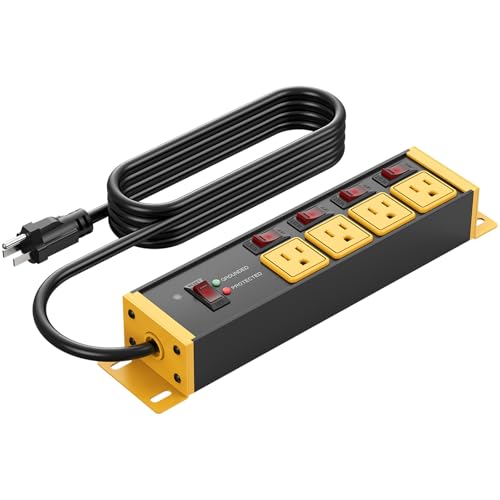
CCCEI 12 Gauge Heavy Duty Surge Protector 6FT

CCCEI Magnetic Heavy Duty Surge Protector 12 Gauge Orange 6FT

CCCEI Magnetic Heavy Duty Power Strip 8 Ports 6FT

SMALLRT Power Strip Tower 2-Pack 12 AC 4 USB

LIDER Outlet Extender 4 Receptacles USB-A 2 USB-C 5ft
The Strengths Of Each Pick
Few surge strips can honestly reach across a two-car garage, and that is exactly what this 50-foot CCCEI strip was built for. The 12-gauge conductor (a thicker wire rated for high-amperage, long-distance runs) keeps voltage drop manageable when a table saw or compressor sits at the far end of the workspace, and the eight-outlet layout means you can daisy-chain a charger, a vacuum, and a few work lights without swapping plugs.
The yellow jacket also doubles as a visual safety cue, which most owners tend to appreciate when a cord is stretched across a walkway. Compared with the smaller bench-mount CCCEI options later in this list, this one trades outlet density for sheer reach.
What Stands Out
- 12-gauge wire holds steady power across a full 50-foot run
- Eight outlets cover a typical garage or yard project
- Dedicated circuit breaker lets you kill power without unplugging gear
- Flat three-prong plug fits behind appliances pushed against the wall
- Bright yellow cord stays visible in low-light work areas
Trade Offs To Note
- Bulky for indoor living rooms or tight home offices
- No USB ports, so phone and tablet charging requires a separate brick
- Long cord can snag on foot traffic if not routed along a wall
Made For
DIYers and homeowners who need to push power across a garage, basement, or yard for tools and lighting.
Swap It Out When
Shoppers wanting a tidier desk setup should reach for the SMALLRT Power Strip Tower instead.
Tower-style strips solve the classic flat-strip problem: chunky plugs that block the neighboring outlet. The SMALLRT tower stacks 12 AC outlets vertically, so each plug gets its own column of breathing room, and the four USB ports (one of which is USB-C) sit on top for easy phone and tablet access.
The 6.5-foot cord is a thoughtful length for a desk pushed against the wall, and overload protection keeps the strip from passing excess current downstream. The trade-off versus the wider, lower-profile Anker strips reviewed here is footprint: a tower wants a bit of floor or corner space.
What Makes Sense
- Vertical outlet layout prevents oversized plugs from blocking neighbors
- Mixed AC and USB ports reduce the need for separate wall chargers
- Overload switch adds a clear reset path if the strip trips
- 6.5-foot cord reaches behind most desks and nightstands
Points To Note
- Tall shape can tip if children or pets bump it; anchoring helps
- USB power is shared across all four ports, splitting amperage
Right Fit For
Dorm students and remote workers running a laptop, monitor, phone, and several accessories from a single outlet.
Where Another Pick Suits Better
Homeowners wanting a slimmer desk profile may prefer the Anker Power Strip 900J Surge Protector 35W.
Anker leans into fast charging with this 12-in-1 strip, pairing eight AC outlets with two USB-C and two USB-A ports. The 35-watt USB-C output is enough to feed a 13-inch laptop or fast-charge a phone without a separate brick, and the slim housing slides under a monitor stand without stealing desk real estate.
The 900-joule rating (a measure of how much sudden electrical energy the strip can absorb before it fails) covers everyday laptop and monitor surges, though heavy workshop loads would want more headroom. Compared with the SMALLRT tower above, this one trades vertical capacity for a lower, more desk-friendly footprint.
Points In Its Favor
- Two USB-C ports handle modern laptops and phones directly
- Slim housing fits behind monitors and under keyboard trays
- Eight AC outlets cover a full work-from-home setup
- 35-watt output charges a laptop at full speed through one cable
Worth Noting
- Lower joule rating means it is best for electronics, not heavy machinery
- Outlets are close together, so wide plugs may still crowd neighbors
Quick Facts
Who It Suits Best
Hybrid workers running a laptop, monitor, phone, and accessories from a single low-profile hub.
Skip It When
Someone building a home theater with a higher joule need should look at the Anker Power Strip 2100J Surge Protector 20W 12 AC.
The 2100-joule rating on this Anker strip sits at the higher end of what most home users actually need, making it a smart pick for gear you really don’t want to lose to a lightning strike or grid hiccup. Twelve AC outlets pair with a 20-watt USB-C port and two USB-A ports, so a phone still charges quickly without taking up a precious AC slot.
Anker’s eight-point safety system covers fire resistance, temperature control, and overload protection in one package. Compared with the 900-joule sibling reviewed above, the extra joule capacity costs very little in footprint but buys meaningful protection for sensitive electronics.
Notable Upsides
- 2100-joule rating absorbs bigger spikes than most home strips
- 20W USB-C port still fast-charges an iPhone from empty to half in roughly 30 minutes
- Twelve AC outlets handle full entertainment centers
- Multi-layer safety system covers fire, heat, and current faults
A Few Limitations
- USB-C output tops out at 20W, slower than the 35W Anker option
- Larger housing needs more clearance behind a TV console
Best Suited To
Gamers, home theater owners, and anyone protecting a pricey monitor, console, or PC from grid noise.
Reach For A Different Pick When
Desk setups that value slim profile over joules fit better with the Anker Power Strip 900J Surge Protector 35W.
This CCCEI bench strip leans into shop use rather than desk use. The four outlets accept standard NEMA 5-15 and twist-lock 6-20 plugs, and each one carries an independent 20-amp breaker (a safety switch that trips when current exceeds 20 amps) so you can kill a single tool without darkening the rest of the bench.
The 12-gauge cord is the same serious wire used on the 50-foot CCCEI reviewed above, just in a shorter package. The wall-mount design clears floor clutter, which shop owners tend to appreciate when a vacuum or rolling stool needs the space.
Features That Help
- Independent breakers per outlet prevent total bench blackouts
- Wall-mount design lifts the strip off the floor
- 12-gauge cord handles 20-amp tools without voltage sag
- Twist-lock outlet option supports heavier industrial equipment
Room For Improvement
- Only four outlets; larger benches may need a second one
- Yellow industrial look does not blend into a tidy living room
Spec Overview
Whose Shelf It Belongs On
Workshop owners and contractors running table saws, miter saws, or compressors from a single bench outlet.
Consider Something Else When
Garage projects needing longer reach are better served by the CCCEI 12 Gauge Long Extension Cord 50FT.
The built-in magnet on the back of this CCCEI strip turns any steel surface into an instant mounting point. In a shop with metal shelving, a tool cabinet, or a workbench with a steel frame, the strip hangs at eye level where plugs are easy to reach, no screws required.
Four outlets share a master switch plus individual switches, which is unusual at this price and lets you isolate a single tool. Compared with the wall-mount CCCEI 6-foot strip above, the trade is a stronger magnet and per-outlet control in exchange for losing twist-lock compatibility.
The Practical Payoff
- Magnetic mount lifts the strip off the bench without hardware
- Master plus per-outlet switches give precise control
- 12-gauge cord supports serious 20-amp tools
- Orange color stands out against most workshop surfaces
Where It May Fall Short
- Magnet will not grip aluminum, plastic, or wood surfaces
- Only four outlets limits how many tools run at once
Who Should Grab It
Workshop owners with steel tool cabinets or shelving who want a strip that lives at arm height, not on the floor.
Not Your Match When
Anyone needing eight outlets on a single magnetic strip should pick the CCCEI Magnetic Heavy Duty Power Strip 8 Ports.
More outlets, same magnetic trick. This 8-port CCCEI strip doubles the capacity of the orange 4-port sibling reviewed above while keeping the steel-friendly mounting system. The flat plug slips behind a workbench or refrigerator, and the 14-gauge cord stays flexible enough to route around corners.
The trade-off compared with the 12-gauge 6-foot bench strip reviewed earlier is a slightly lower current rating, which is fine for most household and hobby tools but worth noting for serious welders or large compressors.
Positive Points
- Eight outlets cover a full charging station or hobby bench
- Magnetic back panel sticks to steel surfaces without drilling
- Flat plug saves inches behind furniture
- 14-gauge cord remains flexible for tight routing
Less-Strong Areas
- Lower amperage capacity than the 12-gauge CCCEI bench strip
- Magnet loses grip on painted, dirty, or thin steel
Feature Snapshot
Perfect Match For
Hobbyists and home shop owners running several smaller tools or battery chargers from a single magnetic strip.
A Better Fit Elsewhere
Anyone needing 20-amp workshop capacity will get more from the CCCEI 12 Gauge Heavy Duty Surge Protector 6FT.
Sometimes one tower is not enough. The two-pack SMALLRT option delivers two of the same 12-outlet, 4-USB towers reviewed earlier, so a household can place one at a desk and another in a living room without buying twice.
The value shows up clearly when outfitting a shared apartment or a dorm with multiple rooms, and per-strip pricing tends to land lower than buying singles. Compared with the single SMALLRT tower above, this set sacrifices a little per-unit quality control for genuine convenience.
Everyday Perks
- Two towers cover two rooms or workstations at once
- Same USB-C fast-charge behavior as the single tower
- Overload switch on each unit adds safety in every room
- Vertical layout saves floor space in tight apartments
Possible Compromises
- Towers can crowd smaller nightstands or end tables
- USB power splits across all four ports when several devices charge at once
Built With In Mind
Roommates and families who want matching tower strips in two different rooms without shopping twice.
Look Elsewhere When
Single-room setups that just need one tower can save space by going with the single SMALLRT Power Strip Tower.
The LIDER wall-mount extender keeps the footprint small without sacrificing modern charging. Four AC receptacles, one USB-A, and two USB-C ports fit behind a nightstand, kitchen counter, or guest-room desk, and the 5-foot cord routes cleanly to the nearest outlet.
The wall-mount shape is the main trade versus the tower strips reviewed above: it sits flush against the wall instead of standing on the floor. The matching color lineup from LIDER also makes it easier to keep the look cohesive if the rest of the room uses their wall plates.
A Favorable Mix
- Two USB-C ports future-proof a nightstand for modern phones
- Wall-mount shape saves floor and desk space
- 1250W rating covers most household electronics safely
- 5-foot cord reaches without excess slack
Details To Watch
- Only four AC receptacles limits how many devices run at once
- USB ports share amperage across multiple devices
Feature Snapshot
Who Should Grab It
Guest room and nightstand shoppers who want a slim wall-mounted extender with USB-C built in.
Reach For A Different Pick When
Larger entertainment setups with more devices will get more from the Anker Power Strip 2100J Surge Protector 20W 12 AC.
What Matters Most Before Choosing Outlet Extender Surge Protectors
Outlet count is the obvious first filter, but the details behind it matter more than the raw number. A 12-outlet strip with tightly spaced receptacles can actually serve fewer devices than a 4-outlet strip with wide spacing. Always picture the largest power brick you own and make sure it has room to breathe.
Joule rating tells you how much surge the strip can absorb before it stops protecting your gear. A 900-joule strip covers basic home electronics, while 2000-plus joules is a better match for home theaters, gaming PCs, and expensive monitors where replacement cost justifies the headroom.
USB-C output is worth checking if you own a modern laptop or phone. A 20W port handles fast charging for most phones, while 35W or higher will actually feed a 13-inch laptop at full speed. Towers are great for crowded outlet needs, while wall-mount extenders suit tight nightstand and kitchen spots.
Key Considerations Across These Picks
Common Shopping Slip Ups
The most frequent mistake is picking on outlet count alone and ignoring plug size. A wide gaming PC power brick or chunky wall wart can quietly take up two slots, leaving you with fewer working outlets than the box promised. Measure your largest brick before choosing.
Another trap is assuming every strip protects equally. A cheap unmarked strip may not include surge protection at all, only basic power splitting. Looking for a stated joule rating is the quickest way to tell whether a strip will actually save your gear during a spike.
Why Top Tier Costs More
Higher-end strips like the Anker 2100J model and the heavy-duty CCCEI bench options charge more for two clear reasons: stronger surge components and better safety circuitry. That extra protection matters most for expensive electronics, where the cost of replacing a laptop or TV far outweighs the price gap between a basic and a premium strip.
Frequently Asked Questions
How many joules do I really need?
For everyday laptops, monitors, and TVs, 900 to 2100 joules is a reasonable range. Sensitive or expensive electronics benefit from the higher end, while lamps and basic chargers do fine on lower ratings.
Can I plug a surge protector into another surge protector?
Daisy-chaining is generally discouraged. Most manufacturers explicitly warn against it because it can confuse the protection circuits and overload the wall outlet. Use a single strip sized for your needs instead.
Do tower strips tip over easily?
Towers can tip if bumped, especially with heavy cables pulling at the top. Placing the tower near a wall or using a small adhesive pad underneath usually keeps it stable.
Are USB-C ports on a strip as fast as a wall charger?
Sometimes. A 35W USB-C port on a strip can fast-charge a laptop the same way a dedicated wall brick would. Lower-wattage USB-C ports, around 5W to 15W, charge phones well but will not feed a laptop quickly.
How long do surge protectors last?
The internal components wear down after absorbing repeated surges, and many strips have an indicator light that signals when protection has faded. Replacing a strip every few years, or right after a known surge event, is a sensible habit.
Final Take
The right outlet extender surge protector comes down to where you live and what you plug in. Workshops, desks, nightstands, and home theaters each ask for something different, and the nine picks above cover those main lanes without forcing one strip to do every job. Match the form factor to the room, match the joule rating to the gear, and the rest tends to take care of itself.
