

Microwaves with inverter technology suit you when even reheating matters as much as speed. They help keep leftovers from drying out, handle delicate foods more evenly, and make daily cooking feel less fussy in a small apartment, a family kitchen, or a dorm setup.
This roundup focuses on countertop models with different footprints, control styles, and interior layouts. You’ll see compact choices for tight spaces, larger picks for meal prep, and a flatbed option for easier wiping after busy weeknight use.
Quick Shortlist for Busy Kitchens

Panasonic NN-SN76LS 1.6 cu.ft Cyclonic Inverter Countertop Microwave Oven

Emerson 1.2 Cu. Ft. Microwave Oven with Inverter, MWI1212SS

Panasonic Countertop Microwave Oven 1.2 Cu. Ft. NN-SN67QS

TOSHIBA Flatbed Microwave Oven with Inverter Technology 1.3 Cu.Ft

LG Countertop Microwave 1.5 cu. ft. Smart Inverter

LG Countertop Microwave 0.9 cu. ft. NeoChef
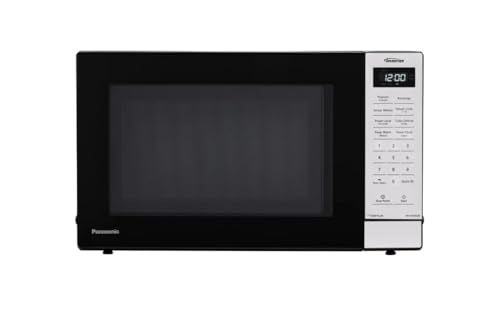
Panasonic 1.2 cu. ft. Inverter Microwave NN-SN68QB

FRIGIDAIRE Microwave Oven Inverter Technology 1.1 Cu Ft
More Details On Our Top Picks
The larger 1.6 cu. ft. cavity gives you more breathing room for casserole dishes, family leftovers, and taller containers. Panasonic’s Genius Sensor cooking should feel especially handy in a busy kitchen, since it reduces the need to babysit the reheating cycle.
The stainless steel finish fits a more traditional countertop setup, and the 19.44-inch depth means you should plan your counter space before you commit. Compared with the smaller Emerson and 1.2 cu. ft. Panasonic options below, this one leans harder toward volume and everyday flexibility than compact convenience.
Strong Points
- 1.6 cu. ft. capacity suits larger plates and deeper bowls.
- 1250 watts gives you brisk heating for regular use.
- Sensor cooking helps take some guesswork out of reheating.
- Stainless steel styling blends well with common kitchen finishes.
- The roomy interior makes it easier to heat family portions without crowding.
Things To Consider
- The larger footprint needs honest counter planning.
- Stainless surfaces tend to show fingerprints more than matte finishes.
- It’s less suited to very tight dorm or studio layouts than the compact LG.
Feature Snapshot
Who It Suits Best
You’ll get the most from this Panasonic if you cook for a household and want a roomy countertop microwave with sensor-based convenience.
A Better Fit Elsewhere
The LG Countertop Microwave 0.9 cu. ft. NeoChef suits you better when counter space is tight and your portions run smaller.
This Emerson keeps things approachable, with a 1.2 cu. ft. interior that works well for lunches, reheated dinner plates, and standard bowls. The LED display, timer, and 10 power levels make it feel friendly for everyday use, especially in a kitchen where you want controls that don’t ask much of you.
The removable glass turntable should make cleanup easier than a fixed plate, though the child-safe lock adds an extra step during use. Compared with Panasonic’s larger NN-SN76LS, this model is easier to place, but it gives up some internal room and heating headroom.
Bright Spots
- 10 power levels give you more control over gentle or full-power heating.
- Eight preset modes save time for common tasks.
- The removable glass turntable simplifies wipe-downs after spills.
- Child-safe locking is useful in households with younger kids around.
Room For Improvement
- 1.2 cu. ft. is practical, but not generous for oversized cookware.
- 1000 watts is serviceable rather than fast for bigger batches.
- The control set is helpful, yet not as sensor-driven as Panasonic’s higher-wattage picks.
Details At A Glance
Who Will Love This
This Emerson suits you best when you want a straightforward countertop microwave with usable controls and a manageable footprint.
Swap It Out When
The TOSHIBA Flatbed Microwave Oven with Inverter Technology fits you better if cleanup convenience matters more than a classic turntable setup.
This Panasonic sits in a comfortable middle ground, with 1.2 cu. ft. of space and 1250 watts that should feel responsive in a daily household rhythm. The Genius Sensor is the feature that stands out most, because it can help you avoid the common problem of reheated food coming out uneven at the edges and hot in the center.
Its stainless steel look keeps it in line with the larger NN-SN76LS, though this one trims the footprint enough to suit smaller counters a little better. The trade-off is straightforward, since you get less internal room than the 1.6 cu. ft. Panasonic while keeping much of the same cooking character.
What We Like
- 1250-watt output gives it a lively feel for day-to-day cooking.
- The sensor feature helps take the edge off guesswork.
- 1.2 cu. ft. size works for most standard kitchen jobs.
- Stainless steel construction fits neatly into common appliance rows.
Points To Note
- The smaller cavity is less roomy than the NN-SN76LS.
- Stainless steel still asks for regular wipe-downs to keep smudges in check.
- It’s a practical middle-size pick, not a space-saving mini model.
Technical Sheet
Built With In Mind
You’ll appreciate this Panasonic most in a regular family kitchen where even reheating and a moderate footprint matter equally.
Where A Sibling Pick Shines
The Emerson 1.2 Cu. Ft. Microwave Oven with Inverter suits you better if you want more preset guidance and a child-safe lock.
The flatbed layout is the big story here, because it replaces the usual turntable and opens up a smoother interior that’s easier to wipe clean. In a busy kitchen, that can feel like one less thing to work around, especially after saucy dishes or spill-prone leftovers.
TOSHIBA also adds a smart sensor and mute function, which should appeal to you if you care about quiet operation and less babysitting during reheating. Compared with the Emerson and Panasonic turntable models, this one favors maintenance ease and a more open cooking floor over familiar tray-based setup.
Upsides
- No turntable means fewer parts to remove and wash.
- The 1.3 cu. ft. cavity gives you a bit more room than many compact models.
- Smart sensor control can make routine heating more forgiving.
- Mute function suits early mornings and shared living spaces.
Softer Spots
- The flatbed format feels different from the classic rotating plate setup.
- The black stainless look may show fingerprints depending on your cleaning habits.
- Some shoppers prefer the visual simplicity of a turntable, even when cleanup is easier here.
Feature Rundown
Perfect Match For
You’re the right fit for this Toshiba if you want an easier-to-clean microwave and don’t care about having a rotating glass plate.
Another Choice May Suit
The Panasonic Countertop Microwave Oven 1.2 Cu. Ft. NN-SN67QS suits you better if you want a more traditional countertop layout with a familiar turntable.
This LG gives you a roomy 1.5 cu. ft. interior, which is helpful for wide plates, deeper bowls, and the sort of leftover containers that make a smaller microwave feel cramped. The 1200-watt output and sensor cooking add a nice balance of speed and guidance, so it suits you well in a household that microwaves a lot but still wants simple controls.
The cabinet size is substantial, so you should treat it like a proper countertop appliance rather than an afterthought. Compared with the Panasonic NN-SN67QS, it offers more internal room, while the Toshiba flatbed keeps the cleanup edge if that matters more than capacity.
Highlights
- 1.5 cu. ft. size helps with larger containers and meal prep.
- Sensor cooking trims some of the trial-and-error from daily use.
- 1200 watts keeps heating brisk for regular family routines.
- Stainless steel styling makes it easy to match common appliances.
Areas To Watch
- The larger footprint asks for serious counter space.
- Stainless surfaces tend to need frequent wiping.
- It’s less compact than the LG 0.9 cu. ft. NeoChef model.
Core Details
Whose Shelf It Belongs On
This LG belongs on your counter if you cook for a household and want a bigger cavity without jumping to an oversized appliance.
Reach For A Different Pick When
The LG Countertop Microwave 0.9 cu. ft. NeoChef fits you better when space is tight and your cooking mostly involves smaller portions.
The 0.9 cu. ft. cavity makes this LG a smart fit for small kitchens, studio apartments, and secondary cooking spots where every inch matters. Its 1000-watt output is modest compared with the larger Panasonic and 1200-watt LG models, but that lower profile can be easier to live with in tight spaces.
The NeoChef line keeps the look clean and simple, and the 18.75 x 14 x 10.69 inch footprint is the kind of detail that helps you avoid a counter-day headache later. In everyday use, this feels like the easiest model to place, though it gives up interior room to get there.
Best Bits
- Very manageable footprint for cramped counters.
- 1000 watts is enough for standard reheating and simple meals.
- Stainless steel keeps it visually consistent with many kitchens.
- The smaller body is easier to move and position during setup.
Small Caveats
- The compact cavity limits what you can fit inside.
- It isn’t the right choice for large casserole dishes.
- Its lower capacity makes it less suitable than the Panasonic NN-SN76LS for family-scale use.
Spec Overview
Made For
You should grab this LG when counter space is scarce and your microwave use stays focused on smaller portions.
Look Elsewhere When
The LG Countertop Microwave 1.5 cu. ft. Smart Inverter suits you better if you want more elbow room for larger dishes.
The renewed label makes this Panasonic worth a closer look for you if you want the brand’s inverter style without stepping into a brand-new premium model. At 1.2 cu. ft. and 1250 watts, it lines up closely with the other Panasonic countertop pick, so the main appeal is the value angle rather than a different feature set.
That means it fits best in a practical kitchen where you care more about reliable daily reheating than about a long feature list. The honest read is that renewed products depend more on listing condition and your comfort with pre-owned gear, so this suits budget-minded shoppers who are fine with that trade-off.
Positives
- 1250 watts gives it the same brisk feel you’d expect from Panasonic’s newer countertop style.
- 1.2 cu. ft. is a sensible size for standard plates and bowls.
- The renewed format can make the model easier to justify in a secondary kitchen.
Honest Caveats
- Renewed condition means you’ll want to read the listing details carefully.
- It may suit you less than a new model if you prefer a fresh-from-box setup.
- The feature set is lean compared with the Emerson’s presets and child lock.
Key Specs
The Right Fit
This Panasonic belongs with you if you want a familiar 1.2 cu. ft. inverter microwave and are comfortable choosing renewed gear.
Where Shoppers Go Wrong
The LG Countertop Microwave 0.9 cu. ft. NeoChef is a better fit when your counter space is the tightest constraint.
FRIGIDAIRE keeps this model compact at 1.1 cu. ft., which makes it appealing for apartments, smaller counters, and secondary prep spots. The programmable, multi-function layout gives you a little more control than a bare-bones microwave, though the 1000-watt output keeps it in a sensible everyday lane rather than a high-output one.
That balance makes it an easy fit for homes that want flexibility without a bulky appliance. Compared with the LG 0.9 cu. ft. NeoChef, it offers a touch more room, while the Panasonic 1.2 cu. ft. models still bring more heating muscle.
Reasons To Buy
- 1.1 cu. ft. size keeps it manageable on smaller counters.
- Programmable functions give you more control than a very basic unit.
- Multi-function design helps it handle common day-to-day microwave jobs.
Areas To Watch
- 1000 watts is fine for routine use, but not especially strong.
- The smaller cavity may feel limited for larger dishes.
- It sits between the LG compact model and the Panasonic 1.2 cu. ft. units, so the fit needs to be intentional.
Core Details
Who Should Grab It
You should choose this FRIGIDAIRE if you want a compact microwave with a little more control than the simplest countertop options.
Skip It When
The Panasonic NN-SN76LS fits you better when capacity and stronger output matter more than a smaller footprint.
How To Choose The Right Microwaves With Inverter Technology
Capacity And Footprint Come First
Start with the cavity size, then check the outside dimensions against your counter. A 0.9 cu. ft. model like the LG NeoChef fits tight spots more easily, while 1.5 or 1.6 cu. ft. models give you room for wider plates and bulkier leftovers.
That difference matters more than it sounds. In a crowded kitchen, a microwave that fits the counter cleanly gets used more often than a larger model that feels awkward.
Power Level Matters For Real Meals
Inverter technology matters because it keeps power delivery steadier than old-style cycling, which helps delicate foods heat more evenly. Higher wattage, like 1200 or 1250 watts, usually feels quicker for soups, dinner plates, and family portions.
Lower wattage can still work well for snacks, drinks, and smaller meals. The trade-off is speed, so the right match depends on how often you cook beyond simple reheating.
Controls Should Match Your Routine
Sensor cooking, presets, timers, and mute functions all change how easy a microwave feels day to day. Panasonic’s sensor approach suits you if you want less manual guesswork, while Emerson’s presets and child lock make sense in a family setting.
Flatbed designs, removable turntables, and simple LED displays also shape the ownership experience. These details sound small until you’re cleaning up after dinner or reaching for a quick breakfast.
Think About Placement And Cleanup
Countertop microwaves live or die by practicality. Stainless steel looks familiar in most kitchens, but it does ask for wiping more often than some matte finishes, and a flatbed interior can save time after spill-prone meals.
Shared homes may care more about mute modes and lock features, while solo cooks often care more about a small footprint. Match the model to the space and the routine, and the rest gets easier.
Things Worth Knowing First
Mistakes Worth Dodging
One common mistake is chasing capacity without measuring the counter first. A larger cavity is useful, but a microwave that crowds the prep space quickly becomes annoying.
Another slip is overlooking the control layout. Simple presets help in a rushed kitchen, while a more bare-bones panel can feel slow during weekday cooking.
The Upgrade Payoff
Higher-tier models usually cost more because they pair steadier inverter heating with stronger sensors, roomier interiors, or better build details. Flatbed interiors, larger cavities, and more polished control systems also add to the cost.
The upgrade makes sense when you microwave often, cook larger portions, or care about smoother cleanup. For lighter use, a simpler 1.1 or 1.2 cu. ft. model usually feels more sensible.
Frequently Asked Questions
What does inverter technology do in a microwave?
It delivers a steadier stream of power instead of switching fully on and off in repeated bursts. That helps heating feel more even, especially for softer foods and leftovers.
Is a higher wattage microwave always better?
Not always, because a smaller home kitchen may benefit more from a compact 1000-watt model than a bulky 1250-watt unit. The right wattage depends on how much space you have and how often you cook full portions.
Do flatbed microwaves clean more easily?
Usually, yes, because there’s no rotating plate to lift out and wash. That said, some people still prefer the familiar look and feel of a turntable.
What size works best for a small apartment?
A 0.9 to 1.1 cu. ft. microwave usually fits small counters more comfortably. The LG NeoChef and FRIGIDAIRE compact model both suit that kind of setup well.
Should you choose presets or sensor cooking?
Presets help when you want fast button presses for familiar foods. Sensor cooking is better when you want the microwave to take more of the timing guesswork off your plate.
Closing Thoughts
The right microwave with inverter technology comes down to your space, your portions, and how much control you want over everyday reheating. Panasonic offers the strongest case for steadier cooking, LG covers both compact and roomy setups, and TOSHIBA stands out for easier cleanup. Emerson and FRIGIDAIRE keep things approachable, while the renewed Panasonic gives you a value-minded route. Choose the one that matches your counter and your routine, and you’ll feel the difference quickly.
