

Portable generators earn their keep during outages, camping trips, RV stays, and jobsite backup, especially when you need steady wattage without hauling around a full standby system. The seven picks below cover compact travel-friendly units, RV-ready inverter models, and heavier-duty options for homes that want a little more breathing room.
You’ll also see where each one fits best, because wattage alone does not tell the whole story. Noise level, outlet layout, engine type, and how easy it is to store or move all shape the real ownership experience.
Quick Look At The Shortlist
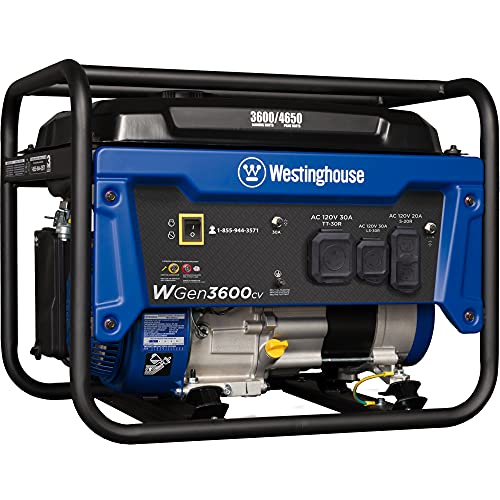
Westinghouse 4650 Peak Watt Portable Generator

Oxseryn Power Equipment 4400 Watts Inverter Generator

AIVOLT 1600W Super Quiet Inverter Generator 28lbs

Champion Power Equipment 4000-Watt RV Ready Portable Inverter Generator

ERAYAK 4500W Portable Inverter Generator for Home Use

PowerSmart 3600 Watt Portable Inverter Generator

Champion Power Equipment 4000-Watt Dual Fuel RV Ready Portable Inverter Generator
More Details On Our Top Picks
Westinghouse sits in the practical middle ground: enough output for home backup basics, yet still set up for RV use with a 30A outlet. The CO sensor adds a useful layer of awareness for enclosed or semi-enclosed situations, and that matters in real garages and campsites where ventilation is not always perfect.
Compared with the lighter AIVOLT unit, this one makes more sense for households that care more about coverage than carry weight. The trade-off is obvious, you give up some portability for a sturdier home-use profile, so it suits weekend power loss, travel trailers, and driveway setups more than grab-and-go use.
What We Like
- RV-ready 30A output supports trailer hookup use without extra adapter clutter.
- Gas power keeps runtime expectations straightforward for backyard or outage duty.
- CO sensor adds a useful safety-oriented control point for common use spaces.
- Peak watt rating gives you extra headroom for startup loads.
Points To Note
- It is bulkier than the smaller camping-focused models in this list.
- Gas units need routine fuel handling and storage discipline.
- The stronger output also means it is less casual to move around daily.
Feature Snapshot
Who It Suits Best
Homeowners and RV travelers who want one unit for backup basics and trailer power will get the most from it.
A Better Fit Elsewhere
PowerSmart 3600 Watt Portable Inverter Generator suits you better for lighter family camping, where lower bulk matters more than extra reserve output.
This Oxseryn model lands in the useful gap between basic camping units and heavier home-backup boxes. Open-frame construction usually means easier access for servicing and a less enclosed build, while ECO mode helps the engine dial back output during lighter demand.
That combination makes sense for a garage, a cabin, or a trailer site that sees mixed loads rather than constant full draw. Compared with the Westinghouse above, you are looking at a similar utility-minded shape, but with a more openly built format that feels better suited to straightforward utility than polished portability.
Strong Points
- 4400-watt class output gives you room for larger household basics.
- ECO mode helps the engine work more efficiently under lighter demand.
- RV-ready design broadens use beyond backyard backup.
- Open-frame layout can be easier to inspect and service over time.
Small Caveats
- Open-frame designs are usually less compact to store than enclosed inverter shapes.
- Noise control depends on load and placement, so positioning still matters.
- Gas operation means ongoing fuel care and seasonal upkeep.
Core Details
Who Should Grab It
Shoppers who want a utility-first generator for mixed home and RV use will find the format easy to live with.
Swap It Out When
AIVOLT 1600W Super Quiet Inverter Generator fits better for compact camping travel, especially where every pound matters.
Weight is the story here, because 28 pounds is the kind of number that changes how often a generator actually gets moved. For camping, tailgates, or a small emergency stash in the garage, that lighter frame matters more than raw output, especially when your load stays modest.
It also carries inverter-style power with pure sine wave output, which means the electricity is shaped more cleanly for sensitive electronics. That puts it in a different lane from the heavier Westinghouse and Oxseryn picks, which are better suited to larger loads and less frequent moves.
Upsides
- 28-pound build makes transport far easier than the larger units here.
- 57 dBA noise rating suits quieter campsites and closer-set outdoor spaces.
- Pure sine wave output is friendlier to devices that prefer steadier power.
- CO auto-shutoff and ECO mode add practical control for travel use.
- 8-hour ECO mode runtime supports extended low-demand sessions.
Areas To Watch
- Running power is much lower than the 4000-plus watt models in this roundup.
- It fits lighter duty best, so large appliance support stays limited.
- Frequent movers will like the size, but heavy home backup use calls for more capacity.
At A Glance
Built With In Mind
Campers and casual outdoor users who value portability over output will appreciate how easy this one is to move.
Where A Sibling Pick Shines
Champion Power Equipment 4000-Watt RV Ready Portable Inverter Generator suits you better for RV hookups and larger campsite loads.
Champion’s 4000-watt inverter lands in the sweet spot for travel trailers and home backup basics, because it pairs RV-ready output with quieter inverter behavior. That makes it easier to place near a campsite or a driveway without the harsher character common to open-frame utility units.
Compared with the AIVOLT, it gives you far more reserve power, though you give up some carry-ease. The better fit is the person who wants a familiar gasoline setup with enough breathing room for appliances, not the person chasing the smallest footprint.
Bright Spots
- 4000-watt class output supports a wider range of home and RV tasks.
- RV-ready design reduces the hassle of connecting trailer power.
- Inverter architecture is a better fit for mixed electronics use.
- Quiet-technology branding points to a more neighbor-friendly setup.
Worth Noting
- It still relies on gasoline, so storage and refueling remain part of ownership.
- It is less portable than the smaller travel-focused units in this roundup.
- Quiet behavior depends on load and placement, not just the housing design.
Details At A Glance
Perfect Match For
RV owners and home users who want a quieter gasoline inverter with more reserve power will get the most from it.
Another Choice May Suit
PowerSmart 3600 Watt Portable Inverter Generator is the easier fit for mixed home use where a slightly smaller unit feels more manageable.
ERAYAK pushes harder on output than the compact camping models, which makes it a sensible middle step for homes that need more reserve power without moving into full-size standby territory. The gas engine and ECO mode point to practical day-to-day use, especially in garages, patios, or outage setups that run for more than a quick hour.
Compared with Champion’s 4000-watt inverter, this one leans a bit harder toward higher capacity for the same portable category. The trade-off is that more output usually means more weight and a larger footprint, so it fits households that can store it without a squeeze.
Reasons To Buy
- 4500-watt output provides extra room for startup-heavy appliances.
- Super-quiet positioning makes it better suited to close-in residential use.
- ECO mode helps extend runtime under lighter demand.
- Gas power keeps refueling simple for longer backup periods.
Room For Improvement
- Higher-capacity portable units usually take more storage space.
- Gas upkeep remains part of the ownership routine.
- It is more generator than travel gear, so frequent lifting may feel less convenient.
Core Details
The Right Fit
Homeowners who want extra portable capacity for outages, patios, or rough-weather backup will get the best match here.
Reach For A Different Pick When
AIVOLT 1600W Super Quiet Inverter Generator suits you better for lighter travel use and easier carrying.
PowerSmart feels like the practical middle lane in this list, because 3600 watts, clean inverter output, and a digital display cover a lot of everyday needs without drifting into overkill. The parallel-ready setup also matters, since parallel operation means pairing two compatible units to increase output, which is useful for future expansion.
That flexibility puts it ahead of the smallest camping pick for home utility, while staying easier to handle than the bigger 4400 and 4500-watt options. For most garages and mixed-use households, it lands with a steadier balance than flashier, heavier units.
Best Bits
- 8-hour runtime gives you a practical stretch for outages or campsite use.
- 59 dBA rating keeps noise in a more manageable range.
- Clean power is useful for electronics and other sensitive gear.
- Parallel-ready design leaves room to scale later.
- Digital display makes operating status easier to read at a glance.
Honest Caveats
- Parallel readiness only matters if you plan to add a second compatible unit.
- It still sits below the strongest reserve-output models here.
- Gas-powered upkeep remains part of regular ownership.
Quick Facts
Whose Shelf It Belongs On
Mixed-use households that want one generator for backup, travel, and future expansion will find it easy to justify.
Look Elsewhere When
ERAYAK 4500W Portable Inverter Generator suits you better for higher reserve output in the same general portable category.
Dual fuel is the headline here, because it lets you choose between gasoline and propane, and that flexibility can matter during travel or outages. For someone who values backup planning, that extra fuel option feels less like a luxury and more like a practical hedge.
It shares the 4000-watt RV-ready structure of the single-fuel Champion model, but the fuel choice widens the use case. That makes it the more adaptable pick for people who store fuel differently or prefer propane for certain setups.
Positives
- Dual fuel support gives you a useful backup option.
- 4000-watt inverter output covers a wide range of portable needs.
- RV-ready design works well for trailer and campsite hookups.
- Quiet-technology build suits neighborhoods and shared outdoor spaces.
Minor Gripes
- Dual fuel convenience adds complexity compared with a single-fuel unit.
- Gas and propane both still require proper storage habits.
- It remains a portable inverter, so very large home loads still call for more output.
Technical Sheet
Made For
RV travelers and backup-focused households that want fuel flexibility without stepping into a much larger generator class will like this model most.
A Better Fit Elsewhere
Champion Power Equipment 4000-Watt RV Ready Portable Inverter Generator is the cleaner pick for someone who wants the same class of output with a simpler single-fuel setup.
How To Choose The Right Mades In America Portable Generators
Start With Load, Not Marketing
The first decision is capacity, because your actual needs rarely line up with a nameplate headline. A small camping setup can live happily with lighter output, while a refrigerator, fan, and charging stack during an outage need more reserve.
Peak wattage covers short startup surges, while running wattage is the steadier number that matters over time. That difference matters most for homes, where a compressor or pump can ask for more at startup than it does once settled.
Match The Noise And Portability To Your Space
Noise ratings matter more than many shoppers expect, especially in campgrounds, close-set neighborhoods, or driveway use. A lighter inverter unit also changes how often you’re willing to move it, and that affects daily ownership more than people assume.
Open-frame models usually trade a bit of polish for easier access and a sturdier utility feel. Enclosed inverter units often travel better and suit sensitive electronics more comfortably, though the exact fit still comes down to where you plan to store and run them.
Fuel Style Changes The Experience
Gas-powered units are familiar and easy to understand, but they add fuel rotation, storage, and seasonal care. Dual fuel models give you another path, which can matter during long outages or for users who already keep propane on hand.
The extra flexibility can be worth it for homes and RVs that run across different scenarios. For lighter travel use, a single-fuel inverter often keeps things simpler and easier to manage.
Outlets And Power Quality Should Not Be An Afterthought
RV-ready 30A outlets are not just a convenience, they help you connect a trailer more directly. Clean inverter output also matters for laptops, battery chargers, and other electronics that behave better with steadier power.
Parallel-ready support is useful for anyone who may scale up later. It gives you a path to more output without replacing the whole unit, which is a practical long-view advantage.
Things Worth Knowing First
Mistakes Worth Dodging
Many shoppers focus on wattage alone and overlook noise, weight, and outlet layout. That usually leads to a generator that sounds louder than expected or feels awkward to store.
Another common misstep is ignoring fuel handling. Gas and propane both need space, routine attention, and some planning, so the most convenient spec sheet can still become a hassle in a cramped garage.
The Upgrade Payoff
Higher-tier units tend to cost more because they usually bring cleaner power, better inverter behavior, dual fuel flexibility, or stronger output. Those features matter most when you run electronics, manage trailer hookups, or need more backup breathing room.
The upgrade makes sense for people who expect regular use or more demanding loads. For occasional camping with a phone charger and a few lights, a simpler model often leaves more money on the table than it saves in convenience.
Frequently Asked Questions
What size generator works for basic home backup?
A mid-range inverter in the 3600 to 4500-watt zone covers a lot of common household backup tasks. It gives you more room for startup loads than a tiny camping unit.
Are inverter generators a better fit for electronics?
Inverter models produce cleaner power, which is helpful for devices that prefer steadier output. That makes them a smart match for charging stations, laptops, and similar gear.
Does dual fuel really add value?
Dual fuel helps when you want another option during outages or prefer propane for storage reasons. It also adds a layer of flexibility that single-fuel models do not have.
Is a quieter generator always worth the upgrade?
Quieter units matter most in campgrounds, neighborhoods, and places where the generator sits near people. In a detached work area, noise may matter less than output or portability.
What matters more for RV use, the outlet or the wattage?
You need both, but the RV-ready outlet is what makes the hookup practical. Wattage still decides how much equipment the unit can support once connected.
Closing Thoughts
The best match depends on where you plan to use the generator and how much weight you’re willing to handle. A compact inverter suits camping and light travel, while the 4000 to 4500-watt class makes more sense for RVs and household backup. Dual fuel adds flexibility, and quieter inverter designs tend to feel easier to live with near people. Choose the unit that fits your space first, then let the output follow.
