

Long days on the road get easier when your cab can handle a laptop, phone, fan, or small appliance without feeling cramped. The right inverter turns a truck into a more workable mobile space, especially for overnight stays, job-site stops, and family trips in RV-style setups. Some of these picks lean compact and efficient, while others are built for heavier loads and more demanding gear.
That mix matters, because truckers rarely need the same setup. A weekend hauler, a daily commuter, and a driver running tools or backup power all need different output, ports, and control features. This roundup keeps those use cases separate so you can match the inverter to the way you actually travel.
Quick Look At The Shortlist

TOPBULL 3000 Watt Power Inverter with Remote Control

DrimMek 300W Car Power Inverter with USB-C

BELTTT 2000W Pure Sine Wave Inverter

vansoet 400W Car Power Inverter with USB-C
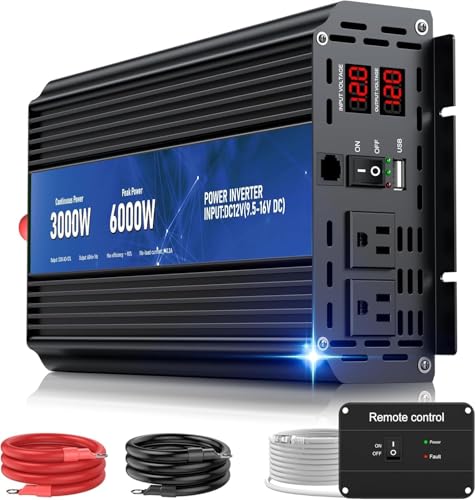
HONOURLIGHT 3000W Power Inverter with LCD Display

Pro Chaser 400W Power Inverters for Vehicles

OLTEANP 1000 Watt Power Inverter with LCD Screen

ROARBATT 3000W Power Inverter with LCD Display
More Details On Our Top Picks
TOPBULL’s 3000-watt setup suits a truck cab that needs to behave more like a rolling work station. The remote control reaches up to 200 feet, so you can check or adjust the inverter without crawling into a storage bay, and the LED display keeps the status easy to read in dim light.
The dual AC outlets and USB port cover the usual roadwork mix, while the dual smart fans are there for hotter, longer-duty use. The honest trade-off is size and power draw, so this kind of inverter makes more sense for drivers who need real capacity than for someone just topping off a phone.
Strong Points
- Remote access helps with setups mounted out of reach.
- Dual AC outlets make room for more than one device.
- LED readout makes status checks easier at a glance.
- Smart fans add support for heavier daily use.
- Included cables reduce the extra parts you need to hunt down.
Things To Consider
- Its power level is more than many light-duty cab setups need.
- Installation takes more planning than a smaller plug-in unit.
- The larger footprint can crowd tight storage spaces.
Feature Snapshot
Who It Suits Best
You fit this best when your truck doubles as a power station for tools, backup gear, or a multi-device setup.
A Better Fit Elsewhere
DrimMek 300W Car Power Inverter with USB-C suits light travelers and office commuters who only need charging, not large appliance support.
DrimMek keeps things simple, and that’s the point. A 300-watt inverter with a 65W USB-C port works well for charging a laptop, tablet, or phone on short hauls, without taking over the cab.
The LED display gives you a quick read on what’s happening, which is useful in a dashboard setup where glanceability matters. Compared with the TOPBULL unit above, this one is far easier to stash, but the trade-off is obvious, because it’s for lighter gear rather than power-hungry equipment.
What We Like
- Small output suits everyday charging jobs.
- 65W USB-C is handy for modern laptops.
- LED display makes the unit easier to monitor.
- Compact size fits neatly in a cab or console area.
Room For Improvement
- 300 watts limits what you can run at once.
- It makes more sense for electronics than for larger appliances.
- Light-duty use means less headroom for future upgrades.
Core Details
Made For
You’ll get the most from this in a commuter cab or a light-duty road kit where charging matters more than running appliances.
Another Choice May Suit
Pro Chaser 400W Power Inverters for Vehicles gives you more output and a stronger port mix for drivers carrying several devices.
Pure sine wave means the inverter sends out AC power shaped more like household electricity, which matters for devices that can be picky about input quality. That makes the BELTTT unit a smart match for truckers using sensitive electronics, RV systems, or outdoor setups where you want steadier behavior from the gear.
It also brings a dual AC layout, a 20A socket, a 5V 2.1A USB port, a hardwire port, and a remote controller, so the feature set runs deeper than the smaller compact picks. The trade-off is that it asks for a more deliberate install, and that tends to suit drivers who already know they need a more serious power backbone.
Highlights
- Pure sine wave output supports more delicate electronics.
- Dual AC outlets add flexibility for multi-device use.
- Hardwire port fits more permanent vehicle or RV installs.
- Remote controller helps with placement away from the seat.
- Surge capacity gives extra headroom for startup loads.
Points To Note
- More advanced features mean more planning during installation.
- Not the simplest route for casual charging only.
- Its size and wiring needs fit serious setups better than quick grab-and-go use.
Details At A Glance
The Right Fit
You fit this best in a truck, RV, or off-grid setup where electronics sensitivity and installation flexibility both matter.
Where A Sibling Pick Shines
HONOURLIGHT 3000W Power Inverter with LCD Display suits you better when raw output and a larger backup role matter more than cleaner wave shape.
This vansoet model sits in a useful middle lane. With 400 watts of output, dual AC outlets, a 30W PD USB-C port, and a mix of USB-A and USB-C charging, it handles the day-to-day tech load of a road trip without feeling oversized.
The port spread is what makes it stand out next to DrimMek’s smaller 300W option, because you get a little more breathing room for a laptop and phone together. The trade-off is still capacity, so this one is strongest for electronics rather than anything that pulls serious startup power.
Best Bits
- 400 watts gives a bit more flexibility than 300-watt units.
- PD USB-C helps with modern laptop charging.
- Dual AC outlets support two plug-in devices at once.
- USB-A and USB-C options cover mixed gear in one stop.
Small Caveats
- It still sits in the light-duty class.
- Less suited to large appliances or hard-working tools.
- Best kept tidy in the cab so cable clutter stays under control.
Feature Card
Best Suited To
You fit this best for road trips, camping weekends, or drivers who need to keep several devices powered without carrying a large inverter.
Skip It When
ROARBATT 3000W Power Inverter with LCD Display makes more sense for truckers planning heavier backup loads or off-grid use.
HONOURLIGHT is built for drivers who need power with a little more command over it. The 3000W output, 6000W peak rating, LCD display, and remote control make it better suited to a truck, solar setup, or backup power plan than a simple dash charging rig.
Compared with TOPBULL’s similar power class, this one keeps the focus on display clarity and remote management, which matters when the inverter is installed out of sight. The honest catch is that the higher output brings a more serious installation footprint, so it fits experienced setups better than casual plug-and-play use.
Upsides
- 3000W output gives plenty of capacity for larger loads.
- 6000W peak helps cover startup demand.
- LCD display makes status checks straightforward.
- Remote control is useful for mounted installations.
- Dual AC outlets and USB support mixed gear.
Honest Caveats
- Higher capacity usually means a more involved install.
- More power than light travelers typically need.
- Best stored carefully, since larger units take more cab space.
Technical Sheet
Whose Shelf It Belongs On
You fit this best if your truck or RV needs dependable backup power for larger gear, not just handheld devices.
Look Elsewhere When
DrimMek 300W Car Power Inverter with USB-C is the calmer choice for drivers who mainly charge a laptop and phone on the go.
Pro Chaser gives you a tidy 400W package with a stronger charging profile than many small inverters. The USB-C port is rated at 65W, which is a useful detail for road travelers carrying newer laptops, and the dual AC outlets leave room for a second plug-in device.
That makes it a sensible middle ground for truck cabs that need more than phone charging but less than a heavy-duty power station. The trade-off is that it’s still built for portable convenience, so you won’t want to ask it to do the work of the larger 2000W and 3000W picks.
Reasons To Buy
- 65W USB-C is a strong fit for modern work laptops.
- Dual AC outlets help when two plug-in devices need power.
- 400W output gives more room than mini units.
- Good middle ground for mixed cab charging needs.
Areas To Watch
- Not built for appliance-level power demands.
- Portable size is useful, but it still needs careful cable placement.
- Light to moderate use suits it better than heavy-duty installs.
Feature Rundown
Built With In Mind
You fit this best for mixed-device travel, especially where a laptop and smaller accessories both need power.
Reach For A Different Pick When
BELTTT 2000W Pure Sine Wave Inverter suits you better for cleaner output and a more serious truck or RV setup.
OLTEANP lands in the useful middle zone for truckers who need more room than a 300W unit gives, but not the size of a full 3000W setup. The LCD screen, dual AC outlets, 36W Type-C port, and 5V/3A USB port make it a practical cab companion for mixed device charging and light backup power.
The balance is its real appeal, because it feels more flexible than the compact picks while staying easier to manage than the heavy-duty models. One thing worth considering is that this kind of inverter makes the most sense when your load stays moderate, not when you plan to run demanding gear all day.
Bright Spots
- 1000W output gives a useful step up from compact models.
- Two AC outlets let you run more than one device.
- 36W Type-C port helps with newer phones and smaller laptops.
- LCD screen keeps status info easy to check.
Minor Gripes
- Still not in the heavy-duty class.
- Best suited to moderate, not demanding, power needs.
- Cab storage planning helps keep the setup tidy.
Spec Overview
Who Should Grab It
You fit this best if you want a midrange inverter for daily truck use, quick stops, or occasional home backup.
Swap It Out When
ROARBATT 3000W Power Inverter with LCD Display is the stronger match for larger RV or off-grid power plans.
ROARBATT sits in the same high-output lane as the HONOURLIGHT model, but its simpler USB setup and LCD display make it feel more straightforward. That works well for truckers who want a large inverter for RV weekends, emergency backup, or off-grid power without a lot of extra controls to think through.
The 3000W output and 6000W peak rating give it the kind of headroom that larger appliances tend to need, which is a different story from the compact 300W and 400W units earlier in the list. The trade-off is predictably practical, since a unit this size deserves proper installation space and thoughtful cable routing.
Standout Traits
- 3000W output suits bigger backup and travel setups.
- 6000W peak adds startup headroom.
- LCD display makes it easier to track operation.
- Two AC outlets support multiple plug-in items.
- Solid fit for RV and off-grid use cases.
Areas To Watch
- Higher output means a larger setup footprint.
- Not the lightest choice for quick cab-only use.
- Works best when installed with care and space in mind.
Core Details
Whose Shelf It Belongs On
You fit this best if your truck setup leans toward larger appliances, RV use, or backup power planning.
Where A Sibling Pick Shines
Pro Chaser 400W Power Inverters for Vehicles is the easier match for drivers who only want compact charging support in the cab.
How To Choose The Right Inverters For Truckers
Start With The Loads You Carry
Output wattage decides what the inverter can support, so start by matching the unit to the gear in your cab. A 300W or 400W model suits phones, tablets, and many laptops, while 1000W and above give you more room for accessories and light appliances.
That gap matters because a trucker’s routine can change fast, from quick charging between stops to overnight use at a job site. The wrong size often shows up as clutter, wasted space, or a unit that never gets used to its full potential.
Match The Port Layout To Your Devices
USB-C, USB-A, and AC outlets each solve a different problem. USB-C helps with newer laptops and phones, USB-A still works for plenty of smaller devices, and AC outlets matter when you need a plug instead of a cable.
The best layout is the one that reduces adapters in your cab. That’s why the Pro Chaser and vansoet picks feel useful for mixed-device travel, while the compact DrimMek model makes more sense for simple charging.
Think About Placement And Control
Remote controls, LCD screens, and hardwire ports become more useful as the inverter grows. A remote matters most when the unit sits behind a seat or in a storage bay, while a clear display helps you check load status without guessing.
For a truck that runs daily, these details can matter as much as raw wattage. They shape how easy the inverter is to live with, which is often the real difference between a good fit and a missed one.
Choose Wave Type With Care
Pure sine wave output costs more, but it suits sensitive electronics better because the AC power is shaped more like household electricity. Modified-style units can still serve many charging tasks, yet they may not be the right pick for gear that prefers cleaner input.
That’s why BELTTT stands apart in this list. It’s the more deliberate choice for truckers building around sensitive equipment, while the simpler models make more sense for general charging duty.
Things Worth Knowing First
Common Shopping Slip Ups
Many shoppers focus on peak wattage and ignore continuous output, which is the number that matters for everyday use. Another easy miss is forgetting the port mix, then ending up with a unit that needs adapters for everything.
Mounting also gets overlooked. A larger inverter needs space, ventilation, and cable routing that won’t feel cramped once the cab is in motion.
What The Higher Tier Buys
More expensive inverters usually bring cleaner output, stronger cooling, remote control, and more careful display hardware. Those parts don’t just look nicer, they make the inverter easier to live with in a truck that’s used hard.
The upgrade tends to pay off for drivers running larger loads, sensitive electronics, or installed backup systems. For simple phone charging, the extra hardware is usually more than you need.
Frequently Asked Questions
What size inverter works for basic truck charging?
A 300W or 400W unit covers phones, tablets, and many laptops. That range keeps the setup compact without feeling underpowered for daily travel.
Do truckers need pure sine wave power?
Clean output helps when you run sensitive electronics or gear that prefers steadier AC power. For basic charging, a simpler inverter can still make sense.
Is a remote control actually useful in a cab?
Yes, especially when the inverter sits out of reach or in a storage area. It makes monitoring and switching easier without crawling around the truck.
Why do some inverters have peak power much higher than continuous power?
Peak power covers brief startup demand from certain devices. Continuous power is the number you should use for day-to-day planning.
What port mix is most useful for long-haul use?
A combination of AC outlets plus USB-C and USB-A covers the widest spread of road gear. That setup reduces the number of adapters you need to carry.
Final Thoughts
The best inverter for your truck depends on how you actually use power in the cab. Light chargers belong in the smaller 300W and 400W range, while larger rigs and backup setups need the headroom of 1000W, 2000W, or 3000W models. Once you match wattage, ports, and installation style to your route, the choice gets a lot clearer. Pick the model that fits your day, not the one that looks strongest on paper.
