

Inverter Hvac Systems make the most sense when you want steadier comfort without a bulky setup taking over the room. That usually means a bedroom, a condo, a home office, or a whole living area where zoning, voltage, and installation style matter just as much as BTU count.
This roundup keeps the focus on what changes daily use: Wi-Fi or remote control, pre-charged lines, wall-mount format, and the coverage range each unit is built for. You’ll also see where a smaller 9,000 BTU unit is the sensible fit, and where an 18,000 or 24,000 BTU system is the better move for more open floor plans.
Quick Look at the Shortlist

ROVSUN 9000 BTU Wifi Enabled Mini Split

ROVSUN 9000 BTU Mini Split AC Heating System

Cooper & Hunter 24,000 BTU Wall Mount Mini Split AC
ROVSUN 12000 BTU Wifi Enabled Mini Split

Rellytech Mini Split AC Heating System 18000 BTU
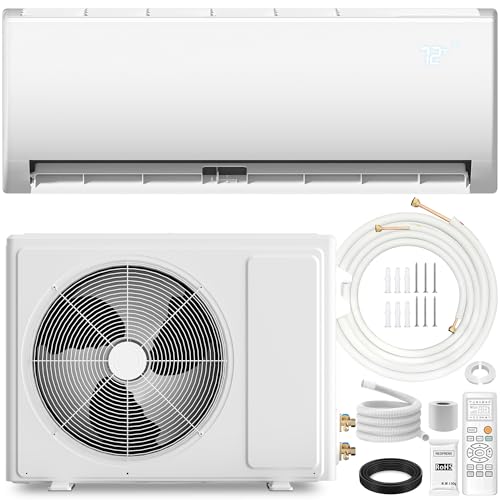
9000 BTU Mini Split Air Conditioner Heat Pump
ROVSUN 18000 BTU Mini Split AC Heating System
MRCOOL 18000 BTU 230V Ductless Inverter Mini Split
More Details On Our Top Picks
A 9,000 BTU setup like this usually makes the most sense in a smaller bedroom, office, or apartment zone where you want steady comfort without overbuilding the system. The Wi-Fi feature adds convenience for daily life, especially when your schedule changes and you want the room comfortable before you walk in.
Compared with the 12,000 BTU ROVSUN below, this one leans more tightly toward compact spaces and lighter loads. The honest read is that smaller capacity keeps the footprint sensible, but it also means you should match it carefully to the room size rather than stretching it too far.
Strong Points
- Wi-Fi control helps you adjust comfort from another room, which is handy for late arrivals or busy mornings.
- 115V power keeps it aligned with many standard home setups, so the electrical planning is less demanding than on 230V units.
- The inverter design supports smoother output than older on-off style systems, which tends to feel steadier in everyday use.
- The pre-charged condenser can simplify the install path, a welcome detail for straightforward wall-mount projects.
Small Caveats
- 9,000 BTU suits smaller zones best, so larger open areas need a bigger system.
- Wi-Fi convenience is useful, though it adds one more setup step for your network.
- Mini-split installation still asks for careful planning around line routing and mounting space.
Feature Card
Who It Suits Best
You’ll appreciate this most in a compact bedroom, home office, or apartment room where a clean wall-mount setup fits better than portable gear.
A Better Fit Elsewhere
ROVSUN 12000 BTU Wifi Enabled Mini Split is the smarter step up for a larger bedroom or a small open-plan living area that needs more breathing room.
This ROVSUN keeps the same compact 9,000 BTU footing as the Wi-Fi model, but it trims the feature stack and leans into a simpler control story with the included remote. That makes it a comfortable fit for spare rooms, guest spaces, or a small home office where you want direct control without extra app setup.
Compared with Item 1, it gives up Wi-Fi convenience, so the trade-off is less smart-home flexibility in exchange for a more straightforward ownership experience. You may prefer that balance in a room that gets used occasionally rather than all day.
What We Like
- The included remote keeps daily operation simple and familiar.
- 115V power helps it fit many residential electrical setups.
- Inverter operation supports more even temperature control than basic stop-start systems.
- The pre-charged condenser can help keep installation planning cleaner.
Honest Caveats
- Without Wi-Fi, you lose app-based control that some homes now expect.
- Small-room capacity is the right match here, not a whole-open-floor solution.
- Any ductless install still benefits from a careful wall location and line-set plan.
Core Details
Who Will Love This
You’ll get the most from this in a small room where a clean, no-frills ductless system feels better than a more feature-heavy option.
Skip It When
ROVSUN 9000 BTU Wifi Enabled Mini Split is the better fit for you if app control matters and the room still stays in the small-zone category.
The jump to 24,000 BTU changes the whole conversation, because this Cooper & Hunter is aimed at larger spaces that need more air-moving capacity. In most homes, that means a big living room, a combined kitchen-dining area, or a finished basement where smaller 9,000 BTU units would feel underpowered.
Compared with the ROVSUN 18,000 BTU models, this one pushes harder on coverage and gives you smart control plus a 16-foot installation kit. The catch is the 230V requirement, so it fits best where the electrical plan already supports that setup.
Highlights
- 24,000 BTU capacity suits larger zones better than the smaller picks in this roundup.
- Smart control adds convenience for everyday adjustments and scheduling-style use.
- The 16-foot installation kit offers a more generous starting point for wall placement.
- Inverter operation helps it avoid the harsher feel of old-style cycling.
- Ductless wall mounting keeps the room layout cleaner than window or portable units.
Areas To Watch
- 230V power means you need the right electrical setup in place.
- Its size makes the planning stage more important than with the 9,000 BTU units.
- Larger capacity usually rewards careful sizing, so room volume matters a lot.
Details At A Glance
Perfect Match For
You’ll want this for open rooms, larger common areas, or a basement zone where higher output matters more than compact size.
Look Elsewhere When
ROVSUN 18000 BTU Mini Split AC Heating System is the easier fit for a medium-size room that doesn’t need the extra output of 24,000 BTU.
This 12,000 BTU ROVSUN sits in the middle ground where a lot of homes actually live, because it has more muscle than the 9,000 BTU models without jumping into the bigger electrical demands of 230V units. For a bedroom suite, a compact studio, or a finished den, that balance can feel just right.
Compared with Item 1, you get more coverage headroom, and the Wi-Fi feature still gives you app-based convenience. The trade-off is simple, though, because like most mini splits it rewards careful room matching, and it is still a wall-mounted system that asks for proper installation planning.
Upsides
- 12,000 BTU gives you a useful middle step between compact and large-capacity systems.
- Wi-Fi control is handy for routine adjustments in rooms that get used throughout the day.
- 115V compatibility keeps it friendly to many common home electrical setups.
- The inverter setup helps deliver steadier comfort than basic on-off systems.
Points To Note
- It still needs thoughtful sizing, since 12,000 BTU is not for every open-plan space.
- App control is convenient, but only useful once the network setup is complete.
- Wall-mount installation calls for enough clear space and a clean route for the line set.
Quick Facts
Right Fit For
This makes sense for you in a medium bedroom, a home office with afternoon heat, or a small suite that needs a bit more reach.
A Better Fit Elsewhere
ROVSUN 9000 BTU Wifi Enabled Mini Split is the better call for a smaller room where you want the same connected convenience with less capacity.
Rellytech’s 18,000 BTU setup lands in the sweet spot for medium-size spaces, especially where you want more coverage than a 9,000 BTU unit without stepping all the way up to 24,000 BTU. The listed coverage up to 1,250 square feet makes it more appealing for open living areas, though actual room layout still matters a lot.
Compared with the ROVSUN 18,000 BTU unit later in the list, this one runs a 19 SEER2 rating instead of 20 SEER2, so the balance shifts slightly toward room reach rather than the most efficient spec on paper. That kind of trade-off is common in this category, and it’s a fair one for homes that need broader coverage.
Reasons To Buy
- 18,000 BTU is a practical step for bigger bedrooms, den areas, or open-plan portions of a home.
- The 208-230V requirement lines it up with higher-capacity installs.
- Up to 1,250 square feet of stated coverage gives you a helpful planning reference.
- Pre-charged system design can reduce some installation friction.
Room For Improvement
- It needs the right higher-voltage setup, so this is not a casual plug-in choice.
- 19 SEER2 is solid, though the 20 SEER2 units in this list edge ahead on paper.
- Larger installs still benefit from pro-level planning around wall position and line routing.
Technical Sheet
The Right Fit
You’ll find this most convincing for a larger bedroom suite, a den, or a multi-use room that needs broader coverage than a compact mini split.
Where A Sibling Pick Shines
ROVSUN 18000 BTU Mini Split AC Heating System is the better match for you if you want the same capacity with 20 SEER2 and a more feature-heavy package.
Kol Air keeps this one focused on the basics that matter in a small room: 9,000 BTU, 110V to 120V compatibility, and a wall-mounted ductless format that stays out of the way. The listed 500 square feet of coverage puts it in the same practical territory as the other 9,000 BTU picks, but the 19 SEER2 rating gives it a slightly different efficiency profile.
Compared with the two ROVSUN 9,000 BTU options, this model leans more toward plain utility than app features. For most bedrooms and studio corners, that can be the cleaner choice, especially when quiet operation matters more than smart-home extras.
Best Bits
- 110V to 120V compatibility makes it easy to place in many home settings.
- 500 square feet of coverage is a clear reference point for smaller spaces.
- Ultra quiet operation suits bedrooms, study rooms, and work-from-home corners.
- Heat pump design gives you both seasonal functions in one wall-mounted unit.
Worth Noting
- 9,000 BTU still calls for a carefully matched room size.
- It does not lean on smart controls, so app-based convenience is off the table.
- Mini split installs usually reward tidy placement and a thoughtful line route.
At A Glance
Who Should Grab It
You’ll like this for a compact bedroom, a small studio, or a quiet office zone where low-profile comfort matters.
Swap It Out When
ROVSUN 9000 BTU Wifi Enabled Mini Split is the better fit for you if connected control matters more than the simpler setup here.
This 18,000 BTU ROVSUN sits in a very practical middle lane, because it has enough capacity for larger rooms while staying below the 24,000 BTU jump in electrical and spatial demands. The 20 SEER2 rating, 230V requirement, and remote control package make it feel like a well-rounded pick for homes that want a stronger split system without overshooting the room.
Compared with the Rellytech 18,000 BTU model, this one edges ahead on SEER2 and adds Wi-Fi control, which is handy in a busy household. That extra convenience matters most when the unit lives in a frequently used family room or a shared office space.
Bright Spots
- 18,000 BTU is a strong match for larger rooms and open areas that still don’t need 24,000 BTU.
- Wi-Fi control gives you more flexibility for daily use and temperature changes.
- 20 SEER2 is a strong efficiency figure within this capacity class.
- The pre-charged condenser can make the setup path feel less intimidating.
- Remote control keeps basic operation simple when you do not want to open an app.
Softer Spots
- 230V power means the electrical setup matters before installation begins.
- It is still best for rooms that fit the 18,000 BTU range, not very large open floors.
- Wall-mounted ductless systems need a clean installation path and some planning.
Feature Rundown
Built With In Mind
You’ll get the most from this in a large bedroom, family room, or a common area that sees regular daily use.
Reach For A Different Pick When
MRCOOL 18000 BTU 230V Ductless Inverter Mini Split is a smarter fit for you if easier install planning matters more than app-based control.
MRCOOL’s Easy Pro Series feels aimed at households that want a more installation-friendly path without giving up the core strengths of a ductless inverter system. With 18,000 BTU, 230V power, and heating plus cooling in one wall-mounted unit, it makes sense for home offices, bonus rooms, and some commercial-style spaces where a cleaner layout matters.
Compared with the ROVSUN 18,000 BTU model above, the attraction here is the Easy Pro positioning and the straightforward wall-mounted format. The trade-off is that you are still working with a higher-voltage system, so the install plan needs to be lined up carefully before anything goes on the wall.
What We Like
- The Easy Pro setup focus is appealing for spaces where installation simplicity matters.
- 18,000 BTU gives you a serious step up from the smaller 9,000 BTU units.
- Heating and cooling in one system keeps the room setup cleaner.
- The wall-mounted design works well in offices, bedrooms, and some workspaces.
Minor Gripes
- 230V power means you need the right circuit and planning in place.
- It still asks for a proper mini-split install, so this is not a casual weekend add-on.
- For very large rooms, the 24,000 BTU Cooper & Hunter has more headroom.
Core Details
Whose Shelf It Belongs On
You’ll value this most in a home office, workshop, or bonus room where a tidy wall-mounted system fits the space well.
Another Choice May Suit
Cooper & Hunter 24,000 BTU Wall Mount Mini Split AC is the stronger fit for you when the room is larger and the extra output matters more than the install focus.
How To Choose The Right Inverter Hvac Systems
Start With Room Size, Then Check The Electrical Plan
BTU is the first number to respect, because it shapes whether the unit feels comfortably matched or constantly strained. A 9,000 BTU model works well for smaller rooms, 12,000 BTU sits in the middle, and 18,000 to 24,000 BTU suits larger common areas or open layouts.
Electrical compatibility matters just as much. The 115V units are easier to place in many homes, while 230V systems usually belong in spaces with the right circuit already in place.
Decide How Much Convenience You Actually Want
Wi-Fi control helps you adjust temperature from your phone, which is handy in a bedroom, office, or rental where you do not always stand next to the wall unit. Remote control alone can be enough for a spare room or a simpler setup.
That choice sounds small, but it shapes how pleasant the system feels every day. A more connected unit suits busy routines, while a basic control path keeps ownership straightforward.
Look Closely At Efficiency And Coverage Claims
SEER2 is the efficiency rating used here, and it gives you a rough sense of how the system is positioned on energy use. Higher numbers do not replace proper sizing, though, because a well-matched unit usually matters more than a slightly fancier spec.
Coverage claims also deserve a careful read. A system listed for 1,250 square feet or 500 square feet is giving you a planning marker, not a promise that every room shape behaves the same way.
Think About Installation Before You Fall In Love With Features
Pre-charged condensers and installation kits can simplify the path, but they do not erase the need for mounting space, line routing, and the right electrical work. That is especially true with larger 230V mini splits.
The cleanest choice is usually the one that fits both the room and the install path, not just the one with the longest feature list. That’s the difference between a system that feels easy to live with and one that turns into a project.
What To Weigh Before You Spend More
Mistakes Worth Dodging
Many shoppers focus on BTU alone and skip the rest of the picture. Room layout, ceiling height, and voltage matter just as much, so a high-capacity unit can still feel wrong in the wrong space.
Another common miss is overlooking control style. Wi-Fi is handy, but it does not help much if the room only needs an occasional temperature change and a simple remote would do the job.
The Upgrade Payoff
Higher-tier inverter systems usually cost more because they offer more capacity, smarter control, better efficiency ratings, or easier install details. A 24,000 BTU wall mount unit with smart control is doing more work than a smaller 9,000 BTU model, so the jump is not only about size.
The upgrade makes sense when the room is used often, the layout is open, or the installation needs the extra flexibility. In a guest room used twice a month, that extra spend can feel unnecessary, while in a busy family room it may feel well placed.
Frequently Asked Questions
What size Inverter Hvac Systems work for a bedroom?
Most bedrooms fit somewhere in the 9,000 to 12,000 BTU range, depending on square footage and layout. A compact room usually benefits from the smaller end of that span.
Does 115V mean easier installation?
It usually fits more common home setups than a 230V unit, so the electrical planning can be simpler. You still need the rest of the mini-split install done correctly.
Is Wi-Fi control worth having?
It helps most in busy homes, home offices, and rooms you adjust often. A remote alone is enough for many spare rooms.
Why do some systems use 230V?
Higher-capacity units often need the additional electrical support that 230V provides. That matters most once you move into 18,000 BTU and 24,000 BTU territory.
How do you choose between 18,000 BTU and 24,000 BTU?
Use 18,000 BTU for medium-large rooms and 24,000 BTU for broader open areas or heavier demand. Room layout usually decides the winner more than the number alone.
Final Thoughts
The best Inverter Hvac Systems here are the ones that match your room, your voltage, and how you actually live in the space. A compact 9,000 BTU unit makes sense for a bedroom or office, while the 18,000 and 24,000 BTU models step in when the room opens up and needs more reach. Wi-Fi, remote control, and pre-charged installs each add convenience in different ways, but none of them replace careful sizing. Choose the system that fits the space cleanly, and daily comfort usually follows.
