

RV power gets tricky fast. You need clean DC charging, dependable AC conversion, and enough headroom for the way you travel, camp, or park for the season. The right inverter charger keeps lights steady, batteries happier, and small appliances usable without making your setup feel clumsy.
This roundup focuses on different needs, from simple converter chargers to higher-output inverter units with remote controls and hardwire options. You’ll see where each pick fits best, what it gives up, and who gets the most value from it.
Quick Look At The Shortlist

PowerMax PM3-100LK 110V to 12V DV Power Supply Converter Charger


3000W Pure Sine Wave Inverter 12V DC to 120V AC
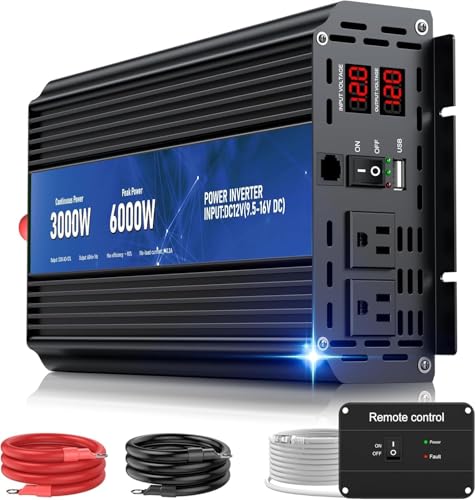
3000W Power Inverter 12V DC to 110V/120V AC Converter

RecPro 55 Amp RV Power Converter & Battery Charger

WF-9855 55 Amp Deck Mount Charger/Converter

RecPro 65 Amp RV Power Converter & Battery Charger

Xantrex 81-2010-12 Freedom 458 Inverter/Charger
More Details On Our Top Picks
A 100 amp converter charger belongs in rigs with serious 12V demand, and that’s the lane this PowerMax unit occupies. The modified sine wave output matters because it suits many basic power needs, though it can be less graceful with sensitive electronics than pure sine designs like the BELTTT pick later in the list.
You’ll appreciate it most in a coach that runs lights, fans, and battery charging from shore power without a lot of fuss. The trade-off is simple, it’s aimed at workhorse behavior rather than polished output shaping, so it fits practical setups better than delicate ones.
Strong Points
- 100 amp output gives you room for heavier 12V loads in larger RV electrical systems.
- It works as a converter charger, so your shore power can support both cabin use and battery charging.
- Modified sine wave design keeps the unit in a straightforward, utility-first category.
- That kind of setup suits travelers who care more about steady function than extra bells and whistles.
Things To Consider
- Modified sine wave output can be less compatible with electronics that prefer cleaner power.
- The stronger output also means your wiring and overall system should be sized with care.
- It feels better suited to permanent RV installations than casual plug-and-move use.
Feature Snapshot
Who It Suits Best
You fit this pick best when your RV setup leans large, steady, and fairly simple, especially in a coach that spends plenty of time on shore power.
Where Another Pick Suits Better
PowerMax PM4 45A RV Converter suits smaller rigs and shoppers who want a more controlled charging profile with less output than this heavier-duty unit.
This one feels more polished than the PM3-100LK because it adds a built-in 3-stage smart charger, which means charging happens in phases instead of one blunt push. That matters for lead-acid or lithium battery setups, especially in rigs that sit plugged in for long stretches or rotate between travel days and campground stays.
The adjustable 13.5VDC output gives you a bit of control without making the unit feel complicated. It’s a sensible middle ground for RV owners who want cleaner everyday behavior than a basic converter, but don’t need the higher-output ceiling of the RecPro 65 amp model.
What We Like
- 45 amp output is a comfortable fit for many mid-size RV electrical systems.
- The 3-stage smart charger helps charging feel more measured and battery-aware.
- Lithium compatibility broadens its use beyond older lead-acid setups.
- Adjustable output around 13.5VDC gives you useful tuning for real-world RV loads.
Room For Improvement
- It has less raw capacity than the 55 amp and 65 amp RecPro picks.
- The more advanced charging profile adds usefulness, but also adds a bit more setup thought.
- It suits moderate systems better than rigs with large simultaneous 12V demand.
Core Details
Made For
You fit this pick well when your RV needs a dependable converter charger for routine travel, seasonal camping, or a compact-to-mid-size electrical setup.
A Better Fit Elsewhere
RecPro 55 Amp RV Power Converter & Battery Charger makes more sense for you when your rig needs a little more output and you still want a four-stage charging profile.
Pure sine wave output is the headline here, and for RV life that usually means smoother compatibility with a wider range of electronics and appliances. Compared with the modified sine PowerMax PM3-100LK, this BELTTT unit is the more refined choice for rigs that carry gear you’d rather not make compromises with.
The hardware side is busy in a good way, with dual AC outlets, a 20A socket, a 5V 2.1A USB port, a hardwire port, and a remote controller with a 23-foot cable. That mix works well in a camper, truck, or off-grid setup where access points matter more than having a plain box tucked out of sight.
Highlights
- Pure sine wave output is a strong fit for sensitive electronics and many appliance types.
- Three power delivery paths, outlets, socket, and hardwire, give you flexible installation choices.
- The remote with a 23-foot cable helps from a seat, cabinet, or control panel.
- USB power adds convenience for phones, tablets, and small accessories.
- 3000W capacity suits larger campsite or mobile power needs.
Softer Spots
- The higher-output design asks for a system that’s sized properly around it.
- Remote and hardwire flexibility are useful, but they also mean installation takes more planning.
- It’s better for power conversion than simple battery charging chores.
Technical Sheet
The Right Fit
You fit this pick best when your RV, truck, or off-grid rig depends on cleaner AC power and you want more connection options than a basic inverter gives you.
Swap It Out When
HONOURLIGHT’s 3000W Power Inverter suits you better when you want a screen-driven setup with a 6000W peak figure and a more gadget-heavy control style.
HONOURLIGHT takes a different path from the BELTTT unit by leaning into user-facing controls, including an LCD display and remote control. That makes it easier to monitor in a parked RV, truck bed, or campsite setup where you want a quick read on what the inverter is doing without opening cabinets.
The dual AC outlets and 3.4A USB port give you a practical mix for road gear and household-style accessories. The honest read is that this one suits people who like clear status feedback and tidy control more than minimalist hardware.
Bright Spots
- The LCD display gives you a direct view of the inverter’s status.
- Remote control support is handy in rigs where the unit sits out of easy reach.
- Dual AC outlets help you power more than one device at a time.
- The 3.4A USB port is useful for everyday charging without extra adapters.
- Its 6000W peak figure adds headroom for brief power surges from connected gear.
Minor Gripes
- The feature set is busy, so setup may take a little more patience than a simpler inverter.
- Peak power is not the same as continuous output, so the numbers need to be read carefully.
- It’s a better fit for AC conversion than for battery charging duties.
Details At A Glance
Who Will Love This
You fit this pick best when you want visible status, remote access, and a straightforward inverter for RV, truck, or backup power use.
Another Choice May Suit
BELTTT’s 3000W Pure Sine Wave Inverter is the better fit for you when cleaner waveform matters more than display-driven convenience.
RecPro’s 55 amp converter charger sits in a very useful middle zone, stronger than the 45 amp PowerMax PM4 but not as heavy as the 65 amp RecPro below it. The 4-stage charging profile is the real draw, because it gives battery charging a more graduated rhythm that suits RVs parked for long weekends or longer stays.
The unit’s job is simple, taking 120VAC shore power and turning it into usable 12VDC power, which is exactly what a lot of RV electrical systems need. That makes it a practical replacement-style pick for owners who want a familiar fit and steady output without chasing flashy extras.
Positives
- 55 amp output gives you more breathing room than the 45 amp PowerMax option.
- Four-stage charging suits routine battery maintenance in a steadier, more gradual way.
- Shore power conversion into 12VDC matches a common RV electrical need.
- It works well for long stays where battery charging and cabin power happen together.
Points To Note
- The feature set is functional rather than fancy, so it won’t feel overbuilt.
- Installation is most comfortable in a setup already designed around converter replacement.
- Since no extra control features are listed, you may prefer a more visible inverter if monitoring matters a lot.
Feature Card
Built With In Mind
You fit this pick best when your RV already uses a standard converter bay and you want a no-nonsense replacement with stronger output than smaller units.
A Better Fit Elsewhere
PowerMax PM4 45A RV Converter fits better for you when lithium support and adjustable output matter more than the extra amperage here.
Deck mount replacement units matter when your RV setup already has a clear installation path, and the WF-9855 is aimed squarely at that kind of job. The lithium-ion switch is the part that stands out, because it suggests a more flexible match for newer battery setups than a basic legacy converter.
Compared with RecPro’s 55 amp unit, this one feels more specific to replacement work than general shopping. That specificity is useful, but it also means you’ll want to be sure your trailer or camper calls for the 9800 series style before you commit.
Best Bits
- 55 amp output gives it solid replacement-level charging strength.
- The lithium-ion switch broadens its fit for newer battery chemistry.
- Deck mount format suits systems already built around that installation style.
- It feels especially sensible for trailer and camper repair jobs.
Areas To Watch
- Replacement fit matters here, so compatibility checks take priority.
- It makes less sense for shoppers who want a general-purpose inverter charger.
- The deck-mount format can be less forgiving than a simpler plug-in style.
Core Details
Whose Shelf It Belongs On
You fit this pick best when you need a deck-mount replacement for a trailer or camper that already points to the 9800 series style.
Look Elsewhere When
RecPro 55 Amp RV Power Converter & Battery Charger is the better choice for you when you want a broader, less specialized replacement path.
The 65 amp rating puts this RecPro above the 55 amp version in the same family, so it makes sense for RVs that ask more from their 12V system. The four-stage charging setup keeps the experience aligned with long-term battery care rather than blunt, one-speed charging.
That extra output matters most in rigs with more accessories, more occupants, or more time spent on shore power. The trade-off is that you’re moving into a stronger unit than many compact setups truly need, so it’s a better fit for heavier loads than casual camping.
Reasons To Buy
- 65 amp output gives you more charging headroom than the 55 amp RecPro model.
- Four-stage charging supports a more thoughtful battery charge cycle.
- It suits RVs with larger 12V demand and busier electrical use.
- Shore-power conversion keeps the system useful during campground stays.
Small Caveats
- The stronger output is useful, but only when your system really needs it.
- It may be more than a light-duty RV setup can use well.
- As with most converter replacements, installation fit should be confirmed before moving ahead.
Technical Sheet
Who Should Grab It
You fit this pick best when your RV electrical system has grown beyond light-duty use and you want extra current on tap.
Where A Sibling Pick Shines
RecPro 55 Amp RV Power Converter & Battery Charger makes more sense for you when your system is smaller and the extra 10 amps here would be more than you need.
The Freedom 458 is the most integrated-feeling option in this group, because it combines inverter and charger functions in a single unit. That kind of layout makes sense in boat or RV electrical systems where you want fewer separate boxes and a more consolidated power path.
Compared with the separate converter-focused picks from PowerMax and RecPro, this Xantrex unit feels more like a system centerpiece than a replacement part. You may find it especially useful in a more established setup where coordinated power management matters more than adding another stand-alone component.
What We Like
- The combined inverter-charger design reduces the number of separate power components.
- It fits boating and RV electrical systems that need an integrated approach.
- The model has a long-running style that appeals to owners of established setups.
- It can simplify layout choices in a tighter electrical compartment.
Worth Noting
- It is more specialized than the simpler converter chargers in this roundup.
- Installation and system matching matter more because it sits at the center of the setup.
- Shoppers who only need a basic 12V converter may be paying for more capability than they use.
Feature Rundown
Perfect Match For
You fit this pick best when your RV or boat setup needs an integrated power center instead of separate charger and inverter boxes.
Another Choice May Suit
BELTTT’s 3000W Pure Sine Wave Inverter is the better route for you when pure AC output is the main goal and charging is handled elsewhere.
How To Choose The Right Inverter Chargers For Rv
Start With Your Electrical Load
The first number to check is amperage or wattage, because that tells you how much your setup can realistically support. A 45 amp converter like the PowerMax PM4 works well for moderate needs, while a 65 amp unit like the RecPro makes more sense for busier rigs with more 12V demand.
Pure sine wave inverters matter for a different reason, they shape AC power in a cleaner way that many electronics prefer. Modified sine wave units can still work well for basic loads, but they’re usually the more utilitarian choice.
Match The Unit To Your Battery Type
Battery chemistry matters more than many shoppers expect. The PowerMax PM4 includes lithium compatibility, while the WF-9855 adds a lithium-ion switch, so both are better fits for newer battery setups than older fixed-output converters.
Lead-acid systems can still do very well with 4-stage or 3-stage charging, because those charging phases help the unit behave in a more measured way. That’s useful in RVs that sit on shore power for days, not just overnight.
Think About Installation Style
Deck mount, replacement converter, hardwire port, and remote control each point to a different kind of installation. The BELTTT and HONOURLIGHT inverters are better for owners who want a built-in power station feel, while the RecPro and PowerMax converter chargers fit replacement-minded setups.
You’ll want to think about access too. A remote with a long cable, like the BELTTT’s 23-foot lead, helps when the unit lives in a cabinet, bay, or rear compartment.
Choose For Daily Use, Not Just Peak Numbers
Peak wattage looks impressive, but continuous output and real setup fit matter more in daily RV life. The HONOURLIGHT’s 6000W peak figure is useful context, yet it’s the continuous use case, not the burst number, that should guide your choice.
That same logic applies to converter chargers. A well-matched 55 amp or 65 amp unit often gives you a smoother ownership experience than a bigger model that’s out of step with your wiring or battery bank.
Things Worth Knowing First
Common Shopping Slip Ups
Many RV owners focus on output and skip compatibility. That’s how you end up with an inverter that feels strong on paper but awkward in a trailer that needs a specific mounting style or battery mode.
Another frequent miss is treating modified sine wave and pure sine wave as the same thing. They’re not, and the cleaner option usually matters more for sensitive electronics or appliances with fussier power needs.
Where The Extra Money Goes
Higher-tier units usually charge more because they add smarter charging stages, cleaner waveform output, or more flexible controls. That’s visible in the BELTTT remote setup and in the RecPro four-stage charging approach, both of which add convenience and system friendliness.
The upgrade makes sense when your RV lives a busy life, such as long trips, frequent shore-power use, or multiple devices running at once. For lighter seasonal camping, a simpler converter can still be the more practical choice.
Frequently Asked Questions
What does an inverter charger do in an RV?
It converts power between DC and AC roles depending on the design, and it can also manage battery charging. In an RV, that keeps your cabin power and battery setup working as one system.
Is pure sine wave worth the extra focus?
It usually matters most for electronics and appliances that prefer cleaner AC output. Basic gear may run fine on modified sine wave, but the cleaner option gives you more flexibility.
How do you know what amp rating you need?
Look at the size of your 12V system and the number of items you run at the same time. Bigger rigs with more accessories usually benefit from higher amp output.
Can lithium batteries work with every converter charger?
No, lithium compatibility needs to be listed clearly by the unit. The PowerMax PM4 and WF-9855 are the clearest matches in this roundup for that use case.
Should you choose a converter charger or a pure inverter?
Choose a converter charger when your main job is shore power to 12V battery support. Choose a pure inverter when your main need is AC power from a 12V source.
Closing Thoughts
The right choice depends on how your RV actually lives, not just on a spec sheet. A smaller converter charger can be a smarter fit for routine camping, while a higher-output inverter or integrated inverter/charger makes more sense for bigger systems with more moving parts. You’ll get the best result by matching output, waveform, and installation style to the way you travel. That keeps the setup steady, and steady is what matters most on the road.
