

Hot bedrooms, stuffy apartments, and home offices all feel harder to live with once the temperature climbs. These Inverter Aircons focus on steadier cooling, quieter operation, and smarter controls, which matters when you want comfort without constant fiddling. You’ll also see a mix of window and portable styles, so the right fit depends on your room layout and how much installation work you want to take on.
Some picks are better for compact rooms, while others make more sense for larger living spaces or mixed-season use with heat and dehumidifying functions. The list below keeps those differences clear so you can match the unit to your space instead of guessing from BTU numbers alone.
The Shortlist At A Glance

Whynter Portable Air Conditioner Inverter ARC-1230WN

Midea 8,000 BTU Smart Inverter Window Unit with Heat

Midea 10,000 BTU U Shaped Smart Inverter Window Air Conditioner

Hykolity 8,000 BTU Smart Inverter Window Air Conditioner
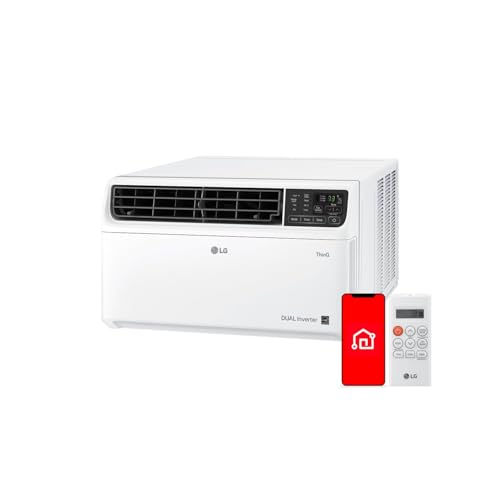
LG 14,000 BTU DUAL Inverter Smart Window Air Conditioner

Midea 12,000 BTU Window Air Conditioner with Heat
Midea 8,000 BTU Smart Inverter 115V Window Air Conditioner
More Details On Our Top Picks
Portable cooling makes the most sense in rooms where a window unit feels awkward, and that’s where this Whynter setup stands out. The built-in dehumidifier helps in muggy spaces, while the auto-drain design reduces the chore of constant emptying, which is handy in a basement office or spare room.
Its Wi-Fi control adds convenience for a busy schedule, though portable units still ask for floor space and hose routing. Compared with the simpler compact models later in this list, this one suits you better when flexibility matters more than a fixed window install.
What We Like
- Portable format gives you more placement freedom than a fixed window setup.
- Cooling, dehumidifying, and fan modes cover changing room conditions through the season.
- Auto-drain support helps cut down on routine water management.
- Wi-Fi control suits you when you want to adjust comfort from another room.
- The all-in-one layout works well for a guest room or basement space that needs more than basic cooling.
Things To Consider
- Portable units take up floor space, so they feel less discreet than a window mount.
- Hose placement matters, especially in narrow rooms or around furniture.
- Cleaning and setup take a bit more attention than a simpler plug-in-and-close window model.
Feature Rundown
Whose Shelf It Belongs On
You’ll get the most from this one in a room that needs flexible placement, steady cooling, and moisture control without a permanent install.
Where A Sibling Pick Shines
Midea’s B0FDQLNGHZ suits you better for a window you still want to open, especially in a shared room where airflow flexibility matters.
This Midea unit is aimed at small rooms that need cooling most of the year but also benefit from a bit of heat on colder mornings. The 350 sq. ft. coverage claim puts it in that sweet spot for bedrooms, smaller living rooms, and home offices, though room layout always affects real comfort.
Electronic controls and remote operation make daily use straightforward, and the quieter operation should suit you better than a louder basic unit in a sleeping space. Compared with the portable Whynter, this one gives you a cleaner window fit, though you give up the easy room-to-room mobility.
Positives
- Cooling plus heat gives you one unit for more of the year.
- The 350 sq. ft. coverage range suits compact apartments and bedrooms.
- Quiet operation makes it easier to live with near a bed or desk.
- Remote and electronic controls keep day-to-day adjustments simple.
Worth Noting
- Window installation is less flexible than the portable Whynter in pick 1.
- Heating helps with mild chill, but it is still a room air conditioner first.
- Like most window units, it needs regular filter attention to keep airflow moving.
Technical Sheet
Right Fit For
You’ll appreciate this most in a smaller room where cooling and occasional heat both matter.
Skip It When
LG’s B09WB5TZ7Q suits a larger shared room better, especially when you need more coverage than a compact 8,000 BTU model can reasonably target.
The U-shaped design changes the whole feel of a window unit, because it leaves room for the window to open around the frame. That matters in a bedroom or apartment where fresh air and cooling both have a place, and it’s easier to appreciate than a bulkier fixed panel style.
Its 450 sq. ft. coverage makes it the step-up option between the smaller 8,000 BTU models and the larger LG unit later in the list. App compatibility with Alexa and Google Assistant adds convenience, though you may not care about that as much as the window flexibility and quieter operation.
Bright Spots
- U-shaped frame supports open-window flexibility that standard window units usually skip.
- 450 sq. ft. coverage fits a larger bedroom or modest living area.
- Quiet operation is a solid match for sleep spaces and shared rooms.
- Smart assistant compatibility gives you another way to control comfort.
- The included remote keeps basic adjustments close at hand.
Minor Gripes
- The unusual shape can make installation feel less familiar than a plain rectangular unit.
- Window layouts vary, so fit matters more here than it does with some conventional models.
- App features help, but they are not the main reason to choose this unit.
Feature Card
Best Suited To
You’ll like this most in a room where window flexibility and quieter cooling matter as much as raw capacity.
Look Elsewhere When
Hykolity’s B0GFD5SSX1 is the simpler fit for someone who wants a more straightforward 8,000 BTU window unit without the U-shaped format.
This Hykolity model keeps the formula focused: 8,000 BTU, smart Wi-Fi control, and a window-friendly design for rooms up to 350 sq. ft. That makes it a sensible match for bedrooms or smaller offices where you want control from the couch without paying for extra capacity you may not use.
The four operating modes, sleep setting, and 24-hour timer round out the everyday experience, especially in a space where comfort needs change from afternoon to overnight. Compared with Midea’s B0CVVQWGH2, this one leans more on mode variety and Wi-Fi convenience than on adding heat.
Upsides
- Wi-Fi support makes remote adjustments easier during a workday or before bed.
- Four modes give you more control over comfort than a plain cooling-only unit.
- Sleep mode and timer settings fit the rhythm of a bedroom.
- 350 sq. ft. coverage keeps it in a sensible size range for compact rooms.
Areas To Watch
- The feature set is useful, but it is still a compact 8,000 BTU unit.
- Remote and app convenience depend on how you prefer to control the room.
- Like most window models, it needs a stable install and occasional filter care.
Core Details
Who Should Grab It
You’ll get the most out of this in a small room where Wi-Fi control and multiple modes matter more than extra capacity.
A Better Fit Elsewhere
Midea’s B0FDQLNGHZ suits you better for a larger bedroom or living area that needs the U-shaped window design and added coverage.
Once you move into larger rooms, the LG unit starts to make more sense than the 8,000 BTU models above. Its 14,000 BTU rating and 800 sq. ft. coverage point toward bedrooms, living rooms, and apartments that need broader cooling without stepping into a bulky portable setup.
The DUAL Inverter system is the real draw here, because inverter control usually means steadier output and less stop-start behavior than a basic compressor cycle. Smart features through LG ThinQ, Alexa, and Hey Google add convenience, though the real payoff is still its room coverage and quiet-leaning design.
Reasons To Buy
- 14,000 BTU output gives you more reach than the smaller units in this roundup.
- 800 sq. ft. coverage suits larger shared spaces and apartments.
- Smart home compatibility helps you fold it into an existing connected setup.
- The inverter-style operation is a good fit when you want steadier comfort.
Softer Spots
- This is a larger, more committed window install than the compact 8,000 BTU choices.
- Its full value shows up in bigger spaces, so smaller rooms may not need this much capacity.
- Smart features are helpful, but the room size match matters more than app control.
Details At A Glance
The Right Fit
You should look at this one for a larger room where steady cooling and smart control both matter.
Another Choice May Suit
Midea’s B0CVVQWGH2 is the easier fit for a smaller bedroom or office, especially when you want heat in a more compact package.
This Midea model sits in a useful middle ground, because it combines 12,000 BTU cooling with heat and dehumidifier functions. For a mid-size room that sees hot afternoons and cooler evenings, that mix can feel more practical than buying separate equipment.
Its 550 sq. ft. coverage lands between the compact 8,000 BTU units and the larger LG pick, so it suits spaces that need more than a bedroom unit but less than a big-room solution. Quiet operation and electronic controls round out the everyday experience, though the bigger frame means installation deserves a little care.
Standout Traits
- Cooling, heat, and dehumidifier functions give you year-round versatility.
- 550 sq. ft. coverage makes it a strong middle-size option.
- Quiet operation helps it blend into workrooms and living spaces.
- Smart inverter control supports steadier room comfort.
Small Caveats
- The larger footprint calls for a more careful window fit than the 8,000 BTU models.
- More functions add value, but they also mean more settings to learn.
- Filter upkeep still matters for airflow and day-to-day reliability.
Spec Overview
Built With In Mind
You’ll like this most in a mid-size room where seasonal flexibility matters more than keeping the unit as small as possible.
Where Shoppers Go Wrong
LG’s B09WB5TZ7Q is the better reach choice for a larger apartment space, while this Midea makes more sense when your room is comfortably mid-size.
This is the cleanest fit for a renter or first-time window-unit shopper who wants smart control without a long feature list. App support, Alexa compatibility, remote control, and easy installation all point toward a setup that feels approachable in a bedroom or small office.
Energy-saving inverter tech and quiet operation make it easier to live with during long work sessions or sleep, though the 8,000 BTU size still sets the ceiling. Compared with Hykolity’s B0GFD5SSX1, this one leans more into app control and installation ease than extra modes.
Best Bits
- Smart control through the app adds convenience without making the unit feel complicated.
- Easy installation helps in rentals or rooms where you want a quicker setup.
- Quiet operation suits sleep spaces and home offices.
- 350 sq. ft. coverage keeps it focused on compact rooms.
Room For Improvement
- It is still an 8,000 BTU model, so bigger shared rooms need a stronger option.
- The smart features are useful, but they matter most after the room size is already right.
- Regular cleaning will help keep the compact system performing smoothly.
Feature Snapshot
Who Will Love This
You’ll appreciate this most in a small room where simple smart control and an easier setup matter more than extra cooling power.
Swap It Out When
Midea’s B0FDQLNGHZ is a better match for a larger room, especially when you want the U-shaped window design and a wider cooling footprint.
How To Choose The Right Inverter Aircons
Start With Room Size, Not Hype
Room coverage should lead the decision. An 8,000 BTU unit like the Midea and Hykolity picks fits smaller bedrooms or offices, while 12,000 BTU and 14,000 BTU models make more sense once the room gets larger or more open.
BTU is a cooling capacity measure, and it helps you compare units without getting lost in app features or marketing language. A unit that is too small runs harder than you want, while an oversized one can feel like more machine than you need.
Match The Format To Your Space
Window units suit you when you have a stable opening and want a tidier footprint. Portable designs, like the Whynter pick, help in rooms where a window mount is awkward, but they ask for floor space and hose placement.
U-shaped window models add another layer of flexibility, especially for people who still want the window to open around the frame. That style is a strong fit for apartments and bedrooms where airflow matters as much as cooling.
Look Beyond Cooling Alone
Heat, dehumidifier mode, fan mode, sleep mode, and timers can change how often you use the unit through the year. A model like Midea’s B0CVVQWGH2 or B0GL6H2J7P makes more sense if you want one device to cover more seasons.
Smart controls also deserve a look, but they work best as a comfort upgrade rather than the main reason to choose a unit. App control, Wi-Fi, and voice compatibility are useful when your daily routine is busy, though they never replace the need for the right room match.
Things Worth Knowing First
Common Shopping Slip Ups
People often focus on smart features and forget room size. That leads to a unit that sounds impressive on paper but feels underpowered in a larger room.
Installation gets overlooked too. Window fit, hose routing, and floor space can matter just as much as BTU output, especially in apartments and older homes.
Where The Extra Money Goes
Higher-tier units usually pay for stronger coverage, quieter operation, smarter control, or extra functions like heat and dehumidifying. The LG B09WB5TZ7Q and Midea B0GL6H2J7P show how more capacity and more flexibility can raise the value of the whole setup.
That upgrade makes sense when you use the room daily and want a more comfortable, less fussy experience. For a spare room or a short-term setup, a simpler 8,000 BTU unit may already cover the job.
Frequently Asked Questions
What size room suits an 8,000 BTU inverter unit?
These units usually suit smaller bedrooms, offices, or compact living areas. The exact feel depends on sunlight, ceiling height, and how open the room layout is.
Do inverter models save power compared with basic units?
Inverter control usually helps the compressor run more steadily instead of cycling hard all the time. That can support smoother comfort and a more measured power profile.
Is a portable inverter air conditioner worth it?
It makes sense when you need flexibility or cannot use a window mount. You trade that flexibility for more floor space and a setup that takes a little more planning.
Do heat and dehumidifier functions matter in a window unit?
They matter most in places with changing seasons or sticky humidity. One unit can cover more daily situations, which is handy in bedrooms and small apartments.
Should smart controls be a deciding factor?
Smart controls are useful, but room fit should come first. App access and voice compatibility are best treated as convenience features after the capacity and format are right.
Closing Remarks
You get the best result from Inverter Aircons when you match capacity, format, and room use instead of chasing the longest feature list. The portable Whynter suits flexible placement, the Midea and Hykolity 8,000 BTU models fit compact rooms, and the LG and larger Midea units make more sense once you need broader coverage. For most homes, the right pick feels calm, quiet, and sized to the room you actually live in.
