

Households that want steady backup power usually care about two things, enough output for the essentials and a setup that does not turn stressful during an outage. That’s why gas powered generators for home need to be judged by outlet mix, portability, and whether the size matches your space and routine.
The eight picks below cover light-duty home backup, RV-friendly models, and larger units for whole-home planning. You’ll see where compact inverter designs make sense, where open-frame builds feel more practical, and where dual-fuel flexibility can help you keep options open.
The Shortlist At A Glance
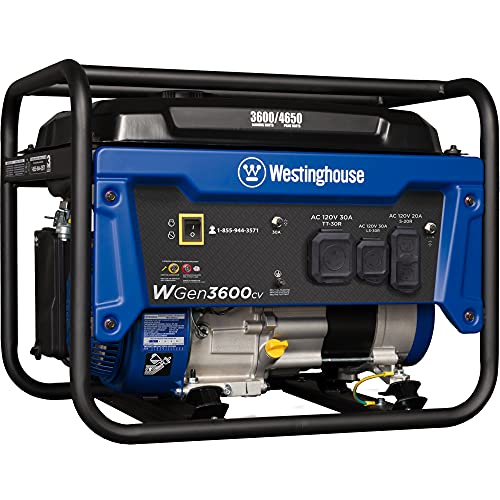
Westinghouse 4650 Peak Watt Portable Generator

Oxseryn Power Equipment 4400 Watts Inverter Generator

ERAYAK 2400W Portable Inverter Generator

Oxseryn 4400-Watts Inverter Generator

ERAYAK 4500W Portable Inverter Generator

AMERISUN 4500W Open Frame Gas Inverter Generator

DuroStar DS13000MX 13,000-Watt 500cc Dual Fuel Portable Generator

Oxseryn 5000-Watts Portable Inverter Generator
More Details On Our Top Picks
Home backup around this size feels useful for essentials, not for running everything at once, and that’s the right lane for many households. The RV-ready 30A outlet adds flexibility, while the CO sensor gives extra peace of mind in spaces where placement matters.
Compared with the smaller ERAYAK 2400W pick, this one gives you more breathing room for larger loads, though it also asks for more storage space. For a garage, shed, or patio setup, that trade-off makes sense.
What We Like
- The 30A RV outlet opens up more connection options for backup circuits or travel use.
- The CO sensor adds a practical layer of awareness for home placement.
- Its size suits essential-home use without drifting into oversized territory.
- Good middle-ground output helps cover fridges, lighting, and a few household devices more comfortably than a mini unit.
Points To Note
- It still needs regular fuel handling and storage space, so it’s not the lightest choice for quick grab-and-go use.
- Households wanting whole-home coverage will likely want more headroom than this class provides.
Feature Rundown
Who It Suits Best
Households wanting a practical backup unit for essentials, plus RV owners who want one machine to handle more than a single job, fit this model well.
A Better Fit Elsewhere
Oxseryn 5000-Watts Portable Inverter Generator suits you better if you want a step up in output for heavier home backup loads.
Open-frame inverter units sit in a nice middle zone, and this Oxseryn leans into that balance with RV-ready utility plus ECO mode. ECO mode trims engine output under lighter demand, which matters when you want less waste during evening use around the house.
Relative to the Westinghouse pick, this one feels more stripped back and task-focused, which may suit a garage storage setup better than a polished patio corner. The trade-off is simple: you get utility first, polish second.
Strong Points
- The 4400-watt class gives you a workable step up from small portable units.
- RV readiness makes it more versatile for travel and home backup routines.
- ECO mode helps the generator match output to demand more efficiently during lighter use.
- The open-frame layout usually feels straightforward for storage and access in a utility area.
Small Caveats
- Open-frame designs tend to look more utilitarian, so they suit functional spaces better than decorative ones.
- Like most gas-powered units, fuel upkeep and routine storage planning still matter.
Core Details
Made For
Travel-minded households and garage users who want useful power without stepping into oversized territory are the strongest match here.
Another Choice May Suit
DuroStar DS13000MX 13,000-Watt 500cc Dual Fuel Portable Generator fits better for you if whole-home backup is the real goal.
Small inverter generators make the most sense for lights, routers, chargers, and a fridge running in rotation, and this ERAYAK lands neatly in that lane. The ECO mode helps it scale down during lighter household use, which is handy in a quiet neighborhood after dark.
Compared with the 4400-watt models above, it asks you to be more selective, but that also makes it easier to store and move. For a small house, apartment-style storage area, or occasional emergency kit, that restraint can be exactly right.
Highlights
- The compact form is easier to store than the larger open-frame picks in this roundup.
- Quiet operation is a strong fit for campgrounds, patio backup, and close-in neighbors.
- ECO mode gives you a more measured approach during light power demand.
- Its smaller scale makes it friendlier for quick setup in tight storage areas.
Areas To Watch
- It has less output headroom than the 4400 and 5000 watt options.
- Households with several larger appliances will need a bigger backup plan.
At A Glance
Whose Shelf It Belongs On
Space-conscious households and casual campers who want a portable backup without a large footprint are the clearest fit.
Look Elsewhere When
ERAYAK 4500W Portable Inverter Generator suits you better once your backup list includes a fridge plus a few extra essentials.
This one overlaps with the Oxseryn model above, but the 30A RV outlet and emergency-home framing make its purpose feel more clearly defined. In a utility room or garage, that kind of practical focus matters more than a polished exterior.
You may find the open-frame layout more convenient for access and storage than a sealed-style body, though it still asks you to manage fuel and placement carefully. That’s the honest read for most households: useful, not fussy, and more about function than flair.
Upsides
- The 30A RV outlet broadens its use beyond a simple backup role.
- The open-frame style keeps the unit straightforward for utility storage.
- Its 4400-watt class sits in a helpful middle range for home essentials.
- The emergency-home positioning makes it easier to understand the intended job.
Minor Gripes
- Open-frame construction suits function more than quiet indoor-adjacent appearance.
- Routine fuel handling and storage habits still need attention.
- It won’t replace a much larger setup for whole-home needs.
Feature Card
Best Suited To
Households wanting a straightforward backup option with RV-friendly flexibility are the strongest match here.
Where A Sibling Pick Shines
Westinghouse 4650 Peak Watt Portable Generator makes more sense for you if safety-oriented CO sensing matters more than the open-frame format.
The jump from 2400 watts to 4500 watts changes how the generator fits into a house, because you gain more room for everyday essentials without moving into a much larger frame. That makes this ERAYAK a comfortable middle step for households that want a little more breathing room.
Compared with the smaller ERAYAK model, this one is easier to picture beside a fridge, a few lights, and charging needs during a neighborhood outage. The honest trade-off is size, since more output usually means more to store and manage.
Positives
- 4500 watts gives you more margin than the 2400-watt option.
- The inverter design suits household electronics better than a raw utility-only approach.
- ECO mode can help keep light-load use less wasteful.
- Its size works well for regular household backup instead of only emergency-only storage.
Worth Noting
- It still calls for fuel care and periodic upkeep like any gas-powered unit.
- Households with larger appliance loads may still want the bigger Oxseryn 5000-watt option.
Spec Overview
Right Fit For
Families wanting a moderate-output portable generator for common outage duties will get the most from this size.
Skip It When
DuroStar DS13000MX 13,000-Watt 500cc Dual Fuel Portable Generator fits better once you need a much larger home backup cushion.
This AMERISUN model packs in several useful touches, and the mix of CO alert, 30A RV outlet, parallel readiness, and ECO mode gives it a flexible profile. Parallel ready means you can link compatible units together for more output, which matters more for growing backup plans than for casual weekend use.
Compared with the Oxseryn 4400-watt open-frame pick, this one leans harder into feature breadth. You may appreciate that in a garage or campsite setup, though the feature set only helps when you’re actually going to use it.
Best Bits
- CO alert is a practical added safeguard for home placement awareness.
- Parallel readiness gives you room to expand later with a compatible second unit.
- The 30A RV outlet broadens its usefulness beyond house backup alone.
- ECO mode supports lighter-use scenarios without unnecessary engine strain.
- The lightweight framing makes it easier to move than larger home-backup machines.
Softer Spots
- Open-frame construction is useful, but it looks and feels more utilitarian than enclosed designs.
- Parallel planning only matters when you already expect to scale up later.
Details At A Glance
Built With In Mind
Households wanting a flexible utility generator with room to expand later fit this model well.
Swap It Out When
ERAYAK 4500W Portable Inverter Generator may suit you better if you want a quieter, simpler shape for routine household backup.
Nothing else in this roundup reaches the same broad backup ambition, and that’s exactly why the DuroStar stands apart. Dual fuel means it can run on gas or propane, which gives you flexibility in storage planning and household preparedness.
Remote electric start is a real comfort feature during bad weather or a late-night outage, because it reduces the usual fuss of getting a large unit going. The honest read is that this size belongs in a serious backup plan, not in a casual weekend setup.
Reasons To Buy
- The 13,000-watt class gives you far more headroom than the mid-range picks here.
- Dual fuel flexibility can make storage and fuel planning easier.
- Remote electric start is especially helpful when you want faster starts with less effort.
- Transfer switch readiness makes it a natural fit for a more integrated home backup setup.
- It can support a broader household plan than the compact inverter models in this list.
Things To Consider
- Its size and output level ask for more storage, more planning, and more physical room.
- This class is more generator than casual portable, so handling will feel heavier.
- Routine upkeep matters even more once you move into a large-capacity machine.
Technical Sheet
Who Should Grab It
Homeowners building a serious outage plan, especially those expecting to power more than just the basics, are the strongest match here.
Where A Sibling Pick Shines
Oxseryn 5000-Watts Portable Inverter Generator fits better for you if you want a lighter, more manageable machine for everyday backup.
This Oxseryn sits in a useful sweet spot for households that want more output than the 4400-watt models without jumping all the way to a large dual-fuel machine. The 30A outlet and RV-ready setup give it a practical edge for backup circuits and travel use.
At 60 pounds, it’s still portable in a real-world sense, though not something you’ll want to move around casually every day. For a garage, shed, or emergency corner of the house, that weight feels like a fair exchange for the added capacity.
Best Bits
- The 5000-watt class gives you more room for household backup than the 4400-watt models.
- The 30A outlet helps it fit RV and home-connected use cases.
- ECO mode can reduce engine effort during lighter power demand.
- At 60 pounds, it stays more movable than a much larger whole-home unit.
- Its balance of output and portability makes it easy to picture in ordinary home storage.
Room For Improvement
- Sixty pounds is still substantial, so stairs and tight storage spots may feel awkward.
- It has less reach than the DuroStar if you want to back up a larger house.
Feature Snapshot
The Right Fit
Households wanting a stronger portable backup unit without stepping into a very large frame are the best match here.
Consider Something Else When
DuroStar DS13000MX 13,000-Watt 500cc Dual Fuel Portable Generator suits you better if whole-home coverage is the main goal.
How To Choose The Right Gas Powered Generators For Home
Match Output To The Job
Start with the load you actually expect to carry. A small inverter generator can handle lights, routers, chargers, and a refrigerator in rotation, while the larger 4500 to 5000 watt range gives you more breathing room for multiple essentials at once.
Whole-home planning is a different class entirely, which is where the DuroStar DS13000MX makes sense. Think in terms of circuits and habits, not just a single watt number, because that keeps the choice realistic.
Look Closely At Outlet And Start Features
Outlet layout matters more than many shoppers expect. A 30A RV outlet is useful for travel rigs and some home setups, and transfer switch readiness points toward a more built-in backup approach.
Electric or remote start can also make a difference during bad weather, especially on larger machines. That convenience matters most when you want the unit to feel ready without a lot of extra effort.
Balance Noise, Size, And Storage
Inverter generators are usually the friendlier choice for neighborhoods and tighter spaces because they tend to feel more composed in everyday use. Open-frame models often trade a bit of that polish for easier access and a more utility-first design.
Storage is part of ownership, not an afterthought. A compact 2400W model may be easier to tuck away in a closet or shelf, while a 60-pound or larger unit needs a clearer plan.
Choose Flexibility Or Simplicity
Some households value parallel capability, dual fuel, or ECO mode because those features leave room to grow. Others want a straightforward machine with fewer moving parts to think about.
The right answer depends on how often you expect to use the generator and how much maintenance you’re willing to manage. A simple, lighter unit can be plenty for occasional outages, while a larger feature set makes sense for more serious backup routines.
Things Worth Knowing First
Common Shopping Slip Ups
One frequent mistake is sizing too small for the load list. Another is overlooking outlet compatibility, which can leave a useful-looking generator awkward for your actual setup.
Storage gets ignored too often. A unit that feels fine on paper can become annoying fast if it’s too heavy for the space where you’ll keep it.
What The Higher Tier Buys
More money usually buys more output headroom, stronger start options, and a better fit for larger homes. Dual fuel models also add another layer of flexibility, which matters during long outages or fuel planning.
That extra spend makes sense once you’re backing up more than the basics. For occasional light use, a midrange inverter model can be enough without adding size you won’t really use.
Frequently Asked Questions
What size generator works for a house?
That depends on whether you want essentials only or broader backup coverage. Smaller inverter units handle a limited set of appliances, while larger models suit more demanding home plans.
Are inverter generators a better fit for home backup?
Inverter models are often easier to live with for everyday use because they tend to be more refined in how they deliver power. They’re a strong match for electronics and tighter neighborhoods.
What does a 30A outlet add?
A 30A outlet improves compatibility with RV setups and some transfer-style applications. It gives you more connection flexibility than a basic outlet mix.
Does ECO mode matter?
ECO mode helps the engine adjust more closely to lighter demand. That can be useful during partial load use around the house.
When does a dual fuel model make sense?
Dual fuel makes sense when you want more fuel planning flexibility for outages or longer backup sessions. It’s especially useful for larger home backup setups.
Closing Thoughts
Gas powered generators for home cover a wide range, from compact inverter units that handle essentials to large dual-fuel machines built for more serious backup plans. The best choice depends on how much you want to power, where you’ll store the unit, and whether convenience features like RV outlets, ECO mode, or electric start matter in your day-to-day routine. For many homes, the sweet spot sits in the middle range, where the machine feels capable without becoming cumbersome. Choose the size that fits your real space, and the rest gets much easier.
