

Tracing a dead circuit in a dark panel box is the kind of small frustration that turns a Saturday project into a Sunday one. I put together this lineup of electric power testers for homeowners who want clear answers before flipping a breaker, hobbyists tearing into electronics, and pros who need a dependable second opinion on the truck. Eight solid picks, each matched to a real scenario, so the tool you grab actually fits the work in front of you.
The Picks In Brief

Fluke T5-1000 Voltage, Continuity and Current Tester
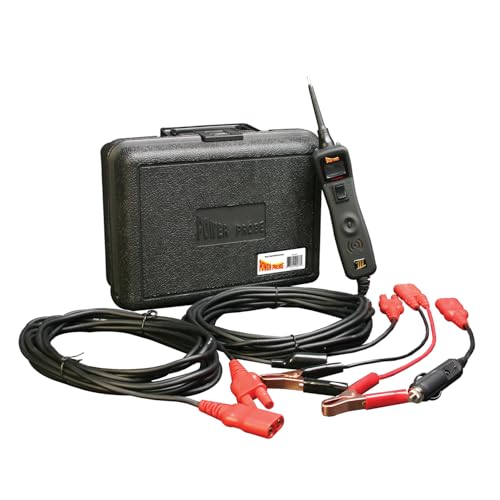
Power Probe 3 Circuit Tester Kit with Case (PP319FTCBLK)

Power Probe 3 Circuit Tester with Lead Set (PP3LS01)

Fluke T6-600 Electrical Tester

ANENG Digital Clamp Meter Multimeter Tester (4000 Count, NCV)

Power Probe 5V Reference Adapter for Circuit Testers (PPT5VA)

ANENG Digital Multimeter with Case (DC AC Voltmeter, Ohm, Amp)
ANENG Pen Type Digital Multimeter (4000 Count, NCV)
A Deeper Look At The Lineup
The Fluke T5-1000 has earned its reputation among electricians for one reason: it pulls three jobs into a single hand-sized tool. You get AC/DC voltage detection, a continuity beeper, and current readings through Fluke’s OpenJaw slot, which clamps around a conductor without breaking insulation or metallic contact. For homeowners tracing a hot wire in a crowded panel, that means fewer trips up and down the ladder.
Detachable SlimReach probe tips slot into custom holders, so storage stays tidy in a tool bag. Auto-off conserves battery life when you forget to switch it off, and auto-selection between AC and DC removes a step. Compared with the clamp meters later in this list, it trades broad measurement range for rugged simplicity, which is exactly why apprentices and serious DIYers reach for it.
Positive Points
- OpenJaw current measurement eliminates the need to strip wire or break the circuit for a quick amp check.
- Auto-selection between AC and DC voltage reduces manual dial flipping during routine outlet and panel checks.
- Detachable SlimReach probes store neatly, and the slim profile fits in shallow panels where bulkier testers wedge in awkwardly.
- Continuity beeper gives instant audible feedback when tracing fuses, switches, or broken conductors behind drywall.
Things To Consider
- The OpenJaw reads current only up to a modest limit, so heavier service-panel loads may push you toward a dedicated clamp meter.
- Probe tips accept Fluke accessory clips, but third-party leads often require adapters for a snug fit.
Made For
Homeowners and apprentice electricians who want one reliable tool for everyday outlet, switch, and panel troubleshooting.
Consider Something Else When
Auto technicians working deep in 12V wiring will find the Power Probe 3 Circuit Tester Kit with Case (PP319FTCBLK) better matched to their needs.
The Power Probe 3 takes a different angle than the Fluke above: it doesn’t just read a circuit, it powers it. Working across the 12 to 24V range found in cars, trucks, and marine systems, it supplies battery voltage or ground on demand to components like fans, relays, and fuel pumps without jumper wires or back-probing. A 20-foot power cable lets you sit in the cab while reaching the rear lighting harness.
The DC voltmeter indicators glow to confirm active feedback, and the resettable 8-amp breaker protects both the tool and the vehicle when a short pops up. Continuity and component testing round out a kit that arrives with a hard case and accessories, ready to live in a working garage. The trade-off is clear: this is not a household AC tester, and reaching for it on a 120V outlet would be the wrong tool entirely.
Notable Upsides
- Supplies power or ground directly to a component, so you can bench-test a fuel pump on the vehicle without splicing wires.
- Resettable 8-amp circuit breaker stops damage instantly when a fault pops, which matters on modern cars packed with electronics.
- The 20-foot cable reaches from a battery to trailer lights or rear harness without extension cords cluttering the floor.
- Carrying case keeps probe accessories, clips, and the main unit together, so nothing gets lost between jobs.
Worth Noting
- Built strictly for DC systems between 12 and 24V, so it has no role in household AC troubleshooting where the Fluke T5-1000 shines.
- The unit draws power continuously while active, and the included leads occasionally need re-tensioning after heavy shop use.
Right Fit For
Auto electrics specialists and mobile mechanics who diagnose live 12V systems daily and want to drive components directly during testing.
A Better Fit Elsewhere
Homeowners chasing phantom outlet loads should pick the ANENG Digital Multimeter with Case (DC AC Voltmeter, Ohm, Amp) instead.
The PP3LS01 trims the previous kit down to the essentials that a busy shop actually reaches for: the Power Probe III main unit, a 20-foot extension lead, battery hook-up clips, a cigarette lighter adapter, and 3-foot probe tips with 4mm connectors. For technicians who already own a case and want to refresh worn leads, that bundle covers the wear items in a single order.
It still does what the Power Probe line is known for: supplying power or ground to components, reading DC voltage on demand, and tracing continuity through relays. The 20-foot extension gives reach across a workbench or to a vehicle’s tail lamps. Compared with the PP319FTCBLK above, this is the leaner, lead-focused version that assumes you already have storage handled.
What Helps Most
- Refreshes all major lead types at once, so a worn cigarette lighter adapter or stretched battery clip no longer slows a diagnosis.
- The 4mm banana connectors mate with any standard Power Probe, including the 5V reference adapter covered later in this list.
- Continuity and component testing on the main unit keep relay diagnosis in the same workflow as power injection.
Trade Offs
- No storage case is included, so a dedicated drawer or shelf becomes essential to keep leads from tangling.
- Strictly a 12 to 24V DC tool, with no place in residential AC troubleshooting where the Fluke T6-600 below excels.
Who It Suits Best
Garage and shop mechanics refreshing their lead inventory without paying for accessories they already own.
Look Elsewhere When
Field-service electricians measuring live AC branch circuits will get far more value from the Fluke T6-600 Electrical Tester.
The Fluke T6-600 leans on FieldSense technology, which lets the open jaw slide around a single conductor and read AC voltage and current without metallic contact or test leads. For a working electrician crouched in a ceiling joist or wedged into a disconnect box, that saves the dance of finding a neutral and a hot to clip onto.
The compact head slips into tight motor cabinets where a standard clamp can’t open wide enough, and the backlit display keeps readings legible in a dark mechanical room. Rated for 600V CAT III environments, it sits comfortably in light commercial work. Where the Fluke T5-1000 above relies on probe contact for voltage, this one reads through the jaw, so you trade traditional certainty for speed on live panels.
Key Advantages
- Open jaw reads AC voltage and current without test lead contact, which is faster on crowded panels and energized motor circuits.
- Compact head design fits into disconnect boxes where traditional clamp meters cannot open fully.
- Backlit display stays readable in dark ceilings, switchgear rooms, and outdoor enclosures during service calls.
Honest Caveats
- FieldSense readings require a known return path, so a truly floating conductor can return confusing or zero readings without a reference lead attached.
- Priced well above entry-level options like the ANENG clamp meter later in this list, which matters for budget-tight solo operators.
Best Suited To
Field-service electricians working on live AC panels who need fast non-contact voltage and current checks without breaking the circuit.
Another Choice May Suit
Hobbyists on a budget doing occasional outlet checks should consider the ANENG Digital Clamp Meter Multimeter Tester (4000 Count, NCV).
ANENG’s clamp meter trades some of the Fluke polish for genuine affordability, and it lands in the sweet spot for hobbyists and DIY troubleshooters. The 4000-count display covers AC current, AC and DC voltage, resistance, capacitance, continuity, diode testing, and frequency, plus non-contact voltage detection for quick live-wire checks. For someone staring at a suspect outlet or a flickering trailer light, that covers nearly every common question.
It only reads AC current, not DC, which rules out solar battery banks and DC motor diagnostics, but covers every household and shop scenario a typical DIYer faces. The non-contact voltage function adds a safety layer: hover it near a wire before you touch anything metal. Compared with the Fluke T6-600 above, this trades FieldSense wizardry for a price tag that doesn’t sting, and that is exactly the point.
The Helpful Details
- AC current, AC/DC voltage, resistance, capacitance, continuity, diode, and frequency in one tool reduces the need for separate meters.
- 4000-count display resolution gives finer readings on small electronics projects than basic 2000-count alternatives.
- Non-contact voltage detection flags live wires before contact, adding a quick safety step on unfamiliar circuits.
Small Caveats
- DC current measurement is absent, so solar or battery-bank diagnostics require a different meter entirely.
- Build quality is functional rather than rugged, and the included leads are the first thing most owners eventually replace.
Quick Facts
Who Should Grab It
Hobbyists, DIY troubleshooters, and first-time homeowners who want clamp-style current reads without a professional price tag.
Swap It Out When
Auto electrics work on 12V systems is the home turf of the Power Probe 3 Circuit Tester Kit with Case (PP319FTCBLK).
The PPT5VA is not a tester on its own. It is an accessory that snaps onto any Power Probe with a 4mm banana tip and steps the tip’s battery voltage down to a clean 5V reference. Modern vehicle sensors run on 5V, and pushing a raw 12V into one with a standard Power Probe can fry a $200 throttle position sensor in a careless second.
By limiting the output current and capping the voltage, this little adapter lets you simulate sensor reference signals without risking the part. For an automotive technician chasing a tricky MAP sensor or coolant temp signal, that protection pays for itself the first time it saves a component. It only works with Power Probe-style tools, so anyone without one of those is looking at the wrong aisle.
Practical Pluses
- Steps output to 5V to safely exercise modern vehicle electronics that would otherwise see damaging full battery voltage.
- Current-limiting protects sensors from short-circuit damage during signal simulation and bench testing.
- Universal 4mm banana compatibility works with any Power Probe tip in the lineup above.
Points To Note
- Useless without a Power Probe main unit, so it is an add-on purchase, not a stand-alone tool.
- Only delivers 5V references, so it does not replace a full-function multimeter like the ANENG models covered here.
Perfect Match For
Power Probe owners who diagnose modern sensor circuits and want to simulate reference voltages safely.
Not Your Match When
General residential AC work is handled more directly by the Fluke T5-1000 Voltage, Continuity and Current Tester.
ANENG’s traditional bench-style multimeter suits anyone learning the trade or working through a list of household electrical questions. AC and DC voltage, current, resistance, continuity, diode testing, and live-wire detection all sit on one rotary dial. A student measuring the output of a small solar panel or a homeowner checking whether a fuse is open gets everything they need in one handheld package.
The included case keeps leads and the meter organized between uses, which is a small but meaningful detail in a cluttered garage drawer. Compared with the clamp meter above, this unit requires test lead contact for every measurement, which is slower on live panels but more precise on a workbench. It is the meter I would hand to a first-time DIYer without hesitation.
Practical Advantages
- Covers AC/DC voltage, current, resistance, continuity, diode, and live wire detection for full bench and outlet testing.
- Included storage case keeps leads, probes, and the meter together, ideal for students moving between class and home projects.
- Lead-contact measurement style gives precise bench readings that clamp meters sometimes approximate.
A Few Limitations
- Requires test lead contact for every reading, which slows troubleshooting on live panels compared with clamp-style tools.
- Manual ranging on some variants can confuse first-time users who expect auto-ranging behavior.
Feature Snapshot
Who Will Love This
Students and first-time DIYers learning the basics of voltage, current, and resistance on household circuits.
Reach For A Different Pick When
Auto electrics specialists chasing live 12V faults will find the Power Probe 3 Circuit Tester Kit with Case (PP319FTCBLK) more practical.
The ANENG pen-style A3005 collapses a multimeter into a shape closer to a thick marker than a bench instrument, with a protective pen cap that keeps the tip safe in a pocket or belt pouch. The 4000-count display reads AC and DC voltage with non-contact detection for quick live-wire checks. For an HVAC tech, IT field engineer, or anyone whose work jumps between locations, that portability matters more than an extra range or two.
It pairs voltage testing with standard multimeter functions, so it covers outlet checks, low-voltage electronics, and continuity tracing without dragging out a full-size meter. The trade-off is obvious: the smaller body means a smaller display and fewer ranges than the larger ANENG model above. For a go-bag, that compromise usually feels welcome.
What Works In Its Favor
- Pen form factor slips into a shirt pocket or belt pouch, ideal for techs who move between job sites daily.
- Non-contact voltage detection flags live conductors before contact, adding a quick safety check to every outlet visit.
- Protective pen cap shields the probe tip during transport, reducing wear between calls.
Worth Bearing In Mind
- Smaller display and fewer measurement ranges than full-size ANENG multimeters, so it suits light travel work more than heavy bench use.
- The slim body is easier to misplace on a busy workbench than a chunkier handheld meter.
Built With In Mind
On-the-go technicians and field engineers who need quick voltage checks without hauling bench equipment to every call.
Skip It When
Residential electricians running full panel diagnostics will find the Fluke T5-1000 Voltage, Continuity and Current Tester more capable.
Choosing The Right Electric Power Tester For The Job
Match The Tester To The Voltage And Current Type
The first decision is whether you measure AC household current, DC automotive circuits, or both. AC-only clamp meters suit standard outlets and breaker panels, while DC-focused Power Probe tools shine on cars, trucks, and marine systems. A few meters handle both, and those are the most flexible for someone who crosses between a workbench and a garage. Picking the wrong current type is the most common reason a tool ends up in a drawer unused.
Look For Safety Ratings And Measurement Limits
A CAT III rating (a category marking that signals the tool can withstand voltage spikes typical of distribution panels) gives confidence on household panels, while higher CAT ratings cover industrial service. Measurement limits matter: a tool rated for 600V covers most residential work, but higher loads require higher-rated meters. Treating the rating as a checkbox rather than a hard limit is a shortcut to burned-out tools or worse.
Prioritize Features That Match Real Workflows
Continuity beepers save time when tracing broken wires, non-contact detection (a sensor that senses live voltage without touching bare metal) flags live wires before you touch anything, and auto-ranging removes a manual step. FieldSense or OpenJaw current measurement (sliding the jaw around a conductor to read current without breaking the circuit) is a real time-saver on crowded panels but costs more. For most DIYers, a beeper, NCV, and auto-ranging cover the workflow without overspending.
Decide Between Compactness And Capability
Pen-style and compact meters travel well but trade range and screen size for portability. Full-size clamp meters and bench multimeters handle a wider set of measurements and read more clearly. The honest read is that the best tester is the one you actually carry to the job, so portability often wins over a feature or two.
Common Shopping Slip Ups
First-time shoppers often grab a clamp meter expecting DC current readings, only to discover the unit handles AC current only. Others overlook safety category ratings and end up with a tool unsuited to panel work. A more common mistake is buying a full bench multimeter when a simple voltage tester would handle every household outlet. Matching the tool to the actual workflow saves both money and frustration.
What The Higher Tier Buys
Stepping up from an entry meter typically adds ruggedized construction, a wider measurement range, true RMS readings (more accurate voltage and current on modern electronics with non-linear waveforms), and field-proven safety ratings. For pros who use the tool daily, that build quality pays back in years of service rather than a single job. For occasional DIYers, the mid-tier usually covers every realistic need without overspending.
