

You want solar help that fits real travel, not a bulky setup that stays in the garage. These E Bike Solar Panels lean toward portable charging, backup power, and off-grid use, so they make more sense for campsites, road trips, and emergency storage than for a fixed rooftop system.
The shortlist below focuses on panel size, output options, water resistance, and portability. That mix matters because the right pick depends on whether you need to top off a power station, keep a battery maintained, or carry something light enough for daily transport.
Quick Shortlist For Portable Solar Use

Renogy 200W Portable Solar Panel

ZOUPW 100W Portable Solar Panel

FlexSolar 100W Foldable Portable Solar Panel Charger

2pcs USB Solar Panel 6W 5V

ECO-WORTHY Solar Panel Kit 25W 12V

STAR 100 Watt Solar Panels 12/24V

100W Portable Solar Panel CPC Material

100W Portable Solar Panel 24% High Efficiency
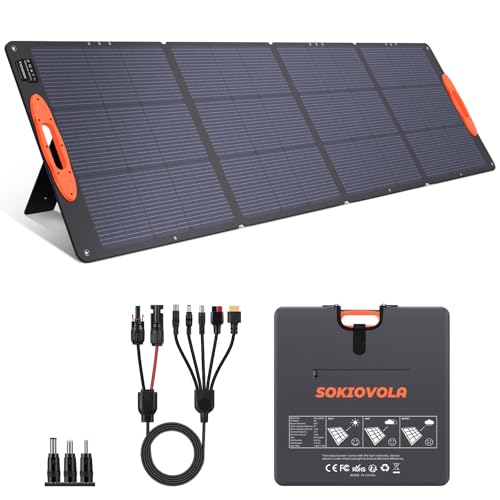
SOKIOVOLA N-Type 16BB 220W Portable Solar Panel
More Details On Our Top Picks
The 200W rating makes this one feel built for bigger jobs, not just topping off a phone on a picnic table. The foldable format and kickstand setup suit campers and RV owners who need a panel that stores flat but opens into a usable charging angle.
USB-A and USB-C outputs add flexibility, which helps when your day includes a power station, a small device, and maybe a blackout kit at home. The trade-off is simple, it carries more panel than the 100W options below, so you’ll want the extra output to justify the larger carry size.
Strong Points
- 200W capacity suits larger portable power stations.
- Foldable build keeps storage easier than rigid panels.
- Kickstands help you set a better sun angle.
- USB-A and USB-C outputs widen device compatibility.
- IP65 resistance adds useful protection for outdoor use.
Things To Consider
- Size and carry weight matter more than with 100W picks.
- Best value shows up when you need the extra wattage.
- Folding seams need a bit more care in storage.
Feature Snapshot
Who It Suits Best
You’ll get the most from this panel in an RV, during camping trips, or in a home outage kit where higher output matters more than featherweight carry size.
Where A Sibling Pick Shines
The ZOUPW 100W Portable Solar Panel fits better for commuters or weekend campers who want a lighter panel and don’t need the 200W footprint.
ZOUPW keeps the footprint friendlier than the Renogy 200W panel, while still giving you a full 100W class option for portable charging. The claimed 23.5% efficiency is the kind of detail that matters in real use, because higher conversion helps when sun hours are short or cloudy weather cuts your margin.
It’s a sensible match for smaller power stations from brands like Jackery, EcoFlow, Anker, and Bluetti. The honest read is that it suits compact travel setups more than heavy-duty home backup, but that narrower focus is exactly what makes it easy to live with.
Highlights
- 100W output fits compact portable power stations.
- 23.5% efficiency supports stronger use of available sunlight.
- Foldable layout makes transport and storage simpler.
- Broad power-station compatibility helps with common setups.
- IP67 rating adds strong outdoor protection.
Worth Noting
- Better suited to smaller loads than whole-camp backup.
- Folded storage still needs enough bag space.
- Compatibility is strongest with the listed power-station brands.
Core Details
Built With In Mind
You’ll appreciate this most for camping, weekend trips, or emergency kits where a 100W panel is the right middle ground between portability and usable output.
Another Choice May Suit
Renogy 200W Portable Solar Panel is the better fit for RV users or home backup setups that need more charging headroom than a 100W panel can give.
This one stands out because it spreads charging across several port types instead of leaning on panel output alone. PD 3.0 means Power Delivery, a fast-charging standard that helps compatible devices draw power more efficiently, while QC 3.0 refers to Quick Charge support for certain phones and accessories.
The mix of USB-C, USB-A, and DC ports is useful in a travel bag, especially on trips where your phone, power bank, and small station all need different connections. Compared with the ZOUPW panel, this FlexSolar option gives you more direct device charging, though the extra versatility may be overkill for someone who only feeds a power station.
What We Like
- Multiple output types suit mixed-device charging.
- USB-C PD 3.0 helps with compatible modern gear.
- USB-A QC 3.0 gives you another fast-charge path.
- IP67 protection helps in rough outdoor conditions.
- Foldable design keeps it travel friendly.
Areas To Watch
- Port variety adds value only when you use it.
- Direct charging focus may not suit every station-first setup.
- Folded panels still need dry storage after outdoor use.
Details At A Glance
Who Should Grab It
You’ll like this best for camping bags, mobile work kits, or any setup where a single panel needs to charge several types of gear.
Look Elsewhere When
ZOUPW 100W Portable Solar Panel is the cleaner pick for power-station owners who care more about listed compatibility than built-in port variety.
The two-panel pack makes sense for small gear instead of bigger charging jobs. Monocrystalline cells, meaning solar cells cut from a single crystal structure, usually help a compact panel make decent use of limited surface area, which matters when you’re strapping something to a backpack or cycling kit.
At 6W and 5V, this one fits mini fans, phones, cameras, and light outdoor accessories better than a power station. That’s the trade-off, of course, because you gain easy carry size and lose the ability to handle serious energy needs.
Bright Spots
- Two-panel pack gives you more placement flexibility.
- Small size works well for backpacks and light travel.
- USB 2.0 output keeps charging simple.
- IP67 rating suits outdoor carry use.
Small Caveats
- 6W output fits small accessories, not larger loads.
- Best used as a light-duty backup, not primary power.
- Backpack use asks for careful cable routing.
Quick Facts
Made For
You’ll get the best match here for a backpack, bicycle bag, or outdoor camera setup that needs a small, portable charging helper.
Swap It Out When
FlexSolar 100W Foldable Portable Solar Panel Charger is the smarter step up for anyone who wants a full-size portable panel with device ports and far more output.
This kit shifts away from mobile charging and into battery maintenance, which is useful for vehicles and seasonal equipment that sit parked for stretches. The adjustable mount bracket and controller give it a more complete feel than a bare panel, so you’re closer to a ready-to-use upkeep setup.
It fits cars, RVs, boats, motorcycles, and marine batteries, so the real value shows up in storage scenarios where you want to keep a 12V battery topped up. Compared with the mini USB panel above, this is less about carrying power in a pack and more about preserving a battery in place.
Upsides
- 25W output suits battery-maintenance use.
- Included controller helps complete the setup.
- Adjustable bracket adds mounting flexibility.
- Works across several 12V vehicle types.
- Useful for parked equipment and seasonal storage.
Room For Improvement
- Not meant for high-demand charging.
- Mounting takes a little planning.
- Best results depend on steady outdoor placement.
Feature Rundown
The Right Fit
You’ll get the most value from this kit if you own a car, boat, RV, or motorcycle that spends time parked and still needs battery upkeep.
Reach For A Different Pick When
STAR 100 Watt Solar Panels 12/24V suits you better if you want a stronger panel for broader off-grid use rather than simple battery maintenance.
The frame-less design gives this panel a cleaner look than the folding travel picks, and that matters in a fixed setup where you care about long-term placement more than packability. The 12/24V range helps it fit different system types, so it lands well for roofs, RVs, marine installs, or home backup use.
Its maintenance-free framing language points toward a lower-fuss ownership experience, though permanent installs still call for decent mounting and cleaning habits. That’s where it differs from the Renogy and ZOUPW options, which are more travel-minded and easier to move around.
Standout Traits
- Frame-less design feels neat for fixed installs.
- 12/24V range broadens system compatibility.
- 25% efficiency is strong for a 100W panel class.
- Works across RV, roof, and marine use.
Softer Spots
- Less convenient for quick carry-around use.
- Fixed setup needs thoughtful mounting.
- Not as flexible as foldable travel panels.
At A Glance
Best Suited To
You’ll appreciate this most in a more permanent RV, marine, roof, or home setup where a tidy panel and broad voltage support matter.
A Better Fit Elsewhere
Renogy 200W Portable Solar Panel is a stronger match for travelers who want foldability and carry-friendly storage instead of a fixed install feel.
The longer 3-meter DC cable is a useful detail, because cable reach often decides where a panel actually works in camp, at home, or beside a generator. USB-C PD 3.0, 20V DC, XT60, Anderson, and USB-A/C support give this option a broad connection set, which makes it a handy middle ground for mixed gear.
Compared with FlexSolar’s port-heavy panel, this one feels a bit more connection-flexible for station and generator setups without losing the everyday travel shape. The trade-off is that all those connector options only matter when your equipment can use them, so the appeal depends on what you already own.
Best Bits
- 3-meter cable gives better placement freedom.
- Wide connector mix suits many common devices.
- USB-C PD 3.0 supports faster compatible charging.
- Foldable design keeps it manageable for travel.
Points To Note
- Connector variety is only useful with matching gear.
- 100W output stays in the portable middle tier.
- Long cable storage takes a little tidying.
Spec Overview
Whose Shelf It Belongs On
You’ll like this most if you keep a power station, generator, and phone gear in the same travel kit and want fewer adapter headaches.
Skip It When
2pcs USB Solar Panel 6W 5V makes more sense for tiny backpack gear, while this one is built for people who need full portable output.
This pick leans into thoughtful setup details, especially the solar angle guide and twin kickstands. Angle guides help you line the panel toward the sun more easily, and the kickstands are there to hold that position without constant fuss, which is handy on uneven campsite ground or a driveway.
The ETFE surface and 24% efficiency make it feel like a well-rounded 100W option for outdoor charging, while the USB-C 60W, QC3.0, and MC4 outputs widen your connection choices. Compared with the CPC-material panel above, this one is more about positioning and panel-side polish than cable length.
Reason To Buy
- Solar angle guide helps with easier aiming.
- Two kickstands improve setup stability.
- ETFE surface is a sensible outdoor-facing material.
- 24% efficiency keeps it competitive in its class.
- MC4, USB-C, and USB outputs add flexibility.
Minor Gripes
- Positioning features matter most with open sunlight.
- Foldable gear still needs careful fold-line storage.
- Setup takes a little more attention than a basic panel.
Feature Card
Perfect Match For
You’ll get the most from this panel if you spend time outdoors and want a portable setup that makes aiming and positioning easier.
Where Shoppers Go Wrong
STAR 100 Watt Solar Panels 12/24V fits better for people who want a cleaner fixed-install style instead of a foldable panel with setup aids.
The 220W rating pushes this into serious portable-output territory, which is why it sits apart from the 100W and 25W picks above. N-type and 16BB cell language point to the panel construction, and in practical use that usually means a design aimed at stronger energy capture in a portable frame.
Its IP68 rating adds a stronger weather-resistance claim than the lighter foldables, so it fits rougher outdoor conditions better. For campers, RV travelers, and power-station owners who want more headroom without stepping into a fixed array, this is the most capable portable option in the group.
Reasons To Buy
- 220W output gives you the most portable headroom here.
- N-Type 16BB cell design supports a more advanced panel build.
- ETFE surface suits outdoor wear better than basic material layers.
- IP68 rating offers strong protection for rough conditions.
- Works with several major power-station brands.
Honest Caveats
- Higher output usually means a larger carry load.
- Best for users who actually need the extra wattage.
- Foldable storage still asks for careful handling.
Technical Sheet
Who Will Love This
You’ll appreciate this most if you want a high-output portable panel for camping, RV travel, or larger backup kits.
Not Your Match When
2pcs USB Solar Panel 6W 5V is the lighter choice for tiny gear, while this SOKIOVOLA panel makes sense only when you need much more charging power.
How To Choose The Right E Bike Solar Panels
Match Output To Your Real Load
Solar panel wattage tells you how much energy a panel can produce under ideal conditions. For e-bike use, that matters because you may be charging a battery pack, a power station, or smaller gear that supports your ride.
Higher wattage helps when you want faster recovery between rides or you camp away from outlets. Smaller panels make more sense for a carry bag, but they won’t keep up with a bigger power station as easily.
Portability Is Part Of Performance
Foldable panels are easier to pack, but the folding joints and seams need a little care in storage. Rigid or frame-less panels feel better for fixed setups, especially on a roof, shed, or stationary backup area.
For daily commuters, carry weight and folded size matter more than raw output. For RV travel or long stays at a campsite, a larger panel can earn its space by giving you more usable charging time.
Outputs And Compatibility Matter
USB-C, USB-A, DC, XT60, Anderson, and MC4 are connection types, not power promises. Each one changes what you can plug in, so the right match depends on the gear already in your kit.
Power-station owners should check supported brands and input limits before narrowing a choice. That step keeps the setup simple and avoids ending up with a panel that looks right but plugs into nothing useful.
Weather Resistance And Setup Habits
IP ratings describe how well a product resists dust and moisture. Higher numbers can matter a lot for outdoor travel, but they do not replace sensible storage, dry packing, or basic cleaning after a muddy trip.
Kickstands, angle guides, and adjustable mounts help the panel face the sun more effectively. They also add a little setup time, so the best pick depends on whether you want quick deployment or a more deliberate placement routine.
Things Worth Knowing First
Hidden Buying Traps
Panel size often matters more than the headline watt number, especially in a pannier or travel case. A 200W model sounds appealing, yet the extra bulk can become annoying if you carry it every day.
Another common miss is ignoring connector types. A panel can look right on paper and still sit unused because the cable ends do not match your power station or battery system.
The Case For Spending Up
Higher-tier models usually cost more because they use better cell construction, tougher surface materials, or smarter connection options. Extra output also helps, since stronger panels tend to fit larger power stations and more demanding backup setups.
That upgrade makes sense when you travel often, charge multiple devices, or want more control over panel placement. For occasional light use, a simpler 100W option is usually enough.
Frequently Asked Questions
Can E Bike Solar Panels charge a bike battery directly?
Some setups can support charging through a compatible power station or battery system. Direct charging depends on the e-bike battery, controller, and the panel’s output type.
What wattage works best for portable use?
100W is the most flexible middle ground for travel and campsite use. Smaller panels suit tiny gear, while 200W and above make sense for larger charging loads.
Why do output ports matter so much?
Ports decide what you can connect without extra adapters. USB-C, USB-A, DC, MC4, XT60, and Anderson each suit different gear.
Are foldable panels harder to maintain?
They need a little more attention around fold lines and storage. Dry packing and gentle handling help them stay in better shape.
Do weather ratings change real-world use?
They help you judge how well a panel handles dust and moisture outdoors. They do not replace careful storage, especially after rain or muddy travel.
Closing Thoughts
You get the best results from E Bike Solar Panels when you match wattage, connectors, and portability to the way you actually travel. The Renogy and SOKIOVOLA panels suit bigger power needs, while the lighter 100W and 6W options make more sense for compact kits and everyday carry. For most setups, the right choice is the one that fits your gear without asking you to work around it every time you pack up.
