

Home backup power feels a lot simpler when you can match a generator to your space, your fuel setup, and the appliances you actually plan to keep running. Some of these picks suit a few essentials during an outage, while others are built for whole-house transfer-switch setups or RV-friendly use with a calmer sound profile.
That mix matters. A compact unit can be easier to store and move, while a larger inverter generator can spare you a lot of juggling when the fridge, lights, and charging gear all need attention at once.
Quick Look At The Shortlist

Westinghouse 2550 Peak Watt Portable Inverter Generator

PowerSmart 4400-Watt Dual Fuel Portable Inverter Generator

Westinghouse 12000 Peak Watt Dual Fuel Portable Inverter Generator
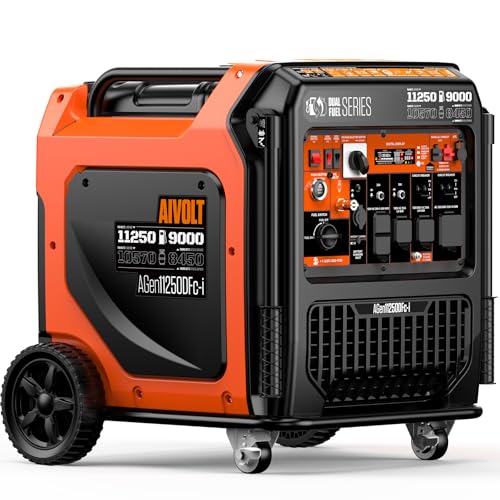
AIVOLT 11250W Dual Fuel Inverter Generator 50A

AIVOLT 4300W Dual Fuel Inverter Generator 53dB Quiet

PowerSmart 4400-Watt Dual Fuel Portable Generator

maXpeedingrods 4000 Watt Inverter Generator with Bluetooth Control

WEN 6800-Watt Dual Fuel RV-Ready Electric Start Portable Inverter Generator
More Details On Our Top Picks
For a smaller backup setup, this Westinghouse feels easy to live with because it keeps the focus on portability and simpler power needs. The RV-ready 30A outlet matters for campers and households that want a cleaner plug-in path, while gas and propane support gives you more fuel flexibility than a single-fuel model.
You may find the lower output more than enough for essentials, but it is still a lighter-duty pick compared with the 6800-watt WEN or the 12000-watt Westinghouse later in this list. That trade-off works well for a garage shelf, a tailgate, or a few household circuits during an outage.
Highlights
- Lightweight build makes moving and storage easier.
- Dual fuel support gives you more refueling options.
- RV-ready 30A outlet suits travel and basic backup use.
- Parallel capability leaves room to expand output later.
- CO sensor adds a useful layer for enclosed spaces near the home.
Things To Consider
- Its output ceiling fits essentials better than whole-home coverage.
- You may need to plan storage around fuel type and extension cords.
- Parallel use adds another purchase path, not just a simple plug-in move.
Feature Snapshot
Who It Suits Best
You should look here for a compact backup setup in a small home, apartment-adjacent garage, or RV-heavy routine.
Where A Sibling Pick Shines
The WEN DF680iX suits you better once your backup plan needs more output and electric start convenience for larger loads.
This PowerSmart lands in the useful middle ground, with enough output for home backup basics without stepping into the bulkier high-output class. The CO sensor makes sense for households that care about added shutdown awareness, and the dual-fuel layout gives you backup flexibility during longer interruptions.
Compared with the smaller Westinghouse 2550, this model gives you more breathing room for fridge duty and charging gear, yet it still stays easier to manage than the big transfer-switch units in the upper half of the list. That balance suits many first-time generator owners who want a practical step up without overshooting their needs.
Bright Spots
- Dual fuel design broadens your refueling options.
- Home-use focus fits emergency backup well.
- Lightweight build helps during storage and setup.
- CO sensor adds a thoughtful safety-oriented feature.
Room For Improvement
- The listing does not present the same heavy-duty profile as the larger Westinghouse units.
- You may want to plan cords and placement around your exact backup layout.
- Portable generators still need routine fuel handling and storage discipline.
Core Details
Right Fit For
You fit this pick best when you want a sensible, mid-sized backup generator for a house, cabin, or camping-heavy schedule.
Another Choice May Suit
The AIVOLT 11250W Dual Fuel Inverter Generator 50A suits you better for larger homes that need a stronger transfer-switch style backup plan.
This is the kind of unit you notice when home backup stops being a small-project question and starts looking like a real household plan. Remote electric start helps from the porch or garage doorway, and transfer switch readiness makes the listing more relevant for homes wired for that kind of setup.
Low THD, or total harmonic distortion, matters because cleaner power is easier on sensitive electronics, and that is a major step up from the lighter Westinghouse 2550. The catch is size and commitment, so it fits better for homeowners who want serious backup capacity instead of a carry-everywhere machine.
Best Bits
- High output supports larger home backup loads.
- Remote electric start adds day-to-day convenience.
- Transfer switch readiness suits wired home backup plans.
- Low THD supports electronics more comfortably.
- Dual fuel support gives you flexibility during shortages.
Points To Note
- This scale is more than most small-space storage plans want.
- Transfer-switch use requires a matching home setup.
- More capacity usually means more maintenance awareness and fuel planning.
Details At A Glance
Whose Shelf It Belongs On
You should keep this one in mind for a house with a transfer switch, larger appliance loads, or a homeowner who wants more breathing room during long outages.
Skip It When
The PowerSmart 4400-Watt Dual Fuel Portable Inverter Generator is the cleaner fit for smaller homes that want easier handling and less bulk.
The AIVOLT 11250W is aimed at homeowners who want a strong backup machine with a 50A path and remote start, not just a basic portable generator. Super-quiet branding and RV readiness make it feel flexible across home and travel use, while the dual-fuel setup keeps fuel planning from being one-dimensional.
In practice, this sits closer to the Westinghouse 12000 than the smaller 4300 and 4400-watt picks, so the upside is coverage and convenience rather than compactness. The honest read is that you are paying for a stronger fit around heavier household loads and a more serious home-connection profile.
Reasons To Buy
- 50A layout suits more demanding home backup plans.
- Remote start makes operation less fussy.
- Dual fuel support gives you practical flexibility.
- RV-ready setup helps bridge home and travel use.
- CO shutoff adds a safety-minded layer.
Small Caveats
- This is a larger unit, so storage and movement need planning.
- Its feature set makes more sense for wired backup than casual weekend use.
- EPA and CARB compliance notes matter, but your setup still needs to match local use and storage expectations.
Spec Overview
Built With In Mind
You fit this pick best if your home backup plan needs a stronger outlet class and you want a more capable dual-fuel setup.
A Better Fit Elsewhere
The AIVOLT 4300W Dual Fuel Inverter Generator 53dB Quiet suits you better for lighter transport, shorter storage, and easier rolling around the yard.
The 53dB claim puts this AIVOLT in a friendlier lane for campgrounds, patios, and home use where you do not want a louder machine dominating the space. Remote and electric start add convenience, and the wheel kit matters because 64 pounds is still easier to live with when rolling beats lifting.
It also auto-switches between gas and propane, so the fuel transition is more hands-off than a manual fuel-planning routine. Compared with the PowerSmart 4400s, this one feels more travel-minded and a touch more user-friendly for moving around, though the output ceiling still keeps it in the lighter backup class.
Plus Points
- Quiet operation suits campsites and close quarters.
- Wheel kit makes movement less awkward.
- Remote and electric start add everyday convenience.
- Auto-switch fuel behavior reduces manual switching.
- Parallel readiness leaves room for added capacity later.
Areas To Watch
- It still sits below the larger home-backup units in raw output.
- Wheel kit convenience helps, but storage space still matters.
- Quiet operation is useful, yet proper placement and fuel handling still take care.
Feature Card
The Right Fit
You should lean here for camping, patio use, or a lighter backup setup that still wants dual-fuel flexibility and easy movement.
Look Elsewhere When
The Westinghouse 12000 Peak Watt Dual Fuel Portable Inverter Generator makes more sense for larger home backup loads and a transfer switch plan.
This PowerSmart keeps the focus squarely on home use and emergency backup, which is exactly where many households want a dual-fuel inverter generator to land. The 30 amp output detail helps it feel more ready for practical home connections, and inverter technology usually appeals to people who want steadier power for electronics.
Compared with the PowerSmart 4400-Watt model earlier in the list, this version gives up some of the camping-oriented wording but keeps the same useful middle-range profile. You may find it a cleaner fit for a garage, shed, or standby corner where simple backup matters more than travel convenience.
Positives
- Dual fuel design helps during fuel shortages or supply changes.
- 30 amp output suits more practical home-backup setups.
- Inverter technology is a good match for electronics-heavy households.
- CO protection adds a safety-focused feature set.
Softer Spots
- The listing leans practical rather than feature-rich.
- Storage and fuel care still matter the way they do with any portable generator.
- You should match the connection style to your home plan before setup day.
Core Details
Who Should Grab It
You fit this pick best if you want a straightforward backup generator for a home where a 30 amp connection is useful.
Swap It Out When
The maXpeedingrods MXR4000GT suits you better if app-linked control and Bluetooth-based convenience matter more than a plain home-backup setup.
Bluetooth control is the standout here, and that makes this maXpeedingrods feel a little different from the more traditional picks above it. Remote and electric start are already helpful, but app-linked control can be especially handy when you want to check settings without standing right beside the machine.
The generator still keeps the usual dual-fuel and RV-ready benefits, so it works for camping and home backup rather than just one setting. In most garages, the trade-off is that you are paying for convenience features alongside the 4000-watt class output, which suits people who like a more connected setup.
Upsides
- Bluetooth control adds easy remote interaction.
- Dual fuel use broadens backup fuel options.
- Remote and electric start keep operation simple.
- RV-ready design supports travel and camp routines.
Honest Caveats
- App-based convenience will matter more to some households than others.
- Its output class remains below the larger home-backup units here.
- Connected features can feel unnecessary for very simple emergency use.
Technical Sheet
Perfect Match For
You should focus here when app control feels useful and you want a portable backup generator with a slightly tech-forward feel.
Reach For A Different Pick When
The Westinghouse 2550 Peak Watt Portable Inverter Generator is the easier fit for simpler storage, lighter carrying, and smaller backup needs.
The WEN DF680iX sits in a very useful middle-to-upper range for someone who wants home backup without jumping all the way to the largest generator in the list. Electric start keeps the routine simple, fuel shut off is handy for storage, and the CO watchdog is a meaningful safety-minded feature for backup use.
That blend makes it a sensible step up from the PowerSmart 4400s when you want more headroom, but it still feels less imposing than the 12000-watt Westinghouse. A household that wants one machine for electric-vehicle backup, RV use, and home essentials may find this balance especially appealing.
What We Like
- 6800 watts gives you stronger backup headroom.
- Electric start keeps operation straightforward.
- Fuel shut off helps with storage routines.
- CO watchdog adds a safety-oriented layer.
- RV-ready design supports travel and home use together.
Worth Noting
- It still needs a reasonable amount of storage space.
- More capability usually means more fuel planning and routine upkeep.
- Its bigger-output profile may be more than a small household needs.
Feature Rundown
Who Will Love This
You should look here for a home backup setup that also needs RV compatibility and a little more output breathing room.
Where Shoppers Go Wrong
The Westinghouse 2550 Peak Watt Portable Inverter Generator is the better fit for someone who only needs a lighter, easier-to-store emergency unit.
How To Choose The Right Dual Fuel Inverter Generators For Home Backup
Start With The Loads You Actually Need
Begin with the appliances and circuits that matter most during an outage. A fridge, modem, a few lights, and device charging can sit comfortably in a different power class than a sump pump, well pump, or transfer-switch-backed section of the home.
Inverter generators are often chosen because they provide steadier output for electronics, while dual fuel gives you room to shift between gasoline and propane. That flexibility helps during supply changes, but it does not replace the need to match wattage to your actual home load.
Match The Outlet And Start Method To Your Setup
A 30A outlet suits lighter backup layouts and many RV-friendly uses, while a 50A setup is more relevant for larger home connections. Remote start and electric start trim down the hassle of heading outside in bad weather, which matters a lot when the generator is sitting near a garage, side yard, or transfer switch.
Placement also matters. A generator that is easy to start but awkward to move can become a nuisance fast, so wheels, handles, and weight all deserve attention alongside raw output.
Think About Fuel, Noise, And Storage As A Trio
Dual fuel sounds straightforward, but your own storage routine still decides how easy an outage feels. Gasoline is common, propane stores differently, and the handoff between the two can shape how calmly you manage longer interruptions.
Noise is another real-world detail, especially in neighborhoods with close lot lines or around campers. A quieter unit can feel far more comfortable to live with, even when it gives up some output compared with a larger machine.
Choose The Size That Leaves You Room To Grow
Smaller generators suit compact homes, short outages, and lighter tool or device loads. Larger units make more sense once you want fewer compromises, more appliance coverage, or a more serious home-backup plan tied to a transfer switch.
The best match is usually the one that gives you a little breathing room without turning storage, transport, and upkeep into a chore. That middle ground is where many households land once the outage plan gets real.
Things Worth Knowing First
Mistakes Worth Dodging
Many shoppers focus on wattage alone and miss the outlet type, start style, or space needed to store the unit safely. Another common slip is assuming a dual-fuel model automatically fits every home backup setup without checking the actual connection path.
It helps to map your essential loads before you narrow the list. That keeps you from ending up with a machine that is either too small for the job or more cumbersome than your space can comfortably handle.
What The Higher Tier Buys
Higher-tier models usually cost more because they bring bigger output, remote or electric start, transfer-switch readiness, cleaner power delivery, and more convenience features. Those additions matter when you want the generator to feel like part of a home system instead of just an emergency appliance.
Spending up makes sense for larger homes, longer outage plans, or setups that need a more polished connection and less daily fuss. For a few lights and a fridge, a mid-size pick is often the calmer choice.
Frequently Asked Questions
What does dual fuel mean on these generators?
It means the generator can run on gasoline and propane. That gives you more flexibility during an outage or a long weekend away from home.
Is inverter technology important for home backup?
It helps deliver steadier power for electronics and other sensitive devices. That makes it a sensible feature for households that charge phones, keep routers on, or run modern appliances.
How much power do you need for home backup?
That depends on the appliances you want to keep running at the same time. A few essentials need far less output than a full home circuit plan.
Do you need remote start?
Remote or electric start is a comfort feature, not a requirement. It becomes more useful when the generator sits outdoors in rough weather or far from your door.
What size generator suits RV and home use together?
A mid-size dual fuel inverter generator often gives you the best balance. It can cover lighter home backup needs without being too cumbersome for travel storage.
Closing Thoughts
You have a lot of room to match one of these dual fuel inverter generators to the way you actually live, not just the way a spec sheet looks. Smaller homes and RV routines can stay compact, while larger households may want the extra headroom of the 6800, 11250, or 12000-watt models. The right call usually comes down to how much power you need, how you plan to store it, and how much convenience you want during an outage. Once those pieces line up, the choice gets much easier.
