

Legacy TVs, older receivers, and game consoles still need a clean bridge to modern speakers, and that bridge is where a good Digitals To Analog Converter earns its keep. You get a simple path from optical, coaxial, or HDMI ARC sources to RCA or 3.5 mm analog outputs, which helps when a soundbar, amp, or stereo lacks the right input. The catch is that not every adapter handles the same source mix, so the right choice depends on your gear, not just the headline format. This roundup focuses on practical fits for home cinemas, dorm rooms, and mixed-media setups.
The Shortlist At A Glance

Hdiwousp 192 kHz DAC with RCA
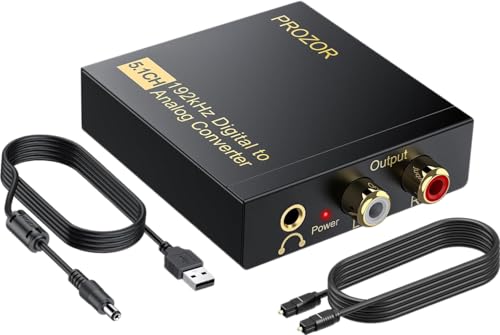
PROZOR 192Khz Digital to Analog Audio Converter
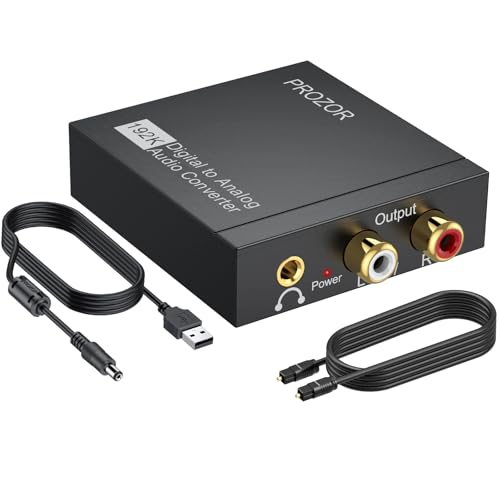
PROZOR 192KHz Digital to Analog Audio Converter

YGiTK 192kHz DAC Digital to Analog Audio Converter

XPTSFDU HDMI ARC to RCA Audio Converter

Beigemo 192kHz DAC Optical and Coaxial Converter
PROZOR 192KHz Digital to Analog Audio Converter DAC
More Details On Our Top Picks
Hdiwousp keeps the layout straightforward, with coaxial and optical input on one side and RCA plus 3.5 mm output on the other. That kind of mix helps in a living room setup where an older amplifier or compact stereo still does the heavy lifting.
The aluminum body gives it a sturdier feel than many basic plastic adapters, and that matters when it sits behind a TV cabinet for months at a time. You may find the simple output layout enough for a bedroom system, though it does not try to cover every possible connection type.
Strong Points
- Works with both coaxial and optical sources.
- RCA and 3.5 mm outputs cover common analog gear.
- Aluminum housing should handle tucked-away placement well.
- Good fit for a TV-to-stereo bridge.
Things To Consider
- No extra input options beyond the core digital pair.
- Best suited to straightforward stereo hookups, not complex racks.
- Aluminum helps durability, though fingerprints can still show.
Key Specs
Who It Suits Best
You get the most from this pick in a simple home cinema or TV-to-speaker setup where you want coaxial and optical support without extra clutter.
Where Another Pick Suits Better
XPTSFDU HDMI ARC to RCA Audio Converter fits better for TV owners who need ARC alongside optical and coaxial in one box.
PROZOR’s selling point is the broader feature set, especially the mention of 5.1-channel support and the included magnetic-ring power cord. That makes it feel better suited to a busy entertainment cabinet where you may be switching between a Blu-ray player, a console, and a TV output.
Compared with Hdiwousp, this one leans a little more toward fuller source coverage rather than a stripped-down adapter feel. The trade-off is that a busier feature list can mean more attention during setup, so it suits a careful installer more than someone who wants the smallest possible box.
What We Like
- 5.1-channel support broadens source compatibility.
- Magnetic-ring power cord is a useful touch for tidy routing.
- RCA and 3.5 mm output support common stereo gear.
- Good match for mixed media rooms.
- Handles DVD and console style source chains well.
Areas To Watch
- The wider feature set adds a little setup complexity.
- Works best in systems that already have the right output gear.
- Cabinet placement benefits from careful cable planning.
Feature Snapshot
Who Will Love This
You get a strong fit here for living rooms with multiple source devices and a need to route sound into older analog speakers.
Look Elsewhere When
Beigemo 192kHz DAC Optical and Coaxial Converter suits simpler setups that need broad input support without the extra channel emphasis.
This PROZOR version keeps the formula compact, but the output side is a little more flexible because it combines RCA and 3.5 mm jack support. That helps in a dorm room, office desk, or den where you might swap between powered speakers and a small amp.
It feels less niche than the 5.1-focused PROZOR above, so the appeal is broad rather than specialized. The honest read is that this suits everyday stereo use better than a more ambitious home theater chain.
Upsides
- RCA and 3.5 mm outputs cover more small-scale setups.
- Optical SPDIF input is common on TVs and older media gear.
- Good everyday fit for compact desks and bedrooms.
- Less fussy than a more feature-heavy converter.
Softer Spots
- Best suited to standard stereo use.
- Does not aim at more advanced surround-style routing.
- Short cable runs usually make the setup tidier.
Core Details
Whose Shelf It Belongs On
You get the best fit here in a small room or desktop setup where simple stereo output matters more than extra routing options.
Skip It When
Hdiwousp 192 kHz DAC with RCA suits you better for a sturdier aluminum shell and a more obviously TV-centered layout.
YGiTK stands out because the listing includes an optical cable, which helps when your TV or console setup still needs one more piece to get going. That can save a little planning in a starter theater or a guest-room audio corner.
The built-in audio amplification chipset is also a notable detail, since it is meant to raise RCA output level rather than leaving everything entirely dependent on the source device. The trade-off is that volume adjustment still happens on the output device, so your amp or speaker control matters just as much.
Positives
- Optical cable inclusion simplifies a first setup.
- Built-in amplification chip can help output level on RCA gear.
- RCA and 3.5 mm support keeps the adapter versatile.
- Good for a straightforward TV-to-stereo link.
Minor Gripes
- Source device volume control still plays a role.
- Works best when the rest of the chain is already compatible.
- The included cable is helpful, though cable management still matters.
Details At A Glance
Built With In Mind
You get a smart fit here for a first-time hookup in a living room, guest room, or media shelf with a simple optical source.
Where A Sibling Pick Shines
Beigemo 192kHz DAC Optical and Coaxial Converter suits you better when coaxial input matters just as much as optical.
HDMI ARC support changes the conversation, because it lets this converter sit directly between a modern TV and older analog speakers or a soundbar chain. Add optical and coaxial inputs, and you get a much wider path for mixed equipment than the simpler optical-only picks above.
That extra flexibility makes it a strong fit for a main television setup, especially where you want one adapter to handle a few different source types. The catch is that more input paths usually mean more planning during installation, so tidy wiring helps a lot here.
Highlights
- HDMI ARC support gives it modern TV compatibility.
- Optical and coaxial inputs expand source choices.
- RCA and AUX output support common analog gear.
- Useful for a living room with mixed devices.
Points To Note
- The broader connection set asks for a little setup patience.
- Best results come from matching the right input to the right source.
- Cable routing can get busy behind a TV stand.
Feature Rundown
Right Fit For
You get the most value here in a TV-first setup where ARC matters and you still want analog output for older speakers or home theater gear.
A Better Fit Elsewhere
Hdiwousp 192 kHz DAC with RCA suits you better for a simpler optical-and-coaxial route with less to coordinate.
Beigemo covers the everyday use case well because it accepts both optical Toslink and coaxial SPDIF, then sends audio out through RCA L/R or a 3.5 mm jack. That makes it easy to match with a TV, Blu-ray player, Xbox, or PS4 without hunting for a different adapter each time.
The PCM and LPCM support is worth a brief pause, because those are common stereo-style digital formats that many home setups rely on. In most family rooms, that kind of format coverage is more useful than flashy extras, though the plain industrial look will not appeal to everyone.
Reasons To Buy
- Optical and coaxial inputs cover a wide range of source gear.
- RCA and 3.5 mm outputs suit both speakers and small amps.
- PCM and LPCM support fits common home audio use.
- Good match for consoles and TVs in one room.
Small Caveats
- Plain styling puts function ahead of finish.
- Works best in standard stereo setups.
- Shared shelf space can feel tight behind crowded consoles.
Spec Overview
Perfect Match For
You get the best fit here for a household setup that mixes consoles, TV audio, and a straightforward stereo amplifier.
Swap It Out When
XPTSFDU HDMI ARC to RCA Audio Converter suits you better for a television setup centered on HDMI ARC.
PROZOR’s aluminum alloy body gives this one a more finished feel than the plain utility style of some of the other converters here. That detail matters in an equipment shelf or compact home theater corner where the adapter stays visible instead of disappearing behind furniture.
Like the other PROZOR model in this list, it stays centered on optical input and analog output, but the 3.5 mm jack adds a useful extra path for smaller speakers. The trade-off is simple, really, you get a cleaner shell and familiar connections rather than broader source coverage.
Best Bits
- Aluminum alloy housing feels more finished.
- Optical to RCA output works for classic stereo gear.
- 3.5 mm support helps with compact speakers and amps.
- Good option for neat, visible shelf placement.
Worth Noting
- Focuses on a narrower source path than multi-input models.
- Best for straightforward digital-to-analog conversion.
- Visible placement makes cable tidy-up worth the effort.
Feature Card
Who Should Grab It
You get a smart fit here for a tidy stereo shelf or a small home cinema where the converter sits out in the open.
Another Choice May Suit
Beigemo 192kHz DAC Optical and Coaxial Converter suits you better when you want both optical and coaxial inputs in the same setup.
How To Choose The Right Digitals To Analog Converter
Match The Input To Your Source Gear
The first thing to sort out is the digital input on your TV, console, or player. Optical Toslink is common on TVs and game systems, while coaxial SPDIF shows up on some older audio gear and disc players. HDMI ARC only matters for a TV-based setup, so do not pay for it unless your television uses that path.
That choice shapes the whole setup. A converter with the wrong input type becomes an extra box sitting behind your cabinet, and that is rarely worth the trouble.
Choose The Right Output For Your Audio System
RCA L/R output fits many amps and powered speakers, while a 3.5 mm jack works well with compact desktop speakers and small sound systems. The jack is a stereo mini-plug, so it helps when space is tight and you want a single cable run.
Think about the gear you already own, not the gear you hope to buy later. A tidy match between output and speaker input usually matters more than a long list of connection types.
Look Closely At Supported Formats And Build
192 kHz support is common in this group, and PCM or LPCM compatibility can matter for a lot of TV and console audio chains. Those terms describe standard digital audio layouts, so they help confirm the converter can pass the kind of signal your source sends.
Build quality matters too, especially for adapters that stay hidden behind a stand. Aluminum alloy tends to feel more solid than plain plastic, while included cables or a magnetic-ring power cord can make installation less fiddly.
Pick For The Room You Actually Use
A bedroom TV, a game room, and a home theater do not ask for the same converter. A compact optical-to-RCA box suits a simple stereo shelf, while HDMI ARC support makes more sense for the main living room display.
That room-by-room thinking keeps you from overbuying. The best match is usually the one that fits your current setup cleanly and leaves the fewest loose ends.
Things Worth Knowing First
Wrong Turns To Avoid
Many shoppers focus only on the headline sample rate and miss the actual input or output shape. That leads to a mismatch, like choosing optical-only gear for a TV that really needs HDMI ARC.
Another common miss is overlooking the analog side. RCA and 3.5 mm are not interchangeable in every setup, so your speakers or amp should guide the choice.
Where The Extra Money Goes
Higher-tier converters usually spend more on input flexibility, stronger housings, and a more complete accessory set. An optical cable, a better cord, or a metal shell can improve day-to-day use even when the core conversion task stays the same.
That extra spend makes sense for a main entertainment room or a setup that stays connected year-round. For a spare bedroom or casual desk system, a simpler box often covers the job just fine.
Frequently Asked Questions
Does 192 kHz matter for everyday use?
It matters mostly as a sign of broader compatibility with common digital audio paths. For many home setups, the input and output types matter more than chasing a bigger number.
Can you use one of these with a soundbar?
Yes, but the right model depends on the soundbar’s input options. HDMI ARC, optical, or RCA support changes which converter fits cleanly.
Why do some models mention 5.1 channel support?
That usually points to wider source compatibility in the digital chain. It does not change the fact that the output side still needs to match your speakers or amp.
Is aluminum worth paying attention to?
It can matter for a setup that stays visible or gets moved around often. A metal shell usually feels more solid than a light plastic case.
Do you need both RCA and 3.5 mm outputs?
Not always, but both can help when you own more than one type of speaker or amplifier. A dual-output model gives you more room to match the gear already on hand.
Final Thoughts
For a simple TV-to-stereo bridge, you can stay with a basic optical or coaxial converter and keep the setup easy. For a main living room system, HDMI ARC support and broader input options are worth a closer look, especially when your television is doing the heavy lifting. The right Digitals To Analog Converter should make your gear feel older in the best way, quietly useful and out of the way. Match the ports first, then choose the build and extras that fit how you actually listen.
