

A brownout in the middle of a Zoom call, a sudden flicker while the NAS is writing data, a router that resets just as the smart doorbell loses its connection. For anyone working from a home office or running a few critical appliances, a small UPS is the quiet insurance policy that keeps those moments from turning into lost work or worse. I’ve put together nine compact uninterruptible power supplies that span the full range of needs, from a tiny plug strip for a single workstation to a serious hybrid inverter ready for off-grid living. Some are pure sine wave models designed for sensitive electronics, while others pair battery backup with built-in solar charging for a more self-sufficient setup. Think of this list as a map of the category, so you can match the right tool to your space, your gear, and the level of redundancy you actually need.
A Fast Comparison Of The Options

PowMr 4000W 24V Hybrid Solar Inverter with 140A MPPT

PowMr 10000W 48V Split Phase Hybrid Solar Inverter

PowMr 10000W 48V Split Phase Solar Inverter (UL1741)

APC 500VA/300W Backup Battery Power Supply (BK500BLK)

APC UPS 1500VA/900W LCD Battery Backup (BX1500M)

APC UPS 1500VA/900W Pure Sine Wave (BR1500MS2)
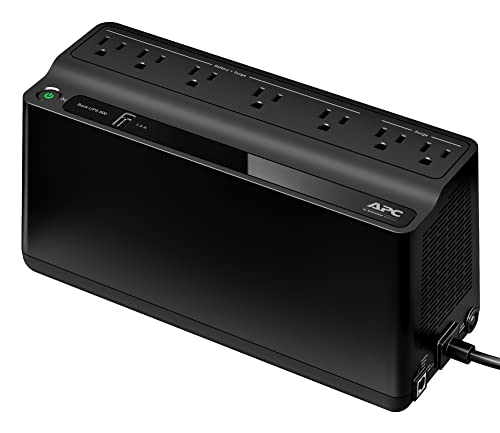
APC UPS 600VA/330W Battery Backup (BE600M1)

Tripp Lite 750VA Standby UPS System (INTERNET750U)
PowMr 5000W 48V Hybrid Solar Inverter with 120A MPPT
Meet The Standout Selections
RVers and cabin owners who want genuine off-grid capability without the bulk of a full solar array will find a lot to like here. The PowMr 4000W 24V hybrid inverter delivers clean pure sine output at 4000W rated with an 8000W peak, which is enough headroom for most kitchen appliances and power tools. Compared with the smaller APC units I’ll cover later, this one trades portability for solar integration, since the built-in MPPT controller accepts up to 5600W of PV input.
The unit runs on a 24V battery bank, supports AGM, gel, lead-acid, and lithium chemistries, and can even operate without a battery during daylight hours. For travelers who already have panels on the roof, that battery-less mode is genuinely useful when stopping somewhere sunny for a quick stay.
What Stands Out
- 5600W of solar input capacity, so a fairly large rooftop array stays productive even on cloudy afternoons.
- 110A maximum charge current, which shortens the recharge window for a sizeable battery bank.
- Battery-less daytime mode, a real convenience for short solar-only stops without hauling batteries along.
- Wide battery compatibility, covering lead-acid, AGM, gel, and lithium chemistries in a single unit.
- 8000W peak surge, enough to start refrigerators and small air conditioners without tripping.
Things To Consider
- Glass-top LCD and exposed terminals mean owners commonly report needing careful mounting to avoid vibration damage in a moving RV.
- The 24V architecture requires a matched battery bank, which adds cost for first-time solar shoppers.
- Fan noise ramps up under heavy inverter load, so placement away from sleeping quarters matters.
Who It Suits Best
RV owners and remote-cabin dwellers with an existing 24V battery bank who want true hybrid solar capability in a single box.
Skip It When
The PowMr 5000W 48V Hybrid Solar Inverter is a calmer fit for anyone already standardized on a 48V battery bank.
Stepping up from the 24V model above, this PowMr unit targets homeowners who want the inverter to handle serious loads, including 220V appliances. The split-phase design outputs both 110V and 220V simultaneously, which means well pumps, dryers, and larger workshop tools can all share the system. Rated at 10000W continuous with a 30000W peak, the inverter sits comfortably in whole-home backup territory.
The built-in 120A MPPT solar charge controller accepts up to 6400W of PV input, so a sizeable rooftop array can keep the battery bank topped off during a long grid outage. Where the earlier 4KW model is RV-shaped, this one is closer to a stationary electrical-room installation.
The Good Stuff
- Split-phase 110V/220V output, a real convenience for households with 220V appliances.
- 30000W peak surge handles motor starts from well pumps and air conditioners.
- Compatible with both 48V lead-acid and lithium battery banks.
- Built-in MPPT controller removes the need for a separate solar charge component.
Points To Keep In Mind
- The 48V battery requirement means existing 24V systems cannot be repurposed, a real cost for retrofit projects.
- Professional installation is widely recommended for split-phase wiring and code compliance.
- Heat output under sustained load means it needs a ventilated, dust-free location.
Made For
Homeowners planning a stationary whole-home backup setup with both 110V and 220V loads.
Look Elsewhere When
The PowMr 10000W 48V Split Phase Solar Inverter (UL1741) is a stronger match when parallel expansion is on the roadmap.
The professional tier of PowMr’s split-phase lineup, this unit is built for installers and ambitious DIYers who want expandability baked into the design. It pushes 120V and 240V from a single 10KW inverter and is rated under UL1741, the standard most utility interconnect rules reference. Where the previous PowMr model was a fixed-capacity solution, this one scales.
Up to six units can run in parallel for a combined 60KW of capacity, so the same hardware grows with the household or workshop. The 200A MPPT charge controller is also a noticeable upgrade, accepting very large PV arrays without bottlenecking. For an off-grid homeowner planning phased growth, this is the inverter that doesn’t force a future replacement.
The Case For It
- Parallel capability up to six units, so the system expands cleanly as power needs grow.
- UL1741 listing supports compliance with common utility interconnect rules.
- 200A MPPT charge current handles large rooftop arrays without throttling.
- Both 48V lead-acid and lithium battery banks are supported.
- Single-inverter split-phase output removes the need for a separate autotransformer in many setups.
Honest Caveats
- The parallel-stacking wiring is more involved than a stand-alone install, which is worth weighing against the future flexibility.
- The large chassis needs dedicated wall or rack mounting with clearance around the vents.
- Firmware configuration for parallel mode is less beginner-friendly than a single-unit setup.
Who Should Grab It
Solar professionals and ambitious off-grid homeowners who want a scalable platform that grows with their energy demand.
A Better Fit Elsewhere
The PowMr 5000W 48V Hybrid Solar Inverter is the calmer match for a workshop or small cabin that doesn’t need parallel expansion.
Now we shift from solar inverters to the classic desktop UPS category, starting with the smallest. The APC BK500BLK is the unit I think of whenever someone needs to keep a modem, a VoIP box, and maybe a small monitor alive through a brief outage. At 500VA/300W, it’s modest on paper, which is exactly the point. A 300W budget is plenty for networking gear, a low-power PC, and a phone charger all at once.
The compact brick form fits behind a desk or beside a media cabinet, and APC’s battery-replacement ecosystem is well established. Compared with the 600VA BE600M1 I’ll cover later, this model leans a little older and a little simpler, which many folks prefer for a set-and-forget installation.
Everyday Perks
- Compact brick footprint slips behind a desk or shelf without dominating the space.
- Surge protection plus battery backup for a router, modem, or entry-level PC.
- APC’s widely available replacement batteries extend the service life for years.
Trade Offs
- 300W capacity is tight for anything beyond networking gear and a single low-power monitor.
- Battery replacement is a recurring ownership cost, roughly every three to five years depending on cycles.
- Older design lacks the LCD status screen found on newer APC units.
The Right Fit
Anyone running a basic home network who wants simple, low-profile battery backup without paying for capacity they won’t use.
Consider Something Else When
The APC UPS 1500VA/900W Battery Backup (BX1500M) is the better match for a full home-office workstation with a desktop tower.
Home workers with a real desktop PC, a monitor or two, and a router will land on this category quickly. The APC BX1500M delivers 1500VA/900W, automatic voltage regulation (AVR), and an LCD status screen that shows load and battery level without software. AVR is the feature worth highlighting: it smooths brownouts without draining the battery, so small voltage dips don’t shave years off the cell.
Compared with the smaller BK500BLK, this unit is a proper workstation-class backup with ten outlets total. For most home offices, it hits the sweet spot between capacity, features, and footprint.
The Upside
- 900W output covers a mid-range desktop tower, dual monitors, and networking gear.
- Automatic voltage regulation handles brownouts without dipping into battery reserves.
- LCD status panel shows load percentage and remaining runtime at a glance.
- Ten total outlets give flexibility for a printer, speakers, and other peripherals.
Softer Spots
- Stepped-approximation wave output is not ideal for some sensitive audio or networking gear, a niche the BR1500MS2 handles better.
- The unit is heavy, around 24 pounds, so placement tends to be a one-time decision.
Best Suited To
Remote workers with a mid-range desktop PC and a couple of monitors who want AVR and a clear status display.
Not Your Match When
The APC UPS 1500VA/900W Pure Sine Wave (BR1500MS2) is the smarter choice for active PFC power supplies and sensitive electronics.
Step into pure sine wave territory and the conversation changes for anyone running modern PC power supplies. The BR1500MS2 outputs a clean sine wave that matches what the grid provides, which matters for computers using active PFC power supplies, certain audio gear, and any equipment with a motor. Where the BX1500M is a step-approximation model, this one is the gentler ride for picky loads.
Capacity stays at 1500VA/900W, so the same desktop-class protection applies. The trade-off is mostly price and the slight learning curve of the more advanced LCD menu.
Everyday Wins
- Pure sine output is compatible with active PFC power supplies and sensitive electronics.
- USB charging port on the front panel, a real convenience for phones and tablets during an outage.
- LCD status panel shows runtime estimates and load metrics in clear detail.
- Battery is user-replaceable, extending the service life of the unit.
Where It May Fall Short
- Pricing runs higher than the BX1500M, which is worth weighing against the cleaner output.
- Same 900W ceiling as the step-approximation model, so high-wattage workstations still outgrow it.
Perfect Match For
Owners of modern PCs with active PFC supplies, plus home studio or A/V setups that benefit from clean sine output.
Reach For A Different Pick When
The Tripp Lite 750VA Standby UPS System is a smaller, more affordable option for a basic modem-and-router setup.
Between the BK500BLK and the BX1500M, the BE600M1 fills a useful middle slot for a tight home office. At 600VA/330W, the unit backs up a small desktop, a router, a NAS, and a monitor with a little headroom to spare. Seven outlets are split between battery-backed and surge-only, which helps when you want everything filtered but only a few items powered during an outage.
The cube-shaped chassis is compact enough for a small media cabinet or a floating shelf. For shoppers comparing the BK500BLK and the BE600M1, the decision mostly comes down to whether the extra outlets and slightly higher capacity earn the price difference.
What It Does Well
- Seven outlets provide flexibility for mixed setups, with five battery-backed and two surge-only.
- A front USB charging port powers phones and small devices without consuming a backed-up outlet.
- 330W capacity handles a compact PC or NAS alongside networking gear.
Less Ideal Details
- Battery is not user-replaceable on this model, a meaningful ownership factor over many years of service.
- Step-approximation wave output is not ideal for the most sensitive electronics, where pure sine is preferable.
Whose Shelf It Belongs On
Small home offices and media cabinets running a router, a NAS, and a compact PC at the same time.
Swap It Out When
The APC UPS 1500VA/900W Battery Backup (BX1500M) is the calmer choice for full-tower workstations with more demanding loads.
Some shoppers care most about protecting a phone or modem line alongside the standard outlets, and the Tripp Lite INTERNET750U is built with that exact job in mind. Built-in TEL/DSL surge suppression is the standout feature, since most consumer UPS units don’t protect the line that runs from the wall jack to the modem. Widely spaced outlets also accommodate chunky wall warts, a real plus behind a TV or a desk.
At 750VA, the unit falls between the small APC BE600M1 and the workstation-class BX1500M. USB connectivity plus free PowerAlert software adds monitoring options for anyone running Windows or a compatible NAS.
Reasons It Performs
- Built-in TEL/DSL surge suppression protects phone and modem lines, not just outlets.
- Widely spaced outlets accept bulky transformer plugs without blocking adjacent sockets.
- Free PowerAlert software enables monitoring and graceful shutdown scheduling.
- 750VA capacity handles a desktop, a router, and a monitor without strain.
Some Limits To Know
- Standby topology means a brief transfer delay during a switchover, which is fine for most electronics but not ideal for the most sensitive gear.
- Unit feels plasticky compared with some APC models, a minor ownership note over years of use.
Built With In Mind
Home users who want phone or modem line protection alongside standard battery backup for a small desktop setup.
Where A Sibling Pick Shines
The APC UPS 600VA/330W Battery Backup (BE600M1) is the more common choice for shoppers prioritizing brand familiarity and a USB charging port.
Closing the list is a happy medium between the smaller 4KW RV unit and the heavy-duty 10KW whole-home options. The PowMr 5000W 48V hybrid inverter puts out clean pure sine power at both 110V and 220V, with a 15000W peak for motor starts. The built-in 120A MPPT controller accepts up to 6400W of PV, a comfortable size for a mid-sized off-grid workshop or small home.
For anyone who finds the 10000W models oversized but the 4000W model a touch small, this is the sensible middle ground. Compared with the APC units, this is a different product entirely: it’s a solar inverter first and a battery backup second, so it’s worth being clear about that distinction before buying.
Useful Highlights
- 110V/220V dual output covers most home and workshop appliance types.
- 6400W PV input capacity supports a meaningful rooftop array without throttling.
- Pure sine wave output is safe for sensitive electronics and modern appliances.
- Compatible with 48V lead-acid and lithium battery banks.
- Mid-range size and weight are easier to install than the 10KW units.
Practical Considerations
- The 48V battery requirement pushes first-time buyers toward a dedicated battery purchase.
- Fan-cooled operation means placement in a ventilated space matters for long-term reliability.
- Wiring knowledge is required for safe installation, so professional help is widely recommended.
Who Will Love This
Off-grid homeowners and workshop builders who want real hybrid solar capability without stepping up to a 10KW platform.
Another Choice May Suit
The PowMr 4000W 24V Hybrid Solar Inverter is the calmer pick for RVers who don’t need 220V output or 48V batteries.
What Matters Most When Choosing a Compact UPS
Match Capacity To The Actual Load
The first decision is sizing the unit to the gear you want to protect. VA (volt-amps) and watts tell you how much the UPS can deliver, while the load is what your devices actually draw. A typical desktop PC, monitor, and router lands around 300 to 500 watts, which is why the APC BX1500M and BR1500MS2 sit comfortably in the home office tier. Undersizing forces the UPS into heavy load, shortens runtime, and can shorten battery life. A modest buffer, somewhere around 20 to 25 percent above your measured load, gives you headroom for startup surges from motors and printers.
Decide Between Pure Sine and Stepped Output
The wave shape matters more than people expect. Pure sine wave output mirrors the grid, which is what sensitive gear expects. Step-approximation output works fine for most computers and routers, but it can cause buzzing in audio equipment, hum in motors, and occasional issues with active PFC power supplies. For a router and a basic monitor, stepped output is fine. For a recording studio, a modern gaming PC, or anything with an active PFC brick, pure sine is the calmer choice.
Plan For The Right Battery Architecture
Inverter-class products like the PowMr units run on battery banks, and the bank voltage shapes everything. A 24V system is common for RV setups and smaller cabins, while 48V is the standard for whole-home and serious off-grid work. Battery chemistry matters too, since lithium LiFePO4 banks last far longer than lead-acid but cost more up front. The “battery-less” mode in certain PowMr models is a convenience for solar-only daytime use, but it’s not a substitute for a real battery bank when the sun goes down.
Factor In Outlets, Ports, and Surge Extras
A UPS is also a power strip, so the outlet count and spacing deserve attention. Widely spaced outlets (like those on the Tripp Lite INTERNET750U) accommodate bulky transformer plugs without blocking neighbors. Front-panel charging ports and TEL/DSL line protection are small conveniences that pay off in real use. AVR, automatic voltage regulation, smooths brownouts without dipping into battery reserves, which is a meaningful feature for areas with unstable grid power.
Key Considerations Across These Picks
Common Shopping Slip Ups
The biggest mistake is sizing by price rather than load. A 300W UPS will not back up a gaming tower, no matter how appealing the cost looks. Another common miss is overlooking the wave shape. Pure sine costs more, and stepped approximation works for most electronics, but skipping that detail can leave you with buzzing speakers or random reboots on sensitive gear. Finally, shoppers sometimes forget the battery is a wearing part. Budget for a replacement cell every three to five years on a typical desktop UPS, and plan for it on the inverter side as well.
Where The Extra Money Goes
Premium models earn their place in three main ways. Pure sine output, like on the BR1500MS2, costs more but protects sensitive electronics that cheaper stepped-approximation units can bother. Higher capacity means longer runtime, which matters during extended outages. AVR, USB charging ports, and informative LCD panels all add small but real quality-of-life improvements. On the inverter side, the upgrade buys parallel capability, larger MPPT controllers, and dual-voltage output, features that pay off when the system grows.
Frequently Asked Questions
What Size UPS Do I Need For My Computer?
A typical mid-range desktop PC with a monitor and router draws around 200 to 400 watts. A 900W unit like the APC BX1500M or BR1500MS2 is a comfortable match, while a 330W BE600M1 works for compact PCs and NAS setups.
How Long Will A UPS Power My Devices?
Runtime depends on the battery capacity and the load. A 900W UPS might run a 300W load for ten to twenty minutes, which is enough to save work and shut down safely. Heavier loads drain the battery faster.
What Is The Difference Between Pure Sine and Stepped Sine Output?
Pure sine wave output matches the clean power from the grid, which is what sensitive electronics prefer. Stepped approximation is a rougher approximation that works for most computers but can bother some audio gear and active PFC power supplies.
Can A UPS Protect My Modem and Phone Line Too?
Most UPS units protect standard outlets, but only some include protection for phone or DSL lines. The Tripp Lite INTERNET750U is one example with built-in TEL/DSL surge suppression.
Do Solar Hybrid Inverters Replace A Regular UPS?
Not exactly. A solar hybrid inverter like the PowMr models is designed for off-grid or backup-power systems running on battery banks, often with solar input. A desktop UPS like the APC units is designed for short runtime and instant switchover in an office or home setting. The right choice depends on whether you need long-duration off-grid capability or a few minutes of safe shutdown time.
Closing Remarks
The right compact UPS depends entirely on what’s plugged into it. A router and a monitor call for a small, inexpensive unit like the APC BK500BLK or BE600M1, while a serious workstation benefits from the AVR or pure sine output of the BX1500M or BR1500MS2. Off-grid households and RVers live in a different category entirely, where PowMr’s hybrid solar inverters bring real capability. Pick the size and features that match your gear, and the rest tends to fall into place.
