

Camper solar panels make more sense once your trips stretch beyond campground hookups. You get quieter charging, less generator fuss, and more flexibility for keeping lights, fans, and small devices ready after a long drive or a full day outside.
The seven picks below split into rigid roof panels, portable suitcase kits, flexible panels for curved surfaces, and a few system-style options with controllers or mounting gear. That mix matters because your camper layout, roof space, and setup patience shape the right choice as much as wattage does.
The Shortlist At A Glance

ECO-WORTHY 400W Solar Panels N-Type 4pcs 100 Watt 18V

Renogy 400 Watt 12 Volt Premium 4 Pcs 100W Panel

Renogy 400W Portable Solar Panel, Premium Materials for Decades of Use

N-Type 16BB 400W Bifacial Solar Panel, 2Pcs 200 Watt
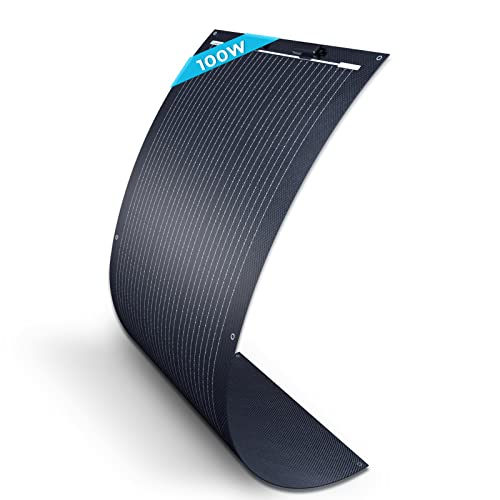
Renogy Flexible Solar Panel 100 Watt, 240° Ultra Flex Bendable

Renogy 100W Solar Panel N-Type, 12V 100 Watt Solar Panel

400W Portable Solar Panel for Power Station, 24% High Efficiency
More Details On Our Top Picks
This four-panel set fits campers that need a fixed roof array rather than a carry-in kit. The 18V panel rating, monocrystalline cell type, and IP68 sealing point to a setup aimed at regular outdoor exposure, so it suits roof racks, sheds, boats, and RV roofs where weather is part of the routine.
Compared with the portable Renogy suitcase pick, this one leans into a more permanent installation and less daily handling. That makes it a better fit for trips where you park, set up, and leave the panels alone, though the trade-off is obvious: mounting takes more planning and roof space.
Strong Points
- Four 100-watt panels give you flexible array sizing for a camper roof or mixed off-grid layout.
- Monocrystalline cells are a smart fit for limited roof area, since each panel has to earn its place.
- IP68 sealing helps around rain, spray, and dusty storage sites, which matters on rough travel days.
- The 12V and 24V battery compatibility broadens the kinds of systems you can pair with it.
Things To Consider
- You need mounting hardware and enough flat space, so this is less casual than a foldable panel.
- Fixed panels are harder to reposition at camp, which can matter on shaded sites or tight parking spots.
- Cleaning roof-mounted glass takes a little upkeep, especially after road dust or pollen-heavy weekends.
Feature Snapshot
Who It Suits Best
You’re the right match for a camper or RV setup that stays in place and needs dependable rooftop coverage.
Where A Sibling Pick Shines
Renogy 400W Portable Solar Panel, Premium Materials for Decades of Use fits you better when you want to move panels in and out of storage with less mounting work.
This is the most complete roof-ready bundle in the group, because it combines four 100-watt panels with an MPPT charge controller. MPPT means maximum power point tracking, a controller style that helps your system pull more useful power as sunlight shifts through the day, and that matters on a camper roof where shade and angle rarely stay ideal.
Unlike the ECO-WORTHY panel set, this package leans toward people who want more of the wiring pieces in one box. The included Bluetooth module, fuse, Z brackets, adaptor kit, and tray cables make the planning easier, though the kit still rewards someone comfortable with a more involved install.
What We Like
- The controller, fuse, brackets, and cables reduce the number of separate parts you need to source.
- Bluetooth support is handy for checking system behavior without standing over the equipment bay.
- Four-panel layout gives you practical room to plan around roof vents and skylights.
- The 12-volt system focus makes it a natural match for common camper and RV builds.
- Bundled parts can save a lot of install guesswork for someone setting up a first roof array.
Room For Improvement
- The bigger kit can feel busy for a simple weekend rig that only needs basic charging.
- More included parts also mean more labeling, routing, and installation steps to manage.
- The bundle is less convenient for campgrounds where you want a fast, temporary setup.
Quick Facts
Made For
You’re the best fit here if you want a more complete rooftop solar kit and prefer fewer separate accessory purchases.
Skip It When
Renogy Flexible Solar Panel 100 Watt, 240° Ultra Flex Bendable suits you better when curved surfaces and light weight matter more than a full install bundle.
Portable suitcase panels solve a very different problem from roof-mounted options. This Renogy pick folds for storage, uses a kickstand for setup, and is built for power stations, so it suits campers who move often, park under changing shade, or store gear in a tight compartment between trips.
Compared with the fixed ECO-WORTHY and Renogy roof kits, this one gives you flexibility more than permanence. The IP67 rating, which means strong protection against dust and temporary water exposure, adds peace of mind for outdoor handling, though you still need to carry, place, and stow it each time.
Upsides
- Foldable suitcase styling makes transport and storage easier in a camper with limited interior space.
- The kickstand helps you angle the panel without leaning it against random gear.
- Plug-and-play use fits power station owners who want a simpler connection path.
- IP67 protection is reassuring for dusty campsites and the occasional splash of weather.
Softer Spots
- You need to handle it every time, which adds weight and storage chores compared with roof panels.
- Suitcase panels can take up floor or closet space that some small rigs barely have.
- The portable format is less seamless for all-day charging than a mounted array left in place.
Core Details
Whose Shelf It Belongs On
You’re a strong fit for this pick if you want portable charging that stores neatly and moves with you.
Reach For A Different Pick When
Callsun N-Type 16BB 400W Bifacial Solar Panel fits you better when a roof-mounted array and rear-side light capture matter more than portability.
Bifacial panels are interesting because they can use light from both the front and the back, which matters more than it sounds on bright surfaces or open rooftops. This Callsun set also uses N-type cells and 16 busbars, and busbars are the thin conductive strips that carry current across the panel, so the layout is aimed at better electrical flow and shade handling.
Compared with the ECO-WORTHY four-panel kit, this one feels more tuned toward performance density than modular sprawl. The dual-module parallel anti-shade design is helpful on rooftops where a vent, rack, or satellite dome can cast partial shade, though the setup makes most sense when you have room to mount the pair cleanly.
Highlights
- Bifacial construction can make better use of reflected light around your camper or trailer.
- N-type cell design is aimed at strong output consistency in sunny travel conditions.
- The anti-shade layout is a thoughtful touch for roofs that never stay fully unobstructed.
- It works with both 12-volt and 24-volt systems, which keeps the pairing flexible.
- Two 200-watt panels offer a tidy way to build a mid-size array.
Points To Note
- Bifacial performance depends a lot on placement, so the mounting surface matters more than usual.
- Two larger panels can be less forgiving on cramped camper roofs with lots of roof gear.
- You may want a cleaner mounting area to get the most from the rear-side light benefit.
Details At A Glance
Best Suited To
You’re the right match for an RV or rooftop setup with enough open surface to let the bifacial design work properly.
Look Elsewhere When
Renogy 400W Portable Solar Panel, Premium Materials for Decades of Use fits better for campers who value carry-in convenience over mounted efficiency.
Flexible panels solve the awkward roof problem. This Renogy option bends up to 240 degrees, so it suits curved camper roofs, rounded van tops, and other surfaces where a rigid glass panel would feel out of place.
Compared with the rigid ECO-WORTHY and Callsun panels, this one trades pure structural stiffness for easier surface fit and a very thin 0.1-inch profile. That low profile helps with clean mounting, though you should expect a more careful installation process and a bit less toughness than a framed panel.
Reasons To Buy
- The bendable shape works well on curved surfaces that frustrate rigid panels.
- A 0.1-inch profile keeps the setup visually quiet and less bulky.
- Lightweight construction can make handling easier on a van roof or cabin top.
- It suits marine, RV, car, and boat use, which gives it wide placement options.
Areas To Watch
- Flexible panels often need careful mounting and support so they stay flat where they should.
- Cleaning dust and road grime from a low-profile surface can take a steady hand.
- It is less suited to rough repositioning than a framed or foldable portable panel.
Feature Rundown
The Right Fit
You’re a strong match for a camper, van, or boat roof with curves that make rigid panels awkward.
A Better Fit Elsewhere
ECO-WORTHY 400W Solar Panels N-Type 4pcs 100 Watt 18V makes more sense for a larger fixed array where you want higher total coverage.
This one keeps the footprint modest, which is handy for a camper with limited roof real estate or a system that just needs a single 100-watt add-on. The N-type cell build and 16 busbars point toward a more modern panel layout, so it feels like a tidy step up from older basic modules without becoming complicated.
Compared with the larger multi-panel kits above, it’s easier to place and easier to expand one piece at a time. That said, 100 watts is still a building block, not a whole-house answer, so it shines most in smaller rigs, maintenance charging, or incremental upgrades.
Best Bits
- Single-panel size keeps planning simple for compact roofs and trailers.
- N-type construction is a thoughtful upgrade over very basic entry-level modules.
- 16 busbars help support a cleaner current path across the panel face.
- The 12-volt fit is easy to match with common camper power setups.
Small Caveats
- One 100-watt panel is modest, so larger power needs call for a bigger array.
- You may outgrow it faster than a four-panel kit if your camping style gets more demanding.
- As with most roof panels, cleaning and placement still matter for steady output.
Spec Overview
Built With In Mind
You’re a good match if you want a compact panel for a smaller camper, trailer, or incremental power upgrade.
Another Choice May Suit
Renogy 400 Watt 12 Volt Premium 4 Pcs 100W Panel fits better for campers who want a fuller roof array and a bundled install path.
This foldable panel leans into campsite convenience, with ETFE, a tough protective top layer used on outdoor panels, plus MC4 output and four kickstands. That combination makes it easy to pair with a power station and practical to position around a campsite, especially for short stays or emergency backup use.
Compared with the Renogy suitcase model, this one feels a little more geared toward open-air setup and quick deployment. The IP65 rating, which covers dust and water jets from certain angles, adds outdoor confidence, though foldable panels still ask you to move, unfold, and store them every time.
Positives
- Foldable construction makes it easier to carry between the vehicle, tent, and storage area.
- MC4 output keeps connection compatibility broad for many power station setups.
- Four kickstands help you find a useful angle without improvised supports.
- ETFE top material suits regular outdoor handling better than a fragile-looking surface would.
- The 24% efficiency claim points to a more capable panel in strong sun.
Worth Noting
- Portable fold-outs still need space on the ground, so crowded campsites can feel tight.
- Moving it every day adds storage and handling chores.
- The setup is friendlier for power stations than for a hard-mounted camper roof.
Technical Sheet
Perfect Match For
You’re a strong fit for a camper setup that relies on a power station and benefits from quick, movable charging.
Swap It Out When
Renogy 100W Solar Panel N-Type, 12V 100 Watt Solar Panel suits you better when you need a small permanent add-on instead of a larger portable fold-out.
How To Choose The Right Camper Solar Panels
Match The Panel Style To Your Travel Pattern
Roof-mounted panels suit campers that stay in one place for longer stretches, because you install them once and let them work in the background. Portable suitcase and foldable panels make more sense for short stays, rented vans, and storage-tight rigs, since you can move them with your trip rhythm.
Flexible panels sit in the middle. They help when your roof is curved or cluttered, though they ask for more careful installation than a rigid glass panel.
Read Wattage As A Whole-System Clue
Wattage is the panel’s power rating, but it only tells part of the story. A 400-watt setup can support more demanding camping routines than a 100-watt add-on, yet the rest of your gear, controller, battery bank, and wiring still has to keep up.
Smaller rigs often do better with one or two panels that fit cleanly than with a large array squeezed into awkward space. Big numbers help, but only when the roof area, charging hardware, and daily use pattern all line up.
Think About Surface, Shade, And Storage
Shade is a bigger issue on campers than many people expect, because vents, skylights, roof racks, and awnings can cut output fast. Bifacial or anti-shade designs are worth a closer look on open sites or reflective ground, while basic rigid panels work well on simple, uncluttered roofs.
Storage matters just as much for portable models. A panel that folds neatly and stows flat feels easy on day one, then stays pleasant to live with after a dozen trips.
Look Past The Panel Alone
Some listings include controllers, brackets, cables, or Bluetooth monitoring, and those extras can save time during setup. They also make the kit feel less pieced together, which helps first-time installers or anyone converting a camper on a schedule.
The trade-off is complexity. A bundled system can be a better value in practical terms, but a simple add-on panel may suit you better if your current setup already has the rest of the hardware.
A Quick Reality Check Before You Choose
Common Shopping Slip Ups
Many shoppers focus on wattage alone and forget the shape of the roof or the space where the panel will live. A rigid panel on a curved van roof creates headaches fast, and a portable panel can feel clumsy in a rig that never has spare floor space.
It also helps to think about accessories before you commit. A panel without the right controller, brackets, or cable ends can turn a simple upgrade into a longer project than you wanted.
The Upgrade Payoff
Higher-tier panels often use newer cell designs, sturdier frames, or bifacial layouts that can make better use of available light. Kits with controllers, brackets, and monitoring pieces also reduce the number of separate parts you need to source.
That extra spend makes the most sense for campers who travel often, park off-grid for long stretches, or want a cleaner install from the start. For occasional weekend use, a simpler panel can be the calmer choice.
Frequently Asked Questions
What size camper solar panel works for a small RV?
A 100-watt panel suits light charging, storage batteries, or a starter setup. For more daily use, a 400-watt array gives you more breathing room.
Are portable panels better than roof panels for camping?
Portable panels are easier to move and store, which helps in temporary campsites. Roof panels win on convenience because they stay mounted and ready.
What does MPPT mean on a solar controller?
MPPT stands for maximum power point tracking, a controller style that helps pull more useful power as light changes. That matters on camper roofs where conditions rarely stay steady.
Do flexible solar panels need special mounting care?
They do, because they need even support across the surface they cover. Curved roofs and uneven mounting points can affect how cleanly they sit.
Is bifacial useful on a camper roof?
Bifacial panels can help where light reflects from bright ground or nearby surfaces. They work best on open setups with enough room underneath and around the panel.
Closing Thoughts
Camper solar panels work best when you choose them around your real travel pattern, not just the watt number on the listing. A fixed roof kit suits long trips and frequent use, a foldable panel suits flexible camping, and a flexible panel solves awkward surfaces that rigid frames can’t handle. The strongest pick is the one that fits your roof, your storage space, and the way you actually park at night. Start there, and the rest gets a lot easier.
