

Buck boost converters solve a simple but annoying problem, they help you match voltage to the device in front of you. That matters in bench projects, vehicle installs, solar setups, display screens, and DIY power supplies where the input you have and the output you need do not line up neatly.
The seven picks below focus on practical range, current limits, and everyday usability. You’ll see compact modules, panel-style units, and more specialized options for fixed 12V jobs, so you can choose something that fits your wiring space and load rather than forcing the project around the part.
Quick Look At The Shortlist
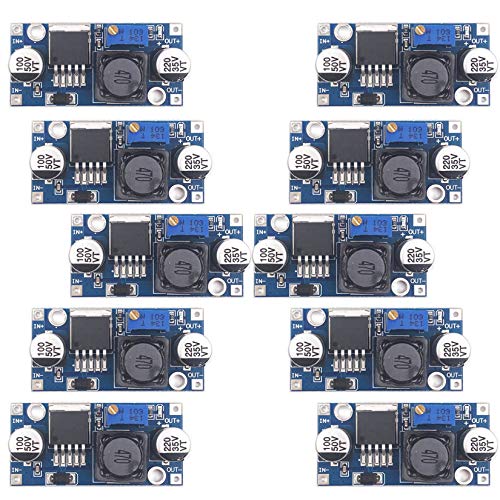
BULVACK LM2596 Buck Converter 10 Pack
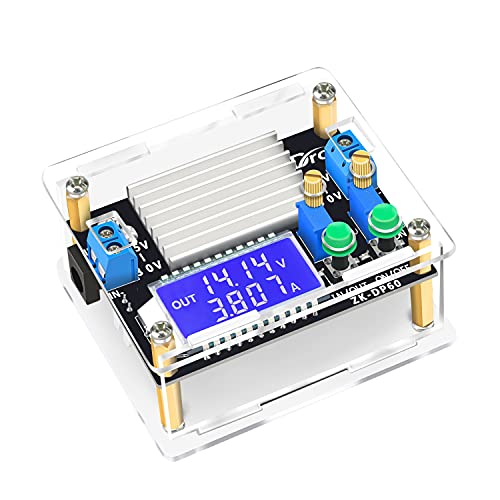
DROK Boost Buck Converter With Case LCD

DROK DC-DC Stabilizer 12V 5A 60W

DROK Adjustable Voltage Regulator Panel
HOMELYLIFE DC Voltage Reducer 12V 6A

Seloky LM2596 Buck Converter 2-Pack

XINGYHENG 8A High-Power Buck Boost Module
More Details On Our Top Picks
The BULVACK LM2596 module makes sense for bench drawers and small repair jobs, because you get a simple step-down board with an adjustable output from 1.25V to 30V DC and up to 3A on paper. The input window runs from 3.2V to 35V, but the source still has to sit above your target output, so this is for lowering voltage, not raising it.
That makes it a steady match for hobby enclosures, LED projects, and quick power experiments where space matters more than fancy controls. Compared with the panel-style DROK options later in this list, this one is much more bare-bones, which is exactly why it suits tidy, repetitive builds.
Strong Points
- Ten modules make it easy to stock parts for multiple builds.
- Adjustable output gives you room to match common low-voltage devices.
- Small footprint fits cramped enclosures and test boxes.
- 3A output suits light electronics work and simple prototypes.
Things To Consider
- It steps voltage down only, so it won’t help with a low input source.
- Bare modules usually need careful mounting and neat wiring.
- Owners often keep these in parts bins rather than exposed locations, since there is no enclosure.
Key Specs
Who It Suits Best
DIY electronics tinkerers and repair hobbyists who need a basic step-down module will get the most value here.
Where Another Pick Suits Better
DROK Boost Buck Converter With Case LCD suits you better for projects that need a display and more hands-on control.
This DROK board stands out because it works in both directions, stepping voltage up or down while staying inside a wide range. The included case and LCD display add a lot of day-to-day convenience, especially for bench work where you want to see the output instead of guessing.
Its 35W rating and 4A ceiling make it a practical middle ground for mixed-voltage projects, small appliances, and portable power setups. Compared with the simpler BULVACK pack, this one gives you more control in a single finished package, though that extra convenience also adds bulk.
What We Like
- Up and down conversion covers more project types than a step-down board.
- LCD readout helps you track output without adding a separate meter.
- Case included, so the module feels easier to mount and protect.
- Wide voltage range helps in mixed-input setups.
Minor Gripes
- The enclosed format takes more room than a bare module.
- Its 4A limit asks for realistic load planning.
- The more feature-heavy setup can feel like more than you need for a tiny project box.
Feature Card
Made For
You get the most from this one in bench setups, display projects, and mixed-source work where voltage can move in either direction.
Look Elsewhere When
Seloky LM2596 Buck Converter 2-Pack is the better fit for simple, low-cost step-down tasks that do not need a screen or enclosure.
Fixed 12V output makes this DROK stabilizer easier to place in real vehicles and utility installs, because you are not spending time tuning a wide range you may never use. The waterproof housing also points to tougher environments, which matters in cars, outdoor power projects, and equipment bays where dust or dampness can become part of the picture.
It takes a 9V to 36V input and delivers 12V at 5A and 60W, so the role is very clear, steady conversion rather than broad experimentation. Compared with the adjustable DROK panel above, this one is more focused and less flexible, yet that focus is a plus for clean 12V jobs.
Highlights
- Purpose-built 12V output keeps setup simple.
- Water-resistant construction suits more demanding locations.
- 60W rating works for many common 12V accessories.
- Useful in vehicle and display wiring where stable output matters.
Points To Note
- You do not get adjustable output, so it is narrow by design.
- Mounting space matters more once you move into enclosed vehicle installs.
- Because the job is specific, it is less useful for general bench experiments.
Details At A Glance
Whose Shelf It Belongs On
You should look here for car audio work, display screens, and solar-related installs that need a fixed 12V feed.
Another Choice May Suit
DROK Adjustable Voltage Regulator Panel is better for bench users who want to set different output levels instead of staying locked to 12V.
This panel-style DROK unit is the most hands-on pick in the group, and that matters in a workshop or test bench where quick readouts and frequent changes are part of the routine. Its buck-boost function covers a wide output window, while the separate buck range gives you a much larger step-down ceiling for jobs that live on the lower-voltage side.
The trade-off is plain enough, because the panel format asks for more installation effort than the plug-and-play feel of the HOMELYLIFE or the simple LM2596 boards. For control-minded hobbyists, though, that extra wiring is often worth it, almost like getting a proper dashboard instead of a single gauge.
Reasons To Buy
- Front-panel layout makes adjustment easier to manage.
- Wide operating range suits more advanced power projects.
- Constant-current support helps in setups that need more control over output behavior.
- Useful for hobby stations that change loads often.
Worth Noting
- The panel format needs more room and planning.
- It can be more module than a simple project really needs.
- Wiring and panel fit deserve a careful second look before installation.
Core Details
Best Suited To
You get the most out of this one in a bench environment, maker cabinet, or equipment rack where you want front-facing control.
Swap It Out When
BULVACK LM2596 Buck Converter 10 Pack is the easier route for simple step-down work and quick part-bin replacement.
The HOMELYLIFE unit is aimed at fixed 12V use, and that focus helps a lot in golf carts and similar vehicle projects where the load profile stays familiar. Its 8V to 40V input range gives you room to work with varying source voltage, while the 6A and 72W figures make it the most capacity-rich fixed-output pick here.
Compared with the DROK 12V stabilizer, this one leans a little more toward simple voltage reduction use, which is fine for installs that need steady 12V without much fuss. The waterproof design adds practical appeal, though you still want to plan mounting carefully so the housing stays protected and the cable run stays clean.
Best Bits
- Fixed 12V output keeps installation logic straightforward.
- Higher current headroom suits more demanding 12V accessories.
- Waterproof build helps in utility and vehicle environments.
- Useful for golf cart and club car style applications.
Softer Spots
- Its fixed-output focus leaves little room for broader experiments.
- Vehicle installation usually benefits from careful cable routing and secure mounting.
- The stronger capacity is helpful, but only within the stated 12V role.
Spec Overview
The Right Fit
Vehicle owners and cart modders who need a steady 12V feed for accessories will find this one especially practical.
Reach For A Different Pick When
DROK Boost Buck Converter With Case LCD is the better route for mixed-voltage bench work that needs visible feedback.
Seloky’s LM2596 pair feels aimed at practical repeat use, especially for people who keep a small pile of regulators for repairs, prototypes, and quick swaps. The 150KHz switching frequency, solid capacitors, and LED voltmeter display all point toward a module that wants to be easy to read and reasonably stable in a compact setup.
The screwdriver-adjusted output and terminal blocks make life easier in a workbench drawer, since you can wire it without soldering and set the output without extra tools. Compared with the BULVACK 10-pack, this one gives you fewer modules but a little more convenience per board, which may suit a tidy bench better than a big parts stash.
Positives
- Two-pack format works well for backup parts and small projects.
- LED voltmeter gives you a quick visual check of output.
- Terminal blocks reduce wiring hassle for basic installs.
- Solid capacitors and higher-frequency design support cleaner day-to-day use.
Areas To Watch
- It is still a step-down module, so it cannot raise voltage.
- Mini-screwdriver adjustment is simple, but not as fast as a front panel knob.
- Open-board layout asks for careful placement in dusty or crowded enclosures.
Technical Sheet
Built With In Mind
This is a solid match for bench builders and repair tinkerers who want an easy-to-wire step-down board with a display.
Where Shoppers Go Wrong
XINGYHENG 8A High-Power Buck Boost Module is the more sensible option for projects that need boost capability or a higher current ceiling.
This XINGYHENG module is the right kind of serious for projects that push harder than a tiny hobby board can comfortably handle. The 8A ceiling, adjustable output from 1.25V to 30V, and buck-boost behavior give it broader usefulness than the simpler step-down-only picks, especially in custom power supplies and mixed-source setups.
The nickel-plated surface and copper inner conductor point to a more durable build approach, and the two heat sinks help with heat spread when the input and output voltages sit far apart. One caution worth keeping in mind is that bigger gaps between input and output usually demand a lighter load, so this suits planned installs better than casual trial-and-error.
Upsides
- 8A capacity gives you more headroom than the smaller boards here.
- Buck-boost function covers both lower and higher voltage needs.
- Heat sinks help with thermal management in tougher installs.
- Copper conductor and plated surface point to a more durable build style.
Small Caveats
- It still needs sensible load planning, especially with large input-output gaps.
- Open-module design benefits from solid mounting and clean airflow.
- The extra power capacity makes it a little less casual than the low-cost LM2596 picks.
Feature Rundown
Perfect Match For
You should look at this one for custom power supplies, bigger DIY loads, and projects that need both step-up and step-down flexibility.
Where A Sibling Pick Shines
Seloky LM2596 Buck Converter 2-Pack is the cleaner fit for simple step-down work where ease and price matter more than current headroom.
How To Choose The Right Buck Boost Converters
Match The Direction To The Job
Start with the voltage direction, because that choice filters out half the category right away. A buck module only lowers voltage, while a buck-boost module can raise or lower it, which matters in mixed-source projects, battery systems, and vehicle installs. A fixed-output 12V unit fits a clear purpose, but a broad adjustment range helps more in bench work and custom builds.
Check Current, Heat, And Load Discipline
Current rating tells you how much load the module can reasonably support, but that number works best alongside heat management and enclosure space. A small bare board may be enough for sensors or displays, while a higher-power panel or heatsinked module makes more sense for heavier accessories. For long runs or warm enclosures, a little breathing room in the spec sheet is worth more than chasing the highest number.
Think About Controls And Mounting
A display, terminal blocks, or a front panel can save time every time you power up and adjust. Those features also add size, so compact projects often do better with a simple board like an LM2596 module. In a crowded case, less hardware usually means easier wiring and fewer awkward reroutes.
Choose For The Environment You Live In
Vehicle, cart, and outdoor-style installs place more weight on housing, moisture resistance, and secure mounting than a bare workbench does. Bench hobbyists can lean toward flexibility and quick access, while fixed installs benefit from cleaner packaging and steadier output behavior. The right pick is usually the one that matches the messiness of your real setup.
A Quick Reality Check
Common Shopping Slip Ups
Many people focus only on output voltage and skip input range, which leads to a module that looks useful on paper but misses the actual source voltage. Another common miss is choosing a step-down board for a job that sometimes needs boost behavior. Clear wiring space matters too, because a tiny module can still become awkward once terminals and cables are added.
What The Higher Tier Buys
Higher-end modules usually spend the extra cost on better controls, more complete housings, stronger current headroom, or easier readouts. That matters most in repeat-use setups, vehicle installs, and benches where you adjust voltage often. For a one-off toy circuit, the extra spend may not feel necessary, but for a workhorse setup, the convenience tends to pay back in time saved.
Frequently Asked Questions
What does a buck boost converter do?
A buck boost converter can lower voltage, raise it, or both, depending on the design. That makes it useful when your source voltage does not match what the device needs.
Do you need a buck boost converter for 12V systems?
A fixed 12V output model makes sense when your device wants a steady 12V supply. A simple buck board can also work when your source voltage is always higher than 12V.
How do you know which current rating to choose?
Add up the load your device or devices draw, then leave some room above that total. A board that sits too close to its limit tends to run less comfortably in real use.
Is a display worth paying for?
A display helps when you adjust voltage often or want a quick visual check before powering gear. For set-and-forget jobs, a plain module can be perfectly fine.
Are heatsinks important?
Heatsinks matter more as load and voltage difference grow, because extra heat has to go somewhere. They are especially useful in enclosed spaces or in modules that run for long periods.
Final Thoughts
You get the best results from a buck boost converter when you match the module to a real job, not just a headline number. Simple step-down boards suit small bench builds, fixed 12V units suit vehicles and carts, and more elaborate panel modules make sense for frequent adjustments. For most setups, the cleanest choice is the one that gives you enough headroom without adding wiring headaches. Keep your use case in front, and the right pick becomes much easier to see.
