

A good breadboard setup quietly decides whether a project feels like play or frustration. I’ve spent enough late nights chasing loose jumper wires and cold solder joints to know that the right prototyping surface changes the whole experience. This roundup gathers ten solid breadboard and power supply options for hobbyists, students, and makers who want their workbench to keep up with their ideas.
The Lineup, Simplified

ELEGOO 32Pcs Double Sided PCB Board Prototype Kit

ElectroCookie Large Solderable Breadboard (Matte Black, 3 Pack)

ElectroCookie Breadboard Style PCB Solder Board with Terminal Blocks

EPLZON Mini PCB Solder Breadboard 2.0″x1.5″ (6 Pack)

ElectroCookie Large PCB Prototype Board Kit (Blue, 6 Pack)

ELEGOO UNO R3 Project Most Complete Starter Kit

Busboard BB400 Solderless Plug-in BreadBoard

EPLZON Solderable Breadboard PCB 3.5″x2.05″ (10 Pack)
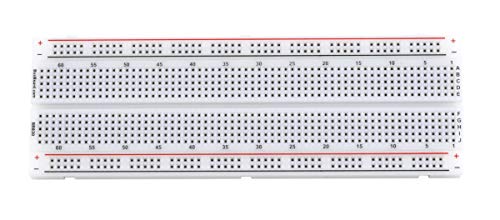
Busboard BB830 Solderless Plug-in BreadBoard

REXQualis 4PCS Breadboards Kit (2x 830 + 2x 400 Point)
More Details On Our Top Picks
A classroom-friendly assortment of double-sided prototype PCBs, the ELEGOO 32-piece kit arrives in a plastic tray that keeps things organized between sessions. Five different board sizes cover small sensor breakouts up to mid-sized Arduino shields, so a student can move from one project to the next without rummaging through loose parts.
Pre-tinned plated-through holes make soldering noticeably easier for newcomers, and four corner mounting holes let finished boards screw into a project enclosure. Compare that to bare perfboard, and the time savings on a hobby project add up quickly.
Points In Its Favor
- Five board sizes in one tray cover most hobbyist layouts
- Pre-tinned holes speed up soldering for first-time builders
- Corner mounting holes ready for enclosure installation
- Double-sided construction allows traces on both sides
Things To Consider
- No color-coding, so labeling by hand may help when boards pile up
- Not pre-scored, so cuts need a saw or shears for custom shapes
Made For
Students and instructors running electronics labs who need a steady supply of varied prototype boards in one organized kit.
Look Elsewhere When
Pick the ElectroCookie Large Solderable Breadboard (Matte Black, 3 Pack) when permanent gold-plated reliability matters more than variety.
Designed for moving a solderless prototype over to a permanent circuit, the ElectroCookie Large board earns its keep in serious project work. The 6.8″x2.05″ footprint mirrors a standard full-size breadboard layout, so a working sketch transfers without redrawing.
A gold-plated surface helps resist oxidation, which matters once a board sits in a finished enclosure for months. M3 and M2 mounting holes make it easy to fasten into a project case alongside the ELEGOO 32Pcs kit if you keep both on hand.
Key Advantages
- Matches a standard breadboard footprint
- Gold plating resists oxidation for long-term installations
- Both M3 and M2 mounting holes ready for enclosure work
- Three-pack spreads cost across multiple builds
Honest Caveats
- Matte black finish can make fine trace inspection harder under poor lighting
- No included terminal blocks, so external wiring needs separate connectors
Best Suited To
Makers transitioning a solderless prototype into a finished, permanent circuit that needs to last.
Swap It Out When
Reach for the EPLZON Mini PCB Solder Breadboard 2.0″x1.5″ (6 Pack) for tiny wearables where this full-size board is overkill.
Six differently colored boards plus seven screw terminal blocks arrive in one bundle, which removes a common shopping trip. The 3.5″x2.05″ dimensions echo a half-size breadboard, so an Arduino Nano or small MCU project drops in cleanly.
Gold plating keeps oxidation at bay, and the included terminals let you land external power leads without soldering stranded wire straight to the board. For Arduino tinkering, that wiring flexibility is the real selling point.
Notable Gains
- Six colors help label projects by function
- Seven screw terminals included for external wiring
- Half-size breadboard footprint suits most Arduino builds
- Gold plating keeps solder joints clean over time
Points To Keep In Mind
- Smaller footprint limits use with full-size shields
- Color variety adds visual clutter for some workspaces
Right Fit For
Arduino hobbyists who want labeled boards and ready-made terminal connections bundled together.
Not Your Match When
Consider the Busboard BB830 Solderless Plug-in BreadBoard when a large solderless workspace matters more than permanent soldering.
When a project shrinks down to a NodeMCU, ESP8266, or Arduino Nano footprint, a full-size board wastes bench space. EPLZON’s 2.0″x1.5″ mini boards arrive in a mixed-color pack of six, sized for those compact MCUs.
Gold-plated pads handle DIP components well, and the small canvas encourages tidy layouts. Raspberry Pi GPIO ribbon headers and similar breakout boards fit without crowding, which is why makers often keep a few of these stashed alongside larger breadboards.
What Earns Its Place
- Compact size fits NodeMCU, ESP8266, and Nano projects
- Six-pack covers several small builds
- Gold plating handles DIP components cleanly
- Mixed hues aid quick visual identification
Worth Noting
- Too small for shields or wider breakout boards
- Limited expansion room once a board fills up
Quick Facts
Perfect Match For
Makers working on compact IoT and sensor builds where a small board keeps the project tidy.
Reach For A Different Pick When
Pick the ElectroCookie Large PCB Prototype Board Kit (Blue, 6 Pack) for projects that need both small and large boards in the same order.
Six boards split between a 6.8″x2.05″ full-size layout and a 3.8″x3.5″ square give a workspace genuine flexibility. The square boards handle Arduino shields nicely, while the long boards take on multi-IC designs.
Gold-plated holes line up with the rest of the ElectroCookie family, and the M3 plus M2 mounting holes are a small but thoughtful touch for project enclosures. Blue solder mask also makes traces easier to follow under a magnifier.
What Stands Out
- Two board sizes share one order
- Blue solder mask aids trace visibility
- Gold plating matches the rest of the ElectroCookie line
- M3 and M2 mounting holes for enclosure work
Points To Note
- Six-pack may be more than casual hobbyists need
- Larger boards take up more shelf space when stored
Who Will Love This
Workspaces running several parallel projects where both square and full-size boards stay in rotation.
Where Another Pick Suits Better
Skip this kit and grab the EPLZON Solderable Breadboard PCB 3.5″x2.05″ (10 Pack) when bulk classroom supply matters more than size variety.
For someone just stepping into Arduino, a single kit that bundles an UNO R3 board, 37 sensor modules, and 120 multicolored jumper wires removes the guesswork of figuring out what else to buy. Tutorials guide learners from LED basics through RFID, motor control, and LCD displays.
The Dupont wires ribbon out to male-to-male, male-to-female, and female-to-female, which covers most breadboard hookups without extra trips to the parts drawer. It’s the kind of starter bundle that gets a complete beginner through the first few months.
What Makes Sense
- All-in-one starter reduces guesswork for beginners
- 120 jumper wires in three connector styles
- 37 sensor modules cover LEDs through RFID
- Tutorials walk through 30+ guided projects
Practical Considerations
- Sensor count may go unused for focused learners
- Larger kit takes more shelf space than minimal starters
Built With In Mind
First-time Arduino builders who want a guided path from blinking an LED to more involved sensor projects.
Skip It When
Pick the Busboard BB400 Solderless Plug-in BreadBoard for makers who already own sensors and only need a clean breadboard surface.
Busboard’s BB400 has earned a reputation for crisp, dependable tie-point contacts, and the 3.3″x2.2″ body fits tight workbenches where a full-size board would crowd the desk. Four power rails give serious flexibility for dual-supply circuits.
Owners commonly report the contact feel stays firm over years of plugging and unplugging. For small experiments, this is the kind of board that quietly outlasts cheaper alternatives.
Useful Touches
- Four power rails for dual-supply circuits
- Compact footprint suits tight workbenches
- Self-adhesive backing mounts to a shield or case
- Crisp legend printing aids quick component placement
Small Caveats
- 400 tie points fill up fast on larger builds
- No color-coded rails on this compact model
Whose Shelf It Belongs On
Makers running small, focused circuit experiments who want a board that holds up over years of daily use.
A Better Fit Elsewhere
Consider the REXQualis 4PCS Breadboards Kit (2x 830 + 2x 400 Point) for a versatile mix of small and large solderless boards.
Ten boards for the price of a few singles, this EPLZON pack covers the kind of volume that workshops, classrooms, and repair benches burn through. The 3.5″x2.05″ footprint suits small MCU builds the same way the ElectroCookie half-size option does.
Black solder mask reduces glare under bench lamps, and gold plating handles repeated soldering without pad lift. For a maker running Raspberry Pi GPIO headers or DIP-based projects, ten boards lets you experiment without hoarding.
A Few Highlights
- Ten boards stretch budget across multiple builds
- Black solder mask cuts glare under bench lamps
- Gold plating holds up to repeated soldering
- Half-size footprint suits Nano and Pi GPIO work
Factors To Consider
- More boards than casual hobbyists need
- Black finish can hide fine trace details in dim light
Who Should Grab It
Workshops and classrooms running multiple parallel builds where bulk supply beats variety.
Consider Something Else When
Pick the ElectroCookie Breadboard Style PCB Solder Board with Terminal Blocks when screw terminals are part of the build.
The BB830 is the full-size counterpart to the BB400, and it remains the go-to workhorse for mid-sized circuit layouts. With 830 tie points and four power rails, mid-density builds like sensor clusters or motor controllers fit comfortably.
Busboard’s reputation for crisp tie-point contacts travels over from the BB400, which matters for circuits that get plugged and unplugged often. The 6.5″x2.2″ footprint matches what most tutorials assume when they describe a “standard breadboard.”
A Strong Showing
- 830 tie points handle mid-density builds
- Four power rails for multi-supply projects
- Full-size 6.5″x2.2″ footprint matches tutorial diagrams
- Self-adhesive backing mounts cleanly
Where It Is Less Suited
- Larger footprint crowds small workbenches
- Single board means no spare if a tie point fails
Key Specs
The Right Fit
Makers running mid-sized projects where a larger solderless canvas cuts down on jumper-wire gymnastics.
Another Choice May Suit
Choose the ElectroCookie Large Solderable Breadboard (Matte Black, 3 Pack) when the build needs to move from solderless to permanent.
Two 830-point and two 400-point solderless breadboards in one kit give a workspace instant versatility. The white ABS body with black printed legend stays readable, while color legend on the distribution strips helps separate power rails at a glance.
Self-adhesive tape on the back sticks directly onto an Arduino prototype shield or a project case. For wire gauges in the 20-29 AWG range, the contact hold feels firm in most bench setups.
Useful Strengths
- Four boards cover small and mid-sized builds
- Self-adhesive backing mounts on shields or cases
- Color legend on distribution strips aids wiring
- ABS body holds up to repeated plugging
Trade-Offs
- Adhesive may weaken on rougher case finishes
- White body shows dust and scratches more than darker boards
Who It Suits Best
Workbench builders who want a mix of board sizes ready for projects that range in complexity.
Where A Sibling Pick Shines
Pick the Busboard BB830 Solderless Plug-in BreadBoard when a single premium full-size board is preferable to a mixed-value kit.
What To Weigh Before Buying Breadboard And Power Supplies
Solderless vs. Solderable
A solderless breadboard lets you rearrange parts in seconds, which is perfect for testing ideas. A solderable prototype board turns a working sketch into a permanent circuit. Most makers keep both, using solderless boards for quick experimentation and solderable boards once a design is locked in.
Size and Layout
Standard full-size and half-size layouts match most tutorials and shields. A 6.5″x2.2″ full-size board handles mid-density projects, while a 3.3″x2.2″ half-size works for focused experiments. Larger square boards handle Arduino shields, and mini boards suit NodeMCU and Nano builds.
Power Rails and Distribution
Power rails are the long strips running down each side, used to share voltage and ground across a circuit. Boards with four rails support dual-supply projects. For projects using 3.3V and 5V MCUs side by side, four rails reduce wiring clutter considerably.
Surface Finish and Mounting
Gold plating resists oxidation, which matters for boards that sit inside enclosures for months. Mounting holes (M2 or M3) make it easier to fasten finished boards into cases or shields. For workshops running multiple builds, these details save time during the final assembly.
Smart Habits For Picking The Right Setup
Common Shopping Slip Ups
A common slip is buying only solderless breadboards and ending up with a tangle of jumper wires for every finished project. Another trap is grabbing the cheapest boards and finding tie points that go soft after a few months. Owners commonly report that mid-grade boards with metal reinforcement contacts hold up better over time.
What The Higher Tier Buys
Higher-tier solderable boards often bring gold plating and consistent plated-through holes, which makes a real difference for boards that get soldered and unsoldered repeatedly. Premium solderless boards offer crisper legends, firmer contacts, and color-coded rails that simplify wiring. Whether the upgrade is worth it depends on how often a project moves from sketch to permanent circuit.
Frequently Asked Questions
What Is The Difference Between Solderless And Solderable Breadboards?
A solderless breadboard uses spring contacts to hold component leads, allowing fast changes, whereas a solderable prototype board requires soldering components in place for a permanent circuit.
How Many Tie Points Do I Need?
For small circuits with one or two ICs, 400 tie points usually suffice, while mid-sized builds with multiple sensors and ICs often need 800 or more points.
Do I Need Gold-Plated Prototype Boards?
Gold plating helps resist oxidation, which keeps solder joints reliable in long-term installations, especially in humid environments.
Can I Use These Boards With Arduino?
Yes, both solderless and solderable boards in this roundup work with Arduino UNO, Nano, and Mega boards, and most also fit NodeMCU and ESP8266 projects.
What Wire Gauge Works Best?
Most solderless breadboards accept 20-29 AWG wire, which covers standard solid-core jumper wires used in hobby electronics.
Final Verdict
A solid breadboard setup grows with you, from the first blinking LED to finished projects that ship to friends. Match the board to your most common project size, keep one solderless and one solderable option handy, and the bench stays ready for the next idea.
