

I’ve spent enough mornings scrambling for outlets in a dark kitchen to know that a reliable portable power source changes everything. Whether you’re rigging a tailgate, prepping for storm season, or just want to keep your laptop alive at a remote campsite, the right battery power station pays for itself the first time the grid blinks. The eight units below cover everything from apartment-friendly 1kWh workhorses to RV-ready 3kWh tanks, with realistic notes on weight, ports, and the trade-offs each one carries.
A Quick View Of The Lineup
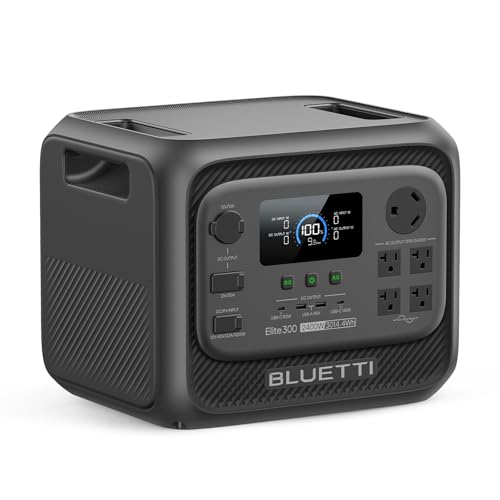
BLUETTI Elite 300 Portable Power Station (3014.4Wh)

EF ECOFLOW Delta 3 Portable Power Station 1024Wh

BLUETTI Elite 100 V2 Portable Power Station 1024Wh

BLUETTI AC200L Portable Power Station 2048Wh LiFePO4

BLUETTI Elite 200 V2 Portable Power Station 2073.6Wh

STARYLINE 1000W 1024Wh Portable Power Station

STARYLINE 1000W 1024Wh LiFePO4 Power Station

EF ECOFLOW River 3 Plus EB600 Extra Battery
Meet The Standout Selections
Most 3kWh units feel like carrying a small suitcase full of bricks, but the BLUETTI Elite 300 is built around the opposite problem: how do you pack serious capacity into something that still fits behind the driver’s seat? That’s the trade-off here. You get 3014.4Wh in a body BLUETTI positions as nearly 59% smaller than traditional large stations, so for RV owners who hate wasting basement space, this one earns its keep before you even plug anything in.
For home backup, that 3kWh reservoir covers a fridge, internet router, and a few lamps through a short outage without rationing. The chemistry is LiFePO4 (lithium iron phosphate), which typically outlasts standard NMC cells and tolerates heat better, and BLUETTI has built its reputation on that chemistry. If you need a station that doubles as household insurance and road-trip fuel, this is the one I’d point to first.
Real-World Strengths
- 3014.4Wh capacity handles multi-day outages for essentials
- LiFePO4 battery chemistry for longer cycle life
- Compact 3kWh form factor saves space in RVs and closets
- Single unit replaces a stack of smaller stations
- Trusted brand reputation for home backup scenarios
Things To Consider
- Still substantial weight for a single carry into a campsite
- Recharging from a wall takes patience at this capacity
Whose Shelf It Belongs On
RV travelers and homeowners prepping for outage season who want one serious unit instead of a stack of small ones.
Reach For A Different Pick When
Weekend campers who mostly charge phones and lanterns will get more value from the lighter BLUETTI Elite 100 V2.
Recharge speed is the silent killer of portable power: nothing worse than draining your station Saturday and waiting until Sunday afternoon to use it again. The EF ECOFLOW Delta 3 attacks that pain point with a full-charge claim around 56 minutes using combined AC and solar input, and 80% in roughly 30 minutes on AC alone. For people who bounce between jobsites or rotate the unit between home and truck, that turnaround matters more than raw capacity.
Under the hood you get 1024Wh with 1800W of continuous AC output, which covers everything from a microwave to a circular saw. Where it gets clever is the ecosystem: you can pair it with extra battery packs in EcoFlow’s lineup to scale up to 5kWh as your needs grow. Compared to the BLUETTI Elite 100 V2 I just covered, this unit leans harder into fast turnaround and modular expansion, while the BLUETTI leans into port count and pure camping readiness.
Positive Takeaways
- Full recharge in roughly 56 minutes combined
- 80% recharge in about 30 minutes from AC
- 1800W output handles most household appliances
- Expandable to 5kWh with ecosystem batteries
- Solid option for shared household and jobsite use
Honest Caveats
- Expansion batteries cost extra beyond the base unit
- Shorter runtime per charge than the 3kWh BLUETTI Elite 300
Key Specs
Who Should Grab It
Anyone who cycles their station between trips or shifts and hates waiting hours to recharge.
Skip It When
RV travelers needing multi-day off-grid capacity will find the BLUETTI Elite 300 a more generous reservoir.
Campers want ports, not promises. The BLUETTI Elite 100 V2 shows up with 11 outlets on a 1024Wh battery, which is unusually generous for this capacity class. That means you can run a phone, a camera battery bank, a lantern, a CPAP, and a small cooler at the same time without playing musical chairs. For a family of four at a state park, that’s the difference between relaxing and refereeing plug access.
Output tops out at 1800W rated AC with a 2700W power-lifting mode for high-draw surges, so it handles most everyday appliances. Charging is brisk too: BLUETTI lists around 70 minutes via AC TurboBoost or up to 1000W of solar input, which is meaningful for off-grid trips where wall outlets don’t exist. Sitting between the EF ECOFLOW Delta 3 and the heavier BLUETTI Elite 200 V2, this one hits a sweet spot for campers who need port flexibility without lugging a 2kWh brick.
A Strong Showing
- 11 ports handle a full family’s charging setup
- 1800W rated with 2700W surge headroom
- Around 70 minutes to full via AC
- Up to 1000W solar input for off-grid recharging
- LiFePO4 chemistry for long cycle life
Points To Note
- Heavier than pocket-class stations despite the “V2” trim
- Solar input ceiling lower than some larger competitors
Perfect Match For
Family campers and tailgaters who want maximum port variety in a 1kWh-class body.
A Better Fit Elsewhere
RV owners needing days of off-grid capacity should look at the BLUETTI Elite 300 instead.
The BLUETTI AC200L sits in the middle of the lineup, but “middle” undersells what it does. You’re getting 2048Wh of LiFePO4 storage at 2400W of continuous AC output, which is enough to run a microwave, a small window AC, or a table saw without blinking. Where it pulls ahead of the 1kWh units I’ve already covered is the expansion story: BLUETTI lists compatibility with multiple expansion batteries, pushing the ceiling as high as 8192Wh. That’s not a power station, that’s a small home system.
Fast charging is part of the package too, with a roughly 45-minute fast-recharge claim via AC input. For shop owners, off-grid tiny homes, and anyone running power tools in the field, this is the kind of unit that replaces a gas generator for most tasks. Compared to the BLUETTI Elite 200 V2 below, this one trades a bit of peak output for more expansion headroom and a longer track record, since the AC200L has been in BLUETTI’s lineup longer.
Strengths Worth Knowing
- 2048Wh capacity with 2400W continuous output
- Expandable to 8192Wh with add-on batteries
- About 45 minutes to full via fast AC charging
- LiFePO4 chemistry for long cycle life
- Workhorse choice for jobsite and tiny home use
Worth Bearing In Mind
- Add-on expansion batteries are a separate purchase
- Bulkier than 1kWh units, so plan storage space
Feature Snapshot
Best Suited To
Workshop owners and off-grid tiny home dwellers who want a scalable, expandable power hub.
Consider Something Else When
Light recreational campers will do better with the smaller, port-rich BLUETTI Elite 100 V2.
Some appliances simply refuse to behave on a “small” station. Hair dryers, kettles, and full-size coffee makers all want sustained power above the 2000W line, which is exactly where the BLUETTI Elite 200 V2 lives. With 2600W continuous AC output and a 3900W power-lifting mode, this unit is built to handle the things that make other stations trip their breakers. For households where a power outage shouldn’t mean cold coffee and unstyled hair, that’s the pitch.
Capacity lands at 2073.6Wh, which BLUETTI emphasizes as more usable than competitors’ same-numbered units thanks to higher conversion efficiency. You also get up to nine devices running simultaneously, so this doubles as a multi-device hub during blackouts. Looking at the BLUETTI AC200L just above, the Elite 200 V2 trades some expansion ceiling for higher peak output and a newer design, so the choice comes down to whether you value scalability or raw wattage more.
Standout Benefits
- 2600W continuous, 3900W surge for tough loads
- Higher usable capacity than similarly rated units
- Powers up to 9 devices at once
- Strong fit for high-draw kitchen appliances
- Modern BLUETTI build with refined efficiency
Trade Offs
- Lower expansion ceiling than the AC200L
- Premium positioning means higher entry cost
Made For
Homeowners and road-trippers running high-wattage kitchen gear who care about usable capacity, not just the headline number.
Look Elsewhere When
Those planning to grow into a multi-kWh home system will find the BLUETTI AC200L more scalable.
The STARYLINE 1000W sits in the most crowded part of the market, the 1kWh value tier, and that’s where it earns its place. For shoppers who want a sensible entry point without the brand tax of a big-name unit, this one covers the basics: 1024Wh capacity, 1000W of continuous output, and the ports needed for a phone, laptop, mini-fridge, and a few lights during an outage. Nothing flashy, just the practical stuff.
The honest read is that you’re trading ecosystem polish and ecosystem expansion for a friendlier price. There’s an optional 200W solar panel bundle for off-grid charging, and three color options (black, white, gray) that share the same internals. If you’re a first-time portable power shopper who isn’t ready to commit to a high-end ecosystem, this is a sensible place to start before graduating to something like the BLUETTI Elite 100 V2 down the line.
Points In Its Favor
- Lower entry price for first-time buyers
- 1000W output covers common household devices
- Optional 200W solar panel bundle available
- Three color choices with identical internals
- Solid starter unit before scaling up
Practical Considerations
- Lower 1000W ceiling than competing 1800W models
- Less mature brand ecosystem for expansion batteries
Right Fit For
First-time shoppers testing the portable power category without committing to a premium ecosystem.
Swap It Out When
Anyone planning to run hair dryers or kettles should step up to the BLUETTI Elite 200 V2 for the higher output.
Chemistry matters more than most shoppers realize. LiFePO4 cells (lithium iron phosphate) typically deliver thousands more charge cycles than the older NMC packs found in cheap consumer electronics, which means this STARYLINE unit is built to stay in your household for the long haul. Pair that with 1024Wh of capacity and 1000W of continuous output, and you have an everyday backup that won’t need replacing in two years.
The port layout covers the basics: two AC outlets, a 60W USB-C PD port that handles a laptop, and two USB-A ports for older cables. Owners commonly cite the LiFePO4 longevity as the deciding factor over similar-capacity NMC units. Between this STARYLINE and the one above it, the difference is really chemistry philosophy: if long-term daily use matters more than peak output, this one quietly wins.
Positive Points
- LiFePO4 chemistry for extended cycle life
- 60W USB-C PD port for laptop charging
- 1024Wh capacity suits daily backup use
- Powers five devices at the same time
- Strong value for long-term household ownership
Some Limits To Know
- 1000W ceiling limits heavier appliances
- No mention of solar input in source specs
Who Will Love This
Households wanting a long-life backup unit for daily essentials without paying premium-brand prices.
Where Another Pick Suits Better
Shoppers wanting stronger solar input should consider the BLUETTI Elite 100 V2 instead.
The EF ECOFLOW EB600 isn’t a stand-alone power station, and that’s the point. It’s an extra battery designed to snap onto the River 3 Plus via a pogo-pin connection (a magnetic-style contact that lets the modules dock without cables), which adds 572Wh of capacity on top of the base unit’s 286Wh, taking you to 858Wh total. For owners who already have the River 3 Plus, this is the modular upgrade that lets a small station behave like a mid-sized one.
EcoFlow notes the EB600 can run a car fridge for roughly 10.8 hours or a travel kettle for about 60 minutes on its own, and the no-cable stacking makes it genuinely portable. The honest caveat is that this is an accessory, not a primary buy: without the River 3 Plus host unit, it can’t do anything on its own in any practical sense. Think of it as the second purchase after you’ve decided the ecosystem fits your life.
Why It Works Well
- Adds 572Wh to a River 3 Plus base unit
- Pogo-pin dock needs no extra cables
- Can run independently for small loads
- Modular path to expand a starter system
Less Ideal Details
- Requires a River 3 Plus to function as a system
- Modular price adds up versus a single larger station
Who It Suits Best
Existing River 3 Plus owners who want a tidy modular path to more capacity without buying a whole new station.
Not Your Match When
Shoppers starting from scratch will get more value from a complete unit like the BLUETTI Elite 100 V2.
What To Weigh Before Choosing A Portable Power Station
Capacity and output are the obvious numbers, but they aren’t the only ones that matter. Real ownership comes down to chemistry, ports, recharge speed, and how the unit fits your daily rhythm rather than spec-sheet fantasies.
Capacity Vs. Real-World Output
A 3kWh station sounds impressive, but usable watt-hours drop once you factor in inverter efficiency (the energy lost converting DC battery power to AC outlet power). If you want a station that survives daily fridge-and-router duty for a multi-hour outage, lean toward 2kWh or above. For a weekend of phone and laptop charging, 1kWh is enough.
Battery Chemistry Trade-Offs
LiFePO4 cells last longer and tolerate heat better than NMC packs, which is why nearly every pick above uses LiFePO4. The trade-off is slightly higher weight per watt-hour. If a unit lives in your garage or closet for years, LiFePO4 pays off; if it’s a once-a-season camping buddy, the difference is less critical.
Ports And Recharge Behavior
Look at port layout, not just count: a USB-C PD port (Power Delivery, a fast-charging standard) matters more than five USB-A ports if you carry a laptop. Solar input ceilings determine how fast you refill off-grid, and AC fast-charge times dictate how the unit fits between uses.
Use Case Matters Most
Match the unit to the scenario: RV travelers want capacity, campers want ports, jobsite users want output. Buying the “biggest” number rarely beats buying the right tool for the way you actually live.
Smart Choices Before You Click
Pitfalls Shoppers Hit
The most common trap is buying on capacity alone and ending up with a station that can’t run the one appliance that mattered, like a kettle or a hair dryer. Always check the continuous AC output, not just the watt-hour number. Another miss is ignoring recharge behavior: a 3kWh tank that takes nine hours to refill isn’t useful for daily cycling. Solar input ceilings also catch people off guard when they assume any panel works.
Why Top Tier Costs More
Higher-end stations justify their price through LiFePO4 chemistry, faster AC charging, brand-tracked firmware updates, and expansion ecosystems. Premium picks like the BLUETTI Elite 300 and Elite 200 V2 also tend to use more efficient inverters, which means more of those watt-hours actually reach your devices. The honest read is that paying up gets you longevity and faster turnaround, not just bigger numbers.
Frequently Asked Questions
How long can a 1kWh power station run a fridge?
A typical mini-fridge draws 50 to 100W, so a 1kWh station can run one for roughly 10 to 18 hours, accounting for inverter losses and the fridge’s compressor cycling on and off.
Can these stations run a CPAP overnight?
Yes, most 1kWh units handle a standard CPAP using its DC adapter for one to two nights. Heated humidifiers draw more power and shorten that runtime significantly.
Is solar input really worth using?
For off-grid trips or extended outages, yes. Solar lets you stretch capacity without grid access, but recharge speed depends heavily on panel wattage and direct sunlight.
Do LiFePO4 stations really last longer?
LiFePO4 cells typically deliver 2,500 to 3,500+ charge cycles before noticeable degradation, compared to around 500 to 1,000 for older NMC packs, so the longevity claim holds up.
Can I take these on a plane?
Generally no. Most portable power stations exceed airline battery limits for both carry-on and checked luggage, so they’re road- and ship-only for travel.
The Takeaway
Battery power stations come in many shapes, but the right one matches your actual routine rather than the biggest spec sheet. RV owners will love the BLUETTI Elite 300, campers will appreciate the BLUETTI Elite 100 V2, and value shoppers get solid footing with the STARYLINE LiFePO4 unit. Pick the tool that fits how you live, and the rest sorts itself out.
