

Battery work rarely lines up with the way a vehicle or solar array is actually laid out. The factory harness reaches one spot, but the battery you want to connect lives in a different corner, and standard jumpers don’t bridge that gap cleanly. I’ve spent enough time routing cables through engine bays, RV battery compartments, and cramped solar setups to know that the right gauge, length, and connector type makes the difference between a tidy install and a weekend of frustration. This roundup covers ten battery extension cables that solve real reach problems, from short SAE jumpers to long 2 AWG welding-grade runs.
A Snapshot Of The Selections

ELFCULB SAE to O Ring Terminal Cable 10AWG 5FT

Oyviny 1FT SAE Extension Cable 12AWG
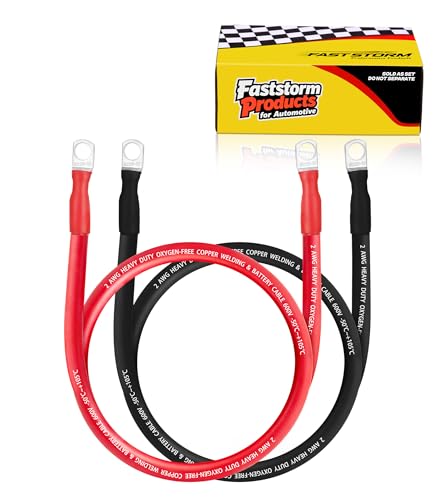
FASTSTORM 2 AWG Battery Cable 2FT Pair
FASTSTORM 2 AWG Battery Cable 3FT Pair

Hiutgowt 10AWG XT60i Solar Cable 30FT

Oyviny 14AWG SAE Extension Cable 15FT

Oyviny 10AWG SAE to MC4 Adapter 20FT

Oyviny 10AWG SAE to MC4 Adapter 10FT

MOOKEERF 4 Gauge Battery Cable 10FT Pair

FASTSTORM 2 AWG Battery Cable 10FT with Lugs
The Strengths Of Each Pick
When the factory battery lead stops short of the spot you’ve mounted an accessory, a 10AWG tinned-copper run with O-ring terminations solves it cleanly. ELFCULB’s 5-foot extension carries an SAE quick-disconnect on one end and ring terminals on the other, which is the most common combo for motorcycles, ATVs, and small RV battery drops. The PVC jacket stays flexible in winter, so routing along a frame rail or tucked behind a seat doesn’t fight you back.
Compared to the much shorter Oyviny SAE cable coming up next, this one gives meaningful reach without forcing a coil of excess. Most riders and weekend campers will find the gauge and insulation more than enough for trickle chargers and small DC loads.
A Strong Showing
- 10AWG tinned copper resists corrosion better than bare copper in humid or salty environments
- PVC jacket rated for high heat, so it survives engine bay proximity
- SAE to O-ring combo covers the most common motorcycle and RV hookup pattern
- 5-foot reach bridges most accessory-to-battery gaps without excess slack
- Flexible jacket makes routing through tight frame gaps manageable
Points To Keep In Mind
- Not rated for high-amperage inverter loads, so it sits in the accessory and charging lane
- The 5-foot length can run short on larger RVs with battery compartments far from the chassis ground
Who Should Grab It
Motorcycle owners and RV owners wiring a single trickle charger or small DC accessory who want a no-fuss SAE-to-ring hookup.
Look Elsewhere When
The FASTSTORM 2 AWG 2FT Pair suits anyone running a heavier inverter or dual-battery setup that needs true welding-grade current flow.
Sometimes the gap you need to bridge is just a few inches, the kind of clearance between a battery box wall and the nearest SAE port. Oyviny’s 1-foot SAE-to-SAE extension handles exactly that kind of tiny hop, and the included polarity-reversing adapter is a quiet lifesaver when the panel side and the charger side don’t agree on which pin is which.
Where the ELFCULB option reaches five feet for an accessory run, this one stays deliberately short. It belongs in the toolbox as a problem-solver, not as a primary feed. Anyone juggling mismatched solar chargers will appreciate the reversing adapter more than the cable itself.
Why It Works Well
- 12AWG pure copper handles the currents most trickle chargers and small solar panels push
- Polarity-reversing adapter sidesteps the most common SAE mismatch headache
- Thick PVC jacket protects against abrasion in tight battery boxes
- One-foot length avoids the coiled-slack mess that longer cables create in small compartments
Honest Caveats
- The short length means it can’t solve a real reach problem on its own
- 12AWG is fine for charging currents but starts to limit sustained high draw
Right Fit For
Anyone with a tight battery compartment or a polarity-mismatched solar setup who needs a short bridging cable rather than a long run.
A Better Fit Elsewhere
The Oyviny 14AWG 15FT SAE Extension Cable suits anyone needing real distance between panel and battery, where this 1-foot cable simply won’t reach.
Inverter and dual-battery setups ask more from a cable than a phone charger ever will, and they punish anything that isn’t genuinely copper at the right gauge. FASTSTORM’s 2-foot, 2 AWG pair is built for that lane: pure copper strands, 3/8-inch tinned lugs, and the kind of flexibility that lets the cable bend around a battery box corner without kinking.
The pair ships red and black, so polarity stays obvious at a glance. It’s the shortest of FASTSTORM’s heavy-gauge offerings, which keeps it focused on close-quarters inverter jumps. Anyone stepping up from a 10AWG accessory run will immediately feel the difference in cable mass.
Useful Highlights
- 2 AWG pure copper carries inverter-class current without measurable voltage drop at short lengths
- 3/8-inch tinned copper lugs resist corrosion at the terminal, a frequent weak point in marine bays
- Flexible stranded jacket bends around tight corners
- Red and black pair makes polarity mistakes harder to make during installation
Where It May Fall Short
- Two feet is enough only for batteries mounted very close to the inverter
- Lugs are fixed-size 3/8-inch, so smaller terminal posts will need shims or different hardware
Key Specs
Best Suited To
Van builders and boat owners adding a compact inverter or linking two batteries mounted close together.
Reach For A Different Pick When
The MOOKEERF 4 Gauge 10FT Pair makes more sense for runs where batteries sit several feet from the inverter, since this 2-foot cable won’t reach.
One extra foot of cable sounds trivial until the inverter lives on the opposite side of a battery tray from the battery itself. FASTSTORM’s 3-foot version of the 2 AWG pair buys a little working room, which in tight engine compartments is the difference between a clean install and a strained connection.
The build matches the 2-foot sibling, with the same pure copper conductor and 3/8-inch tinned lugs. The honest read is that this is the better choice for most mid-sized installations, since the extra foot absorbs small layout surprises without forcing a new order.
Practical Pluses
- Extra foot of slack eases routing around obstacles in mid-sized bays
- Same 2 AWG OFC copper conductor as the shorter pair, so current capacity is unchanged
- Tinned 3/8-inch lugs fight corrosion at the terminals, especially in marine environments
- Color-coded red and black pair keeps polarity visually obvious during the install
Things To Consider
- The added length introduces slightly more voltage drop than the 2-foot version, though it’s still negligible
- At three feet you start to notice the stiffness of 2 AWG cable, so tight bends need planning
Made For
Mid-sized marine battery banks and mid-power inverter installs where the battery and inverter sit within three feet but not directly adjacent.
Not Your Match When
Anyone needing a much longer reach should jump to the FASTSTORM 2 AWG 10FT with Lugs, since that version ships with extra terminal hardware for custom builds.
Portable power stations changed the solar game, but they also added a new connector standard to the mix. Hiutgowt’s 30-foot, 10AWG XT60i cable bridges a folding panel to a portable power station across the kind of distance a campsite actually demands. The XLPE insulation is rated for extreme cold and heat, which matters more than people expect when panels sit in winter sun.
Compared to the SAE adapters earlier in this list, this cable speaks a different connector language entirely. It’s purpose-built for people running newer power stations, not for traditional RV battery banks.
Everyday Wins
- 10AWG tin-coated copper keeps voltage drop low even across the full 30-foot run
- XLPE sheath handles temperature swings from deep cold to high heat without cracking
- XT60i connector is increasingly common on newer portable power stations
- 30-foot reach lets the panel chase the sun while the station stays in the shade
- Anti-UV jacket holds up to long days of direct sun exposure
Practical Considerations
- XT60i connector won’t fit older power stations with different input ports, so compatibility matters
- 30 feet can be a lot to manage in a small campsite, depending on how it’s coiled
Feature Card
Whose Shelf It Belongs On
Overlanders, van lifers, and campers running newer portable power stations who need real distance between panel and station.
Swap It Out When
The Oyviny SAE to MC4 Adapters are a better match for permanent RV solar arrays, where XT60i is the wrong connector type entirely.
Fifteen feet is the kind of run that suddenly appears when a panel ends up mounted farther from the battery than planned. Oyviny’s 14AWG SAE extension handles the trickle-charger and small-solar use case over that distance without complaint. The included polarity-reversing adapter addresses the same mismatch problem as the brand’s shorter cable, just with more reach on the other side.
This is where 14AWG starts to matter: at 15 feet, thinner wire would waste real energy as heat. 14AWG keeps most of that energy in the battery where it belongs.
Noteworthy Benefits
- 14AWG thick copper holds voltage drop reasonable across the full 15-foot run
- Polarity-reversing adapter solves mismatched SAE conventions between brands
- Long enough for rooftop RV solar drops to interior battery compartments
- PVC jacket resists oil, acid, and abrasion commonly found in engine and battery bays
A Few Limitations
- 14AWG is fine for charging currents, but it limits sustained high-amp draw
- The 15-foot length needs careful coiling to prevent a tripping hazard at camp
Perfect Match For
RV owners and remote cabin folks who need a long SAE run between an outdoor solar panel and an indoor battery.
Consider Something Else When
The Hiutgowt 30FT XT60i cable fits people running portable power stations, where SAE is the wrong connector entirely.
Mixing solar gear means dealing with two connector families: SAE (the round two-pin plug common on RV battery leads) and MC4 (the snap-lock connectors on most rigid panels). Oyviny’s 20-foot adapter translates between them, with IP68 sealing on the MC4 end and a rubber dust cap on the SAE side for when it’s not hooked up.
Compared to the shorter 10-foot version coming up, this one carries the same gauge and weatherproofing across twice the distance. That’s the trade: more reach, more cable to manage.
Everyday Advantages
- 10AWG tinned copper holds current flow well over a 20-foot solar run
- MC4 connectors carry an IP68 waterproof rating with a snap-lock design for safety
- SAE dust cover protects the unused end from grit and water in storage
- Polarity-reversing adapter handles brand-to-brand SAE convention differences
- Heat-resistant PVC jacket survives direct sun on a rooftop or panel mount
Worth Bearing In Mind
- MC4 connectors require a firm crimp or proper tool to attach securely, which can challenge first-timers
- 20 feet is more than some setups need, so excess cable has to be managed
Who Will Love This
Anyone mixing a portable MC4 panel with an existing SAE solar port on an RV, where reach and weatherproofing both matter.
Where Another Pick Suits Better
The Oyviny 10AWG SAE to MC4 10FT is a better fit for compact trailer wiring where the extra 10 feet would just become coiled slack.
The same 10AWG tinned-copper build as the 20-foot adapter, just halved. For trailer tongues, van interiors, and other tight solar setups, ten feet is often the right size, and the shorter run reduces voltage drop while keeping cable management simple.
The IP68 sealing on the MC4 side and the rubber dust cap on the SAE end carry over from the longer version. Anyone who already has a longer run planned should skip this one, but for compact jobs it earns its place.
What Works In Its Favor
- Short run minimizes voltage drop for tighter solar arrays
- IP68 MC4 connector keeps rain and road spray out of the connection
- 10AWG tin-coated copper balances flexibility and current capacity
- SAE dust cap protects the unused end during storage or transit
Room For Improvement
- Ten feet is tight for RV roof-to-battery drops where panels sit far from the battery bank
- MC4 connectors still require a proper crimping tool for a secure fit
Built With In Mind
Compact solar trailer wiring and short van builds where the panel and battery live close together.
Skip It When
The Oyviny 20FT version covers anyone running an RV rooftop panel to a battery bank on the opposite side of the vehicle.
Welding cable is the right reference point for any battery cable that has to move serious amps over a meaningful distance. MOOKEERF’s 4 AWG pair runs 10 feet per side in red and black, built from stranded oxygen-free copper with hundreds of fine strands per conductor. That fine stranding is what keeps the cable flexible despite the thick gauge.
It’s a different animal from the 2 AWG FASTSTORM options earlier in this list: heavier to handle, but rated for 600V and a wide temperature window. For off-grid shops and inverter projects, that headroom matters.
Benefits That Matter
- 469 strands of fine copper per conductor keep the cable flexible despite the 4 AWG thickness
- 600V rating and broad operating temperature window suit demanding environments
- 10-foot reach per cable handles most mid-distance inverter and battery bank runs
- Stranded oxygen-free copper resists the conductor fatigue that solid-core wire suffers under vibration
- Red and black pair simplifies polarity across a long, multi-component install
Possible Compromises
- 4 AWG is heavier to route than 10AWG, and 10-foot runs need secure mounting to avoid stress on terminals
- Cable ships without lugs, so terminal hardware has to be sourced separately for a finished install
Quick Facts
The Right Fit
Off-grid builders and DIY solar installers running mid-distance battery-to-inverter wiring where a heavier gauge than 10AWG is required.
A Better Fit Elsewhere
The FASTSTORM 2 AWG 10FT with Lugs suits anyone who wants the lugs included rather than buying terminal hardware separately.
A custom battery install lives or dies on the terminals, and sourcing lugs separately is one of those small annoyances that derails a Saturday project. FASTSTORM’s 10-foot, 2 AWG pair ships with five 5/16-inch and five 3/8-inch tinned copper lugs, plus heat shrink tubing, so the install is genuinely ready to terminate out of the box.
The longer 10-foot run covers the full-size battery-to-inverter or trailer rewiring jobs that the brand’s shorter 2- and 3-foot pairs can’t reach. It’s the most complete kit of the FASTSTORM lineup, which makes it the natural pick for first-time builders.
Reasons It Performs
- 10-foot length handles most full-size trailer and battery compartment rewires
- Ten tinned copper lugs (5/16-inch and 3/8-inch) cover both common terminal sizes without a separate parts run
- Heat shrink tubing included for a sealed, finished termination
- Pure copper 2 AWG conductor carries inverter-class loads with minimal voltage drop
Trade-Offs To Consider
- At 10 feet, the cable mass is noticeable, so routing needs planning to avoid strain on terminals
- The included lugs are tinned copper, which requires a proper crimping tool for a secure, low-resistance fit
Technical Snapshot
Who It Suits Best
First-time trailer rewire builders and weekend project folks who want the lugs and heat shrink bundled with the cable.
Reach For A Different Pick When
The MOOKEERF 4 Gauge 10FT Pair is a better fit for higher-voltage or larger inverter projects that step beyond 2 AWG capacity.
Choosing Battery Extension Cables That Fit Your Setup
Gauge And Current Demands
Wire gauge is the most consequential spec on any battery extension cable, since undersized wire wastes energy as heat and can damage insulation under sustained load. A simple rule of thumb holds: shorter runs tolerate thinner wire, while longer runs demand thicker wire to keep voltage drop low. For a one-foot accessory hop, 12AWG often suffices. A 15-foot solar drop calls for 10AWG minimum, and a 10-foot inverter run almost always wants 2 AWG or thicker. Matching gauge to length and load is where most cable problems originate.
Connector Type And Compatibility
SAE, MC4, XT60i, ring terminals, and 3/8-inch lugs each solve a different connection problem. Choosing the right one starts with what already exists on the panel, battery, or inverter. Mixing connector families without an adapter cable leads to improvised splicing, which is one of the more common reliability complaints in this category. Verify both ends of the planned run before ordering.
Length, Routing, And Environment
Measure the actual routing path, not the straight-line distance between two points. Cables that wrap around a battery box, pass through a firewall, or tuck along a frame rail all add length. Outdoor and under-hood environments also call for jackets that resist heat, oil, UV, and water. Marine and coastal installs benefit most from tinned copper, since bare copper corrodes faster in salty air.
Use-Case Profiles
Trickle charger owners and small solar setups typically live in the 10AWG to 14AWG range with SAE connectors. Inverter and dual-battery builders gravitate toward 2 AWG to 4 AWG welding-grade cable with ring lugs. Portable power station users need the newer XT60i standard. Matching cable spec to actual load and connector environment avoids the most common mismatch.
Where Shoppers Slip Up
Pitfalls Shoppers Hit
The most frequent mistake is buying the shortest or cheapest cable that physically reaches, without checking whether the gauge supports the actual load. A 16AWG accessory cable on a 15-foot solar run will lose a meaningful chunk of energy as heat. The flip-side mistake is over-buying gauge on a short run, paying for material that doesn’t improve performance. Both come from skipping the gauge-versus-length math.
A second common slip is ignoring connector compatibility. SAE polarity conventions vary between brands, and an adapter cable without a polarity-reversing accessory can mean an unconnected panel on arrival. Checking the connector type and any included adapters prevents the surprise.
Where The Extra Money Goes
Higher-tier cables in this category tend to spend the budget in three places: conductor material, jacket quality, and included termination hardware. Pure oxygen-free copper conducts better and resists corrosion longer than copper-clad aluminum. XLPE and high-grade PVC jackets survive temperature extremes and chemical exposure better than basic insulation. Bundled lugs and heat shrink save a separate parts run and ensure the terminations match the cable gauge.
The upgrade is worth it for permanent installs, marine environments, and any application where a cable failure would be costly or hard to reach. For a one-off trickle charger in a protected compartment, mid-tier options perform nearly as well.
Frequently Asked Questions
What Gauge Battery Extension Cable Do I Need?
For short accessory runs under five feet, 10AWG to 14AWG typically works. For inverter and dual-battery wiring, 2 AWG to 4 AWG is the safer choice.
Can Battery Extension Cables Be Used Outdoors?
Cables with weather-resistant jackets and sealed connectors can handle outdoor exposure. Look for IP-rated MC4 ends and UV-stable insulation for permanent outdoor use.
How Long Can A Battery Extension Cable Be?
It depends on the gauge and the load. Thicker wire tolerates longer runs with less voltage drop. A 10AWG cable works well to about 30 feet for solar charging currents.
Do I Need Tinned Copper Battery Cables?
Tinned copper resists corrosion better than bare copper, which makes it the better choice for marine, coastal, and high-humidity environments where bare copper would pit over time.
What Is The Difference Between SAE And MC4 Connectors?
SAE is a round two-pin plug common on RV battery leads and trickle chargers. MC4 is a snap-lock connector standard on most rigid solar panels. Adapters bridge between the two.
Closing Remarks
The right battery extension cable comes down to matching gauge, connector, length, and environment to the actual job. Most folks over-buy length and under-think gauge. Spend a few minutes measuring the routing path, identifying both connector ends, and confirming the load, and any of the ten cables above will do the rest cleanly.
