

A loose battery cable is the kind of problem that starts with a slow crank on a cold morning and ends with someone stranded in a parking lot. I’ve sorted through kits built for marine bilges, off-grid solar banks, weekend car audio projects, and shop floor repairs, looking at copper grade, stud size coverage, tinned versus bare finishes, and whether the heat shrink actually shows up in the box. The ten kits below cover the gauges and use cases that come up most, with honest notes on what each one trades away so the right fit is easier to spot.
A Closer Look At The Lineup

SELTERM 25pcs 4 AWG 5/16″ Heavy Duty Bare Copper Lugs

SELTERM 6 AWG 1/4″ Tinned Copper Lugs with Heat Shrink

RED WOLF 1/0 Gauge 3/8″ and 5/16″ Copper Ring Terminals
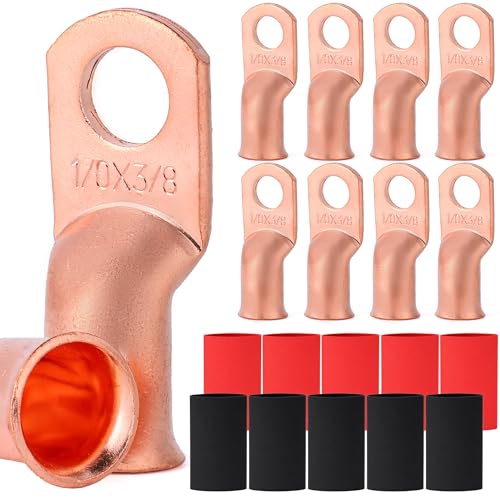
TKDMR 10 PCS 1/0 AWG 3/8″ Copper Ring Terminals

SELTERM 25pcs 2 AWG 3/8″ Bare Copper Battery Cable Lugs

Sanuke 10pcs 4 AWG 3/8″ (M10) Ring Terminal Lugs

SVAAR 1/0 and 2/0 AWG Copper Lugs with Heat Shrink

SVAAR 4 6 8 AWG UL Listed Cable Lugs with Heat Shrink

SVAAR 72pcs 2/4/6 AWG Copper Lugs with Heat Shrink
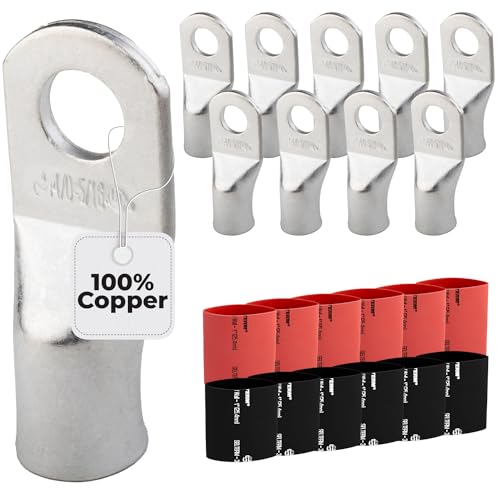
SELTERM 4/0 AWG 5/16″ Marine Grade Tinned Copper Lugs
Taking A Closer Look At The Options
For most DIY wiring jobs around a garage or shed, 4 AWG cable hits the sweet spot between current capacity and physical flexibility. These SELTERM lugs use 100% annealed copper, which is copper that has been heat-treated to stay soft and ductile so it crimps tightly without cracking the barrel. The 5/16″ stud fits most common battery posts on cars, trucks, and small marine setups, and a 25-pack leaves room for a few mistakes plus leftover stock for the next job.
Compared to the heavier 2 AWG option further down this list, this set is easier to bend around tight engine bays and battery trays. In our view, anyone running a single-battery automotive or light marine setup gets a clean fit without overbuilding the connection.
What Earns Its Place
- Annealed copper barrel crimps cleanly with a standard hex die
- 25-count bag covers a full vehicle plus spares for the toolbox
- 5/16″ stud matches most common battery terminal posts
- Bare copper finish solders easily when a stronger joint is needed
- Heavy-duty flange keeps the lug flat against the terminal surface
Things To Consider
- Bare copper will tarnish over time in salty or wet environments, so a coat of dielectric grease helps
- Heat shrink tubing is not included in this particular pack
Who It Suits Best
A home mechanic or hobbyist working on cars, trucks, and small boat batteries who wants a reliable, no-frills copper lug at a sensible count.
Look Elsewhere When
Boaters running in saltwater should consider the SELTERM 6 AWG 1/4″ Tinned Copper Lugs and Heat Shrink Kit instead, since the tin plating resists corrosion far better than bare copper.
Saltwater punishes bare copper quickly, which is why tinned lugs are the standard below the waterline and on any outdoor battery bank. This SELTERM kit pairs 25 tinned 6 AWG lugs with a 108-piece assortment of 3:1 dual-wall adhesive heat shrink tubing, meaning the tubing has an inner adhesive layer that melts and seals when heated. The 3:1 shrink ratio means the tubing compresses to one-third of its original diameter, sealing tightly over varying wire sizes.
The 1/4″ stud hole suits smaller terminal posts found on many marine panels and compact battery monitors. For a boat owner replacing a corroded negative run or adding a fuse block, this bundle covers both the connector and the finished insulation in one box.
The Good Stuff
- Tinned copper shell resists corrosion in damp or salt-exposed setups
- 3:1 adhesive-lined shrink seals the crimp from moisture intrusion
- 108-piece tubing kit covers multiple wire diameters and repairs down the road
- OEM-style heavy-duty construction handles high-temperature engine bay runs
Worth Noting
- The 1/4″ stud is smaller than the typical 5/16″ automotive post, so verify terminal hardware before ordering
- 6 AWG is on the lighter side for large inverter banks, where 1/0 or 2/0 cable is more common
Made For
Boat owners and RV enthusiasts building or refreshing 12-volt battery banks in damp, exposed, or coastal environments.
Consider Something Else When
Anyone wiring a high-amperage inverter should look at the SVAAR 1/0 and 2/0 AWG Copper Lugs, which handle heavier current loads with room to spare.
When the cable gauge climbs to 1/0 AWG (also called “one-aught”), the connection enters serious current-carrying territory for car audio amplifiers, off-grid inverters, and dual-battery setups. RED WOLF packages six 3/8″ lugs and six 5/16″ lugs, plus twelve pieces of 3:1 adhesive heat shrink in red and black for polarity coding. The split stud sizes cover both inverter studs and the smaller accessory terminals without buying two kits.
Compared to the SELTERM 4 AWG set above, the copper walls here are noticeably thicker, and crimping requires a heavy-duty hydraulic tool rather than a small hand crimper. Anyone running a 2,000-watt inverter or a pair of subwoofers will appreciate the headroom this gauge provides.
Key Advantages
- Annealed copper core handles sustained high-amperage loads
- Two stud sizes in one pack eliminate guesswork at the terminal block
- Color-coded heat shrink prevents reversed polarity on installation
- Special surface treatment slows corrosion at the crimp joint
Trade Offs
- Only six of each stud size, so larger projects may need a second pack
- Crimping 1/0 cable demands a heavy hex or hammer crimper, which most casual toolkits lack
Best Suited To
Car audio installers and off-grid hobbyists terminating 1/0 AWG cable runs where both 3/8″ and 5/16″ stud landings show up in the same build.
A Better Fit Elsewhere
Someone working on a small automotive repair where 4 AWG is sufficient will find the SELTERM 25pcs 4 AWG 5/16″ Heavy Duty Bare Copper Lugs far easier to handle.
Not every project demands a 25-pack, and TKDMR leans into that reality with a tight ten-count of 1/0 AWG copper ring terminals. The 3/8″ stud covers the heavy inverter and winch hardware most DIYers encounter, while the bundled 4:1 dual-wall heat shrink (meaning the tubing shrinks to one-quarter of its original diameter, providing an even tighter seal than 3:1) gives the finished joint a sealed, professional look. Bare annealed copper with a treated surface keeps corrosion in check on a vehicle that sees seasonal storage.
Compared to the RED WOLF option above, this kit drops the 5/16″ stud size for a focused 3/8″ build. For a single inverter install or a winch replacement, ten lugs is plenty without surplus parts cluttering the drawer.
Useful Strengths
- Right-sized count for one focused installation rather than bulk stock
- 4:1 adhesive shrink ratio seals tightly over 1/0 cable insulation
- Annealed copper crimps predictably with a quality hex die
- Treated surface helps resist oxidation between service intervals
Honest Caveats
- Only one stud size, so mixed-terminal jobs need a second source
- Heat shrink color split is generic black and red without clear labeling
Who Will Love This
A DIYer replacing a single heavy cable run, like a winch lead or a primary inverter feed, who values a tidy parts count over bulk supply.
Reach For A Different Pick When
Anyone building a dual-battery setup with mixed stud sizes will be better served by the SVAAR 1/0 and 2/0 AWG Copper Lugs, which bundle two gauges and two stud sizes together.
Stepping up from 4 AWG to 2 AWG roughly doubles the cross-sectional copper area, which translates to lower voltage drop across long cable runs. SELTERM packs 25 of these 2 AWG heavy-duty bare copper lugs with a 3/8″ stud, the same OEM-style construction found in their smaller 4 AWG kit. For someone running a high-output alternator, a battery relocation project, or a long inverter feed to a remote cabin, the thicker cable pays for itself in cleaner voltage at the load.
The 3/8″ stud matches the larger distribution blocks and inverter inputs found on most 1,000-watt-plus power systems. In our view, this gauge hits a useful middle ground for DIYers who have outgrown 4 AWG but don’t need the bulk of 1/0.
Everyday Wins
- 2 AWG handles heavy alternator and inverter feeds with low voltage drop
- 25-pack supports full vehicle wiring plus a few replacement lugs
- Heavy-duty flange prevents the lug from twisting under torque
- Bare copper solders cleanly when a permanent joint is preferred
Points To Note
- 3/8″ stud is larger than most stock automotive posts, so check terminal hardware
- Heat shrink is sold separately, which adds a step to the installation
Right Fit For
Power-hungry builds, including high-output alternators, dual-battery trays, and moderate inverter installations that need more copper than 4 AWG offers.
Swap It Out When
Someone planning a large off-grid inverter bank should reach for the SVAAR 1/0 and 2/0 AWG Copper Lugs, which include both gauges and the heat shrink in one kit.
Sanuke’s ten-pack is the smallest-count option here, but the 4 AWG sizing lands in the most common DIY category for car and truck battery work. The 3/8″ stud is also labeled M10, since metric terminal hardware has crept into many aftermarket battery posts and fuse blocks. Color-coded heat shrink in red and black cuts the guesswork out of positive versus negative runs.
Compared to the SELTERM 4 AWG 5/16″ lugs in slot one, this kit trades the smaller stud for a metric-friendly one and includes the shrink tubing in the box. For a single battery swap or a small solar controller install, ten lugs is the right amount.
Benefits That Matter
- Annealed electrolytic copper barrel for consistent crimping
- Color-coded heat shrink keeps polarity straight during install
- 3/8″ (M10) stud matches most aftermarket fuse blocks and distribution posts
- Compact count avoids drawer clutter for occasional users
Small Caveats
- Ten lugs may run short for a full vehicle rewire that touches multiple grounds
- Copper quality is solid but not as heavy-duty as the SELTERM OEM-spec parts above
Built With In Mind
DIY home garage mechanics handling a single battery, a small solar controller, or an accessory relay who appreciate a tidy parts count and metric-friendly studs.
Where Another Pick Suits Better
Anyone running marine battery banks should pick the SELTERM 6 AWG 1/4″ Tinned Copper Lugs with Heat Shrink Kit, where tinned plating holds up against humidity and salt.
SVAAR combines 1/0 and 2/0 AWG lugs in a single 20-piece box, four sizes total: 1/0 with 3/8″ stud, 1/0 with 5/16″ stud, 2/0 with 3/8″ stud, and 2/0 with 5/16″ stud. The T2-grade copper has low electrical resistance, and the closed-end barrel design keeps moisture from wicking up the cable strands. 3:1 adhesive heat shrink is included for a sealed finish.
Anyone building a serious inverter bank or a high-amperage audio system often ends up mixing cable gauges between the battery, the distribution block, and the equipment. This kit covers those transitions without sourcing four separate packs.
What It Does Well
- Four size combinations cover mixed gauge and stud layouts in one box
- Closed-end barrel blocks moisture intrusion at the crimp
- T2-grade copper delivers high conductivity for low voltage drop
- Adhesive-lined shrink seals the joint against corrosion
A Few Limitations
- Five lugs per size means a large project may need a second box
- Crimping requires a heavy-duty tool, which adds to the total project cost
Whose Shelf It Belongs On
An off-grid installer or car audio builder who needs both 1/0 and 2/0 cable terminations with multiple stud sizes for one complete system.
Another Choice May Suit
Someone focused purely on smaller automotive repairs will find the SELTERM 25pcs 4 AWG 5/16″ Heavy Duty Bare Copper Lugs far easier to work with at half the cable thickness.
Repair benches and small electrical shops live and die by having the right gauge on the shelf when a customer walks in. SVAAR’s kit pulls together 4, 6, and 8 AWG lugs in both 5/16″ and 3/8″ stud sizes, all built around a closed-end barrel that conforms to UL486 standards (the Underwriters Laboratories benchmark for safe, durable wire connectors). Heat shrink tubing is bundled in, which saves a separate trip to the parts drawer.
Compared to the larger 72-piece SVAAR kit in slot nine, this set focuses on the smaller gauges most common in automotive and light industrial work. For someone who repairs vehicles or runs accessory circuits, the three-gauge spread handles nearly every termination that comes through the door.
Good Reasons To Consider
- Three gauges and two stud sizes in a single organized kit
- UL486-style closed-end design promotes long-term joint integrity
- Heat shrink included for a sealed, finished appearance
- T2-grade copper balances cost and conductivity for everyday use
Points To Keep In Mind
- Smaller gauge spread means very heavy inverter work falls outside this kit
- Lug count per gauge is moderate, so high-volume shops may burn through it quickly
Perfect Match For
A small repair shop or serious hobbyist who wants one organized kit covering the gauges that show up most often in automotive and accessory wiring.
Not Your Match When
Someone building a heavy inverter system should pick the SVAAR 1/0 and 2/0 AWG Copper Lugs instead, where the heavier gauges handle serious current loads.
Bench stock is a term for the everyday supply of parts that a shop keeps on hand so work never stalls waiting for an order. SVAAR’s 72-piece assortment across 2, 4, and 6 AWG lugs with both 3/8″ and 5/16″ studs is built exactly for that purpose. The closed-end barrel meets UL486 design intent, and the included 3:1 heat shrink covers the sealing step without a separate purchase.
For someone doing a fleet refresh, a golf cart conversion, or multiple small engine swaps, the variety here means the right lug is always on hand. In most home shops, this kit lasts through several seasons of weekend projects before needing a reorder.
What Makes Sense
- 72 lugs spread across three gauges and two stud sizes
- T2-grade copper keeps electrical resistance low across the joint
- Closed-end barrel conforms to UL486 standards for long-term reliability
- Heat shrink bundled in, so no extra trip to the parts store
Practical Considerations
- Lugs arrive loose in the bag rather than pre-sorted, so a small organizer bin helps
- Stocking 72 lugs only pays off for shops with steady project flow
The Right Fit
Shops and serious DIYers who run frequent electrical repairs across multiple vehicles or pieces of equipment, and want one bulk kit to cover the common gauges.
Skip It When
Someone tackling one battery replacement should grab the Sanuke 10pcs 4 AWG 3/8″ Ring Terminal Lugs instead, since a smaller kit avoids drawer clutter.
4/0 AWG cable (commonly called “four-aught”) is the heavyweight class used in large battery banks, big inverters, and offshore marine runs where voltage drop across long distances would otherwise cripple performance. SELTERM coats these lugs in a matte tin plating and salt-spray tests them to ASTMB117, the American Society for Testing and Materials benchmark that simulates prolonged marine exposure. The 5/16″ stud suits standard marine busbars and battery switches.
Ten lugs is a focused count, since 4/0 projects rarely call for a wide variety. For a yacht refit or a large off-grid battery bank, the corrosion resistance here justifies the premium over bare copper.
Strengths Worth Knowing
- Tinned matte finish handles saltwater exposure without rapid corrosion
- Salt-spray tested to a recognized marine benchmark
- Matte tin plating solders as easily as it crimps
- Heavy-duty barrel supports 4/0 cable thickness for big-banks and inverters
Where It May Fall Short
- Only a 5/16″ stud, so projects needing 3/8″ landings require a different lug
- Heat shrink is not included with this particular pack
Who Should Grab It
Offshore boaters and large off-grid system builders terminating 4/0 cable runs in harsh, salt-exposed environments where corrosion is the constant enemy.
Where A Sibling Pick Shines
Anyone wiring a smaller marine panel without 4/0 cable will find the SELTERM 6 AWG 1/4″ Tinned Copper Lugs with Heat Shrink Kit more than adequate, and easier on the budget.
What To Weigh Before Choosing Battery Cable And Lugs
Matching Gauge To Current Load
AWG (American Wire Gauge) numbers get smaller as cable gets thicker, which trips up a lot of first-time installers. A 4 AWG cable handles roughly 100 amps in typical automotive runs, while 1/0 AWG carries around 250 amps, and 4/0 AWG pushes past 400 amps. Mismatched gauge and load is the most common cause of melted terminals and voltage drops, so sizing the cable to the equipment matters more than the brand of the lug.
Stud Size And Terminal Hardware
Stud size refers to the diameter of the bolt that passes through the lug’s ring, and a mismatch leaves the connection loose or unable to fit. Common sizes are 1/4″ (sometimes labeled M6), 5/16″ (M8), 3/8″ (M10), and 1/2″ (M12). Pulling a battery post or measuring an existing cable before ordering saves a return trip, and a small caliper is the easiest way to confirm.
Tinned Versus Bare Copper
Tinned copper has a thin tin coating that sacrifices a hair of conductivity for a big jump in corrosion resistance. Bare copper is cheaper and slightly more conductive, but it develops green verdigris in damp environments over time. Boats, RVs, and outdoor solar banks benefit from tinned plating, while sealed engine bays and indoor battery rooms are fine with bare copper.
Heat Shrink And Insulation
Dual-wall adhesive heat shrink does more than tidy up the joint; it seals the crimp from moisture, salt, and abrasion. A 3:1 shrink ratio fits most cable insulation thicknesses, while 4:1 handles oversized insulation or boots. Bundled shrink saves a separate purchase and ensures the tubing diameter actually matches the lug barrel.
Crimping Tools And Technique
A proper hex crimp with a calibrated die produces a gas-tight connection that resists oxidation far longer than a poorly squeezed joint. Light-duty hand crimpers work for 8 AWG and smaller, but 4 AWG and above benefits from a hammer-style or hydraulic crimper. The honest read is that the cheapest part of the job should never be the crimp, since a loose lug causes more electrical gremlins than any other wiring mistake.
Key Considerations Across These Picks
Pitfalls Shoppers Hit
The most common mistake is matching the cable gauge to the breaker rating rather than the actual cable run length, which causes voltage drop on long inverter feeds. A second trap is ignoring the stud size until install day, when the ring won’t fit over the terminal bolt. Forgetting to seal the crimp with adhesive heat shrink leaves the joint open to moisture wicking up the copper strands, especially in marine and outdoor setups.
Where The Extra Money Goes
Higher-tier lugs typically earn their cost through thicker annealed copper walls, tighter dimensional tolerances on the barrel, and a tin plating that has actually been salt-spray tested rather than merely described as marine grade. Premium kits also tend to include properly sized adhesive heat shrink, which means fewer trips to the parts drawer. For a quick one-cable repair, the upgrade rarely matters, but on a battery bank that lives in a damp engine room or under a boat deck, the extra protection pays back over years of service.
Frequently Asked Questions
What Gauge Battery Cable Do I Need For A Standard Car?
For most passenger vehicles with a single battery, 4 AWG cable handles the starter and accessory loads comfortably. Larger trucks, diesel engines, and dual-battery setups typically step up to 2 AWG or 1/0 AWG for the heavier starter current.
Are Tinned Copper Lugs Worth The Extra Cost?
In any environment where moisture, salt, or humidity is present, tinned plating dramatically slows corrosion compared to bare copper. For sealed engine bays and indoor battery rooms, bare copper works fine and saves some money.
Can I Solder Battery Cable Lugs Instead Of Crimping?
Soldering creates a solid joint, but it requires careful heat control to avoid wicking solder up the cable strands, which makes the cable stiff and brittle near the lug. Crimping with a proper hex die is generally faster and produces a more flexible finished cable.
What Is The Difference Between 3:1 And 4:1 Heat Shrink?
The ratio describes how much the tubing compresses when heated, with 3:1 shrinking to one-third of its original diameter and 4:1 shrinking to one-quarter. Higher ratios fit thicker insulation and provide a tighter seal over uneven shapes.
How Do I Know Which Stud Size To Order?
Measure the terminal bolt on the battery post, fuse block, or ground point with a caliper or by matching it to a drill bit. Common sizes are 1/4″, 5/16″, 3/8″, and 1/2″, and getting this right before ordering prevents a frustrating mid-project parts run.
Closing Remarks
The right battery cable and lug setup comes down to matching three numbers: the cable gauge, the stud size at the terminal, and the environment where the connection lives. A simple automotive repair is well served by a 4 AWG bare copper lug, while marine and off-grid systems benefit from tinned plating and adhesive heat shrink. Pick the kit that lines up with the project in front of you, and the connection should outlast the cable itself.
