

Digital converter boxes can feel plain until you need one in a real living room, guest room, RV, or backup setup. You want clear channel access, sensible connections, and controls that don’t turn a simple evening into a puzzle. This roundup focuses on eight options that suit different setups, from basic over-the-air viewing to models with recording, playback, and media support.
The Shortlist At A Glance


Mediasonic HomeWorx HW250STB

QFX CV-103 Digital Converter Box

ZJBOX 1080P ATSC TV Tuner Box


DP CTCB105 Over The Air Converter & DVR Box

PBD 2608 Antenna Control Box
ZJBOX ATSC TV Tuner
More Details On Our Top Picks
The OWERSLYN unit leans into convenience, with recording, playback, USB media support, and both HDMI and AV-style output paths. That mix makes it easier to match older sets in a spare room while still fitting a newer flat panel in a main space.
For daily viewing, the 2-in-1 remote and included 3RCA cables help keep the setup from feeling fussy. The honest trade-off is that a feature-dense box can take a little more time to sort out than a bare-bones tuner, so it suits you best when you want extra flexibility more than absolute simplicity.
Strong Points
- Recording and playback support give you more control over live TV.
- USB media playback adds room for personal video or photo use.
- HDMI and AV output cover both newer and older display connections.
- The 2-in-1 remote helps reduce remote clutter in shared spaces.
Things To Consider
- The broader feature set can mean a slightly longer first setup.
- USB media use depends on the file types your TV side setup recognizes.
- The included cabling helps, though cord management still matters behind a crowded cabinet.
Feature Rundown
Who It Suits Best
You fit this pick best when you want one box that can do more than basic channel tuning in a family room, guest room, or secondary TV spot.
A Better Fit Elsewhere
The Mediasonic HomeWorx HW250STB makes more sense for you if you want a metal-bodied unit with a slightly more polished all-around feel.
This Mediasonic box reads as the more polished everyday option, mainly because the metal case gives it a sturdier feel than many lightweight plastic units. Clear QAM support also matters in mixed home setups, since some households still need a tuner that can handle a broader range of incoming signals.
You also get TV recording, USB multimedia support, and 1080p HDMI output, which makes it comfortable in a main-room setup where you want cleaner wiring and a neater finish. The trade-off is simple, it is still a tuner box first, so the value comes from steady utility rather than flashy extras.
What We Like
- The metal case gives the unit a more durable, furniture-friendly presence.
- Clear QAM support adds flexibility in households with cable-style signal needs.
- Recording support gives you more control over live broadcasts.
- USB multimedia function broadens use beyond channel watching.
- HDMI output keeps it comfortable with newer displays.
Room For Improvement
- The metal shell can still show fingerprints and dust, so wiping it down helps.
- Some homes may not use the Clear QAM feature at all, depending on the signal source.
- The feature mix is practical, though not especially decorative or luxurious.
Core Details
Right Fit For
You should place this near the top of your list for a main television, especially where metal construction and signal flexibility matter more than extra gadgets.
Another Choice May Suit
OWERSLYN 1080P ATSC Tuner Box suits you better when you want the included 2-in-1 remote and 3RCA cable set to simplify setup.
The QFX CV-103 is the kind of box that helps an older television keep pulling its weight without forcing a full replacement. The included power adapter, A/V cable, remote, UL adapter, and manual make it feel ready for a straightforward antenna setup, especially in a bedroom or a secondary viewing space.
Its RF input and output, plus HD and video outputs, give you several ways to hook it into different displays. The sleep timer is a small but useful touch, although the overall setup feels more utilitarian than polished, so you may prefer it for function over finish.
Highlights
- RF input and output give you broad connection flexibility.
- HD and video outputs help with both newer and older TVs.
- The included remote and cables reduce extra accessory hunting.
- The sleep timer fits bedrooms, guest rooms, and late-night viewing.
Points To Note
- The bundled accessories help, though cable routing can still take a little patience.
- The design is functional first, so it does not feel especially premium.
- USB recording is useful, but storage habits still matter for daily use.
Spec Overview
Who Will Love This
You will appreciate this most in a second room, especially where you want a simple handoff from antenna to TV with fewer extra parts to source.
Swap It Out When
IVIEW-3500STB III is a better match for you if you want a learning remote and a slightly broader feature mix for mixed legacy setups.
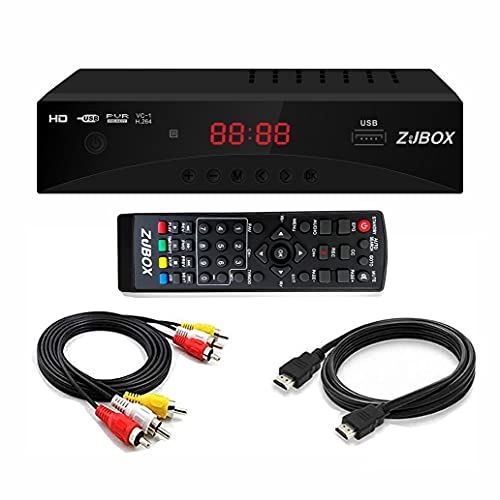
Placed behind a TV, this ZJBOX model makes a lot of sense for tight cabinets and wall-mounted screens where visible clutter matters. HDMI output, 3RCA cables, a power adapter, and a 2-in-1 remote give you the parts needed for a tidy setup without extra shopping.
Recording, playback, and USB media support round it out for households that want more than live channel access. Compared with the QFX CV-103, this one feels more tuned to a hidden installation, though the trade-off is that hidden setups can make cable access less convenient later.
Bright Spots
- The behind-TV layout helps reduce visible clutter.
- HDMI plus 3RCA connections fit both modern and older displays.
- Recording and playback add everyday convenience.
- The included remote and power adapter make setup less piecemeal.
Small Caveats
- Hidden mounting spots can make future cable changes a little awkward.
- The box is compact, though compact gear can still get crowded behind a TV.
- USB media use depends on how you organize files and storage.
Details At A Glance
The Right Fit
You should look at this one for a wall-mounted TV, entertainment nook, or compact media center where hidden wiring matters more than a visible control box.
Where A Sibling Pick Shines
OWERSLYN 1080P ATSC Tuner Box works better for you if you want a slightly more feature-forward setup with the same general home-friendly spirit.
The IVIEW-3500STB III covers a lot of ground for homes that still mix old and new display gear. It handles analog-to-digital conversion, supports QAM tuning, and includes HDMI, A/V, USB, and a learning remote, so it can settle into a family room or older TV corner with less fuss.
That range is the point, and it also explains the trade-off: a box with this many paths and modes can feel more involved than a bare tuner. For households with a computer monitor, an older television, or a shared media shelf, the extra flexibility earns its place.
Upsides
- QAM support broadens compatibility for mixed signal environments.
- HDMI, A/V, and USB keep it adaptable across older and newer gear.
- The learning remote reduces the need for multiple handheld controls.
- Recording and media playback extend its day-to-day usefulness.
Areas To Watch
- The wider feature set can take a bit more setup patience.
- Shared living rooms may need careful remote labeling to avoid mix-ups.
- More ports usually mean more cable planning behind the cabinet.
Feature Card
Best Suited To
This is the better match for you when one room needs to bridge old and new gear without forcing you into a stripped-down setup.
Look Elsewhere When
Mediasonic HomeWorx HW250STB fits you better if you want a metal case and a slightly cleaner, more restrained setup.
The DP CTCB105 puts DVR-style use front and center, which helps you catch live programming without sitting at the screen the whole time. In a busy household, that can be the difference between watching TV on schedule and fitting it around dinner, chores, or phone calls.
Because the listing emphasizes converter and DVR duties rather than a long accessory list, this one feels clean and focused. The trade-off is that you may need to think a little more carefully about your own connections and storage habits, especially in a cabinet where cords already compete for space.
Reasons To Buy
- DVR focus gives you more control over how you watch live TV.
- The simple feature story makes it easier to understand at a glance.
- It suits households that want function without a crowded front panel.
Worth Noting
- Fewer listed extras mean you may rely more on your own cabling plan.
- DVR use usually means you’ll want a tidy storage routine for recorded content.
- It looks best in a setup that values function over ornament.
Core Details
Made For
You fit this pick best when recording matters more than a long list of bonus media functions.
Reach For A Different Pick
OWERSLYN 1080P ATSC Tuner Box suits you better if you want USB media playback alongside the same general tuner role.
This PBD unit sits a little outside the usual converter-box crowd, because it is an antenna control box rather than a TV tuner. That makes it a more specialized piece for setups where antenna management, rather than channel decoding, is the main concern.
The important caveat is right in the title, no power cord is included, so you need to plan for that before installation day. For hobby setups, workshop rigs, or niche antenna systems, that detail is manageable, though it does mean the box is less plug-and-play than the others here.
Best Bits
- Specialty antenna control use suits niche setups.
- The compact control-box design keeps the footprint modest.
- It can fit projects where a tuner box would be overkill.
Honest Caveats
- No power cord is included, so the setup needs one more part.
- This is not a general digital converter box, so the fit is narrower.
- Specialty gear usually calls for a little more planning around placement.
Feature Snapshot
Whose Shelf It Belongs On
You should look at this only when your setup is built around antenna control, not standard channel conversion.
A Better Fit Elsewhere
QFX CV-103 Digital Converter Box makes more sense if you want a more familiar tuner-and-output package for a typical TV setup.
The ZJBOX ATSC TV Tuner lands in a comfortable middle ground, with recording, playback, HDMI output, and timer settings that suit a routine viewing setup. In a living room, that can feel a bit like a good chair, not flashy, just dependable where it counts.
Timer settings are especially useful for people who want the box to work around regular habits rather than demand attention every time you sit down. Compared with DP CTCB105, this one leans more toward flexible daily viewing than a DVR-first identity, which may suit you better in a shared home.
Positives
- Recording and playback help you manage viewing on your schedule.
- HDMI output keeps the connection clean for modern televisions.
- Timer settings add a useful layer of routine control.
- The overall feature mix suits everyday household use.
Minor Gripes
- More routine-friendly than specialized, so power users may want a different layout.
- Timer-based features are handy, though they still ask for a little setup attention.
- Cable organization matters once recording gear sits near a media stack.
Details At A Glance
Who Should Grab It
You should choose this for a home TV setup where the goal is steady, low-drama viewing with a few useful extras.
Where Shoppers Go Wrong
IVIEW-3500STB III suits you better when QAM support and broader legacy-device flexibility matter more than a simpler routine-focused layout.
How To Choose The Right Antennas For Digital Converter Box
Signal Match Matters Most
The first thing to sort out is the signal path, because ATSC conversion, QAM support, RF input, and RF output are not the same job in practice. ATSC, or Advanced Television Systems Committee, is the broadcast standard used for over-the-air digital TV in the United States, while QAM, or Quadrature Amplitude Modulation, helps with certain cable-style feeds.
You benefit from a box that matches the source you actually use, not the one with the biggest feature list. In a home with an attic antenna, a straightforward ATSC tuner makes sense, while mixed legacy gear can justify HDMI plus A/V output or even RF passthrough support.
Think About The Room, Not Just The Box
Placement changes the experience more than many shoppers expect. A behind-TV unit like the ZJBOX model keeps the shelf clean, while a metal-case option such as the Mediasonic HomeWorx may feel better on an open cabinet where the box is visible.
You should also think about cable access, remote reach, and whether the setup sits in a bedroom, guest room, RV, or main living area. Small things matter here, because a remote that feels awkward or a cable bundle that crowds the back panel can make daily use feel fiddly fast.
Recording And Playback Add Real Convenience
Recording, playback, USB media, and DVR support sound similar, yet they solve slightly different habits. Recording lets you save broadcasts, playback lets you revisit stored material, and DVR-style control can help when your schedule is scattered.
Those extras suit you best in a home where TV time shifts throughout the day. For a simpler setup, a tuner with basic output paths may feel calmer and easier to live with, especially in a spare room or secondary TV corner.
Power And Control Details Are Easy To Overlook
Power adapters, learning remotes, and bundled cables often decide whether the first setup feels smooth or annoying. A box that includes the right cables can save you from a last-minute hardware run, and a learning remote can shrink the number of remotes on the coffee table.
That matters most in shared rooms, where everyone wants the TV to work without a tutorial. One missing cord, like the PBD 2608’s separate power-cord note, can turn a simple project into an extra errand, so always read the accessory list closely.
What To Weigh Before You Buy
Wrong Turns To Avoid
Plenty of people focus only on output resolution and forget the actual wiring. HDMI is handy, but older televisions may still need A/V or RF support, and hidden-installation setups need enough cord length to stay tidy.
Another common miss is buying a feature-rich box for a use case that only needs basic channel tuning. That usually adds setup steps without improving your day-to-day experience much.
The Upgrade Payoff
Higher-tier models usually cost more because they bundle more connection options, sturdier housing, and added functions like recording, playback, or learning remotes. Metal cases, broader signal support, and extra ports all add parts and complexity.
Spending up makes sense when the box sits in a main room, handles several displays, or needs to work around varied signal sources. A simpler model still fits spare rooms and casual setups, especially when you just want steady channel access.
Frequently Asked Questions
Do you need an antenna with a converter box?
Yes, these boxes process the signal, but they do not create one on their own. An antenna supplies the over-the-air feed that the box then tunes.
What does ATSC mean on a converter box?
ATSC refers to the digital broadcast standard used for over-the-air television in the United States. A box with ATSC tuning is built to receive those channels from an antenna.
Why would you want HDMI on a converter box?
HDMI carries digital video to newer TVs with a single cable. That usually means a cleaner connection than older analog leads.
Do recording features matter for casual viewing?
They matter most when your schedule shifts or you want to revisit a program later. For basic channel watching, they are helpful but not essential.
Is a metal case worth paying extra for?
A metal case often feels more solid on a shelf and can suit a main-room setup better. A plastic case can still work fine in a secondary room where appearance matters less.
Closing Thoughts
The right converter box depends on how you live with television, not just how many labels appear on the box. A simple tuner fits a spare room, while a recording-focused model or a unit with broader output options makes more sense in a busy family space. You can keep the choice easy by matching the box to your antenna, your display, and the way you actually watch TV. When those three line up, the setup feels calm instead of fussy.
