

A needle that swings can tell you a lot. When you’re tracing a fault on a vintage amplifier, checking a car battery at the trailhead, or teaching someone how voltage behaves, an analog multimeter has a way of making the physics visible. I pulled together nine options that span digital workhorses, dedicated analog classics, and the test leads and clamp accessories that make any meter more useful.
The Essentials At A Glance

Fluke 117 Digital Multimeter, Non-Contact AC Voltage Detection


Replacement for Fieldpiece ATLK2 Silicone Test Leads HVAC/R

Fluke 179 Multimeter with Backlight, Includes Built-In Thermometer

Replacement for Fieldpiece ATLK7 HVAC Silicone Test Lead Kit

OX60 60-Inch Silicone Test Leads for Multimeters

Gardner Bender GMT-312 Analog Multimeter, 5 Function/12 Range
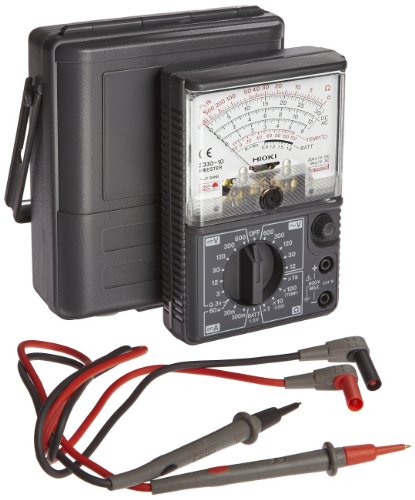
Hioki 3030-10 HiTester Analog Multimeter, 600V

HC600 Clamp Meter for Electrician HVAC, 600A True RMS
Taking A Closer Look At The Options
The Fluke 117 sits in that sweet spot where pro-grade build quality meets genuinely intuitive controls. AutoVolt automatically detects whether the circuit is AC or DC, which removes one of the most common beginner mistakes: leaving the dial on the wrong setting. VoltAlert non-contact sensing lets me check for live wires without touching a conductor, a useful habit in older buildings where labels lie.
True RMS (root mean square) matters when the load isn’t a clean sine wave, anything with a variable-frequency drive, LED dimmer, or computer power supply. The low-impedance mode helps suppress “ghost voltage,” those phantom readings that show up from coupled circuits in long cable runs. It operates from -10°C to 50°C, so an unheated garage in winter won’t lock it up.
Practical Pluses
- Non-contact voltage detection speeds up outlet and panel checks without breaking insulation.
- Low-Z mode prevents false-positive readings caused by induced voltage on adjacent conductors.
- True RMS keeps readings accurate on modern electronics with choppy waveforms.
- Wide operating temperature range supports cold storage rooms and outdoor enclosures.
- Large white backlight stays readable in dim crawl spaces and behind equipment racks.
Things To Consider
- No dedicated temperature input, so HVAC work may push you toward the Fluke 116 instead.
- Battery compartment owners commonly report the cover screws wear with frequent swaps.
- Carrying case sold separately on some listings.
Who It Suits Best
Commercial electricians, facilities techs, and serious DIYers who want one reliable meter across household and light commercial work.
Consider Something Else When
Heating and cooling specialists will find the Fluke 116 HVAC Multimeter a better match thanks to its built-in temperature input.
Where the Fluke 117 handles general electrical work, the Fluke 116 is built around HVAC troubleshooting. The big difference is the built-in thermometer, which uses a type K thermocouple (a temperature probe that accepts a wide range) to read from -40°C upward. That’s a real benefit when you’re checking supply air versus return air, or measuring the temperature drop across a coil.
It measures microamps, a specialty scale needed for testing flame-sensor current on gas furnaces. That single feature separates it from general-purpose meters and saves carrying a separate tool. Combined with capacitance, frequency, and continuity, it covers the diagnostic checklist most HVAC techs run through on every call.
The Case For It
- Integrated temperature measurement removes a separate thermometer from the tool bag.
- Microamp range supports flame-sensor diagnostics on residential gas furnaces.
- True RMS readings stay accurate on variable-speed compressor drives.
- Compact form factor fits easily in a crowded service van drawer.
Room For Improvement
- Thermocouple probe sold separately on some bundles, so check before assuming it’s included.
- Less useful for industrial cabinet work where higher voltage ranges dominate.
Feature Snapshot
Made For
Residential and light commercial HVAC technicians who measure temperature and microamp draw on every service call.
Look Elsewhere When
General electrical work without temperature needs is well-covered by the Fluke 117 at a similar tier.
Test leads are the unsung consumable in any kit. The ATLK2-compatible silicone set is built for HVAC and refrigeration work where the environment swings from a chilly roof to a hot attic. Silicone insulation stays flexible when temperatures drop, unlike the PVC insulation that turns brittle below freezing and cracks at the worst moment.
Gold-plated tips maintain stable contact resistance (the small electrical opposition at a connection point), which matters when reading microamps on flame sensors or low-voltage signals. L-shaped banana plugs (4mm connectors with a right-angle bend that fit most meter jacks) work with most multimeters and clamp meters that accept standard inputs, so these aren’t locked to a single brand.
Why It Works Well
- Silicone insulation resists cracking in cold outdoor service work.
- Right-angle banana plugs reduce strain on meter jacks during tight reach-ins.
- Gold-plated probe tips hold stable contact over many insert cycles.
Honest Caveats
- Not a replacement for full alligator-clip hands-free setups found on the ATLK7 kit.
- Lead length is standard, so very large panel reach may still call for an extension.
Best Suited To
Techs replacing worn leads on a Fieldpiece ATLK2 setup or anyone wanting flexible silicone for variable-temperature environments.
Reach For A Different Pick When
Alligator-clip hands-free testing on recessed terminals is the priority; the ATLK7 kit covers that better.
The Fluke 179 is the most feature-rich meter in this lineup. It carries a built-in analog bargraph alongside the digital readout, a hybrid that gives you the trend-tracking smoothness of analog while keeping numeric precision. Display Hold and Auto Hold freeze readings, which helps when probing in awkward positions where I can’t see the screen.
The included thermocouple covers temperature alongside voltage, current, resistance, capacitance, frequency, and diode testing. Manual and automatic ranging both work, so beginners can stay in auto while experienced users drop into manual for faster settling on known ranges. Min/Max-Average recording captures fluctuations over time, useful for tracking intermittent dropouts.
Good Reasons To Consider
- Analog bargraph helps spot trends faster than a changing numeric display.
- Min/Max-Average recording documents transient events without manual logging.
- True RMS on AC current and voltage handles modern electronic loads accurately.
- Built-in thermometer with included thermocouple consolidates tools.
- Dual ranging modes welcome both novice and experienced users.
Things To Weigh
- Heavier than the 117 or 116, which adds up over a long shift in the field.
- Premium pricing reflects the broader feature set.
Quick Facts
Whose Shelf It Belongs On
Industrial electricians, lab techs, and serious troubleshooters who want one meter that covers temperature, electronics, and power work.
Skip It When
Light residential DIY work doesn’t justify the heavier weight and broader price; the Fluke 117 handles the basics with less carry.
The ATLK7 kit is the hands-free upgrade over standard probe leads. Alligator clips attach to terminals so both hands stay free to hold the meter in view, an underrated benefit when reading a small display at an awkward angle. Extended probe tips reach into recessed test points on control boards and tightly packed connectors.
Like the ATLK2 set, silicone insulation keeps the leads soft across cold rooftops and hot mechanical rooms. The kit format means the accessories arrive in a roll-up pouch, easier to keep track of in a busy van than loose probes rattling in a drawer.
What Pays Off
- Alligator clip extensions let you monitor a reading while adjusting controls elsewhere.
- Extended probe tips reach recessed pins on modern control boards.
- Silicone insulation survives cold-weather outdoor service work.
Practical Considerations
- More pieces to keep track of than a basic two-lead set.
- Storage roll pouch may need replacing after heavy field use, owners commonly report.
The Right Fit
HVAC and controls techs who probe the same terminals repeatedly while watching meter response.
Swap It Out When
Quick spot checks without hands-free needs are well-served by the simpler ATLK2 lead set.
When the meter needs to stay on the floor while you probe a ceiling-mounted panel, lead length becomes the limiting factor. The OX60 set runs 60 inches, five feet of reach that keeps both the meter and the technician in safer positions around live equipment. One end terminates in a right-angle connector, the other straight, which lets you feed leads into tight cabinet openings without putting torque on the meter jack.
Silicone insulation stays flexible across temperature swings, and the CAT III 1000V / CAT IV 600V ratings (safety categories defined by where in the building’s electrical system you can safely use the leads) cover distribution and service entrance work. The 10A current rating supports most measurements short of large motor testing.
A Few Highlights
- 60-inch reach reduces ladder climbs and awkward kneeling.
- Mixed right-angle and straight connectors suit varied panel layouts.
- High safety ratings support distribution-level measurements.
Less Ideal Details
- Longer leads can snag in busy mechanical rooms if not routed carefully.
- No alligator clip accessories included for hands-free setups.
Perfect Match For
Automotive diagnostics and industrial panel work where the meter needs to live away from the probe point.
Where A Sibling Pick Shines
Hands-free terminal probing is the ATLK7 kit’s strength; pair it with these long leads for ceiling-mounted control boards.
The Gardner Bender GMT-312 is one of the few true analog meters still in regular production. The needle swings across a printed scale, which is genuinely useful for watching a value change rather than reading a stable number. Watching a capacitor charge shows up as a smooth needle climb, not a series of jumps on a digital readout.
Manual ranging across 12 positions and a zero-ohms adjustment dial teach the fundamentals: how resistance scales behave, why range matters for accuracy. Color-coded scales and lead input icons reduce wiring mistakes, and the fuse-protected circuitry adds a margin of safety when a probe slips onto the wrong terminal.
Key Advantages
- True analog needle shows trends and rates of change at a glance.
- Manual ranging teaches electrical measurement fundamentals.
- Battery test function checks common household cells without adapters.
- Color-coded scales help beginners read values confidently.
Some Limits To Know
- 300V ceiling rules out service entrance and industrial distribution work.
- No True RMS, so readings on electronic loads may show moderate inaccuracy.
- Mechanical meter movement is more sensitive to drops than solid-state digital meters.
Essential Details
Who Should Grab It
Electronics students, hobbyists, and homeowners who want to learn electrical fundamentals and see values move in real time.
A Better Fit Elsewhere
Anyone regularly working above 300V or on modern electronic loads should step up to the Fluke 179 for True RMS and broader range.
The Hioki 3030-10 is the analog purist’s choice. It’s a Japanese-built, average-sensing meter designed for clean linear loads where the waveform isn’t distorted, the kind of conditions found in classic audio gear, basic DC electronics, and educational labs. The 600V ceiling covers most residential and light commercial panel work.
Manual ranging, a battery test scale, and an optional thermistor probe (a temperature-sensitive resistor) for temperature measurement give it flexibility. Average-sensing readings on non-linear loads can drift from true values, which is the honest tradeoff for the smooth analog experience. For watching capacitor charge curves or tube amplifier bias drift, the needle movement is genuinely satisfying.
A Strong Showing
- Smooth needle movement captures trends that digital displays miss between updates.
- 600V ceiling covers residential panel diagnostics comfortably.
- Battery test scale handles common household cells quickly.
- Build quality holds up across decades of regular use, owners commonly report.
Points To Note
- Average-sensing design loses accuracy on variable-frequency drives and switching power supplies.
- Thermistor temperature probe sold separately.
- Price premium reflects the niche analog-build approach.
Built With In Mind
Electronics purists, vintage radio restorers, and educators who want students to see electrical behavior rather than numbers.
Not Your Match When
Modern HVAC and industrial electronics with choppy waveforms call for the Fluke 179 with True RMS.
A clamp meter measures current without breaking the circuit: you clamp the jaw around a conductor and read the magnetic field strength. The HC600 handles up to 600A, which covers residential service entrances, HVAC condenser units, and most light industrial motors. True RMS keeps readings accurate on variable-speed drives and inverter compressors.
Beyond current, it measures AC/DC voltage up to 600V, resistance, capacitance up to 10000µF (large enough for motor-start capacitors), frequency, temperature, continuity, and diodes. The 4000-count display (a display that shows values in steps of 4000, giving finer resolution than a 2000-count meter) offers reasonable resolution for general troubleshooting. NCV (non-contact voltage) detection adds a quick live-wire check before clamping.
Useful Strengths
- Clamp-style current measurement removes the need to break into circuits for amp readings.
- True RMS on AC current stays accurate on inverter-driven HVAC equipment.
- High capacitance range covers motor-start and run capacitor testing.
- NCV detection adds a quick safety check before clamping.
A Few Limitations
- Clamp accuracy on very low currents under 1A is less reliable than a direct-contact meter.
- Heavier than a pocket multimeter, noticeable on long shifts.
Who Will Love This
Electricians and HVAC techs who regularly measure motor current, compressor draw, and panel-level loads.
Where Another Pick Suits Better
Electronics bench work below 1A benefits more from the Fluke 179’s direct-contact precision.
What Matters Most Before Choosing Analog Multimeters
Know Your Voltage Envelope
The first filter is how much voltage you’ll actually measure. Household outlets sit at 120/240V, but solar inverters, HVAC condensers, and shop machinery push higher. A 300V meter like the Gardner Bender GMT-312 covers outlet work but rules itself out for service entrance testing. Industrial panel work typically needs CAT III 600V or CAT IV 600V ratings, the safety categories that match the energy available at different points in a building’s wiring.
Decide Analog, Digital, Or Both
True analog meters, the Gardner Bender GMT-312 and Hioki 3030-10, shine when you want to watch a value change. Capacitor charge curves, drift in tube amplifier bias, and tuning circuits all benefit from smooth needle movement. Digital meters like the Fluke 117 give exact numbers and often add True RMS for non-linear loads. Hybrid models like the Fluke 179 pair both: a numeric display plus an analog bargraph for trend tracking.
Think About The Environment
Silicone lead insulation stays flexible below freezing, while PVC turns brittle and cracks. Cold rooftops, unheated garages, and outdoor enclosures all push toward silicone. High-current environments like motor controls and service panels want a clamp meter (HC600) over a direct-contact probe, both for safety and convenience.
Key Considerations Across These Picks
Common Shopping Slip Ups
Buying on feature count alone is a frequent trap. A Fluke 179 with temperature input is wasted money for someone who never measures heat, while a Gardner Bender GMT-312 is the wrong tool for someone routinely probing 480V panels. Match the meter to the actual range and load types you’ll encounter. Skipping safety ratings is a worse mistake, since CAT ratings exist because misapplied meters fail at the worst possible moment.
What The Higher Tier Buys
Stepping up from a basic analog meter to a Fluke 117 or 179 buys True RMS, non-contact voltage detection, and broader safety ratings. The price premium reflects more than build quality: it reflects the certification work and component selection that let a meter survive a 600V transient without ending the technician’s day. For occasional household use, the premium rarely pays back. For daily professional work, the durability and accuracy differences justify the cost within a season.
Frequently Asked Questions
What Is True RMS And Why Does It Matter?
True RMS (root mean square) is a calculation that gives the effective value of an AC waveform regardless of its shape. Standard meters assume a clean sine wave; on inverter drives, LED lighting, and computer power supplies, that assumption fails and readings drift from the actual energy delivered. True RMS meters calculate the real heating equivalent, which matters for energy and load diagnostics.
Can I Use An Analog Multimeter On Modern Electronics?
Yes, with awareness. Analog meters draw a small current from the circuit under test, which can disturb sensitive electronics. They also lack the input impedance (the resistance the meter presents to the circuit, ideally very high so it doesn’t alter what’s being measured) of modern digital meters, so high-impedance circuits may read low. For watching trends in classic audio or simple DC circuits, they’re excellent. For microcontroller-level signals, a digital meter is safer.
How Often Should I Replace Test Leads?
Replace leads when insulation cracks, plugs wobble in the meter jack, or probe tips lose their plating. For silicone leads in variable-temperature work, the insulation usually outlasts the tips. For PVC leads in mild environments, insulation is often the first failure. Carrying a spare set, like the ATLK2 or ATLK7 here, prevents a field failure from ending the workday.
Is A Clamp Meter A Replacement For A Multimeter?
No, it’s a complement. A clamp meter excels at current measurement without breaking the circuit, but its voltage and resistance functions are typically less precise than a dedicated multimeter. Many techs carry both: a clamp meter for current checks and motor diagnostics, plus a Fluke-class multimeter for voltage, resistance, and continuity work.
What Safety Rating Do I Need?
For household outlet and appliance work, CAT II 600V covers most situations. For distribution panels and service entrance equipment, CAT III 600V is the minimum. For outdoor service entrance conductors and utility-side work, CAT IV 600V applies. Always match or exceed the rating of the circuit you’ll measure.
Wrap Up
A good multimeter becomes a familiar tool you trust at a glance. The Fluke 117 handles most residential and commercial electrical work, the Fluke 116 adds temperature for HVAC techs, and the Fluke 179 covers industrial and lab use with True RMS and recording. Analog purists will find the Gardner Bender GMT-312 and Hioki 3030-10 genuinely useful for trend watching, and the right leads, the ATLK2, ATLK7, or OX60 sets, make any meter more capable. Match the meter and accessories to the voltages, environments, and waveforms you’ll actually encounter, and the right choice usually makes itself.
