

Backup power gets easier to manage once the cord, inlet, or adapter matches your setup cleanly. That matters most during a storm outage, a campsite hookup, or any weekend project where you’d rather spend time running equipment than sorting out plugs.
This roundup focuses on 30 amp generator plugs, inlet boxes, and adapters that fit different home and RV needs. You’ll see longer cord kits, compact adapters, and a higher-capacity inlet option, so you can match the gear to your layout instead of forcing the layout to fit the gear.
Quick Look At The Shortlist

RVINGPRO 30 Amp Generator Cord 25FT and Pre-Drilled Power Inlet Box
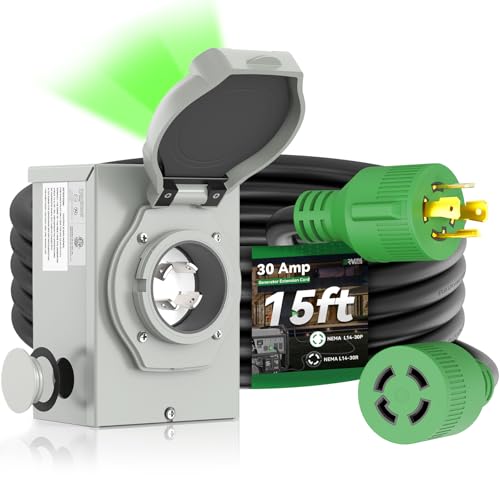
RVINGPRO 30 Amp Generator Cord 15FT and Pre-Drilled Power Inlet Box

RVMATE Pre-Drilling 30 Amp Generator Inlet Box

CircleCord 30 Amp Generator Inlet Box with Pre-Drilled 4 Big Wiring Holes

MECMO NEMA L5-30P to TT-30R 30 Amp RV Adapter

Nilight 30Amp Generator Twist Lock Plugs L14-30P L14-30R

BESYL 50-Amp Generator Inlet Box NEMA 3R Plug

islewire 30 Amp 25FT Generator Cord and Power Inlet Box Kit
More Details On Our Top Picks
The 25-foot cord gives you more breathing room between a generator and the inlet point, which helps on larger patios or around garage-side hookups. The pre-drilled inlet box also trims some setup friction, so your install feels less like a weekend project and more like a straightforward connection.
That extra reach is the real reason this one stands out from the shorter RVINGPRO kit below. The trade-off is simple, longer cord runs take up more storage space, so this suits homes and outbuildings better than tight carry-along setups.
Strong Points
- 25-foot length helps bridge awkward distances between equipment and the inlet location.
- Pre-drilled housing lowers the amount of setup work around the wall opening.
- The NEMA L14-30P to L14-30R layout suits common 30 amp generator connections.
- Waterproof design language makes it a steadier fit for exposed outdoor placement.
Things To Consider
- The longer cord takes more room in storage bins or vehicle compartments.
- It can feel more than you need for a close generator-to-entry path.
- Like most cord-and-box kits, neat coiling and dry storage help keep the setup tidy.
Feature Snapshot
Who It Suits Best
Homeowners with a generator parked farther from the transfer point, or anyone working around a larger yard, will get the most from the extra length.
A Better Fit Elsewhere
RVINGPRO’s 15FT kit is a smarter match for tighter layouts and smaller storage needs, especially for camping rigs or close-coupled backup setups.
This version keeps the same cord-and-box idea as Item 1, only with a shorter 15-foot reach. That makes it easier to store and easier to handle on a compact patio, a smaller outbuilding, or an RV area where excess cable just gets in the way.
The shorter run is the point, not a compromise hidden in the corners. For most nearby hookups, that’s enough length to stay practical without leaving you with a bulky coil to manage afterward.
What We Like
- 15-foot length fits closer generator placements without a lot of excess slack.
- Pre-drilled box design keeps installation simpler than a fully bare enclosure.
- Locking connector layout helps the cord stay seated during routine use.
- Smaller footprint makes storage easier than the 25-foot RVINGPRO kit.
Points To Note
- The shorter reach leaves less flexibility for larger yards or separated structures.
- You may outgrow it faster than the longer RVINGPRO option.
Details At A Glance
Who Will Love This
Campers, RV owners, and homeowners with a close generator position will appreciate the easier handling and smaller storage burden.
Another Choice May Suit
RVINGPRO’s 25FT kit is the better fit for wider layouts, especially where the power source sits farther from the inlet location.
RVMATE keeps the focus tight, just the inlet box and the pre-drilling design that makes the installation feel less fussy. Pre-drilled means the opening points are already laid out, so you skip some of the tool-heavy work that often slows down a basic setup.
That’s useful for homeowners who already have a compatible cord and only need the wall-side connection sorted out. Compared with the combo kits above, this one asks less of your space and more of your existing gear.
Highlights
- Pre-drilling helps reduce the work needed during installation.
- The box format is a clean fit for a cord you already own.
- Its outdoor-ready build suits weather-exposed mounting spots.
- Compatible with 4-prong generator cord setups.
Areas To Watch
- You need a separate cord, so this is not a full kit.
- It fits best for people already comfortable matching inlet hardware.
- As with any mounted box, sealing and placement matter for long-term neatness.
Core Details
Made For
Anyone replacing only the inlet box, or upgrading a fixed backup setup already built around a separate cord, will get the most straightforward value here.
Where A Sibling Pick Shines
CircleCord’s inlet box is the better fit for you if an LED indicator and extra wiring access matter more than RVMATE’s simpler, cleaner approach.
CircleCord adds a more installation-friendly housing than the simpler RVMATE box, mainly through the four larger wiring openings and the LED power indicator. That indicator is handy during outage conditions, because it gives you a quick visual check before you assume everything is live and ready.
The design leans toward people who want clearer wiring access and a little more confidence at a glance. For a garage wall, utility room, or emergency backup point that you revisit often, those extra touches earn their keep.
Reasons To Buy
- Four large wiring openings give you more room to route conductors neatly.
- The LED indicator helps you confirm power status faster.
- 125/250 volt support fits common backup power arrangements.
- The pre-drilled layout keeps the install path less cumbersome.
Worth Noting
- The extra feature set adds complexity compared with plainer inlet boxes.
- The indicator is helpful, but it does not replace careful setup.
- Wall-mounted hardware still benefits from clean routing and routine inspection.
Quick Facts
Best Suited To
Homeowners who want a little more visibility during outages, or who like a roomier inlet layout for wiring, will get the most out of this box.
Look Elsewhere When
RVMATE’s inlet box is the simpler fit for a leaner setup that skips the indicator light and keeps the design more minimal.
This MECMO adapter is about solving a mismatch between a twist-lock generator plug and an RV TT-30R connection. It’s the kind of small part that matters a lot on a trip, because the wrong connector can stop the whole setup before anything else gets going.
Compared with the inlet-box kits above, this one is more about portability than installation. The compact body makes it easy to stash in a camper compartment, though the flip side is that it only fits the exact connector path it was built for.
Bright Spots
- Small size makes it easy to carry in an RV storage bin.
- The twist-lock generator side helps the connection stay seated.
- It bridges a common generator-to-RV plug mismatch cleanly.
- 125V, 30 amp setup fits typical camper power needs.
Small Caveats
- It serves a narrow purpose, so compatibility matters a lot.
- You need the right generator-side plug shape for it to help.
- Compact adapters are easy to misplace, so storage habits matter.
At A Glance
The Right Fit
RV owners who already know they need an L5-30P to TT-30R bridge will appreciate how easy this is to carry and deploy.
Swap It Out When
Nilight’s L14-30P to L14-30R set suits you better when your generator and inlet are both built around a locking 4-prong path instead of the RV-specific adapter path here.
Nilight leans into the actual plug-and-connector side of the job, so it suits setups where the twist-lock hardware itself needs attention. That matters in garages, trailer bays, and RV storage areas, where a dependable connection is often more important than adding more cord length.
Relative to the MECMO adapter, this option is more about building out the generator side and less about bridging to an RV-specific receptacle. The industrial-grade, heavy-duty framing suggests a sturdier feel, though that also means you’re choosing a more hardware-focused piece rather than a tiny carry-anywhere adapter.
Best Bits
- L14-30P and L14-30R compatibility suits common locking generator layouts.
- Male and female pieces give you a complete connector path.
- Heavy-duty framing suits routine use around RVs and trailers.
- ETL-listed design language adds peace of mind for structured installations.
Minor Gripes
- It is less travel-friendly than a tiny one-piece adapter.
- You need to match the twist-lock format carefully.
- Hardware like this should be kept clean and dry between uses.
Spec Overview
Whose Shelf It Belongs On
People setting up or maintaining a locking 30 amp generator connection around a trailer, camper, or RV-style power setup will find this the most relevant.
Reach For A Different Pick When
MECMO’s smaller adapter is the better call for travel-first RV use, especially when you want the lightest item to carry and store.
BESYL steps outside the 30 amp group and into a 50 amp inlet box, so this is the stronger-matched option for larger backup systems. The NEMA 3R housing is meant for indoor or outdoor placement, which makes it a serious fit for transfer switch setups where capacity matters more than compactness.
Compared with the 30 amp inlet boxes above, this one is for a bigger electrical lane. That extra headroom is useful for larger homes or heavier backup requirements, though it’s not the pick you’d choose for a lighter RV-style connection.
Upsides
- 50 amp design suits larger transfer switch setups.
- NEMA 3R housing fits indoor or outdoor mounting.
- 125/250 volt support works with common higher-capacity backup systems.
- Up to 12,500 watts gives you more room for larger loads.
Honest Caveats
- It is a step up in capacity, so it is not the right match for every setup.
- The larger format asks for more wall space and planning.
- Higher-capacity hardware usually deserves careful placement and regular inspection.
Technical Sheet
Built With In Mind
Home backup setups that need more capacity than a standard 30 amp inlet can provide are the natural home for this BESYL box.
Where Shoppers Go Wrong
The 30 amp RV-focused kits in this list are better for compact generator setups, so they suit lighter-duty use far more closely than this higher-capacity inlet.
This islewire kit bundles the long cord and the pre-drilled inlet box together, which makes it a neat all-in-one answer for backup planning. The 10 AWG cable, meaning 10-gauge wire, is a thicker conductor size than lighter cord options, and that usually matters when you want a sturdier-feeling run for household emergency use.
It sits close to the RVINGPRO 25-foot kit, but the wording here frames it as a ready-for-emergency bundle with a strong focus on the full path from generator to inlet. That makes it a sensible pick for homeowners who prefer fewer missing pieces and a cleaner shopping list.
Positives
- 25-foot cord gives you flexibility for larger backup layouts.
- 10 AWG cable is a substantial conductor size for this class.
- Pre-drilled inlet box keeps the installation path simpler.
- The bundled setup saves you from matching parts separately.
- It fits well for emergency-ready home power planning.
Room For Improvement
- The longer cord needs more storage room than compact adapters.
- All-in-one kits can feel oversized for very small setups.
- Like similar cord kits, keeping the cable coiled neatly helps avoid clutter.
Feature Card
Who Should Grab It
Homeowners who want a complete backup package rather than piecing together cord and inlet hardware separately will find this especially convenient.
Skip It When
RVINGPRO’s 15-foot kit is the easier fit for tighter quarters, lighter storage needs, and shorter generator runs.
How To Choose The Right 30 Amp Generator Plugs
Match The Connector Style First
The first thing that matters is the plug pattern. NEMA L14-30P to L14-30R parts are common in home backup gear, while L5-30P to TT-30R serves the RV side of the world, so the wrong shape stops everything before the cord even comes out of storage.
That’s why you should look at the generator outlet, the inlet box, and the appliance or RV end as a single chain. A correct match feels simple once it’s in place, and a mismatch wastes time and creates extra clutter.
Pick Cord Length For The Space You Have
Shorter cords are easier to coil and store, but they only help when the generator sits close to the inlet. A 15-foot run works well around compact patios or RV spaces, while 25 feet gives you more room to place equipment farther away from the house.
The trade-off is plain, more length usually means more bulk. For a garage, shed, or separated yard setup, that extra length is worth it, while a tight setup often feels cleaner with the shorter option.
Choose The Right Mounting Style
Pre-drilled inlet boxes help trim installation work because the mounting points are already laid out. That suits someone replacing old hardware or setting up a backup connection without wanting to chase specialized tools for knockout work.
A plain inlet box can still be the right call for a cleaner, simpler setup, especially when you already know your wiring plan. Hardware choices here are less about flash and more about how much room, time, and patience you want to spend on the wall side.
Think About Capacity And Use Pattern
Thirty amp gear covers many RV and home backup needs, but a 50 amp inlet box belongs in a different lane. Larger homes, heavier transfer setups, and bigger load needs benefit from the extra headroom, while a lighter generator path stays better served by the 30 amp group.
Also pay attention to how often you’ll use the connection. Frequent outage setups reward sturdier hardware and easier access, while a travel kit leans more toward compact storage and quick hookups.
Things Worth Knowing First
Common Shopping Slip Ups
One easy mistake is mixing up the connector standard, especially between generator-side twist locks and RV-specific plugs. Another is grabbing a cord kit when you only needed an inlet box, or the other way around.
Storage gets overlooked too. Longer cords and heavier inlet hardware need more room, so a neat closet or bin setup matters more than many people expect.
Where The Extra Money Goes
Higher-tier options usually spend more of the budget on longer cord runs, thicker cable, roomier wiring access, or added indicators. That extra room and convenience helps during installation and repeated use, especially in a fixed home backup setup.
The upgrade makes sense when your setup is exposed, used often, or wired into a larger system. For a one-time RV bridge or a short run to a nearby inlet, a simpler piece usually gets the job done without extra bulk.
Frequently Asked Questions
What Does NEMA L14-30P Mean?
It names a specific locking plug style used in many 30 amp generator setups. The code helps you match the cord, inlet, and equipment ends correctly.
Do You Need A Cord Kit Or Just An Inlet Box?
A cord kit suits you when both the cable and wall-side connection are missing. A standalone inlet box works better when you already own a compatible cord.
Why Do Some Kits Use 25 Feet And Others 15 Feet?
Length changes how far you can place the generator from the connection point. Longer runs help with wider layouts, while shorter cords are easier to store.
What Makes A Twist-Lock Connection Useful?
A twist-lock plug seats with a locking motion that helps it stay connected. That is handy in outdoor and mobile setups where vibration or movement can loosen a simple push-in plug.
Is A 50 Amp Inlet Better Than A 30 Amp One?
Only for the right setup. A 50 amp inlet suits larger systems, while a 30 amp inlet fits many RV and home backup needs more naturally.
Final Thoughts
Your best choice depends on how far the generator sits from the inlet, whether you need a full kit or just a box, and whether the connection lives in a home or RV setting. The 25-foot kits suit wider layouts, the 15-foot RVINGPRO option keeps things compact, and the BESYL inlet box moves you into larger-capacity territory. Match the plug style first, then let cord length and installation style do the rest. That keeps the setup calm, tidy, and far less frustrating.
