

Mixing aluminum and copper wiring without the right connector is one of those quiet hazards that hides in junction boxes for years. The wrong splice can loosen, oxidize, and overheat, and that’s a real problem in older homes where aluminum branch circuits meet copper pigtails at every outlet and switch. I put this lineup together for homeowners, renovators, and electricians who need a reliable mechanical lug that handles both metals without drama. Below are seven options worth your attention, from small two-port repair packs to heavy-duty inline splices built for service panels.
A Quick View Of The Lineup

WireVanl Aluminum to Copper Wire Connectors, 2 Port, 25 Pack

WireVanl Aluminum to Copper Wire Connectors, 3 Port, 100 Pack
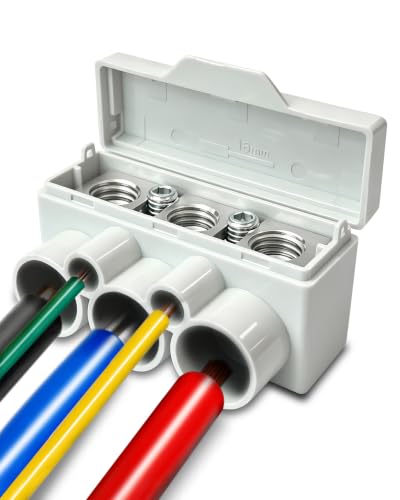
GZDQAD Heavy Duty Aluminum to Copper Wire Connector, 25-Pack
Joinfworld 2 Port Insulated Multi Tap Connector, 2-14 AWG, 10 Pack

Saysurey 2 Port Insulated Multi Tap Connector, 3/0-6 AWG, 10 Pack

Generic 5 Pcs 3 Port Insulated Splice Connector, 2-14 AWG
Airmont Black Insulated Inline Splice Connector, 2/0-6 AWG, 1 Pack
Taking A Closer Look At The Options
I think of this pack as the friendly starting point for anyone staring at a tangle of mixed wiring in an older home. Each connector is a two-port mechanical lug, meaning it has two set screws that clamp the wires down tight inside a small insulated body. You strip the wire, push it into the opening, and tighten the screw, no special torque tools required for most residential gauges.
The 25-pack sizing works well for typical repair work: think replacing a few outlets or switches where aluminum branch wires need to land on copper pigtails. Owners handling whole-home rewires, though, may find 25 connectors tight, and the two-port design won’t help anyone trying to splice three conductors together. For most homeowners, that’s not a real limitation.
Everyday Perks
- Compact two-port design fits standard junction boxes without crowding.
- Insulated body reduces accidental contact with grounded metal surfaces.
- 25-pack covers several typical room-by-room repairs.
- Set-screw termination means reusable splices for future changes.
Things To Consider
- Only handles two conductors at a time, so three-way splices need a different pick.
- Smaller pack than contractor-scale jobs.
Right Fit For
Homeowners patching aluminum-to-copper connections at outlets and switches in a house built between the mid-1960s and late 1970s.
Skip It When
A larger wire run with three or more conductors belongs with the GZDQAD Heavy Duty pack instead.
The three-port version of the WireVanl line steps up the capacity, adding a third set-screw terminal so you can land multiple wires in one block. A hundred-pack is the kind of supply that makes sense when you’re committed to a sizable rewire or you’re stocking a service truck. For occasional repairs, it can feel like overkill.
Compared to the 25-pack above, this trades some single-room convenience for scale. The insulated housing is similar, and the mechanical-lug principle is identical, but the extra port opens up multi-tap situations that the two-port can’t touch. In my view, contractors handling aluminum remediation projects get the most mileage here.
Reasons It Performs
- Three-port layout handles pigtail-plus-feed combinations.
- Bulk packaging lowers the per-connector cost for big jobs.
- Reusable set screws simplify later troubleshooting.
Points To Note
- Physical size runs larger than two-port models, so crowded boxes need planning.
- 100-pack is wasteful for a single-room repair.
Feature Snapshot
Whose Shelf It Belongs On
Electrical contractors and serious DIYers working through whole-home aluminum branch-circuit repairs.
Reach For A Different Pick When
A single outlet swap is all you’re doing, and the WireVanl 25-pack is plenty.
When the wires get thicker, smaller connectors start to feel outmatched. The GZDQAD heavy-duty connector supports copper conductors from 14 AWG up to 2 AWG and aluminum from 13 AWG to 1 AWG, which puts it firmly in range, electric range, and sub-panel territory. Three-port versions sit alongside two-port ones in this line, and the pre-filled oxide inhibitor inside the body helps reduce oxidation where the two metals meet.
Compared to the WireVanl packs above, this one leans into bigger-gauge work where the set screws need more surface area to bite properly. For most homeowners tackling only 14 or 12 gauge branch wiring, that capacity is more than necessary, but it does future-proof your kit if a dryer or range circuit comes up.
Where It Helps
- Accepts conductors up to 1 AWG aluminum, covering most residential feeder runs.
- Pre-filled oxide inhibitor helps slow corrosion at the splice.
- Three-port layout handles tap-and-feed combinations in one block.
Worth Noting
- Bulkier than small-gauge-only connectors, so shallow boxes get crowded.
- 25-pack may leave unused connectors for a single light-fixture job.
Made For
Anyone wiring a sub-panel, range, or large appliance circuit where 6 or 4 AWG feeders are landing.
Look Elsewhere When
You’re only splicing 14 or 12 gauge branch wires, where the WireVanl 25-pack is more efficient.
The Joinfworld connector is the one I reach for when a junction box is shallow and every millimeter counts. It uses a single-side entry design, meaning both wires slide in from the same face of the connector rather than opposite ends, and that geometry can shave off depth in tight boxes. The slotted Allen hex screw takes a standard tool and provides a positive grip on the conductor.
The 2 to 14 AWG range puts this connector in a flexible middle ground, comfortably handling most branch-circuit gauges without overshooting into feeder territory. For someone working in a 1970s condo where every outlet box is shallow metal, the single-side entry is genuinely useful.
What Earns Its Place
- Single-side entry fits cramped boxes where opposite-end models won’t seat.
- Slotted Allen hex screw provides strong mechanical bite on the conductor.
- Black insulation is easy to spot inside a busy box.
Minor Gripes
- 10-pack is small for whole-house projects.
- Allen hex key isn’t included in many shipments, so check the listing.
Quick Facts
Who Should Grab It
Electricians working in shallow retrofit boxes where opposite-entry connectors simply won’t fit.
A Better Fit Elsewhere
The Saysurey 3/0-6 AWG pack makes more sense for service-entrance work above 2 AWG.
Saysurey focuses on the larger end of the residential spectrum, accepting conductors from 6 AWG all the way up to 3/0. That range covers service entrance cables, feeder wires to sub-panels, and the heavier branch circuits powering EV chargers or welders. The pre-filled anti-oxidant compound inside the body is one of those details that quietly matters over years of thermal cycling.
Compared to the Joinfworld unit above, this connector trades flexibility for raw capacity. Two ports keep the package manageable, but each port can swallow a conductor three or four times thicker than what the smaller connectors accept.
Points In Its Favor
- 3/0 capacity handles service entrance and large feeder splices.
- Anti-oxidant pre-fill supports long-term conductivity.
- Set-screw design stays serviceable for inspection.
Honest Caveats
- Overkill for branch-circuit gauges like 14 or 12 AWG.
- 10-pack doesn’t match the scope of most service rewires.
Best Suited To
Electricians landing service entrance or sub-panel feeders where conductors approach 3/0 size.
Where Another Pick Suits Better
The Airmont inline splice is a smarter call for a single dedicated splice in a transfer-switch setup.
The standout feature on this connector is something many alternatives skip: removable access plugs over the hex screws. Once you torque the screw down, you can press a small insulating cap over it, which keeps the termination clean and lets an inspector pop the cap back off later without disturbing the splice. That makes this a thoughtful choice for anyone who expects to revisit the box.
Three ports and a 2-14 AWG range put it in the same flexible middle ground as the Joinfworld unit, with the addition of those reusable caps. In my view, that’s a quiet win for anyone documenting their work for insurance or resale.
Notable Gains
- Removable access plugs simplify future inspection without re-stripping.
- Three ports support multi-conductor splices in one block.
- Wide 2-14 AWG range handles most residential branch gauges.
Room For Improvement
- 5-pack is small for projects beyond a single circuit.
- Access plugs can go missing during reinstallation, so store spares.
Feature Rundown
Who Will Love This
Homeowners and remodelers who want clean, documentable splices that an inspector can re-verify later.
Swap It Out When
Larger gauge feeders call for the Saysurey 3/0-6 AWG connector instead.
The Airmont inline splice is built for a single, important splice in a service panel or transfer-switch setup. It’s dual-rated CU9AL, which means the same body is listed for copper-to-copper, aluminum-to-aluminum, and the trickier copper-to-aluminum combinations inside one splice. The 2/0 to 6 AWG range sits squarely in the feeder territory, and one conductor per terminal keeps the termination straightforward.
Where the multi-tap connectors above aim at distribution within a box, this inline unit focuses on a single heavy splice. In most homes, that’s a niche use, but for generator interlocks and sub-feed lugs, it’s exactly the right tool.
Useful Strengths
- CU9AL dual rating covers mixed-metal splices in a single body.
- Inline geometry keeps the splice compact along a single cable run.
- 7/32 Allen hex screws provide a positive mechanical connection.
Trade Offs
- Single-pack means you’ll buy multiple units for multi-splice projects.
- Range tops out at 2/0, so anything larger needs a different lug.
Feature Overview
Perfect Match For
Homeowners installing a transfer switch or generator interlock who need one solid aluminum-to-copper splice.
Consider Something Else When
Multiple distribution splices inside a junction box call for the GZDQAD heavy-duty three-port instead.
What To Weigh Before Picking Aluminum To Copper Connectors
The most important attribute is the conductor range, printed right on the connector body. AWG stands for American Wire Gauge, and lower numbers mean thicker wire. A connector rated 14-10 AWG will not safely accept a 6 AWG feeder, no matter how hard you torque the screw, so match the rating to your actual wire size before anything else.
Port count shapes how you splice. Two-port connectors handle one feed and one tap cleanly, while three-port versions let you land a feed, a tap, and a pigtail in the same block. For a typical outlet retrofit, two ports is enough, but junction boxes that branch in multiple directions benefit from three.
Insulation material matters for safety in metal boxes where a stray strand could contact a grounded surface. Most modern connectors ship with a plastic shell molded around the conductor channel, which also keeps the splice cleaner over time. Anti-oxidant compound pre-filled inside the body is a small but real upgrade for long-term conductivity, especially where aluminum is involved, since aluminum oxide builds up faster than copper tarnish.
Finally, think about access. Connectors with removable plugs or reusable set screws are easier to inspect, and inspectors appreciate that detail. If you ever sell the home, documented splices keep the conversation short.
Key Considerations Across These Picks
Common Shopping Slip Ups
The biggest trap is buying a connector with a wire range that just barely covers your project. A 14-10 AWG connector cannot safely accept 8 AWG wire even though the screw might still clamp down. Always leave headroom on both ends of the range so the screw seats fully on the conductor.
Another mistake is treating two-port connectors as universal. They handle two wires well, but a junction box with three conductors calls for a three-port model or two separate two-port splices, the latter being harder to fit neatly. Finally, skipping the anti-oxidant step on aluminum conductors is a quiet mistake that shows up years later as a warm connection.
What The Higher Tier Buys
Spending up usually buys wider wire ranges, pre-filled anti-oxidant compound, and removable access caps that simplify inspection. The Saysurey and Airmont picks lean on those higher-tier features for feeder and service work where downstream reliability matters more than per-unit cost. For branch-circuit repairs, the basic two-port packs deliver what most homeowners need without the premium.
Frequently Asked Questions
What does CU9AL mean on a connector?
CU9AL is a dual rating that means the connector is listed for use with copper conductors, aluminum conductors, or a mix of both in the same splice. That matters any time you’re joining two different metals.
Can I reuse an aluminum to copper splice after taking it apart?
Most mechanical-lug connectors are designed to be reusable. You loosen the set screw, pull the wire out, and re-seat it. Owners commonly report a small amount of oxidation on reused aluminum conductors, so brushing the wire clean before re-insertion is standard practice.
Why do aluminum wires need special connectors?
When aluminum and copper touch directly inside a standard wire nut, the two metals react and form oxide layers that resist current flow. That resistance shows up as heat, which is the failure mode behind many older aluminum-wiring fires. Dual-rated connectors isolate the metals inside a mechanical lug and often include an anti-oxidant compound to slow that reaction.
How do I know which AWG range I need?
Look at the printing on the cable jacket. It will list the wire size, and matching the connector’s printed range to that size is the safe path. For typical home outlets and switches, 14 or 12 AWG covers branch circuits, while 6 or 4 AWG shows up on ranges and sub-panel feeders.
Is pre-filled anti-oxidant compound really necessary?
Owners commonly report that splices with pre-filled compound stay cooler over years of thermal cycling compared to dry splices. The compound isn’t strictly required at every joint, but it costs little and adds margin against long-term oxidation.
Closing Thoughts
Any of the seven connectors above will get a mixed-metal splice done safely when matched to the right wire gauge. For most homeowners patching outlets, the WireVanl 25-pack is a friendly starting point. Service-panel work points toward the Airmont or Saysurey units, and the GZDQAD heavy-duty pack sits comfortably in between. Match the range to your wire, torque the screws, and the splice will quietly do its job for years.
