

A bench power supply turns the wall into a tunable stream of DC voltage, which is the sort of thing you only appreciate after you have tried to coax a dead circuit back to life with the wrong adapter. Ham operators, repair-tech hobbyists, and anyone rebuilding electronics at a desk lean on these units every day. The picks below span compact wall adapters for replacing lost cords, mid-range bench converters for radio work, and full lab-grade variable supplies for serious tinkering.
Your Options, Compared

Basicvolt 14V Samsung Monitor Power Adapter 3A

Jesverty SPS-50II 50A Bench Power Supply 9-15V
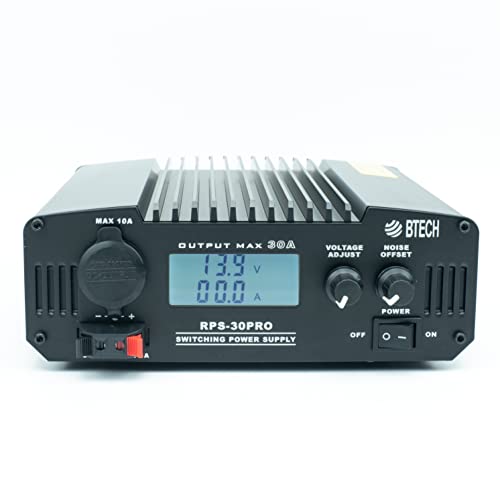
BTECH RPS-30PRO 30A Compact Bench Power Supply

DmgicPro 13.8V 30A DC Power Supply for Ham

WANPTEK 0-32V 0-10A Variable DC Power Supply
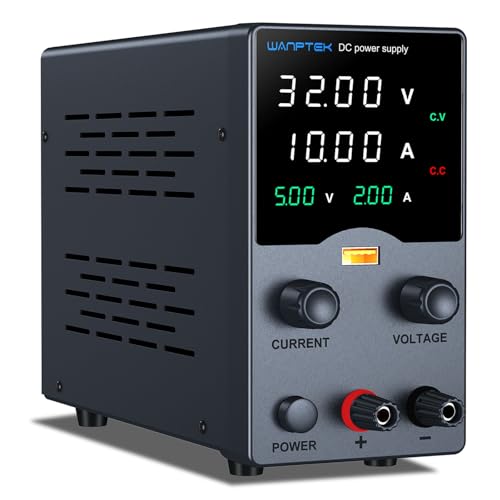
WANPTEK 30V 10A Adjustable Bench Power Supply

Basicvolt 9V 3A AC/DC Adapter 27W

Hyelec 30V 5A Adjustable Bench Power Supply

WANPTEK 0-30V 0-10A Bench Power Supply OCP

Basicvolt 3V-24V Universal Adjustable Adapter 3A
What Each Pick Brings To The Table
Replacing a lost Samsung monitor cord is the unglamorous side of owning adjustable electronics. The Basicvolt adapter keeps things simple: a fixed 14V DC output at 3A, with a 42W ceiling that suits common SyncMaster and 850-series panels. It handles anything under 3A draw, so it powers down to a 1.78A trickle without complaining.
Most shoppers land on this adapter after their original brick vanishes or dies. It accepts a wide AC input range, which means it works in mixed-voltage shops and international outlets. Compared to the broader bench units further down the list, this one stays deliberately narrow, and that narrowness is the point.
The Helpful Details
- Fixed 14V output matches a long list of Samsung monitor models
- Accepts 100V-240V input for travel and mixed-grid workshops
- Comfortably drives 25W through 42W monitor loads
- Drop-in replacement for many failed OEM bricks
Worth Noting
- Will not power 14V monitors rated 3.5A or higher, including the SA850 and P2770
- Single fixed voltage means it has no flexibility beyond Samsung’s 14V line
Whose Shelf It Belongs On
Samsung monitor owners hunting for a direct replacement for a lost or failed 14V adapter, especially in home office setups.
Skip It When
You need flexible voltage tuning, in which case the Basicvolt 3V-24V Universal Adjustable Adapter 3A further down the list is a better fit.
When 30A is not enough, the Jesverty SPS-50II steps up with 50A of regulated headroom, enough for the largest mobile rigs and bench rigs pulling serious current. The output slides from 9V to 15V or locks to a fixed 13.8V, the sweet spot for amateur radio transceivers. A built-in cooling fan keeps the chassis from getting uncomfortable during marathon transmit sessions.
Screw-type main terminals make connecting bare wires or ring lugs straightforward, and auxiliary output terminals are available for low-current accessories. For home labs running high-power HF work, this unit clears room that the 30A picks below simply cannot.
Useful Highlights
- 50A continuous output handles the most demanding transceivers
- Adjustable 9-15V range with a fixed 13.8V preset for radio use
- Screw terminals accept heavy-gauge wire and ring lugs easily
- Cooling fan manages sustained full-load operation
Trade Offs
- Larger and heavier than 30A competitors, which matters on crowded benches
- No fine-resolution encoder like the WANPTEK units offer
Key Product Details
Built With In Mind
Amateur radio operators running high-power HF stations or multi-radio benches that routinely pull more than 30A.
Look Elsewhere When
You mostly work on small repair jobs and want compact portability, in which case the WANPTEK 30V 10A Adjustable Bench Power Supply further down fits better.
BTECH built the RPS-30PRO around the radio operator who swaps between CB, GMRS, and LMR gear throughout a single afternoon. The unit converts AC wall current into a regulated DC stream adjustable from 9V to 15V, with a fixed 13.8V mode for transmitter testing. That dual range covers almost every mobile radio on the market today.
Where the Jesverty above focuses on raw current, this one focuses on connector flexibility. A cigarette socket, screw terminals, and snap-in terminals cover both shop and vehicle use. For the hobbyist running multiple radios at the workbench, the variety removes adapter sprawl.
Good Reasons To Consider
- Three connector styles built in, which cuts down on adapter clutter
- 30A output handles most mid-power mobile radios
- Fixed 13.8V mode matches standard radio rails exactly
- Compact form factor fits tighter desks than larger 50A units
A Few Limitations
- 30A ceiling means it falls short of the Jesverty SPS-50II for high-power HF work
- Noise offset circuit is present but not as refined as the WANPTEK lab units below
The Right Fit
Two-way radio enthusiasts and scanner hobbyists who plug and unplug different mobile radios every session.
Another Choice May Suit
You run a high-current linear amplifier, in which case the Jesverty SPS-50II 50A Bench Power Supply 9-15V handles the extra load more comfortably.
The DmgicPro unit looks similar to the BTECH at a glance, but the front-panel cigarette socket sets it apart for the ham who tests gear in vehicles. Plug a mobile radio’s own DC cord directly in and bench-test it without rewiring. The 10A lighter socket handles charging small accessories alongside the main 30A output.
Output locks at a steady 13.8V DC, with a maximum of 30A and continuous rating of 20A. A digital display shows the actual voltage so you can confirm clean regulation at a glance. For most shacks running a single mid-power transceiver at a time, the continuous 20A spec is the practical ceiling worth knowing.
What Stands Out
- Built-in cigarette socket for direct radio bench testing
- Digital voltage readout for quick regulation checks
- Noise offset circuit reduces interference on receive
- Solid 20A continuous rating covers most mid-power radios
Possible Compromises
- Output is locked to 13.8V, so it does not substitute for a true variable lab supply
- 30A peak but 20A continuous means heavy transmit cycles demand monitoring
Who It Suits Best
Mobile radio installers and ham operators who want a clean bench-test rig that mirrors a vehicle’s 13.8V system.
Consider Something Else When
You need to dial voltages for circuit repair work, in which case the WANPTEK 0-30V 0-10A Variable DC Power Supply later in this list offers the tuning range.
This is where the list shifts from radio-specific supplies to general lab gear. WANPTEK’s 0-32V, 0-10A bench unit covers almost any DC repair scenario, from 3.3V logic boards up to 24V router replacements. The four-digit LED display reads voltage and current simultaneously, which saves a lot of menu-flicking during component swaps.
Three memory presets (M1, M2, M3) let you save frequently used voltage/current combos, which is genuinely useful for repetitive repair flows. USB-A and Type-C fast-charge ports sit on the front, so you can top up a phone or Raspberry Pi while testing a board. For most home repair benches, this is the sweet spot between price and capability.
Benefits That Matter
- Full 0-32V range covers everything from logic-level to 24V systems
- Three memory presets speed up repetitive repair tasks
- USB-A and Type-C ports double the unit as a charging station
- OCP (overcurrent protection) safeguards connected devices
Small Caveats
- 10A ceiling rules out high-power radio bench testing
- No dedicated cigarette socket like the DmgicPro unit offers
Feature Snapshot
Made For
Repair-bench professionals and serious hobbyists who work on a wide mix of DC electronics each week.
Not Your Match When
You only need a 13.8V radio rail, in which case the BTECH RPS-30PRO 30A Compact Bench Power Supply is the simpler choice.
Sibling to the 32V pick above, this WANPTEK unit drops the top voltage to 30V and the higher-end extras to focus on DIY repair essentials. The precision encoder knob replaces the older analog potentiometer found on budget supplies, which means you dial exact values instead of guessing where 9.2V lands. Press the knob to choose the digit, then rotate to set it.
A four-digit LED display shows real-time voltage and current, and a USB fast-charge port on the front adds utility. Compared to the 32V WANPTEK, this one skips memory presets, which is the main reason to choose it or skip it depending on your workflow.
What Pays Off
- Encoder knob lets you dial voltages digit-by-digit for accuracy
- Four-digit display gives clear readout without menu diving
- USB fast-charge port handles phone or SBC charging
- Compact chassis suits smaller workbenches
Factors To Consider
- Lacks memory presets found on the higher WANPTEK model
- 30V ceiling rather than 32V, which occasionally matters for specialty circuits
Who Should Grab It
DIY repair enthusiasts who want encoder precision and clean readouts but do not need the 32V range or memory slots.
Reach For A Different Pick When
You repeatedly dial the same voltages for production-style repair, in which case the WANPTEK 0-32V 0-10A Variable DC Power Supply’s presets save real time.
Stepping away from bench units, this Basicvolt adapter handles the messy real world of small 9V devices. The 27W output covers everything from guitar pedals to Crosley record players, Arduino boards to label makers. Six interchangeable tips ship in the box, which kills the old frustration of having the right voltage but the wrong barrel connector.
The unit runs cool under sustained loads when paired with devices drawing less than 2A. A polarity-reversal cable flips center-positive to center-negative for guitar pedal owners. The 1.5-meter DC cord reaches from a typical wall outlet to a pedalboard or shelf without strain.
Practical Advantages
- Six tips cover most common barrel sizes out of the box
- Polarity reversal cable handles center-negative guitar pedals
- 1.5m DC cord reaches pedalboards and shelves easily
- Universal 100-240V input works for travel
Honest Caveats
- Heat builds up if pushed near 80% load for hours, which shortens lifespan
- Fixed at 9V, so it is not a substitute for a true variable supply
Perfect Match For
Guitar pedal players, vinyl record enthusiasts, and home electronics tinkerers who need one tidy 9V adapter for several devices.
A Better Fit Elsewhere
You need multiple voltages from a single brick, in which case the Basicvolt 3V-24V Universal Adjustable Adapter 3A replaces a small collection of these.
Hyelec targets the precision-minded hobbyist who cares about clean readouts and tight control. The encoder knob doubles as a coarse-and-fine adjustment: rotate to dial fast, then nudge for that last 0.05V. The four-digit display resolves down to 0.01V and 0.01A, which matters when you are powering reference circuits.
A hold function freezes the current readout, useful when probing a board with one hand and watching current draw with the other. 110V alligator leads ship with the unit for immediate bench use. The 5A ceiling is the trade-off for that resolution: it covers most small electronics but leaves high-current radios out of reach.
Where It Helps
- 0.01V and 0.01A display resolution for reference-grade work
- Coarse-and-fine encoder knob gives quick and precise dialing
- Data hold function freezes the reading for single-handed probing
- Alligator leads included for plug-and-play bench setup
Some Limits To Know
- 5A maximum rules out anything but low-current radio testing
- Less USB/Type-C convenience than the WANPTEK lab units
At A Glance
Best Suited To
Electronics repair hobbyists who need precise voltage control on small boards and reference circuits.
Where A Sibling Pick Shines
You regularly push more than 5A through your projects, in which case the WANPTEK 30V 10A Adjustable Bench Power Supply offers double the current headroom.
The third WANPTEK bench unit on this list earns its slot by doubling down on safety and convenience. OCP, or overcurrent protection, automatically shuts the output down when current exceeds your setpoint, a real safeguard when bench-testing an unfamiliar board. Quick-charge USB and Type-C ports up to 3.6A sit on the front for testing phones or single-board computers.
The coarse-and-fine encoder knob handles fast jumps and last-millimeter tweaks, while the four-digit LED shows voltage and current at a glance. Compared to the basic 30V WANPTEK earlier, this one leans into protection features. For newcomers to bench work, those safety nets matter.
Useful Strengths
- OCP overcurrent protection prevents accidental board damage
- 3.6A quick-charge ports handle USB-C and USB-A devices
- Coarse-and-fine encoder knob for both speed and accuracy
- High-definition four-digit display reads both voltage and current
Where It May Fall Short
- Same 0-30V ceiling as the cheaper WANPTEK lab unit
- No memory presets to recall common repair voltages
Feature Rundown
Who Will Love This
Beginners and intermediate hobbyists who want extra protection when testing boards they do not fully understand.
Swap It Out When
You need preset recall for production-style workflows, in which case the WANPTEK 0-32V 0-10A Variable DC Power Supply earlier in this list stores your common settings.
The other end of the spectrum from the lab units above, this Basicvolt adapter is the Swiss Army knife for household electronics. The protruding knob lets you dial any voltage between 3V and 24V, with stops at the common rails (5V, 9V, 12V, 14V, 20V). An LED on the side shows the actual voltage so you know what you are feeding a device.
The 3A ceiling covers small appliances, routers, LED strips, and most replacement-cord duties. Fully counter-clockwise turns the unit off without unplugging it, a small detail that prevents wall-wart clutter. For someone replacing a drawer full of old adapters, this consolidates the mess into one brick.
Well-Handled Touches
- Dial any output from 3V to 24V with one knob
- LED voltage display confirms the actual output at a glance
- Off-gear at full counter-clockwise prevents unplugging
- Universal 100-240V input suits international outlets
Points To Note
- 3A ceiling rules out anything that draws heavier current
- Analog knob lacks the precision of encoder-based bench units
Right Fit For
Households replacing a clutter of single-voltage wall adapters with one flexible brick for small appliances and electronics.
Not Your Match When
You need high current or precise voltage setting, in which case the WANPTEK 0-32V 0-10A Variable DC Power Supply further up the list serves you better.
Picking An Adjustable Power Supply That Actually Fits
Voltage range and current capacity are the two numbers that decide whether a supply is right for you. Voltage range is the span between the lowest and highest volts the unit can deliver, and current capacity is how many amps it can sustain at that voltage. A 0-32V, 0-10A bench supply covers most home electronics repair, while a 9-15V, 30A radio supply pushes the current higher for ham transmitters.
Voltage And Current: The Real Numbers That Matter
For bench repair work, a wide voltage range matters because circuit boards run at different rails. A Raspberry Pi wants 5V, a router wants 12V, and a small motor controller might need 24V. Current capacity matters too, since underpowering a device leads to mysterious brownouts. Most laptop-style repairs need 3-5A, while LED array projects can pull 8-10A.
Connector Style And Daily Use
Connector choice shapes how often you curse at the unit. Screw terminals grip bare wires and ring lugs, cigarette sockets accept mobile radio cords directly, and banana jacks fit standard bench probes. Pick a unit that matches the connectors on the devices you actually test. Adapter sprawl at a bench is a real productivity drag.
Wall Adapters Versus Bench Units
Wall adapters like the Basicvolt 9V and 3-24V models plug straight into the outlet and replace lost cords. Bench units sit on the workbench with displays and knobs, which suits anyone testing circuits regularly. If your main pain is a missing cord, a wall adapter is enough. If you actively probe circuits, a bench unit pays for itself within a few repair sessions.
What Sets Each Tier Apart
Where Shoppers Go Wrong
The most common slip-up in this category is matching voltage while ignoring current. A 9V 1A adapter powering a 9V 2A device will run hot, sag under load, and die early. Always check that the adapter’s current rating meets or exceeds what the device draws under peak use. The reverse mistake is over-buying a 50A bench supply for simple 9V pedal repair, which adds cost and bulk without payoff.
What Separates Premium From Basic
Higher-tier adjustable supplies earn their price through tighter regulation (cleaner voltage with less noise under load), finer display resolution (0.01V rather than 0.1V), and protective circuits like OCP that shut things down before damage. A premium unit also adds convenience: memory presets, USB charging ports, and encoder knobs that let you set exact values rather than approximating. For occasional work, a budget wall adapter is plenty. For daily bench use, those refinements add up fast.
Frequently Asked Questions
What Is The Difference Between A Bench Power Supply And A Wall Adapter?
A bench power supply sits on your workbench, displays voltage and current in real time, and lets you tune the output while connected. A wall adapter plugs into an outlet and delivers one fixed (or in some cases, knob-set) voltage to a single device. Bench units are for testing circuits; wall adapters are for replacing lost cords.
Do I Need A Variable Supply If I Only Use One Voltage?
Probably not. A fixed-voltage adapter rated for your device’s exact current is simpler, cheaper, and runs cooler. Variable supplies make sense when you regularly test different devices or repair unknown boards at varied voltages.
How Much Current Should My Bench Supply Handle?
Match it to your heaviest load with comfortable headroom. Most consumer electronics repair tops out around 5A, while ham radio benches often need 20-30A continuous. A 50A supply like the Jesverty covers any amateur setup, but it costs more and takes up more desk space.
Can These Units Replace Original Equipment Power Bricks?
Sometimes. Match the voltage exactly, confirm the polarity (center-positive or center-negative), and make sure the current rating meets or exceeds the original. The Basicvolt 14V Samsung adapter and 9V pedal adapter are designed as direct replacements, while bench supplies are general-purpose substitutes.
Are Noise Offset Circuits Worth The Extra Cost?
For radio work and audio repair, yes. A noise offset circuit shifts switching noise away from frequencies you might be trying to listen to, which can clean up reception on sensitive receivers. For purely digital repair, the benefit is harder to hear.
The right pick depends on what you are actually powering. Bench repair calls for a variable unit with encoder precision and memory presets. Ham radio work pushes toward fixed 13.8V with high current capacity. Household cord replacement is best served by a multi-tip or knob-adjustable wall adapter. Pick the category that matches your bench, and the specific choice gets easier.
