

Anyone who has tried to power a CB radio, a bench full of test gear, or a string of LED strips from a wall outlet knows the moment of frustration: a wall outlet pushes AC current, but almost every low-voltage device wants DC. That gap is exactly what an AC to DC power supply solves, and the difference between a cheap one and a well-built one shows up fast in noise, heat, and reliability. I pulled together eight solid options that cover the common scenarios: hobby electronics, ham radio benches, CCTV runs, 3D printers, and DIN-rail industrial builds.
How The Shortlist Stacks Up

Pyramid PS3KX Compact Bench Power Supply 2.5 Amp

Pyramid PS7KX Compact Bench Power Supply 5 Amp

Jesverty SPS-50II Bench Power Supply 50 Amp
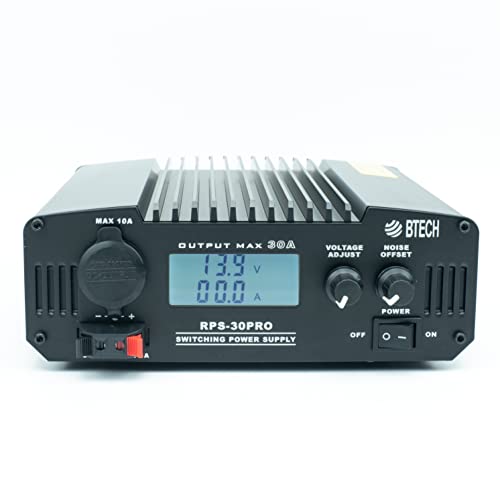
BTECH RPS-30PRO Bench Power Supply 30 Amp

VAYALT 12V 50A 600W Switching Power Supply

VAYALT 12V 100A 1200W Switching Power Supply

Mean Well MDR-20-5 DIN-Rail Power Supply 5V

VAYALT 24V 25A 600W Switching Power Supply
What Each Pick Brings To The Table
The Pyramid PS3KX is a linear regulated bench supply, which means it uses an older analog design rather than a switching circuit. That matters because linear supplies tend to produce cleaner DC output with less electrical noise, a real plus for sensitive radio receivers.
It pushes 2.5 amps at 12V DC (a fixed 13.8V setting common in mobile radio work), fed from a standard 115V AC wall outlet. The screw-type terminals on the front make it easy to clip leads from test gear or bare-wire projects without needing a special connector. For a small desk dedicated to a single CB or scanner, this is the kind of simple, no-fuss brick that earns its space.
Everyday Perks
- Linear regulation, which generally keeps ripple and noise low for clean radio reception.
- Screw terminals accept bare wires, spade lugs, or ring terminals without extra adapters.
- Built-in cooling fan handles continuous operation without thermal throttling in most setups.
- Compact footprint fits on a crowded shelf next to a soldering station.
Things To Consider
- 2.5 amps is genuinely limiting; anything beyond a single low-power radio will starve.
- Linear supplies run warm and waste more energy as heat than switching designs.
Made For
A hobbyist running one CB radio or scanner who values clean DC over raw current and wants a quiet, no-display power brick.
Consider Something Else When
Heavier current demands point toward the Jesverty SPS-50II, which delivers far more amperage for multi-device benches.
Step up from the PS3KX and the PS7KX doubles the available current to 5 amps, still using that same quiet linear regulation approach. That extra headroom is what separates a one-radio setup from a small bench with two devices running side by side.
It takes 115V AC from the wall and outputs a steady 13.8V DC, the de facto standard for ham and CB gear. Screw terminals on the front panel keep wiring flexible, and the internal fan manages heat during longer transmit sessions. Compared to the 2.5-amp sibling, this is the same proven chassis with more breathing room for real workloads.
The Case For It
- 5 amps handles a mobile radio plus a small accessory without voltage sag.
- Linear topology tends to give cleaner audio on receive than most switching supplies.
- Universal screw terminals accept a range of connector types in the field.
- Compact case design, similar in size to the smaller Pyramid unit.
Honest Caveats
- Still no digital display, so voltage readings require an external multimeter.
- Runs warmer than a switching supply at full load, so leave space around the vents.
Quick Facts
Best Suited To
Ham operators or GMRS users running a mid-tier mobile radio who want a quiet, fixed-voltage supply without paying for digital metering.
Reach For A Different Pick When
The BTECH RPS-30PRO suits those who need adjustable voltage plus multiple connector types on the front panel.
The Jesverty SPS-50II lands in a different league entirely. This is a switching power supply, a design that uses high-frequency electronic switching to convert AC to DC more efficiently and at a fraction of the weight of a linear brick. Output is continuously variable from 9V to 15V, or locked at the 13.8V sweet spot for radio work.
At 50 amps of available current, this thing can feed a stack of mobile radios, a small amplifier, or a bench full of test gear simultaneously. The front panel uses oversized screw terminals that handle thick gauge wire without complaint, plus auxiliary terminals for lighter loads. For a repair shop or a serious home lab, this is the kind of supply that disappears into the background and just delivers current all day.
What Pays Off
- Adjustable output from 9V to 15V opens up battery simulation and varied device testing.
- 50-amp capacity handles amplifiers and multi-radio installations without flinching.
- Switching design runs cooler and lighter than the linear Pyramid models above.
- Cooling fan keeps temperatures in check during marathon bench sessions.
- Auxiliary output terminals let you tap small loads without disturbing the main leads.
Practical Considerations
- Switching supplies can introduce some high-frequency noise that sensitive receivers may pick up.
- Larger chassis demands more desk space than the compact Pyramid units.
- Internal fan runs continuously, which may matter in a quiet room.
Right Fit For
A repair technician or advanced hobbyist running multiple high-current devices who needs adjustable voltage and serious amperage.
Swap It Out When
For pure 12V LED or CCTV runs, the VAYALT 50A unit is a more focused option at a different form factor.
The BTECH RPS-30PRO aims squarely at radio enthusiasts who want flexibility baked into the front panel. It accepts AC input and outputs adjustable DC from 9V to 15V, with a fixed 13.8V mode for traditional mobile radio use. The 30-amp capacity sits in a comfortable middle ground for a multi-radio shack.
What sets this unit apart is its connector spread: a cigarette lighter socket, screw-type terminals, and snap-in terminals all live on the front. That means a handheld radio, a mobile rig, and a test lead can all plug in at the same time without adapters. A noise offset adjustment helps push any switching noise outside common receive frequencies, a thoughtful touch for HF operators.
The Good Stuff
- Three output connector types cover most radio accessories out of the box.
- Noise offset adjustment helps clean up receive audio on sensitive bands.
- 30 amps comfortably runs two mobile radios plus accessories.
- Adjustable voltage makes it useful beyond just radio applications.
Points To Keep In Mind
- More connector variety means a more crowded front panel than simpler supplies.
- Snap-in terminals are convenient but limit wire gauge compared to the screw terminals on the Jesverty.
Feature Snapshot
Whose Shelf It Belongs On
A radio hobbyist with a mix of CB, ham, and GMRS gear who wants one supply that adapts to whatever gets plugged in next.
Not Your Match When
Plain 12V lighting or CCTV installs are better served by the VAYALT 12V 50A unit, which targets that use case directly.
Stepping away from the bench supply form factor, the VAYALT 12V 50A is a switching converter built for permanent or semi-permanent installation. It accepts either 110V or 220V AC input, useful for shops with mixed mains standards, and outputs 12V DC with a small adjustment range around that nominal value.
At 600 watts peak, this thing is built to feed CCTV camera arrays, long LED strip runs, 3D printer heated beds, or hobby robotics. The compact chassis is designed to mount in an enclosure or sit on a shelf, not on a benchtop next to a soldering iron. For anyone wiring a fixed low-voltage system, this is the kind of supply that disappears into the project.
Why It Works Well
- High 600W capacity drives demanding loads like 3D printer beds without sagging.
- 110V/220V input flexibility suits both North American and international mains.
- Compact metal chassis dissipates heat well during continuous loads.
- Output voltage is adjustable within a small range to fine-tune drop over long wire runs.
Where It May Fall Short
- No front display or terminal posts; it expects hardwired installation, not benchtop probing.
- Cooling relies on internal airflow that can clog with dust in workshop environments.
Who Should Grab It
An installer building a multi-camera CCTV system or a maker wiring a large LED installation who needs serious 12V current on tap.
Look Elsewhere When
Adjustable benchtop work calls for the Jesverty SPS-50II, which adds variable voltage and front-panel terminals.
The 100-amp version of the VAYALT line doubles down on raw capacity, pushing 1200 watts of 12V DC for the most demanding fixed installations. This is the supply you reach for when a single circuit needs to feed dozens of devices, an entire security camera network, or a fleet of 3D printers on a shared rail.
It shares the same dual-voltage AC input and small voltage adjustment range as the 50-amp model, just with substantially more muscle. The metal chassis and internal fan are sized for continuous high-current draw. Compared to the 50-amp sibling, this unit trades compactness for the kind of headroom that lets a project scale without worrying about tripping the supply.
Notable Upsides
- 1200W output handles multi-device installations from a single supply.
- 100A peak current future-proofs growing CCTV or LED projects.
- 110V/220V auto-ranging input simplifies global deployments.
- Adjustment screw lets installers compensate for voltage drop on long cable runs.
- Switching topology keeps the chassis relatively compact for the wattage.
Some Limits To Know
- Overkill for small projects where the 50A model would already be sufficient.
- Requires careful wire gauge selection; undersized wiring at 100A is a real safety concern.
Perfect Match For
Industrial installations or growing CCTV farms where consolidating to one high-capacity supply beats running multiple smaller units.
A Better Fit Elsewhere
Smaller residential CCTV or single-printer setups are well served by the more compact VAYALT 12V 50A instead.
The Mean Well MDR-20-5 plays a completely different game. This is a DIN-rail power supply, meaning it snaps onto the standardized metal rail inside an electrical control panel alongside breakers, relays, and terminal blocks. It outputs a clean 5V DC at 3 amps, which makes it ideal for low-voltage electronics, sensors, and microcontroller projects.
The universal AC input range (roughly 85V to 264V) means it works on virtually any mains supply worldwide, and the built-in protections cover short circuits, overloads, and overvoltage events. A soft-start circuit limits the inrush current when power is applied, which matters in panels with many supplies sharing a circuit. Mean Well is a brand that installers trust for industrial work, and this little unit reflects that reputation.
Everyday Wins
- DIN-rail mounting integrates cleanly into professional control enclosures.
- Wide AC input range handles global mains voltages without modification.
- Multiple protection circuits improve long-term reliability in unattended panels.
- Compact footprint leaves room for other DIN devices on the same rail.
- 5V output suits sensors, microcontrollers, and small electronics.
Room For Improvement
- 15W total capacity is tiny compared to the bench supplies above; wrong tool for high-current jobs.
- DIN-rail form factor adds installation steps versus a plug-in wall adapter.
Spec Overview
Built With In Mind
An industrial control panel builder or automation integrator needing a reliable 5V rail inside a DIN-rail enclosure.
Where Another Pick Suits Better
For hobby electronics on a workbench, a plug-in wall adapter or the BTECH RPS-30PRO is more convenient than a DIN-rail unit.
The last entry in this roundup climbs the voltage ladder to 24V DC, a common rail for industrial motors, longer LED strip runs, and certain 3D printer components. This VAYALT unit delivers 25 amps at that higher voltage, totaling 600 watts, with the same dual-voltage AC input flexibility as its 12V siblings.
Higher voltage means lower current for the same power, which translates to thinner wire gauges over long runs without significant voltage drop. For a workshop running 24V LED strips or stepper motors, this supply keeps the wiring manageable. It sits in a similar installation-style chassis to the 12V VAYALT models, just optimized for a different voltage class.
The Helpful Details
- 24V output suits industrial motors and long LED runs with less voltage drop.
- 600W capacity covers demanding multi-strip installations.
- 110V/220V input works across regional mains standards.
- Small voltage adjustment compensates for cable losses on long runs.
Factors To Consider
- 24V is wrong for any 12V LED strip or radio gear; double-check device specs before wiring.
- Installation-oriented design lacks the convenience of benchtop supplies for prototyping.
Essential Details
Who Will Love This
A maker or installer running 24V LED strips, stepper motors, or industrial lighting who needs reliable higher-voltage DC.
Skip It When
Radio gear and 12V CCTV installs belong with the Pyramid or VAYALT 12V supplies; mismatch here would damage sensitive electronics.
Picking The Right AC To DC Supply For Your Setup
Match The Voltage To Your Load
Every device on the bench has a specific voltage it expects, and supplying the wrong one is the fastest way to destroy a circuit. 12V DC is the standard rail for automotive accessories, CB radios, and most LED strips, while 24V shows up in industrial motors and longer LED runs. 5V is reserved for low-power electronics, microcontrollers, and USB-adjacent gear. Before choosing a supply, identify what your load actually needs and verify the supply’s output matches.
Linear Versus Switching Topology
Linear regulated supplies use older analog circuitry to step down voltage, producing clean DC with very little electrical noise, which is why radio operators favor them. Switching supplies use high-frequency electronic switching to convert power, running cooler and lighter at the cost of some high-frequency noise. For sensitive audio gear or HF receivers, linear often wins. For raw power in a smaller package, switching is hard to beat.
Right-Size The Current Capacity
Amperage headroom matters more than people expect. Running a supply at 90 percent of its rating continuously shortens its life and leaves no room for inrush currents when devices power up. A good rule of thumb is to choose a supply that delivers roughly 25 to 30 percent more current than your typical load draws. The 5-amp Pyramid handles a single radio comfortably; the 50-amp Jesverty handles a bench full of gear without breaking a sweat.
Connector Type And Form Factor
A supply with the wrong output connectors creates daily frustration. Screw terminals accept bare wires and lugs, cigarette plugs match automotive gear, and snap-in terminals suit quick radio swaps. DIN-rail supplies integrate into industrial panels but add installation steps. Match the form factor to how and where the supply will actually live, whether that is a permanent panel install or a movable benchtop tool.
Key Considerations Across These Picks
Mistakes Worth Dodging
The most common slip up is choosing voltage by assumption. A 24V supply wired to a 12V LED strip will cook the strip in seconds, so always confirm what the load expects before clicking buy. Another trap is undersizing wire gauge for high-current supplies; at 50 or 100 amps, thin wire becomes a fire hazard rather than just a minor inefficiency. Finally, do not overlook noise. A cheap switching supply can inject interference that ruins a radio receiver, which is why RF-sensitive setups often pay extra for linear regulation or a noise-offset feature.
Where The Extra Money Goes
Higher-capacity supplies cost more for obvious reasons: larger transformers, heavier-gauge internal wiring, and bigger cooling systems. But the upgrade also buys tighter voltage regulation under load, more robust protection circuits, and longer service life in continuous-duty applications. For a hobbyist running a radio a few hours a week, the entry-level units are plenty. For a shop running equipment eight hours a day, the jump to a 30- or 50-amp supply pays back in fewer failures and cleaner power over the long run.
Frequently Asked Questions
What Does An AC To DC Power Supply Actually Do?
It converts the alternating current from a wall outlet into the direct current that most low-voltage electronics require. Wall outlets push AC, but radios, LED strips, and 3D printers need smooth DC at a specific voltage to operate safely.
Linear Or Switching, Which Is Better?
Neither is universally better; it depends on the use case. Linear supplies produce cleaner DC with less noise, which matters for radio receivers. Switching supplies run cooler, weigh less, and deliver more current in a smaller package, which suits most other applications.
How Much Headroom Should I Leave On The Current Rating?
Aim for at least 25 percent more current capacity than your typical load draws. Running a supply near its maximum shortens its lifespan, while extra headroom lets it handle brief inrush currents when devices power up.
Can I Use A 24V Supply For 12V Devices?
No, that will likely damage the device. Voltage is not interchangeable; you must match the supply output to the input rating printed on the device or its power adapter. Buck converters can step voltage down safely if you need a different rail.
Do These Supplies Need Cooling?
Most quality units include an internal fan, but adequate airflow around the chassis still matters. Blocking vents or stacking supplies tightly together traps heat and shortens component life, especially in switching designs running at high current.
Wrap Up
The right AC to DC supply comes down to matching voltage, current, and form factor to what the load actually needs. A ham operator with a single radio wants different things than a maker wiring a 24V LED ceiling, and this list covers both ends of that spectrum and everything between. Take a moment to confirm the voltage and current your project requires, then pick the supply that fits the space and workflow.
