

Voltage problems sneak up on people. A brownout during a summer storm, a momentary spike when the utility company does switching, or a marginal outlet in an old garage can quietly shorten the life of expensive gear. Fridges, workshop equipment, vintage tube amps, and even motorcycle charging systems all benefit from a small buffer between them and the wall. I put together this list to cover the most common scenarios people actually face at home, on the bench, and on the road.
A Snapshot Of The Selections

BSEED Surge Protector 4-Pack Brownout Outlet

BSEED Voltage Protector 3-Outlet Surge

Chanzon KBPC5010 Bridge Rectifier Diode 50A 1000V
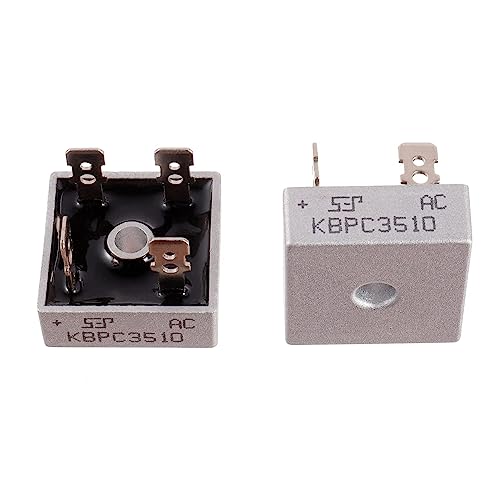
BOJACK KBPC3510 Bridge Rectifier 35A 1000V

Beleeb 20A Variable Auto AC Voltage Regulator

YaeCCC Variac 500VA Variable Voltage Transformer

Trail Tech 7003-AC01 Universal AC Voltage Regulator

Walfront Waterproof Buck Converter 5A 12V-24V to 5V

Walfront 12V-24V to 5V Step Down 1A

Walfront 12V-24V to 5V Step Down 2A
The Picks, Examined More Closely
A four-pack of single-outlet plug-in protectors, this set earns its place for households juggling multiple vulnerable appliances. Each unit sits between a fridge, freezer, or window AC and the wall, watching for sag (a “brownout”) and brief over-voltage events before cutting the line.
The 1440-watt handling covers most household appliances on a standard 120V, 15A circuit, and the built-in delay timer gives compressors time to settle before power returns. For a home with a garage freezer and a kitchen fridge, the multi-pack layout means one purchase covers both rooms. Unlike the wall-mounted 3-outlet BSEED below, this version keeps the form factor small and dedicated to one load.
Useful Strengths
- Four independent protectors in one box, useful for fridges, freezers, and window units in different rooms.
- 1440W capacity handles most 120V household appliances without throttling.
- Built-in delay prevents rapid compressor restarts that shorten motor life.
- Single-outlet pass-through keeps cable clutter to a minimum behind appliances.
Points To Keep In Mind
- One outlet per unit means no pass-through powering for accessories.
- Indicator light behavior on power restore varies by unit revision.
Quick Facts
Made For
Households with multiple brownout-sensitive appliances spread across rooms, particularly older freezers and fridges.
Look Elsewhere When
The single-outlet design feels limiting, in which case the BSEED 3-Outlet Surge Protector on this list handles grouped gear.
Three outlets in one wall-mountable block changes how a small office or media corner handles surges. Each receptacle sees the same protection cycle, which keeps a TV, PC, and a small peripheral on a shared safety net.
The 1875W rating pushes the unit into heavier appliance territory, so it doubles as a washing machine or window AC buffer. The PC flame-retardant shell is a sensible material call for anything that lives near heat-generating gear. Compared with the 4-pack BSEED above, this one trades quantity for outlet density.
Good Reasons To Consider
- Three protected outlets let a desk share one buffer instead of three separate protectors.
- 1875W capacity handles heavier loads like washing machines and window AC units.
- Flame-retardant PC housing adds a layer of thermal safety near electronics.
- Wall-mountable body keeps cords lifted off the ground in workshops.
Some Limits To Know
- Three shared outlets mean one tripped event cuts power to all connected gear.
- The 125V ceiling is fine for North American use but limits overseas installs.
Best Suited To
Home offices, dorm rooms, and entertainment centers where a TV, PC, and console share a single outlet pair.
Skip It When
The use case calls for one outlet per appliance in different rooms, in which case the BSEED 4-Pack Brownout Outlet fits better.
A bridge rectifier takes an AC input and produces a DC output by routing current through four diodes in a diamond pattern, and this KBPC5010 handles the heavy side of that job. The 50-amp forward current and 1000V peak reverse rating put it in welder-supply territory.
The metal case and through-hole mounting make it a bench component, not a finished consumer product. Builders working on variable DC supplies, plating setups, or motor controllers find it useful as a building brick. It sits well above the BOJACK KBPC3510 below in current handling for serious loads.
Strong Points
- 50A forward current covers heavy rectification jobs like welders and motor drives.
- 1000V peak reverse voltage tolerates wide input swings from transformer secondaries.
- Metal case spreads heat effectively under sustained loads.
- RoHS-compliant and lead-free for those watching material composition.
Where It May Fall Short
- Through-hole mounting and exposed case demand heatsinking and safe enclosure work.
- Two-pack quantity leaves no spares for an experiment gone wrong.
Feature Card
Right Fit For
DIY builders assembling high-current DC supplies, plating rigs, or motor controllers from scratch.
Consider Something Else When
The bench project only needs moderate current, in which case the BOJACK KBPC3510 below handles lighter work at a smaller scale.
The KBPC3510 is the middle-weight sibling of the Chanzon above. Its 35A forward current and 1000V reverse rating still cover substantial rectification work, but the smaller package and lower thermal load suit student benches and repair jobs.
The two-pack format gives a backup unit, which matters when an experiment pops a diode. Low reverse leakage is the kind of detail that shows up on oscilloscope traces as cleaner output under load. It serves the same role as the Chanzon at a more modest current ceiling.
Strengths Worth Knowing
- 35A rating covers most hobby motor and amplifier power supply builds.
- Low reverse leakage keeps output cleaner under varied load conditions.
- Two units per pack reduce downtime if one fails mid-build.
- RoHS-compliant construction aligns with common lab material standards.
Things To Weigh
- Still requires heatsinking and proper enclosure work for safe operation.
- 35A ceiling rules out heavier welding-class supplies where the Chanzon fits.
Whose Shelf It Belongs On
Electronics students, repair technicians, and hobbyists assembling moderate DC supplies and motor controls.
A Better Fit Elsewhere
Project demands more than 35A of sustained current, in which case the Chanzon KBPC5010 above is the heavier alternative.
A variac (a variable autotransformer that adjusts AC output by sweeping a tap along a single winding) gives dialed output from a knob, and this 20-amp unit handles real bench loads. The output stays at the input frequency, so it does not distort the waveform the way some electronic regulators do.
That matters when testing vintage tube equipment or motor controllers that depend on a clean sine wave. The 20A rating supports workshop tools and small appliances through slow ramp-up testing. Compared with the YaeCCC below, this one trades the built-in meter for higher current capacity.
A Few Highlights
- 20A capacity supports bench tools, motors, and small appliances.
- Variable output preserves input frequency for waveform-sensitive equipment.
- Autotransformer design handles continuous duty without electronic switching noise.
Less Ideal Details
- No built-in voltmeter means adding an external meter for precise readings.
- Larger chassis demands dedicated bench space.
Who Should Grab It
Electronics labs and serious hobbyists running motor controllers, tube gear, or bench testing that needs dialed AC input.
Swap It Out When
A built-in meter matters more than raw amperage, in which case the YaeCCC Variac 500VA below offers that at lower current.
A 500VA variac brings bench-grade voltage control into a smaller footprint. The built-in voltmeter saves the step of wiring an external display, and the lighted on/off switch gives clear feedback when the unit is live.
Over-voltage protection and a 5A fuse add a layer of safety when dialing up slowly to test old appliances. The wide 0-130V range covers everything from dimming a vintage lamp to slow-starting a refurbished motor. Compared with the Beleeb above, the YaeCCC trades raw amperage for a more user-friendly control panel.
What Makes Sense
- Integrated voltmeter removes guesswork during slow ramp-up tests.
- 0-130V output range covers lamp dimming to motor slow-start scenarios.
- Built-in 5A fuse adds protection during experimental loads.
Worth Bearing In Mind
- 500VA ceiling caps it below heavier bench tools and welders.
- Non-isolated design means the output shares a common reference with input.
Perfect Match For
Home hobby workshops running small motors, tube gear, or home coffee roasting setups that need dialed voltage.
Reach For A Different Pick When
The bench needs 20A of capacity for heavier tools, where the Beleeb 20A Variable Transformer above fits the workload.
This regulator lives in a different world from the wall-plug units earlier in the list. Trail Tech makes it for motorcycle, dirt bike, and UTV charging systems, where stator output varies wildly with RPM and can spike headlights and accessories.
The adjustable output lets a tuner dial between brighter lamps at higher voltage or longer lamp life at the stock 12-16V range. It conditions the circuit to absorb spikes that would otherwise shorten bulb life. The dirt bike garage or powersports shop is the natural home for this regulator.
Where It Excels
- Adjustable output balances brightness versus lamp longevity on AC-powered bike lights.
- Spike conditioning protects headlights from stator surge events at high RPM.
- Universal fitment covers a range of stator-equipped vehicles.
Trade-Offs To Consider
- Limited to AC stator systems, not compatible with standard DC regulator/rectifier setups.
- Higher output settings shorten bulb life noticeably, so tuning matters.
Made For
Riders and tuners working on dirt bikes, vintage enduros, and UTVs with AC stator charging systems.
Where A Sibling Pick Shines
The application is a household appliance rather than a vehicle stator, where the BSEED surge units at the top of the list handle wall-power protection.
A buck converter steps voltage down efficiently while converting it to DC, and this 5A unit takes a vehicle’s 12V or 24V system and delivers a clean 5V at up to 25 watts. The sealed housing and flame-retardant shell make it the right shape for under-hood or marine installs where moisture is a constant.
The SMD-based design keeps the board compact while holding efficiency high enough that heat stays manageable. It suits dash cams, GPS units, or marine electronics that need steady USB-style power. Compared with the lower-rated Walfront units below, this one carries more current for bigger loads.
Benefits That Matter
- Waterproof housing lets it live in engine bays and bilge areas without extra enclosure work.
- 5A output supports power-hungry accessories like heated GPS units and lighting controllers.
- Flame-retardant shell reduces risk near fuel lines and heat sources.
- Wide 12V-24V input covers cars, trucks, boats, and solar battery banks.
Practical Considerations
- Higher output means more heat under full load, so mounting airflow matters.
- Sealed case makes field repair impractical if the board fails.
Best Suited To
Vehicle and marine installers powering multiple accessories from a single clean 5V source in wet or dusty environments.
Not Your Match When
The draw stays under an amp for a single dash gadget, where the smaller Walfront 1A unit below does the job without extra cost.
At 1A of output this is the lean end of the Walfront converter family. It targets low-draw accessories like a single dash cam, a basic GPS puck, or a small LED indicator where 5 watts of clean power is plenty.
The compact SMD board and flame-retardant housing follow the same design language as the 5A unit, just trimmed for smaller loads. It suits tidy installs behind a dashboard where space is tight. The trade-off is current, since powering anything beyond a single small accessory pushes past its ceiling.
What Stands Out
- Compact size fits behind dashboards and inside console panels with minimal space.
- 1A output is well-matched to a single dash cam or small GPS unit.
- Same flame-retardant housing family as the higher-current sibling.
Worth Noting
- 1A ceiling rules out powering multiple accessories from one module.
- No waterproof rating means it needs a dry install location.
At A Glance
Built With In Mind
Single-accessory installs in dry locations where a small, inexpensive step-down module is enough.
Another Choice May Suit
Multiple accessories or a wet install are in play, in which case the Walfront 5A waterproof unit above handles the heavier job.
The 2A sibling sits in the middle of the Walfront converter family, which makes it the most versatile for mixed accessory loads. At 10 watts of output it powers a backup camera and dash cam from the same feed, or feeds a string of LED accent lighting.
The same SMD construction and flame-retardant housing hold across the family, so installation feels familiar if a builder has used the 1A version. The 2A current ceiling lands in the sweet spot for most single-vehicle accessory runs. The trade-off versus the 5A unit is current headroom and the lack of a waterproof rating.
Everyday Wins
- 2A output covers a camera plus dash cam combination or short LED runs.
- Same compact form factor as the 1A unit keeps installs tidy.
- Wide input range accepts both 12V and 24V vehicle systems.
Room For Improvement
- No waterproof rating limits it to dry interior installs.
- 2A ceiling caps it short of running larger accessory arrays from one module.
Who It Suits Best
Vehicle owners running a backup camera, dash cam, or LED strip from a clean stepped-down supply in a dry location.
Where Another Pick Suits Better
The install sits in an engine bay or marine environment, where the Walfront 5A waterproof unit above adds sealing and current.
Choosing The Right Ac Voltage Regulators For Your Setup
The first thing to separate is the kind of protection needed. Brownout and surge protectors at the wall handle a fridge that flickers during a storm. Bench variacs handle slow ramp-up testing of motors and tube gear. Step-down converters handle the gap between a vehicle’s 12V system and a 5V accessory. Bridge rectifiers feed DC power supply builds. Each solves a different problem, and mixing them up usually means wasted spend.
Wattage and amperage matter most for matching. A 1440W wall unit covers most household appliances on a 15A circuit, while a 1875W unit reaches into heavier equipment. For vehicle converters, the input voltage range needs to match the vehicle (12V for cars, 24V for trucks and many boats), and the output current needs to cover the combined draw of the accessories on the load side. For variacs, VA (volt-ampere) is the practical ceiling, and that should sit comfortably above the load’s nameplate draw with headroom to spare.
Form factor closes the gap between spec sheet and reality. A four-pack of single-outlet protectors suits multiple rooms, while a three-outlet block suits a clustered desk. A waterproof converter earns its place in an engine bay but is overkill behind a dry dashboard. The Trail Tech regulator only makes sense on an AC stator system, so it has no role in a typical household. Matching the form factor to the install location avoids frustration after the order arrives.
Key Considerations Across These Picks
Common Shopping Slip Ups
The most frequent mistake is grabbing a surge protector when the real problem is sustained over-voltage or under-voltage, or vice versa. Brownouts and momentary spikes need different circuits, so reading the feature list matters. Another slip is ignoring the rated current. A 1A step-down converter looks like a bargain until a dash cam and a phone charger both draw from it and the voltage sags. Always total the load first, then pick the regulator with comfortable headroom above that number.
When Paying More Pays Off
Extra spend in this category usually buys headroom, sealing, or display feedback. A 5A waterproof converter earns its premium in marine and under-hood installs where moisture would kill an unsealed module. A variac with a built-in voltmeter saves the cost of an external multimeter and removes a wiring step. The heavier KBPC5010 rectifier pays off when a 35A unit would run too hot for the chosen heatsink. The honest read is that mid-tier picks serve most situations, and premium only earns its place when the install demands the extra margin.
Frequently Asked Questions
What does an AC voltage regulator actually do?
It keeps the voltage feeding a device inside a safe range, absorbing brief spikes and cutting power during brownouts to protect motors and electronics.
Do I need a separate regulator if I already use a surge protector?
Often yes. Surge protectors handle fast spikes, while regulators also catch sustained low-voltage or high-voltage events that can quietly damage compressors and transformers.
Are variacs safe for everyday household use?
They are safe when properly enclosed and fused, but they are bench tools rather than always-on wall units, so most people reserve them for hobby work.
Can a step-down converter replace a USB charger in a car?
In many cases yes, since the converter outputs 5V DC at USB-compatible levels, though a proper USB module often adds the negotiated charging protocols modern phones expect.
How do I pick between a 1A, 2A, and 5A converter?
Total the current draw of the accessories you plan to power from it, then pick the converter with comfortable headroom above that combined number.
Final Verdict
The right pick depends entirely on where the voltage problem lives. Wall-side brownouts call for a BSEED plug-in unit, bench work calls for a variac, and vehicle accessory installs call for a Walfront step-down converter. Builders working on DC supplies will find the KBPC-series rectifiers cover most project scales. Match the form to the install, double-check the current headroom, and the rest sorts itself out.
