

You’re probably looking for a way to keep a laptop charged, run small electronics, or add a little flexibility on long drives without overcomplicating your setup. That’s where the right car inverter helps, but the best match depends on wattage, outlet mix, and how much room you have around the plug. Some of these are built for light daily charging, while others make more sense for trucks, RVs, or heavier mobile gear.
Quick Look At The Shortlist

FSATBTNE 400W Power Inverter, 65W PD USB-C

DrimMek 300W Car Power Inverter, 65W USB-C

vansoet 200W Car Power Inverter, PD 65W/30W

BELTTT 2000W Pure Sine Wave Inverter
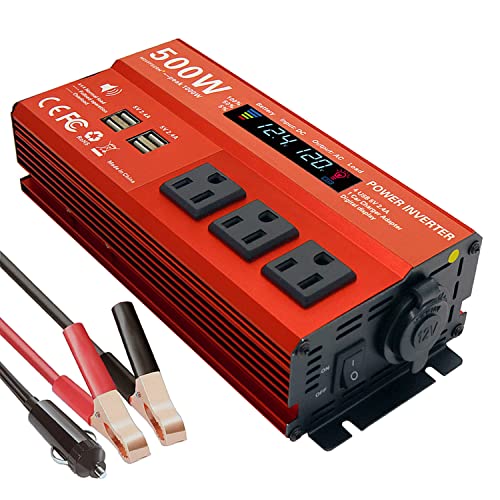
MOVFFGGRM 500W Peak 1000W Power Inverter

BESTEK Power Inverter 300W, PD65W USB-C

vansoet 400W Car Power Inverter, Dual AC Outlets

vansoet 400W Power Inverter, PD 30W USB-C
More Details On Our Top Picks
FSATBTNE’s layout makes sense for daily driving, because you get two AC outlets along with USB-C and USB-A charging in one compact unit. The 65W Power Delivery port matters for newer phones and many laptops, while the 18W Quick Charge port helps older USB gear keep up without hogging the wall sockets.
Compared with the smaller 200W picks below, this one gives you more breathing room for a laptop plus a second device, though it still lives in the lighter class of vehicle inverters. The trade-off is that you’re buying convenience, not a full-time power station, so it fits commuters, road-trippers, and anyone who wants fewer charging adapters in the glove box.
Strong Points
- Two AC outlets make it easier to split charging between a laptop and a small accessory.
- 65W USB-C brings meaningful headroom for modern portable gear.
- 18W USB-A adds a second fast-charging path for older cables.
- Compact format suits cupholder-adjacent or console-friendly storage.
Small Caveats
- Light-duty wattage still limits what you can run at the same time.
- Two AC sockets can tempt overloading, so the connected devices need a little discipline.
- Short-cable cabin setups may feel cleaner than long rear-seat runs.
Feature Card
Who It Suits Best
Commuters and casual road-trippers who want a tidy, everyday inverter for mixed charging needs will get the most from it.
Where A Sibling Pick Shines
DrimMek’s 300W Car Power Inverter suits you better when laptop use is more frequent and the LED display matters more than dual AC flexibility.
The LED display is the detail that changes the feel here, because you can see status at a glance instead of guessing what the inverter is doing. That’s handy on long drives, especially when a laptop is drawing power and you’d rather not keep checking cables.
Its 300W class sits neatly between the light 200W units and the stronger 400W options, so it’s a sensible middle ground for people who want a little more headroom without jumping into a heavier setup. One thing worth considering is cabin layout, since a display is most useful when the unit stays visible.
Highlights
- LED readout gives you simple status feedback.
- 65W USB-C works well for laptop charging on the move.
- 300W output leaves more margin than the 200W options.
- Fits neatly into a balanced daily-use setup.
Worth Noting
- The more compact shell may still feel best with moderate loads, not several high-draw devices.
- The display only helps when you can actually see it from the seat you use most.
Technical Sheet
Who Should Grab It
Drivers who want a middleweight inverter for laptops, tablets, and travel charging without moving into a bulky power setup will appreciate it.
Another Choice May Suit
FSATBTNE’s 400W Power Inverter fits better for you when two AC outlets matter more than an LED display and you want a little extra output cushion.
This one packs a lot into a small power class, and that’s the appeal for cramped consoles or travel bags where you want options without bulk. Two AC outlets, a 65W USB-C port, a second 30W USB-C port, and dual 18W USB-A ports cover a surprising spread of devices for short errands or road trips.
Compared with DrimMek’s 300W unit, it gives you more charging paths but less total headroom, so the fit depends on whether your priority is outlet variety or stronger single-device support. For weekend travelers, that trade can make sense, especially when several phones and accessories need attention at once.
Bright Spots
- Four USB ports give you flexible charging for several devices.
- Dual AC outlets add room for plug-in gear.
- The 200W form keeps the unit easy to tuck away.
- Useful for mixed-device travel where cable clutter usually builds fast.
Points To Note
- Total output stays in the modest range, so it suits lighter gear best.
- Lots of ports can encourage overpacking the load.
- The compact body may be easy to misplace in a busy cabin.
Core Details
Built With In Mind
Space-conscious travelers and families with several small electronics will get the most from this compact layout.
Look Elsewhere When
BELTTT’s 2000W Pure Sine Wave Inverter fits a very different job, especially for RV or solar setups that need much higher output and hardwire support.
This is the outlier in the group, because it steps well beyond car-cabin charging and into serious mobile power territory. Pure sine wave output matters for gear that prefers cleaner AC power, and the hardwire port plus remote controller make sense in RVs, trucks, and off-grid setups.
It also includes a dual AC layout, a 20A socket, and a USB port, so the feature mix is broader than the smaller vehicle units above. The honest read is that most drivers don’t need this much inverter, but campers, van dwellers, and anyone building a larger power system may find the upgrade worth the extra complexity.
What We Like
- Pure sine wave output suits sensitive electronics better than modified-wave designs.
- 2000W capacity opens the door to much heavier mobile power needs.
- Remote controller adds convenience when the unit sits out of reach.
- Hardwire port supports more permanent-style installations.
- Dual AC outlets and a 20A socket widen device compatibility.
Areas To Watch
- Installation is more involved than a simple plug-in inverter.
- The size and power level are more than most sedans will ever need.
- Cabin space, cable routing, and ventilation planning matter more here.
Feature Rundown
Whose Shelf It Belongs On
RV owners, truck operators, and off-grid hobbyists who want a serious inverter with cleaner output and installation flexibility will benefit most.
Skip It When
Movffggrm’s 500W Peak 1000W Power Inverter is the more sensible choice for straightforward vehicle charging without a full installation plan.
Four USB ports and a cigarette-lighter-style socket make this feel built for people juggling several charging needs at once. It’s the sort of setup that fits family trips or workdays on the road, where phones, accessories, and a small AC device all seem to need attention at the same time.
Compared with the leaner FSATBTNE and BESTEK units, the extra USB count is the headline, though the trade-off is a busier top surface. For most cars, that means this one works best when you want distribution more than sleekness, and storage is less of a concern than keeping everyone powered.
Reasons To Buy
- Four USB ports reduce the need for extra charging adapters.
- 500W peak rating gives you a stronger burst ceiling than the 300W and 400W units here.
- The added cigarette-lighter socket is useful for compatible accessories.
- Good fit for multi-device travel where one outlet is never enough.
Room For Improvement
- The crowded control layout may take a little more attention in the dark.
- Peak output is not the same as steady output, so load planning still matters.
- More ports can mean more cable clutter in a small cabin.
Details At A Glance
Made For
Families and road-trippers who need several simple charging points in one vehicle setup will get the most out of it.
A Better Fit Elsewhere
BESTEK’s 300W Power Inverter suits you better when you want a cleaner-feeling aluminum body and a lighter daily carry.
BESTEK gives you a slightly wider input range than the standard 12V-only units in this roundup, and that matters in vehicles where voltage behavior can be a little less predictable. The aluminum housing also helps it feel more solid in hand, which is useful when the inverter gets moved between cars, trucks, or travel bags.
Compared with DrimMek’s 300W inverter, this one trades the LED display for a more polished shell and the same useful USB-C headroom. That makes it a good fit for neat cabin installs, especially where heat management and durability feel more important than a screen.
What We Like
- PD65W USB-C supports modern charging needs very well.
- 18W USB-A still covers older cords and accessories.
- Aluminum housing should hold up well to regular handling.
- Wider 12-17V input range adds flexibility across vehicle types.
Softer Spots
- No display means status feedback is more minimal than on the DrimMek unit.
- Single-car use is the most natural fit, since frequent moving can make any compact inverter feel scattered.
Quick Facts
The Right Fit
Drivers who want a sturdy-feeling 300W inverter with strong USB-C support and a cleaner cabin look will appreciate it.
Reach For A Different Pick When
vansoet’s 400W Car Power Inverter is the smarter move for you when dual AC outlets matter more than a refined aluminum shell.
Dual AC outlets make this feel very usable for everyday travel, because you can keep a laptop and a second plug-in accessory going without rearranging everything around one outlet. The USB side is also generous, with PD 30W and a mix of 15W ports, so phones and smaller gear stay covered.
Against the FSATBTNE 400W model, this one leans more toward USB variety and a flexible daily setup, while that earlier pick gives you a higher-wattage USB-C port. For families, commuters, and camping trips, this balance lands in a comfortable middle.
Best Bits
- Two AC outlets support more than one plug-in item at a time.
- PD 30W USB-C adds meaningful fast-charging support.
- Multiple USB ports help spread out smaller devices.
- 400W class suits common road-trip electronics well.
Honest Caveats
- The mixed 15W ports are fine for lighter gear, but they are not the fastest option in this group.
- That many ports can make cord management a little messy in compact cabins.
Core Details
Who Will Love This
People who want a straightforward 400W inverter for commuting, camping, or family travel will get a lot of practical use from it.
Swap It Out When
FSATBTNE’s 400W Power Inverter fits better for you when a stronger 65W USB-C port is the detail that matters most.
This model lands in a very practical middle zone, because the 400W ceiling, two AC outlets, and mixed USB fast-charging ports cover the common needs most vehicle setups face. The 30W USB-C and 18W USB-A ports are especially useful for road trips where phones, earbuds, and small tablets all end up needing a turn.
Compared with the vansoet 400W unit above, this one swaps in a quicker QC 18W USB-A port, which gives it a slight edge for older charging gear. That makes it a tidy all-rounder for shoppers who want balanced specs without drifting into the more involved 2000W class.
Upsides
- 400W output covers many common car-use electronics.
- Two AC outlets improve flexibility for mixed gear.
- PD 30W USB-C and QC 18W USB-A cover both newer and older devices.
- Easy to picture in a daily commute or a long road trip.
Trade Offs
- The 30W USB-C port is solid, though not as forceful as the 65W USB-C options above.
- A well-rounded layout can still leave you choosing which device gets priority first.
Spec Overview
Who Should Grab It
Drivers who want one balanced inverter for mixed charging needs and simple cabin use will find this especially easy to live with.
A Better Fit Elsewhere
DrimMek’s 300W Car Power Inverter makes more sense for you when a built-in LED display matters more than the extra outlet balance here.
How To Choose The Right Ac Inverters For Car
Match Output To The Load
Start with the devices you plan to charge, then keep a little headroom above that total. A phone is easy, but a laptop, tablet, and accessory bundle can push a light inverter harder than you expect.
For daily commuting, a 200W to 300W unit usually covers the basics. For heavier travel needs, 400W gives more breathing room, and a 2000W class belongs in RVs or truck builds rather than casual cars.
Choose The Right Port Mix
USB-C matters because many newer laptops and phones charge through it, and wattage tells you how quickly they can draw power. USB-A still helps for older cables, earbuds, and small accessories, so a mixed layout often feels more practical than a single-port design.
Dual AC outlets are useful when you need one inverter for two plug-in devices, though they also make load discipline more important. That trade-off shows up most clearly on family trips, where every seat seems to have a charging need.
Think About Installation And Space
Plug-in units are easiest for everyday use because they stay simple and portable. Hardwire models fit better in RVs, vans, and semi-permanent setups, where cable routing and access matter more than quick removal.
Housing shape matters too. A compact shell fits a cupholder or center console more easily, while a larger unit with vents, a remote, or a display needs clearer placement and better cable planning.
Pick For Your Driving Pattern
Commuters usually want a tidy inverter with one or two fast charging paths and minimal clutter. Road-trippers tend to benefit from extra ports and a stronger wattage ceiling, especially when several devices need power at once.
Campers and RV users are the group that should look beyond the standard car class. Pure sine wave output, a hardwire option, and a remote controller can be worth the extra complexity when the inverter becomes part of a larger setup.
Things Worth Knowing First
Mistakes Worth Dodging
A common misstep is choosing by port count alone. A crowded top panel looks flexible, but the real question is whether the inverter can support the devices you plan to run together.
Another slip is ignoring cabin size and cable length. A unit that works beautifully on paper can feel awkward on the road when the display is hidden, the cord is short, or the body blocks nearby controls.
Why Top Tier Costs More
Higher-tier models usually pay for cleaner output, stronger continuous power, and more installation flexibility. In this category, pure sine wave designs and hardwire-ready units naturally sit above simple plug-in converters.
You also tend to pay for better housing materials, extra safety-minded controls, and more thoughtful cable management. That upgrade matters most when your inverter stays in the vehicle full time or supports more demanding equipment.
Frequently Asked Questions
What size inverter works for a laptop in a car?
A 300W unit is a comfortable starting point for many laptop setups. A 400W model gives you more room for a laptop plus a second device.
Do you need USB-C on a car inverter?
USB-C helps a lot because many newer devices use it for faster charging. It’s especially useful on road trips where you want fewer separate adapters.
Are dual AC outlets useful?
Yes, dual AC outlets let you power two plug-in items at once. That helps when you’re charging a laptop and another small accessory.
What makes pure sine wave different?
Pure sine wave output is a cleaner AC form that suits more demanding equipment. It makes the BELTTT 2000W model better suited to RV and off-grid use than basic plug-in inverters.
Should you choose 200W or 400W?
Two hundred watts fits lighter everyday charging, especially for phones and small gear. Four hundred watts gives you a more flexible ceiling for mixed travel use.
Closing Thoughts
You do not need the biggest inverter on this list to make car charging easier. For most people, the smartest choice is the one that matches the devices you actually carry, leaves enough margin for one extra load, and fits cleanly in the cabin. That’s why the FSATBTNE, DrimMek, and vansoet 400W models land so well for everyday driving, while the BELTTT belongs to a very different kind of setup. Choose the one that fits your routine, and the rest gets simpler fast.
