

A blown AC capacitor is the kind of repair that can stop a cooling system in its tracks, usually on the hottest afternoon of the year. I’ve put together this list for homeowners, HVAC techs, and DIYers who need a reliable replacement capacitor matched to their unit’s specific microfarad and voltage rating. Picking the wrong capacitance or shape can mean a motor that hums but never spins, so matching your old part matters. Every option below covers the most common residential and light-commercial sizes, with notes on fit, build, and what each one is genuinely good for.
A Fast Comparison Of The Options

AMRAD 10 uF 370/440 VAC Oval Universal Capacitor (USA-Made)

Buck 45+5uF 45/5 MFD ±6% CBB65B Dual Run Round Start Capacitor (370/440VAC)
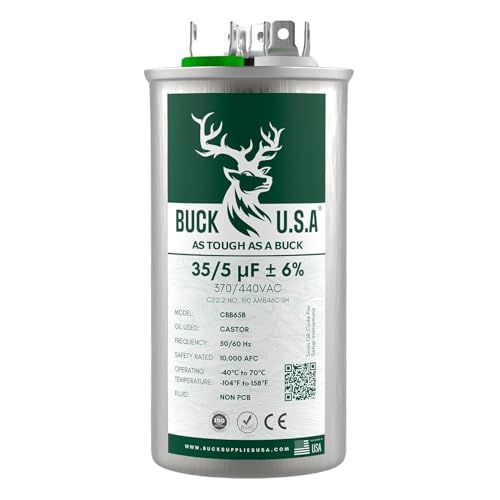
Buck 35+5uF 35/5 MFD ±6% CBB65B Dual Run Round Start Capacitor (370/440VAC)
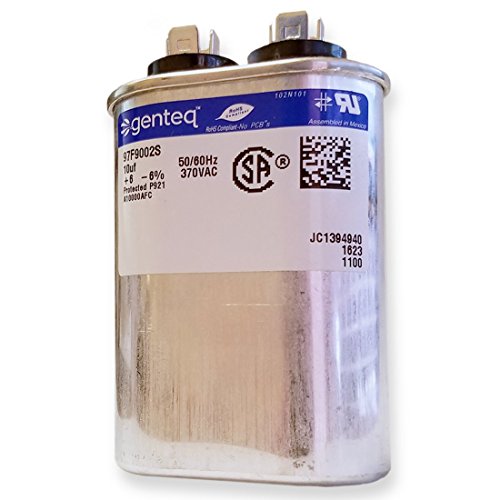
Genteq 10 MFD 370V Oval Capacitor 97F9002

BOJACK 50+7.5 uF 50/7.5 MFD ±6% 370/440 V AC CBB65 Dual Run Circular Start Capacitor

Buck 40+5uF 40/5 MFD ±6% CBB65B Dual Run Round Start Capacitor (370/440VAC)

HVAC Genius 30/5 uF 30+5 MFD 370V/440V Dual Run Round AC Capacitor
ClimaTek 80 uF 440 VAC Round Genteq Replacement Capacitor (Trane CPT01074)

RABECH 70/7.5uF 70+7.5 MFD 370V/440V CBB65B Round Dual Run Start A/C Capacitor

VEXUNGA 30/5 uF 30+5 MFD 370/440VAC Dual Run Round A/C Capacitor CBB65B
Why These Options Stand Out
The AMRAD oval run capacitor is a workhorse replacement for older Carrier, Bryant, and Payne condensing units. The 10 microfarad rating covers one side of the common 10/45 dual-run pairing, and the 370/440 VAC dual rating means it can drop into either voltage setup without rewiring.
Owners of legacy systems tend to gravitate toward this part because it’s assembled in the U.S., individually boxed, and dual-branded for broad compatibility. If your old capacitor was a HC91CA010D or HC90AB010, this is a near-plug match for the fan circuit. The trade-off is that it’s a single-value capacitor, so dual-run applications will still need a second matching unit.
Where It Excels
- 370/440 VAC dual rating covers both common residential voltages
- 10 uF single-value oval shape fits the fan circuit on many legacy systems
- Individually boxed and U.S.-assembled for straightforward inventory and shipping
- Direct cross for HC91CA010D and similar OEM part numbers
Things To Consider
- Single capacitance value means pairing with a second capacitor for dual-run systems
- Oval footprint requires the matching mounting strap, so measure before ordering
- Not a universal swap for units that need a 5 uF or 7.5 uF fan-side rating
Key Specs
Right Fit For
Homeowners with older Carrier, Bryant, or Payne condensing units that need a like-for-like 10 uF oval swap.
Consider Something Else When
The Buck 45+5uF 45/5 MFD ±6% CBB65B Dual Run Round Start Capacitor suits anyone running a 45/5 dual-run circuit in a more modern round format.
The Buck 45/5 CBB65B dual-run capacitor handles both the compressor and fan motor in one round can. The 45/5 microfarad split is one of the most common pairings on residential split systems, so this lands in a lot of replacement jobs.
A 10,000 AFC anti-explosion pressure switch and S1 safety standards are built into the can, which matters in installations where a failing part could vent or rupture. The operating range stretches from -40°C to 70°C, so attic and garage placements are realistic. The catch is that 45/5 only fits systems spec’d for that exact combination, and sizing up or down requires a different model.
Why It Works Well
- Combines compressor and fan capacitance into a single round can
- Anti-explosion pressure switch adds a safety margin on aging equipment
- Wide -40°C to 70°C operating window for hot attic or cold exterior placements
- Clearly labeled Herm, Fan, and Common terminals speed up wiring
Points To Note
- Only fits 45/5 microfarad systems, not a universal substitute for other dual-run ratings
- Round shape may require a new mounting bracket versus the original oval strap
Made For
Techs and homeowners replacing a 45/5 dual-run capacitor on a residential heat pump or straight-cool condenser.
Look Elsewhere When
The HVAC Genius 30/5 uF 30+5 MFD 370V/440V Dual Run Round AC Capacitor suits the more common 30/5 residential size.
The Buck 35/5 mirrors the build quality of the larger 45/5 but in a more compact mid-range split. The 35/5 microfarad pairing sits between the common 30/5 and 40/5 sizes, fitting a fair number of mid-tonnage condensers and heat pumps.
Like its siblings, it carries the 10,000 AFC anti-explosion switch and the same wide -40°C to 70°C tolerance. That’s helpful when the condenser sits in a metal cabinet that bakes in summer sun. The honest trade-off is that 35/5 is less common than 30/5 or 40/5, so you really want to confirm your existing part is stamped 35/5 before swapping.
What Earns Its Place
- Fills the gap between 30/5 and 40/5 for mid-tonnage residential systems
- Same S1 safety construction and pressure switch as the larger Buck models
- Works on 50/60 Hz circuits for broad HVAC compatibility
- Labeled Herm, Fan, and Common posts simplify terminal mapping
Worth Bearing In Mind
- 35/5 is less universal than 30/5, so cross-check the old capacitor’s label carefully
- Round can may not fit older strap-style brackets without an adapter
Who It Suits Best
Homeowners with mid-efficiency 2.5 to 3.5-ton condensing units spec’d for a 35/5 dual-run.
A Better Fit Elsewhere
The BOJACK 50+7.5 uF 50/7.5 MFD ±6% 370/440 V AC CBB65 covers heavier 50/7.5 commercial-style setups.
The Genteq 97F9002 is the go-to swap for anyone working on a legacy GE system. It carries 10 microfarads at 370 volts in the classic oval can, and it cross-references to a long list of older part numbers including 97F9002BZ3, Z97F9002, 27L669, HC91CA010, and HC90AB010.
That cross-compatibility is the main reason it’s still in circulation decades after GE sold the Genteq line. The part simply fits where a lot of older GE capacitors used to fit. The honest read is that 10 uF at 370V is a fairly narrow rating, so this only works where the original was spec’d the same way.
Positive Points
- Direct cross-reference for many legacy GE part numbers
- Oval profile matches the original mounting strap on older GE condensing units
- Single 10 uF value is easy to verify against the failed capacitor’s label
Trade Offs
- 370V rating only; not a direct substitute on 440V systems
- Single-value capacitance means it won’t cover a full dual-run circuit alone
- Confirming the OEM cross-reference list may require checking the old label closely
Best Suited To
Anyone restoring a vintage GE, Trane, or Carrier condensing unit that originally ran a 97F9002-style capacitor.
Swap It Out When
The Buck 45+5uF 45/5 MFD ±6% CBB65B is the better match when the system actually needs a 45/5 dual-run rather than a single 10 uF fan capacitor.
The BOJACK 50/7.5 is the heavyweight in the round CBB65 family. The 50 microfarad side handles the compressor on larger residential and light commercial condensing units, while the 7.5 microfarad side runs the fan motor. One can, two jobs.
The metal shell houses a metallized polypropylene film dielectric, which is the standard long-life chemistry for modern run capacitors. ±6% tolerance means it sits within the spec window most HVAC motors expect. The honest caveat is that 50/7.5 is overkill for a small 1.5-ton system, so don’t drop this into a unit that spec’d 30/5 or 35/5.
Real-World Strengths
- Single can covers both compressor and fan motor on larger units
- Metallized polypropylene film dielectric is the modern long-life standard
- 370/440 V dual rating lets it drop into either voltage class
- Universal CBB65 form factor uses standard mounting hardware
Small Caveats
- 50/7.5 is too large for small 1.5 to 2-ton residential systems
- Circular footprint may need a different bracket than the original strap mount
Feature Snapshot
Whose Shelf It Belongs On
Service techs and serious DIYers who work on 4 to 5-ton residential and light commercial condensing units.
Reach For A Different Pick When
The VEXUNGA 30/5 uF 30+5 MFD 370/440VAC Dual Run Round A/C Capacitor is the better everyday choice for standard residential 30/5 swaps.
The Buck 40/5 fills the slot between the 35/5 and 45/5 Buck units. The 40 microfarad rating paired with 5 microfarads for the fan side lands on a lot of 3 to 4-ton residential systems, which makes this a fairly common repair part.
Same build philosophy as the rest of the Buck line, with the 10,000 AFC anti-explosion switch and -40°C to 70°C tolerance. In an attic installation where summer heat pushes ambient temperatures hard, that temperature range is reassuring. The trade-off is the round profile, which sometimes means buying a new mounting strap.
What It Does Well
- Common 40/5 split suits many 3 to 4-ton residential condensing units
- Anti-explosion pressure switch helps protect against catastrophic failure
- Wide operating temperature window handles attic and outdoor cabinet heat
- Herm, Fan, and Common terminals are clearly marked for quick wiring
Honest Caveats
- 40/5 only fits systems spec’d for that exact combination
- Round shape may require a different bracket than the original strap
Perfect Match For
Homeowners with mid-efficiency 3 to 4-ton systems where the original 40/5 capacitor has failed.
Not Your Match When
The Buck 35+5uF 35/5 MFD ±6% CBB65B is the right call for systems spec’d at the slightly smaller 35/5 rating.
The HVAC Genius 30/5 hits the most common residential split system rating head-on. A 30/5 dual-run capacitor is what you’ll find inside many 2 to 3-ton condensing units, which makes this a frequent replacement part in suburban service work.
The 370/440V dual rating means it can sub into either voltage class without changing the wiring. The round CBB65 can uses standard mounting hardware, so swapping an old oval or failed round cap for this one is usually a quick job. The honest read is that “HVAC Genius” branding is less established than legacy names, so vetting the listing’s reviews and seller is worth a minute of your time.
Well-Handled Touches
- 30/5 split matches the most common residential condensing unit rating
- 370/440V dual rating covers both residential voltage classes
- Standard round CBB65 can uses familiar mounting hardware
- Direct replacement label simplifies matching the failed part
Less-Strong Areas
- Less recognized brand than legacy names like GE or Genteq
- Only fits 30/5 systems, so check the old capacitor’s microfarad label first
Who Should Grab It
DIYers and homeowners with a 2 to 3-ton split system whose old 30/5 capacitor has failed.
Skip It When
The VEXUNGA 30/5 uF 30+5 MFD 370/440VAC Dual Run Round A/C Capacitor offers a similar 30/5 fit from a different vendor worth comparing.
The ClimaTek 80 uF round capacitor is the heavy lifter in this list. An 80 microfarad rating is well beyond what a typical residential condensing unit needs, which is why this part shows up on Trane CPT01074 commercial-style equipment and other high-load applications.
The 440 VAC rating means it’s firmly in commercial territory rather than residential. As a Genteq cross, it slots into units where the original #C480R or 27L322 was spec’d, with no wiring changes required for the swap. The honest caveat is that 80 uF is far too much capacitance for a standard residential condensing unit, and using it where a 30/5 or 45/5 is spec’d can damage the motor.
A Few Strong Suits
- 80 uF rating handles commercial-grade compressor loads
- Direct cross for Trane CPT01074 and Genteq #C480R / 27L322
- Drop-in replacement with no wiring or adapter changes
- 440 VAC rating supports higher-voltage commercial circuits
Possible Compromises
- Far too much capacitance for standard residential condensing units
- Limited to specific Trane and Genteq cross-reference applications
- 440V-only rating means it won’t sub into a 370V system
Feature Card
Built With In Mind
Service techs and facility maintenance staff working on Trane commercial condensing units and similar high-microfarad installs.
Where Another Pick Suits Better
The Buck 45+5uF 45/5 MFD ±6% CBB65B is the right scale for residential 45/5 dual-run repairs.
The RABECH 70/7.5 packs serious capacitance into a compact 65mm round can. The 70 microfarad rating drives larger compressor motors, while the 7.5 microfarad side runs the fan. Diameter is 2.56 inches and height is 3.94 inches, which is helpful when you’re fitting into a tight condenser cabinet.
The 370/440V dual rating plus the -40°C to 70°C operating range gives it real flexibility across climates and voltage setups. The honest read is that the 65mm footprint is smaller than many competitors, so it’s worth measuring the available space inside the cabinet before committing. 70/7.5 also only fits systems spec’d for that exact combination.
Notable Upsides
- Compact 65mm diameter fits smaller condenser cabinets
- 70/7.5 split drives both compressor and fan in one can
- Wide -40°C to 70°C operating temperature range
- 370/440V dual rating for either voltage class
What To Weigh
- Compact 65mm footprint may not match the original mounting bracket
- 70/7.5 only fits systems rated for that specific capacitance combination
Who Will Love This
Techs and homeowners working on larger condensing units where cabinet space is at a premium.
Another Choice May Suit
The BOJACK 50+7.5 uF 50/7.5 MFD ±6% 370/440 V AC CBB65 covers a more common 50/7.5 rating for typical residential installs.
The VEXUNGA 30/5 closes the list as a no-frills drop-in for the most common residential dual-run rating. A 30 microfarad compressor side paired with a 5 microfarad fan side covers the typical 2 to 3-ton condensing unit repair.
At 50mm diameter and 85mm height, it’s a compact can that fits most standard brackets. The 370/440 VAC dual rating covers both residential voltage classes, and the operating range from -40°C to 70°C handles outdoor cabinet temperatures. The honest trade-off is that this is a budget-leaning brand, so confirming the seller and shipping condition is worth doing before installing.
Key Advantages
- Direct 30/5 replacement for the most common residential dual-run rating
- Compact 50mm diameter fits standard mounting brackets
- 370/440 VAC dual voltage rating covers both residential classes
- -40°C to 70°C operating temperature range
Practical Considerations
- Budget-tier brand, so vetting the seller is worth a quick check
- Only fits 30/5 systems, not a substitute for 35/5 or 40/5 ratings
- Round shape may require a different bracket than an original strap mount
The Right Fit
DIYers and homeowners tackling a straightforward 30/5 residential AC capacitor swap on a weekend repair.
Not Your Match When
The Buck 40+5uF 40/5 MFD ±6% CBB65B is the right pick for systems spec’d at the larger 40/5 rating.
Picking The Right Capacitor For Your HVAC System
The first thing to check is the microfarad (uF or MFD) and voltage rating printed on the side of the failed capacitor. A run capacitor temporarily stores an electrical charge to keep the compressor and fan motors running smoothly, and matching that label is non-negotiable, because an under-rated part won’t spin the motor and an over-rated one can push damaging current through the windings.
Voltage class matters next. A 370 VAC capacitor can be replaced by a 440 VAC unit on the same system, since the higher rating simply means more headroom. The reverse doesn’t hold, so don’t drop a 370V part into a 440V circuit.
Shape and mounting decide whether the swap is truly drop-in. Oval capacitors use a metal strap, while round CBB65 cans use a clamp around the body. Measure the available space inside the condenser cabinet before ordering, especially on tight aftermarket installs. Terminal layout is the final detail. Dual-run capacitors have three labeled posts: Herm (compressor), Fan, and Common. Matching these labels to the old wiring prevents crossed connections on install day.
For a typical homeowner tackling a single repair, a 30/5 or 45/5 dual-run will cover most central AC swaps. Techs carrying inventory for service calls benefit from keeping a range of 35/5, 40/5, and 50/7.5 on hand.
Things Worth Knowing Before You Buy
Where Shoppers Go Wrong
The biggest mistake is matching by physical size rather than by microfarad and voltage. A capacitor can look identical to the original and still be the wrong rating, which means the motor either won’t start or will draw too much current and overheat. The honest practice is to read the failed capacitor’s label and match it exactly, then confirm the voltage class before clicking order.
A related trap is assuming a higher microfarad rating is “stronger” or “better.” Capacitance is matched to the motor’s specific starting and running requirements, and overshooting can shorten motor life. Same story with voltage: 440V is more headroom, but only if the system is wired for it.
Where The Extra Money Goes
Higher-tier capacitors tend to carry wider operating temperature ranges, integrated pressure safety switches, and tighter capacitance tolerances. The anti-explosion switch in the Buck line, for instance, vents internal pressure before the can ruptures, which matters on aging equipment where a failed capacitor could damage other components.
Premium picks like the ClimaTek 80 uF also tend to use better metallized polypropylene film dielectric and tighter ±6% tolerance, both of which extend service life under continuous summer load. For a residential system that runs 8 to 12 hours a day in peak season, that extra build quality can pay off in longer intervals between replacements.
Frequently Asked Questions
How do I know which AC capacitor I need?
Read the microfarad (uF or MFD) and voltage rating printed on the side of the failed capacitor, then match those numbers exactly. If the label is unreadable, look up your unit’s model number in the manufacturer’s service documentation.
Can I replace a 370V capacitor with a 440V one?
Yes, a 440V unit is a safe upgrade on a 370V circuit because the higher rating simply provides more voltage headroom. The reverse is not true, so don’t drop a 370V part into a 440V system.
What’s the difference between a run capacitor and a start capacitor?
A run capacitor stays in the circuit continuously to keep the motor running efficiently, while a start capacitor gives the motor an extra torque boost during startup. Most residential AC units use run capacitors, since the compressor and fan motors cycle on and off regularly.
How long does an AC capacitor typically last?
In typical residential service, an AC run capacitor lasts around 10 to 20 years, though attic and outdoor cabinet installs run hotter and often fail on the shorter end of that range.
Is it safe to replace an AC capacitor myself?
The replacement is a straightforward repair for anyone comfortable working with line-voltage wiring, but the capacitor itself can hold a dangerous charge even after the unit is powered off. Discharge the old capacitor safely before handling, and confirm the new wiring matches the original terminal layout before powering the system back on.
The Takeaway
The right AC capacitor comes down to matching your failed unit’s label on microfarad and voltage, then confirming the shape and terminal layout fit your cabinet. For most residential repairs, a 30/5 or 45/5 dual-run round CBB65 covers the job, while commercial and high-load installs need heavier 70/7.5 or 80 uF options. Take a minute to verify the old part’s label, discharge the capacitor before handling, and the swap is usually a quick repair that gets the cooling back online the same afternoon.
