

Replacing disposable AAA cells adds up fast, especially in households where TV remotes, wireless mice, and game controllers chew through them weekly. I started paying attention after watching a steady stream of used alkalines head to the trash, and the case for rechargeables suddenly looked obvious. The right rechargeable AAA setup cuts that waste down to a single charger and a small rotation of cells.
The challenge is chemistry. NiMH cells deliver reliable mid-level voltage for remotes and small electronics, while 1.5V lithium cells hold a steadier line under heavier loads like game controllers and shavers. Below, I walk through ten strong options and explain which households they suit.
How The Shortlist Stacks Up

Eneloop Panasonic BK-4HCCA6BA Pro AAA 6-Pack

Eneloop Panasonic BK-4HCCA12FA Pro AAA 12-Pack

Eneloop AAA 4th Gen 2100-Cycle 8-Pack

Eneloop CC55 Charger with AA + AAA Bundle

Eneloop CC55 Charger with Pro AA + AAA

Eneloop Panasonic BK-4MCCA10FA AAA 10-Count

Dracutum 1300mWh AAA with 2-Hour Charger
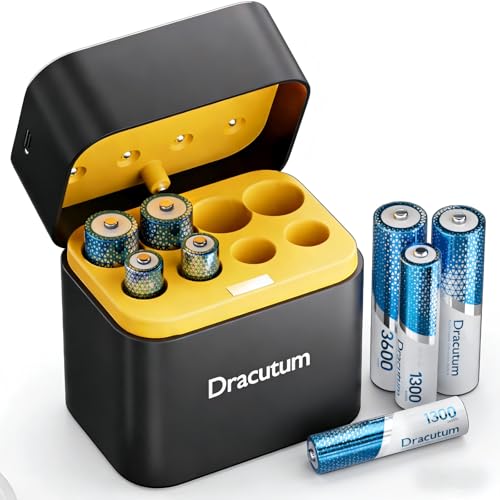
Dracutum 1.5V AA + AAA Lithium Charger Kit

Dracutum 1.5V AAA Lithium 8-Pack

Panasonic K-KJ55 Quick Charger with 4 AAA Pro Cells
Why These Options Stand Out
The Eneloop Pro AAA 6-pack sits in the high-capacity NiMH bracket, which simply means each cell holds more energy than a standard rechargeable. In real households that translates to longer runtimes in game controllers and wireless microphones before you reach for the charger. Pre-charged at the factory using solar power, these cells arrive ready for first use, so first-time rechargeable shoppers can skip the initial top-up.
Compared to the 12-pack you’ll see later, this smaller bundle is friendlier to households that want a steady rotation without sitting on a dozen cells. For most families running a handful of remotes, a six-cell reserve covers the basics with room to spare.
Useful Highlights
- Higher capacity than standard NiMH cells, which helps high-demand gear like game controllers.
- Pre-charged at the factory, so the cells work on day one.
- Rated for hundreds of recharge cycles, lowering long-term replacement costs.
- Recognized Panasonic/Eneloop build quality translates to steady voltage in mid-drain devices.
Honest Caveats
- Self-discharge is slightly faster than standard Eneloop cells, so spares stored for months may need a top-up before use.
- Six cells may run short in a household with several simultaneous high-drain gadgets.
Key Product Details
Who It Suits Best
Shoppers with a small set of AAA devices, like a TV remote, a wireless mouse, and a game controller, who want higher-capacity cells without committing to a large pack.
Look Elsewhere When
The Eneloop Panasonic BK-4HCCA12FA Pro AAA 12-Pack suits a household with more devices in rotation that wants fewer swap-outs.
Stepping up from a 6-pack to a 12-pack, this Pro bundle is built for households that want a deep reserve. With twice the cells, you can run two AAAs in a controller and still have spares ready to rotate in mid-session. The trade-off shows up in storage: you will need a small bin or organizer to keep cells matched.
Capacity-wise, these match the 6-pack above, just in higher quantity. For a family with multiple game controllers, streaming remotes, and a wireless keyboard, having a dozen cells on hand removes the constant scavenger hunt for fresh batteries.
Notable Upsides
- Twelve cells keep a healthy rotation going across several devices.
- Same high-capacity Pro chemistry as the smaller bundle.
- Pre-charged from the factory, which removes the initial charge wait.
- Long cycle life keeps cost-per-use low over years.
Worth Noting
- More cells to label and store, and mixing fresh and used cells can lead to capacity mismatches.
- Higher upfront cost compared to the 6-pack option.
Made For
Multi-device households and busy families who want a deep reserve without frequent recharging breaks.
Consider Something Else When
The Panasonic K-KJ55 Quick Charger with 4 AAA Pro Cells is a smaller starter bundle if you are trying rechargeable cells for the first time.
The 4th-generation Eneloop cells are aimed at users who push their rechargeables into harsher environments. Rated to handle colder temperatures than older Eneloop cells, these are an interesting option for outdoor sensors, garage door openers, and weather station remotes. The 8-pack ships in a simple holder, which keeps the cells organized on a shelf.
These are standard NiMH cells rather than the Pro line, which means they hold their idle charge longer. For a remote cabin or a workshop that sits unheated through winter, that cold tolerance can be a real advantage.
What Helps Most
- Improved cold-temperature performance compared to older Eneloop generations.
- Rated for up to 2100 recharge cycles, an unusually long service life.
- Standard NiMH chemistry holds charge well during storage.
- Comes with a storage holder for tidy organization.
Trade Offs
- Capacity is lower than the Pro line, so high-drain devices may drain them faster.
- Eight cells may feel like an awkward middle ground between a small bundle and the larger 12-pack option.
Spec Overview
Best Suited To
Owners of outdoor devices, garage sensors, and workshop gadgets that face colder storage temperatures than a typical living room.
Skip It When
The Eneloop Panasonic BK-4HCCA6BA Pro AAA 6-Pack is a stronger fit for high-drain indoor electronics where capacity matters more than cold tolerance.
This bundle marks the first appearance of a real charger on the list, the Panasonic CC55, paired with both AA and AAA Eneloop cells. The CC55 charges each cell individually rather than in pairs, which matters when a single battery wears faster than its mate. Four LED indicators show charge state at a glance: green for fully charged, orange for partial, red for low.
The included cells are the standard NiMH line, so they hold charge well in storage but run a bit lighter than the Pro variants. For mixed-device homes with remotes and a wireless keyboard or mouse, having both AA and AAA covered in one bundle is convenient.
Well-Handled Touches
- Individual slot charging means one weak cell does not slow the others.
- LED indicators let you see charge progress without guesswork.
- Accepts both AA and AAA cells, which suits mixed-device homes.
- Compatible with both standard Eneloop and Pro cells.
Small Caveats
- Standard Eneloop cells offer less capacity than the Pro versions in the previous bundles.
- Charges four cells at a time, which can feel slow for larger rotations.
Right Fit For
Households with a mix of AA and AAA devices that want one charger handling both formats.
Not Your Match When
The Eneloop CC55 Charger with Pro AA + AAA Bundle suits users who want higher-capacity Pro cells in the same charger setup.
This bundle combines the same CC55 charger with the higher-capacity Pro line for both AA and AAA cells. The AA cells are the standout here, rated at the higher Pro capacity, which makes this set interesting for households that lean heavily on AA-powered gear like flashlights and digital cameras alongside AAA devices. Same per-slot charging and LED indicators as the previous bundle.
For a home office with a wireless mouse, keyboard, and remote controls, this kit covers all the bases without juggling multiple chargers. The Pro AAA cells deliver the same higher capacity as the standalone Pro packs reviewed earlier.
Useful Touches
- Higher-capacity Pro AA and AAA cells outlast standard Eneloop cells under heavy use.
- Individual slot charging with clear LED feedback.
- One charger handles both AA and AAA cells, reducing desk clutter.
- Pre-charged cells work straight from the package.
Room For Improvement
- Pro cells self-discharge faster in storage than standard Eneloop cells.
- Higher cost than the standard-cell version of the same charger bundle.
Feature Snapshot
Whose Shelf It Belongs On
Power users who cycle through both AA and AAA cells in high-drain devices and want a single charger handling everything.
A Better Fit Elsewhere
The Eneloop CC55 Charger with AA + AAA Bundle suits shoppers who prefer standard cells for less demanding devices and want to pay less upfront.
This standard NiMH pack comes as two packs of five, totaling ten AAA cells. What separates it from the Pro line is its long storage life: these cells hold a high percentage of their charge for up to ten years when not in use, which is the kind of stat that matters for emergency kits and flashlight spares sitting in a drawer.
For shoppers who value readiness over peak capacity, this bundle works well. The cells are pre-charged from the factory using solar power, so they arrive ready for the remote or the bedside clock without a top-up cycle.
The Practical Payoff
- Long shelf life means cells stay ready in storage for years.
- Ten cells suit a mid-sized rotation across remotes and small electronics.
- Standard NiMH chemistry handles up to 2100 recharge cycles.
- Pre-charged from the factory and ready to use.
Points To Note
- Capacity is lower than the Pro variants, so high-drain devices will see shorter runtimes.
Perfect Match For
Preparedness-minded shoppers building emergency kits, or anyone who keeps spare cells in a drawer and forgets about them for months at a time.
Swap It Out When
The Eneloop Panasonic BK-4HCCA6BA Pro AAA 6-Pack is a better fit when peak capacity matters more than storage longevity.
Stepping into lithium territory, the Dracutum pack delivers a steady 1.5V output from each cell rather than the stepped-down voltage typical of NiMH chemistry. That matters in devices that misbehave under lower voltages, like some game controllers and LED flashlights. The included charger tops up cells in roughly two hours, which is meaningfully faster than most NiMH chargers.
Eight cells and a charger come in the box, so this is a complete starter kit. For households that have struggled with rechargeable AAAs fading mid-session in game controllers, the flat voltage curve here can be a real quality-of-life upgrade.
What Works In Its Favor
- 1.5V steady output prevents the gradual dimming seen in NiMH cells.
- 2-hour fast charging minimizes downtime between sessions.
- Eight cells cover a healthy rotation of household devices.
- Works well in sensitive electronics like blood pressure monitors and digital scales.
Factors To Consider
- Lithium cells cost more per cell than NiMH equivalents.
- Requires the included lithium-compatible charger rather than an existing NiMH charger.
Feature Snapshot
Who Should Grab It
Gamers and remote-heavy households frustrated by NiMH cells fading mid-session in high-drain devices.
Where Another Pick Suits Better
The Eneloop Panasonic BK-4HCCA6BA Pro AAA 6-Pack is a more cost-effective fit for households with mostly mid-drain devices like remotes and clocks.
This kit expands the lithium approach to cover both AA and AAA formats, with four of each plus a USB-C charger and a protective travel case. The USB-C input is a welcome touch for travelers who already carry a USB-C cable for phones and laptops, so the charger fits a single-cable travel kit. Charge time lands around three hours for a full top-up.
The AA cells offer higher capacity than the AAA pair, so flashlights and game controllers get the heavier hit of energy they ask for. For someone building a rechargeable setup from scratch across a varied device collection, this bundle is a tidy all-in-one.
A Favorable Mix
- Combined AA and AAA bundle covers most household battery formats.
- USB-C charging simplifies cable management.
- Travel case included for transport and storage.
- Steady 1.5V output suits modern electronics.
Practical Considerations
- Four cells per format means a smaller rotation than AAA-only packs.
- Lithium cells need this specific charger, not older NiMH units.
Built With In Mind
Travelers and hybrid households wanting one bundle that handles both AA and AAA devices with modern USB-C charging.
Reach For A Different Pick When
The Dracutum 1300mWh AAA with 2-Hour Charger is a better fit for shoppers focused only on AAA cells who want faster charging.
This cells-only bundle skips the charger for shoppers who already have a compatible lithium charger at home. The 1.5V chemistry here delivers the same flat voltage curve seen in the larger Dracutum kit, which keeps performance stable across the full discharge cycle. For remote controls and small electronics that read voltage as a battery health signal, that consistency matters.
Capacity lands at 1300mWh per cell, comparable to other Dracutum cells on this list. The eight-cell count suits a mid-sized rotation, and the compatibility with both 1.5V and 1.2V devices adds a touch of flexibility.
Positive Points
- Flat 1.5V output keeps devices performing consistently.
- Works in devices expecting either 1.5V or 1.2V cells.
- Eight-cell pack suits a healthy rotation of AAA devices.
- Cells-only option lowers cost for shoppers who already own a compatible charger.
Where It May Fall Short
- No charger included, so a separate purchase is necessary for first-time lithium shoppers.
- 1.2V NiMH chargers are not compatible with these cells.
Quick Facts
Who Will Love This
Shoppers who already own a lithium-compatible charger and want to expand their AAA rotation with steady-voltage cells.
Another Choice May Suit
The Dracutum 1300mWh AAA with 2-Hour Charger is the right call for shoppers who need a charger included in the bundle.
The K-KJ55 is Panasonic’s compact quick charger, and this bundle adds four Pro AAA cells to get a new rechargeable setup off the ground. Charge time lands around four hours, which is slower than the lithium options above but standard for NiMH charging. For shoppers dipping a toe into rechargeables for the first time, this is an approachable entry point.
The Pro cells here hold higher capacity than standard Eneloop cells, which translates to longer runtimes in devices like game controllers. The smaller cell count means the kit covers one or two devices at a time, with extras added later as needed.
Where It Excels
- Compact charger fits easily on a desk or kitchen counter.
- Pro AAA cells offer higher capacity than standard rechargeables.
- Pre-charged cells work straight from the package.
- Good first-step bundle for shoppers new to rechargeables.
Less Ideal Details
- Only four cells included, so rotation capacity is limited out of the box.
- Four-hour charge time is slower than lithium-based alternatives.
Who Should Grab It
First-time rechargeable shoppers with one or two AAA devices who want a compact, all-in-one starter kit.
Look Elsewhere When
The Eneloop Panasonic BK-4HCCA12FA Pro AAA 12-Pack is a stronger choice for households that want more cells from the start.
What Matters Most Before Choosing Aaa Rechargeable Batteries With Charger
Chemistry Shapes The Experience
The first fork in the road is chemistry. NiMH cells are the classic rechargeable choice, well-understood and widely supported by chargers already in many homes. They deliver roughly 1.2V under load, which is fine for remotes, clocks, and low-drain devices but can cause some modern electronics to read a low-battery warning earlier than expected. Lithium rechargeable cells hold a flat 1.5V output throughout their discharge cycle, which keeps devices performing consistently and avoids the early “low battery” false alarms common with NiMH.
For most households running a mix of remotes, clocks, and occasional game controllers, NiMH remains a sensible default. For devices that misbehave under stepped-down voltage, especially newer game controllers and LED flashlights, lithium cells earn their place.
Capacity and Pack Size
Capacity ratings come in two flavors. NiMH cells typically list capacity in milliamp-hours (mAh), where higher numbers mean longer runtimes. Lithium cells often list capacity in milliwatt-hours (mWh), with the watt-hour rating translating roughly to the equivalent mAh when you account for the higher voltage. A 1300mWh lithium AAA delivers roughly 860mAh at 1.5V, which is comparable to mid-range NiMH cells in usable runtime.
Pack size depends on how many devices need cells in rotation. A single remote and a clock can get by with four cells. A household with game controllers, streaming remotes, wireless keyboards, and digital scales will appreciate eight to twelve cells with a clear storage system.
Charger Features Worth Noting
The right charger quietly disappears into the routine. Look for individual slot charging so one weak cell does not slow the others, LED indicators that show charge progress at a glance, and a power input that fits your space. USB-C chargers travel well and reduce cable clutter, while wall-plug chargers tend to charge slightly faster. Match the charger to the chemistry: lithium cells need lithium-compatible chargers, and NiMH chargers should not be used with 1.5V lithium cells.
Key Considerations Across These Picks
Common Shopping Slip Ups
The most common mistake is mixing chemistries in the same charger. NiMH and lithium cells use different charging profiles, and cross-charging can shorten cell life or cause charging errors. Another trap is buying only four cells for a household that runs six AAA devices at once, leaving someone hunting for a spare mid-evening. Storage slips up many shoppers too: tossing all rechargeable cells in a single kitchen drawer leads to mismatched pairs and confusion about which cells are charged.
Where The Extra Money Goes
Higher-capacity Pro cells cost more because they hold more active material per cell, which translates directly to longer runtimes under load. Smart chargers with individual slot monitoring and LED indicators carry a premium over basic four-slot units, but they extend cell life by avoiding overcharging and let you charge mixed states in one session. Bundles that include a travel case or storage holder add small but real quality-of-life benefits for shoppers who move their setup between locations. The upgrade is worth it for households that cycle through batteries daily rather than monthly.
