

Working on a car, boat, or solar setup means you’ll eventually face the same moment: the cable is too thick for cheap terminals, and a loose crimp becomes a fire risk. I’ve been there, sweating over a battery cable at 10 p.m., wishing I’d spent an extra minute on the lug itself. The picks below cover the stud sizes and pack counts I see most often, with notes on who each one actually suits.
The Picks In Brief

RED WOLF 20PCS 8 AWG-5/16 Battery Lugs w/Heat Shrink Tubing

RED WOLF 20 PCs 8 Gauge x 3/8″ Copper Wire Ring Terminals

SELTERM 10pcs 8 AWG 5/16″ Stud Wide Pad Bare Copper Lugs
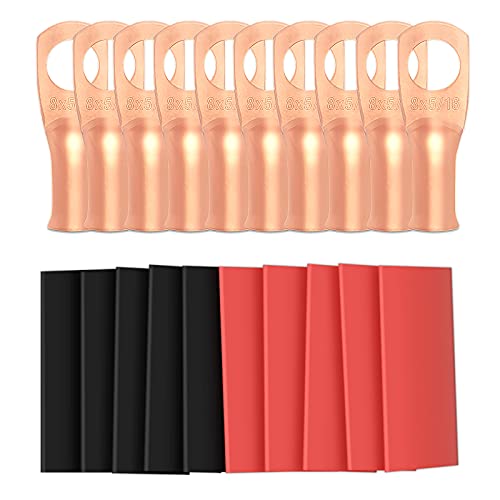
Sanuke 10pcs 8 Gauge-5/16 Wire Connectors Copper Ring Terminals

RED WOLF 8 AWG 1/4″ Battery Cable Lug 12 PCS w/Heat Shrink Tubing
The Picks, Examined More Closely
A 20-pack of 8 AWG copper ring terminals from RED WOLF feels like the right shelf-warmer for anyone who works on their own vehicles. The 5/16″ stud size (the diameter of the bolt hole) covers most automotive battery posts and starter connections, and you also get a full set of 3:1 dual-wall heat shrink tubing in matching red and black counts. A “3:1 ratio” means the tubing shrinks to one-third of its original diameter when heated, so it grips tightly even on the bulky seam where the lug meets the insulation.
For someone rewiring a classic car or adding a second battery to a truck, the count means you won’t run dry mid-project. The lugs are bare copper, so they conduct well but need a coat of dielectric grease (a silicone-based paste that blocks moisture) or shrink tube to fight corrosion in wet environments.
Everyday Wins
- Twenty lugs plus twenty pieces of color-coded heat shrink, enough for a full re-wire without a mid-project parts run
- 5/16″ stud matches the most common automotive battery terminal bolts
- 3:1 adhesive-lined shrink tubing seals out moisture once heated, a real-world upgrade over plain vinyl tubing
- Tubular barrel shape accepts a proper hex crimp (a compression done with a hex-shaped die) for low-resistance joints
Honest Caveats
- Bare copper will tarnish in marine or coastal use unless sealed, so you may want the tinned version below for boats
- The pack only covers one stud size, so 3/8″ or 1/4″ bolts require a different kit
Feature Snapshot
Who It Suits Best
Home mechanics and restoration hobbyists running multiple 12V circuits on a single weekend project.
Where Another Pick Suits Better
Boat owners fighting salt spray should look at the RED WOLF 3/8″ Marine kit instead for its larger terminal footprint.
The 3/8″ stud version of the RED WOLF kit is built for the larger bolt heads you find on marine battery switches, winch solenoids, and inverter grounds. The copper here gets a special surface treatment aimed at slowing corrosion, a real plus for any install that lives near water. You still get the same 20-lug count plus ten pieces of color-coded heat shrink.
Compared to the first pick, this one trades a smaller stud for a heavier-duty bolt pattern, so the ring spreads clamping force across a wider pad. In my view, that makes it a smarter grab for high-amperage runs like a 1000W inverter feed. The trade-off is that the larger stud won’t fit standard automotive battery posts, so it’s not a universal fit.
Where It Delivers
- 3/8″ stud is the standard size for marine battery switches and heavy-gauge grounds
- Copper surface treatment helps fight oxidation in humid engine bays
- Wide pad design spreads clamping pressure, lowering the chance of a loose ring under vibration
- Works as a direct swap-in for trailer winch and inverter cabling
Trade Offs
- Only ten heat shrink pieces included, so larger projects need extra tubing
- Stud size won’t fit most factory car battery terminals without an adapter
- Bare copper body still benefits from grease in saltwater environments
Right Fit For
Boat owners, RV enthusiasts, and off-grid solar builders wiring 3/8″ bolt hardware on high-current circuits.
Swap It Out When
Standard automotive battery posts call for the RED WOLF 5/16″ lug in slot one, which matches factory bolt patterns.
SELTERM’s ten-pack brings tinned copper to the table, which means each lug gets a thin coating of solder that slows corrosion far better than bare copper. The wider pad shape gives your wrench a bigger landing area, so the ring sits flat against the terminal without rocking. This is the lug I reach for on anything exposed to weather, including truck batteries, solar combiner boxes, and tractor harnesses.
Where the RED WOLF kits add heat shrink, SELTERM strips the kit down to just the lugs. That makes sense if you already own tubing or prefer to solder-seal your connections. The ten-count is smaller than the RED WOLF packs, so plan accordingly for multi-battery jobs.
Features That Help
- Tinned copper shell resists salt and humidity far longer than bare copper
- Wide pad design adds clamping surface, useful on thinner terminal posts
- Annealed (heat-softened) copper barrel crimps evenly with standard 8 AWG dies
- OEM-style construction used in commercial vehicle harnesses
Points To Keep In Mind
- No heat shrink tubing included, so you need to source your own or use liquid electrical tape
- Ten-count pack is short for full vehicle re-wires
- 5/16″ stud only, so larger battery switches call for a different pick
Technical Highlights
Made For
Anyone working in coastal, agricultural, or off-grid setups where humidity eats bare copper within a season.
Consider Something Else When
If you need heat shrink bundled in, the RED WOLF 5/16″ kit from the first slot covers the same stud size with tubing included.
Sanuke’s ten-pack leans on electrolytic copper, a refining process that strips impurities for stronger conductivity. You get the same 5/16″ stud as the first and third picks, but Sanuke adds color-matched heat shrink in a five-and-five red-and-black split. That’s a tidy kit for bench builders who wire one project at a time and want to keep polarity obvious.
Where the SELTERM lugs skip the tubing, Sanuke restores the all-in-one approach. The pack count is smaller than the RED WOLF kits, but the tradeoff is a tighter, more focused build. For most garage builds, ten lugs covers a full accessory install with a couple of spares.
Where It Excels
- Electrolytic copper construction supports steady current flow on accessory circuits
- Color-coded shrink tubing helps avoid reverse-polarity mistakes during install
- Compact ten-pack size works for shop drawers where 20-packs waste shelf space
- Closed-barrel design (no inspection window) lets adhesive shrink seal the crimp zone
Small Caveats
- Only five black and five red shrink tubes, so mixed-polarity jobs with more grounds may need extras
- Bare copper body, so outdoor installs still need grease or tinned lugs
- Single stud size means projects mixing 1/4″ and 3/8″ bolts require another kit
Best Suited To
Bench hobbyists and small-shop builders wiring audio amps, lighting circuits, or accessory panels.
Skip It When
High-count marine or trailer jobs call for the RED WOLF 3/8″ marine kit, which ships with more tubing.
The 1/4″ stud version of the RED WOLF line covers the smaller bolts you find inside electrical panels, fuse blocks, and compact junction boxes. The pack count sits at twelve lugs and twelve shrink tubes, split evenly between red and black. For someone wiring a 12V distribution panel or a small camper solar setup, the 1/4″ ring lands flat without forcing the bolt to stretch.
Compared to the first pick, this lug uses a smaller stud that fits tighter hardware. The arc-shaped barrel entry helps the cable slide in without fraying the copper strands, which is handy on tight bends. You may find the twelve-pack limiting on bigger projects, but for a single-panel install it’s exactly right.
Useful Highlights
- 1/4″ stud fits standard fuse blocks, switches, and small distribution panels
- Arc-shape barrel entry guides the cable in cleanly, reducing strand damage
- 3:1 heat shrink seals the crimp joint against vibration and dust
- Even red and black split keeps polarity clear during install
Things To Weigh
- Smaller stud is too light for large battery switches or winch solenoids
- Twelve-pack count may fall short for multi-circuit camper van builds
- Bare copper needs sealing for any outdoor or marine exposure
Perfect Match For
Van lifers, solar hobbyists, and panel builders wiring compact 12V distribution hardware with smaller bolts.
Reach For A Different Pick When
Higher-amperage battery and inverter work fits the RED WOLF 3/8″ marine kit, which uses the larger bolt pattern.
Matching Lug Specs to Real Wiring Jobs
Stud Size and Bolt Match
The stud size stamped on a ring terminal (5/16″, 3/8″, 1/4″) has to match the bolt it seats against. A loose fit means the ring rocks under torque, which slowly works the joint loose. Before choosing, measure the bolt diameter with calipers or check the hardware spec. The 5/16″ size covers most automotive posts, 3/8″ handles marine and inverter grounds, and 1/4″ suits compact distribution panels.
Material and Corrosion Resistance
Bare copper conducts well but tarnishes fast in salt air or humid engine bays. Tinned copper adds a thin solder coating that slows corrosion for years, which is why coastal boaters usually prefer it. For dry, indoor projects like audio amp wiring, bare copper is fine. For anything outdoors, plan on sealing the joint with heat shrink or dielectric grease.
Pack Count and Project Scope
A 20-pack suits a full vehicle re-wire or trailer redo with spares left over. A 10-pack covers a bench project or single accessory install. The smaller counts save shelf space but mean a return trip to the store if the scope grows mid-project. Always estimate lugs at roughly 1.5x the number of connections, because mis-crimps and bad strips happen.
Crimp Tool Compatibility
A proper ratcheting crimper (a tool that locks until full pressure is applied) with an 8 AWG die gives a gas-tight joint that won’t loosen over time. Cheap hammer crimps deform the barrel unevenly and create resistance hotspots. Match the crimper die to the lug brand’s spec where possible, since some wide-pad designs need a slightly larger die than standard.
What Most Shoppers Overlook
Wrong Turns To Avoid
Buying lugs before measuring the bolt is the classic mistake, and it sends people back to the store within hours. A close second is skipping the heat shrink or grease, which lets moisture wick into the crimp and rot the copper from the inside. Finally, mixing stud sizes across one project creates a mismatch that looks sloppy and runs the risk of a loose joint on the smaller bolt.
What The Higher Tier Buys
Spending a bit more on tinned copper and adhesive-lined shrink tubing pays off the moment the install meets weather. Tinned lugs outlast bare copper by years in coastal setups, and 3:1 adhesive shrink seals the crimp zone where 2:1 tubing barely grips. The upgrade rarely breaks a tight budget, but the difference shows up the first time you don’t have to chase a parasitic voltage drop (a small, unwanted current leak that slowly drains the battery) from a corroded joint.
Frequently Asked Questions
What wire size pairs with 8 gauge connectors?
An 8 AWG connector fits cable rated for 8 gauge, which is common on mid-size automotive battery runs, inverter feeds, and trailer wiring. Thicker 6 or 4 gauge cable needs a larger connector.
Can I reuse a crimped 8 gauge lug?
Reusing a crimped lug is risky. The barrel deforms during crimping, so a second crimp usually creates a loose joint. Fresh lugs cost pennies compared to the hassle of a roadside failure.
Do I need heat shrink on every connection?
Heat shrink isn’t mandatory, but it blocks moisture and strain on every joint. For dry, indoor panels, electrical tape works. For engine bays, marine setups, or anything outdoors, adhesive-lined heat shrink is worth the extra minute.
What’s the difference between tinned and bare copper lugs?
Bare copper conducts well but tarnishes fast in humid or salty air. Tinned copper gets a thin solder coating that resists corrosion for years, making it the preferred pick for boats, tractors, and outdoor solar arrays.
Will 8 gauge lugs fit a deep-cycle battery?
Yes, as long as the stud size matches the battery terminal bolt. Deep-cycle batteries typically use 5/16″ or 3/8″ hardware, both of which appear in this roundup.
Wrap Up
Any of these five picks will get a clean, low-resistance joint on an 8 AWG cable when matched to the right stud size and sealed properly. For most weekend builds, the RED WOLF 5/16″ kit covers the broadest range of work. Marine and high-amperage installs point toward the 3/8″ marine kit, while panel builders should grab the 1/4″ version. Take a minute to match the bolt, seal the joint, and the lug will outlast the cable it’s attached to.
