

I wired up a garage subpanel last spring, and the disconnect outside the building was the part I thought about longest. Getting that choice right means your equipment stays safe, your inspector stays happy, and your future self thanks you on the rare day something trips. I pulled together seven solid 60 amp fused disconnect options that cover the common scenarios I see homeowners and light-commercial folks run into, and I tried to be honest about what each one trades away.
The Picks In Brief

ICOOL 60 Amp Non-Fused Disconnect Switch 2 Pack

FixOasis 3P 60 Amp Disconnect with Ground Design

FixOasis 3P 30 Amp Disconnect with Ground Design

FixOasis 3P 60 Amp Fused Disconnect NEMA 3R

FixOasis 2P 60 Amp Disconnect with Ground Design
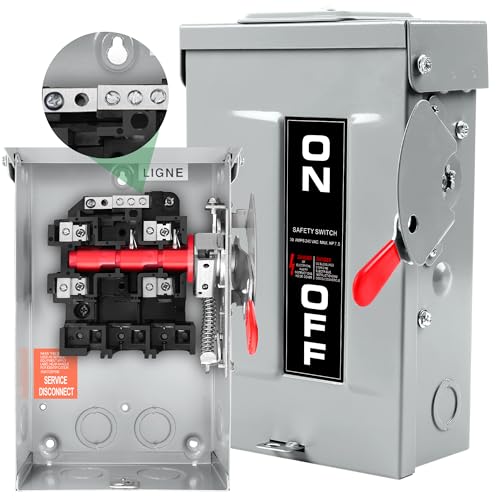
FixOasis 2P 30 Amp Disconnect with Ground Design
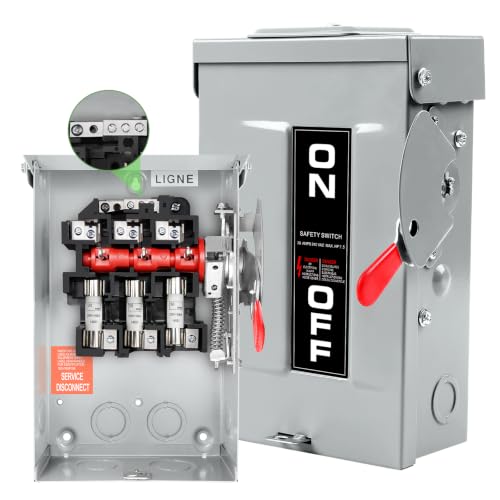
FixOasis 3P 30 Amp Fused Disconnect NEMA 3R
More Details On Our Top Picks
Mounting a disconnect on the side of a house means staring at it every day, so build quality matters more than people expect. The ICOOL 60 Amp Non-Fused Disconnect Switch comes as a pair, which suits anyone running two separate outdoor units, like a mini-split and a pool pump, from the same service run.
The steel enclosure carries a NEMA 3R rainproof rating, and the powder-coated finish helps the box shrug off coastal air or humid summers. A pullout handle with a visible blade lets me confirm power is off at a glance, which is genuinely reassuring when I’m doing the work alone.
Notable Gains
- Two-pack format saves a second trip to the retailer when running parallel outdoor loads.
- NEMA 3R enclosure handles rain and splashing without extra weatherproofing.
- Visible blade through the handle confirms disconnect state without removing the cover.
- Powder-coated steel finish resists corrosion in coastal or humid environments.
- Double-break switch action gives a cleaner mechanical open under load.
Things To Consider
- Non-fused design means upstream breaker protection handles overcurrent events.
- Two-pole layout isn’t ideal for three-phase equipment; the FixOasis 3P option covers that.
Feature Snapshot
Who It Suits Best
Homeowners running two outdoor appliances from one service run, especially HVAC condensers or pool equipment, will get the most out of the bundled pair.
Where Another Pick Suits Better
Anyone needing three-phase protection should reach for the FixOasis 3P 60 Amp Disconnect instead.
Three-phase loads change the math completely, and the FixOasis 3P 60 Amp Disconnect is built for that reality. Unlike the ICOOL box above, this one uses three poles to interrupt all hot legs simultaneously, which is the correct approach for any three-phase motor or commercial feed.
The heavy-gauge steel shell gets an anti-corrosion coating rated for indoor or outdoor mounting, and the added ground design simplifies bonding during install. I’d point an experienced DIYer or a working electrician toward this one, since the three-pole wiring isn’t where I’d suggest a first-time installer start.
The Helpful Details
- Three-pole switching matches commercial three-phase wiring conventions.
- Anti-rust steel coating holds up to weather swings over years of service.
- 14000W rating covers substantial equipment loads at 240V.
- NEMA 3R rating allows the same enclosure indoors or outdoors.
- Integrated ground design streamlines bonding at install time.
- Larger current carrying capacity suits water heaters and large compressors.
Trade Offs
- Three-pole complexity adds wiring time and may require an electrician.
- Non-fusible layout depends on upstream protection for overcurrent events.
- Bigger enclosure footprint demands more wall space than a 2-pole box.
Made For
Workshops, light commercial spaces, and homeowners running three-phase equipment like large compressors or solar arrays benefit most from this layout.
Skip It When
Anyone running standard residential split-phase equipment should look at the FixOasis 2P 60 Amp Disconnect for a simpler install.
Not every three-phase run needs 60 amps, and over-spec’ing a disconnect just costs more and complicates the wire pull. The FixOasis 3P 30 Amp Disconnect handles smaller three-phase loads with the same NEMA 3R enclosure as its bigger sibling, just with a lighter current rating.
For a small air compressor under 30 amps or a modest solar disconnect on a three-phase inverter, this is the right size. Compare that to the 60 amp version above, which I usually find is overkill for residential-scale three-phase gear.
What Stands Out
- Right-sized 30 amp rating avoids unnecessary cost on smaller three-phase loads.
- Same NEMA 3R enclosure as larger FixOasis models means consistent installation.
- Anti-corrosion coating protects outdoor service for years.
- Ground design speeds up bonding during rough-in.
Honest Caveats
- 30 amp ceiling won’t cover larger three-phase motors; the 60 amp sibling is the upgrade path.
- Three-pole wiring still demands confident skills or a licensed electrician.
- Limited clearance inside compared to larger 60 amp units may frustrate thick wire runs.
The Right Fit
Owners of smaller three-phase equipment under 30 amps, like modest compressors or compact solar setups, will appreciate the right-sized capacity.
Consider Something Else When
Anyone running heavier three-phase loads should step up to the FixOasis 3P 60 Amp Disconnect.
Fused disconnects do something non-fused versions can’t: they provide localized overcurrent protection right at the equipment. The FixOasis 3P 60 Amp Fused Disconnect adds that layer, which matters when the upstream breaker is far away or shared with other loads.
It carries the same NEMA 3R rating as the other FixOasis models in this list, so outdoor mounting stays straightforward. For commercial or light industrial use where code inspectors expect fused disconnects on certain equipment feeds, this is the more defensible choice.
Real-World Strengths
- Fused protection isolates faults at the equipment, reducing downtime elsewhere.
- NEMA 3R enclosure handles harsh outdoor weather consistently.
- Three-pole layout suits commercial three-phase wiring.
- 110V/240V AC rating covers both common service voltages.
- Anti-rust paint extends service life in corrosive environments.
Points To Note
- Fuse replacement adds a maintenance step that non-fused models skip.
- Higher component cost than the non-fused 3P sibling for the same amp rating.
Quick Facts
Best Suited To
Commercial sites and light industrial applications where fused disconnects are specified by code will find this fits the requirement cleanly.
Not Your Match When
A homeowner wiring a basic residential three-phase load can skip fuses and save cost with the FixOasis 3P 60 Amp Disconnect.
Wire bending space is the unglamorous detail that makes a disconnect either a pleasure or a nightmare to install. The FixOasis 2P 60 Amp Disconnect tackles that head-on with enhanced wire bending clearance and four-side knockouts, which means I’m not fighting the enclosure to land conductors.
For a garage subpanel or workshop feed where I want room to work, this layout is genuinely thoughtful. The heavy-duty steel and rust-resistant coating match what I’d expect from the brand, and the 14000W rating covers most residential 60 amp subpanel scenarios.
What It Does Well
- Enhanced wire bending clearance reduces install frustration with thicker conductors.
- Four-side knockouts give flexibility for conduit entry direction.
- Rust and corrosion resistant coating for long outdoor service.
- NEMA 3R rated for both indoor and outdoor placement.
- Two-pole design suits standard residential split-phase service.
Potential Drawbacks
- Non-fusible layout requires upstream breaker protection.
- Larger interior clearance makes the box physically bigger than minimal 2-pole units.
Whose Shelf It Belongs On
DIYers running a new garage subpanel feed who want extra install room will find the wire bending clearance worth the larger box.
Another Choice May Suit
Anyone needing fused protection should look at the FixOasis 3P 60 Amp Fused Disconnect instead.
Water heaters, small air compressors, and modest solar arrays usually call for a 30 amp disconnect, not 60. The FixOasis 2P 30 Amp Disconnect matches that real-world need without forcing me to over-spec the install or pad the budget.
For a homeowner doing their first disconnect wiring, the two-pole format is far less intimidating than three-phase gear, and the NEMA 3R enclosure means I can mount it on an exterior wall without extra weatherproofing. I’ve watched homeowners complete this exact install with confidence after one careful walkthrough.
Why It Works Well
- 30 amp rating matches typical water heater and small compressor loads.
- Two-pole simplicity is approachable for DIY installers.
- NEMA 3R enclosure handles outdoor placement.
- Anti-corrosion steel coating for long service life.
- Ground design simplifies bonding for beginners.
A Few Limitations
- 30 amp ceiling is too small for larger HVAC or subpanel feeds.
- Non-fusible means upstream breaker handles all overcurrent duty.
Feature Card
Perfect Match For
First-time installers handling a water heater or small air compressor disconnect will find the two-pole layout far easier to wire correctly.
Look Elsewhere When
Anyone feeding a full subpanel or larger HVAC unit should step up to the FixOasis 2P 60 Amp Disconnect for proper capacity.
Small fused three-phase disconnects are surprisingly hard to find, which is why the FixOasis 3P 30 Amp Fused Disconnect earns its place on this list. It pairs the localized overcurrent protection of fuses with a compact 30 amp ceiling for lighter three-phase loads.
The NEMA 3R enclosure means outdoor mounting on a side wall or equipment pad stays code-compliant without extra shielding. For solar arrays, small commercial equipment, or workshop three-phase machines under 30 amps, this hits a niche the other items don’t.
Everyday Perks
- Fused design isolates faults at the equipment for faster troubleshooting.
- 30 amp capacity suits smaller three-phase loads without oversizing.
- NEMA 3R rating holds up to outdoor weather year-round.
- Anti-rust paint extends service life in challenging environments.
- Three-pole switching matches commercial three-phase expectations.
Less Ideal Details
- 30 amp ceiling excludes larger equipment; the 60 amp fused sibling covers that.
- Three-pole wiring is more involved than residential split-phase work.
Who Should Grab It
Owners of small three-phase equipment that needs fused protection, like compact solar inverters or light commercial gear, will appreciate the right-sized capacity.
A Better Fit Elsewhere
Anyone running heavier three-phase loads above 30 amps should choose the FixOasis 3P 60 Amp Fused Disconnect for proper headroom.
What Matters Most Before Choosing 60 Amp Fused Disconnects
Match Amp Rating To The Load
A disconnect rated higher than the load wastes money, while one rated below risks nuisance tripping and overheated lugs. Check the nameplate amperage on the equipment and add a small margin for startup surges on motors. For residential HVAC condensers and subpanel feeds, 60 amps is usually correct, while water heaters and small compressors typically live in the 30 amp range.
Understand Fused Versus Non-Fused
A fused disconnect contains fuses inside the enclosure that interrupt overcurrent right at the equipment. A non-fused disconnect relies entirely on the upstream breaker panel for that protection. Fused designs add cost and a maintenance step, but they isolate faults locally. For most homeowner installs where the panel is close, non-fused works fine, while commercial sites often need fuses by code.
Read The Enclosure Rating
NEMA 3R means the box is rainproof and safe for outdoor mounting on a wall or eave. Lower ratings like NEMA 1 are indoor-only and will fail outdoors within a season. If the disconnect sits anywhere exposed to weather, NEMA 3R is the minimum.
Two Poles Versus Three Poles
Two-pole disconnects handle standard residential split-phase service. Three-pole disconnects are required for three-phase equipment, which is common in commercial settings and some larger solar inverters. Picking the wrong pole count means the disconnect cannot fully isolate the load.
Key Considerations Across These Picks
Where Shoppers Go Wrong
The most common mistake is choosing amp rating by the wire size rather than the actual load. People also confuse fused and non-fused models, assuming fused is always safer when the upstream breaker already handles overcurrent duty. Double-check the local code for whether fused disconnects are required for your equipment class before paying extra.
Where The Extra Money Goes
Higher-tier disconnects add features like enhanced wire bending clearance, four-side knockouts, and heavier-gauge steel. These pay off when the install site has limited working room or faces corrosive coastal air. For a clean, sheltered install, a basic model performs the same job at lower cost, but the upgrade becomes worthwhile when conditions push the box to its limits.
Frequently Asked Questions
What Is A 60 Amp Fused Disconnect Used For?
A 60 amp fused disconnect isolates high-draw equipment like HVAC condensers or subpanels from the main service. The fuse inside adds a layer of overcurrent protection right at the equipment.
Fused Or Non-Fused Disconnect: Which Do I Need?
Non-fused is fine when the upstream breaker is nearby and properly sized. Fused is required when local code demands it or when the equipment sits far from the main panel and needs localized protection.
Can A 60 Amp Disconnect Handle 240 Volts?
Most residential 60 amp disconnects are rated for 240 VAC, which covers standard split-phase service. Commercial three-phase models handle different voltage configurations, so match the rating to your service.
Is A Disconnect Required By Code For Outdoor Equipment?
Most jurisdictions require a disconnect within sight of outdoor equipment like condensers and pool pumps. Local inspectors may specify fused or non-fused depending on the equipment and wiring distance.
What Does NEMA 3R Mean On A Disconnect?
NEMA 3R means the enclosure resists rain and falling water, making it safe for outdoor wall mounting. Lower ratings are indoor-only and will fail when exposed to weather.
The Takeaway
The right 60 amp fused disconnect comes down to matching your equipment’s amp draw, voltage, and pole count, then deciding whether fused protection is worth the extra cost. For most homeowner installs, a NEMA 3R non-fused box in the right amp range handles the job cleanly. Shop carefully, follow your local code, and the rest tends to fall into place.
