

Working with 6 gauge wire means dealing with serious current loads, the kind that powers subpanels, welders, RV battery banks, and hot tub feeds. Standard wire nuts designed for 14 or 12 gauge residential circuits simply won’t grip these thick conductors, and that’s where purpose-built connectors come in. I’ve sorted through the options that actually fit 6 gauge copper and aluminum, plus one tool that makes prepping those stubborn conductors far less painful.
The Lineup, Simplified

GKG 10PCS 10-6 AWG Wire Connector Nut Kit
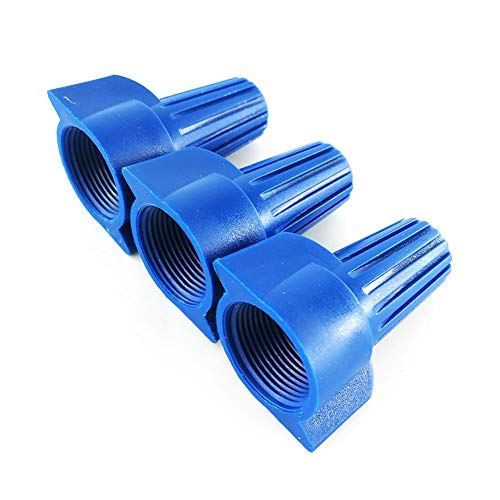
HS P17 UL Listed Blue Winged Wire Connectors 100-Pack

BRLBZXJY 8-in-1 Wire Stripper and Twister for Drill

Linkstyle 6PCS 6 AWG Wire Connector Kit 1-in-9 Out

TMHCRDS 10Pcs Copper Wire Nut Kit 60A/80A
Why These Options Stand Out
Few kits arrive with everything you actually need, and the GKG 10-piece set aims to fix that. It ships with ten wire connectors, forty M5 12.9-grade steel screws, ten heat shrink tubes, and a hex wrench, so the moment your marine or solar project stalls, you can keep moving. Rated for 80 amps across the 10-6 AWG range (6-16mm² wire), it handles the kind of current most residential wirenuts simply can’t touch.
For someone rewiring a boat’s trolling motor circuit or building a small off-grid solar array, the included hardware saves a parts-store run. Unlike the bulk twist-on caps coming up next, these are screw-fixed terminals, meaning you clamp conductors down with the included hex wrench rather than twisting them together by hand.
Everyday Wins
- Suitable for automotive, marine, solar, and industrial DIY projects up to 80A
- Screw-clamp design holds thick conductors far more securely than a spring twist
- Heat shrink tubes included for sealing connections against moisture
- M5 12.9-grade fasteners resist loosening under vibration
Things To Consider
- Only ten connectors in the kit, so larger jobs need multiple sets
- Requires a hex wrench, so you’ll do more mechanical work than with a push-on cap
- Heat shrink needs a heat gun, which isn’t included
Key Specs
Right Fit For
DIYers wiring a vehicle, boat, or solar setup who want a complete kit with hardware included.
Look Elsewhere When
The HS P17 twist-on connectors suit anyone running long residential branch circuits where a simple cap-and-twist method works fine.
Sometimes the right tool is the boring one, and a hundred blue winged wire nuts is about as exciting as it gets. These HS P17 caps handle 14-6 AWG, which spans everything from a 15-amp lighting circuit up to a 55-amp appliance feed. The double-wing grip gives you real torque when twisting by hand, and the color-coded blue shell matches standard electrician convention for larger conductors.
For contractors running multiple subpanel feeders or anyone doing a whole-house rewiring project, the 100-count format keeps you from running short mid-job. Compared to the GKG kit’s mechanical approach, this is the classic twist-and-go method, no tools required beyond your fingers and maybe a lineman’s pliers for pre-twisting stubborn strands.
Good Reasons To Consider
- UL and CSA certified, meaning inspectors will accept them on permitted work
- Large size with 1.6-inch height and 0.7-inch inner diameter handles thick conductor bundles
- No pre-twisting, soldering, or tape required, so installation is fast
- 100-count pack keeps an electrician in supply for months of jobs
Trade Offs
- Plastic body, so heat dissipation is lower than copper or brass alternatives
- Twist-on style means vibration resistance is weaker than the screw-clamp GKG kit
- Not waterproof, so outdoor runs still need conduit or sealant
Made For
Electricians and homeowners pulling long residential branch circuits who need certified, fast-install connections in volume.
Swap It Out When
The TMHCRDS copper kit suits outdoor or high-vibration installs where plastic caps tend to work loose over time.
Before any wire nut goes on a 6 gauge conductor, that conductor has to be stripped, and that’s where this drill-attached tool earns its spot. The BRLBZXJY 8-in-1 handles 14, 12, 10, 8, and 6 AWG wires, stripping insulation and twisting strands in one motion. Five gauge-specific heads, a connecting rod, an L-shaped hex wrench, two stranding tools, and twenty-five strand caps round out the kit.
Where the previous two picks are connectors, this is the prep tool that makes using them faster. I’ve stripped 6 gauge by hand and it’s a knuckle-scraping affair, so anything that bolts to a drill chuck and handles the torque for me is welcome. You may find the setup step takes a few tries the first time, but once dialed in, it chews through runs in a fraction of the manual time.
A Favorable Mix
- Covers 6 through 14 AWG with interchangeable heads, replacing several single-gauge tools
- Drill-driven action saves wrist strain on long runs of thick cable
- Twisting function preps conductors for nut installation in one motion
- Strand caps included for capping off unused conductors
Points To Keep In Mind
- Requires a drill, which is sold separately
- Not a wire nut itself, so it pairs with one of the other picks in this list
- Swapping heads takes a few seconds, slowing you down on mixed-gauge jobs
Best Suited To
Anyone doing repetitive 6 gauge prep work, from electrical contractors to solar installers pulling long conductor runs.
Reach For A Different Pick When
The Linkstyle 1-in-9-out block suits installers who need to split one feeder into multiple branch circuits, not strip wire.
When one feeder needs to become many, a standard wire nut won’t cut it, and that’s where the Linkstyle 1-in-9-out block solves a real problem. Rated for 80 amps and up to 1000 volts across the 14-6 AWG range, it accepts one input conductor and splits it across nine outputs. The brass internal conductor and ABS fireproof shell handle heat well, especially compared to all-plastic twist caps.
For someone wiring a solar combiner, an RV distribution panel, or a small off-grid inverter, this consolidates what would otherwise be a nest of wires and splices. Compare that to the HS twist-on caps, which only join bundles together rather than distributing a single feed.
Why It Works Well
- Compact block format saves space inside enclosures versus daisy-chained nuts
- Brass conductor core handles high-current loads with minimal resistance
- Screw-fixed terminals grip conductors firmly without pre-twisting
- ABS shell resists heat and corrosion in demanding environments
Possible Compromises
- Fixed 1-in-9-out configuration, so it doesn’t suit every split ratio
- Six-piece pack may be more than smaller jobs require
- Block format needs physical mounting space inside the panel
Key Specs
Who Should Grab It
Solar installers and off-grid hobbyists splitting a single high-current feed into multiple branch circuits.
Consider Something Else When
The GKG screw-clamp kit suits simpler point-to-point splicing without the need for a distribution block format.
Where plastic meets the elements, copper tends to outlast it, and the TMHCRDS kit leans into that with thickened copper bodies and a pickled surface treatment. The set ships with ten 6-gauge connectors, ten heat shrink tubes, and a wrench. The 80A round variant has an inner diameter of 0.2 inches and handles 2.5-10mm² wiring, while the 60A square variant widens to 0.26 inches for 1-16mm².
For outdoor junction boxes, marine applications, or any spot where moisture is a real concern, copper plus heat shrink beats a plastic cap every time. I’ve seen plastic wirenuts turn brittle after a few seasons in the sun, and copper construction sidesteps that whole failure mode. The trade-off shows up in cost per connector, since copper costs more than molded plastic.
Positive Takeaways
- Copper body conducts efficiently and resists oxidation better than plated alternatives
- Heat shrink tubes create a sealed, moisture-resistant joint when properly shrunk
- Two current ratings (60A and 80A) suit different circuit demands
- Pickled copper surface improves solderability and contact reliability
Where It May Fall Short
- Heat shrink application requires a heat gun, adding a step versus simple caps
- Copper cost per connector runs higher than the plastic HS twist-ons
- Only ten connectors in the kit, so larger projects need multiples
Key Specs
Whose Shelf It Belongs On
Mobility owners, marine electricians, and outdoor solar installers working in moisture-prone environments.
Where Another Pick Suits Better
The HS P17 blue winged connectors work better for indoor residential branch circuits where copper’s corrosion resistance isn’t needed.
What Matters Most Before Choosing 6 Gauge Wire Nuts
Matching the Connector to the Current Load
The first filter is simple: does the connector actually fit the wire, and can it handle the current? Wire nuts are color-coded for a reason, with blue shells typically designed for 14-6 AWG and rated for whatever current the certification allows. Exceeding that rating is where failures start, so always check the listed amp rating against your circuit’s actual draw. For a 50-amp subpanel feeder, you want headroom, not a connector running at its absolute limit.
Choosing Between Twist-On and Screw-Fixed Designs
Twist-on wire nuts are the classic approach, fast, no tools needed, and the HS P17 pack leans into that simplicity. Screw-fixed terminals, like the GKG and Linkstyle kits, take more effort but grip thicker conductors more reliably and resist vibration. If you’re wiring a vehicle, boat, or anything that shakes, screw-fixed tends to outlast twist-on over years of service.
Considering the Environment
Indoor residential work rarely demands more than a UL-listed plastic cap. Outdoor runs, marine installations, and any spot where condensation or splash is possible call for copper bodies with heat shrink sealing. The TMHCRDS kit covers that category well, pairing copper with the shrink tubes needed to lock moisture out. Junction box depth matters too: bulkier blocks like the Linkstyle 1-in-9-out need real estate inside the enclosure.
Planning for Future Service
Reusable connectors save headaches during troubleshooting. Most twist-on caps can be removed and re-installed, while screw-fixed terminals offer similar serviceability without twisting fatigue on the conductor. If the connection might need to come apart for upgrades or inspection, factor that into your choice from the start.
Key Considerations Across These Picks
Where Shoppers Go Wrong
The biggest mistake is grabbing whatever wire nut is on the shelf without checking the gauge range. A standard red or yellow cap rated for 18-10 AWG simply won’t seat on a 6 gauge conductor, and forcing it creates a loose connection that heats up under load. Another common slip is ignoring environment: indoor plastic caps fail outdoors within a season or two, especially in direct sun. The TMHCRDS copper kit exists specifically to solve that, but only if you actually reach for it instead of the cheaper twist-ons.
When Paying More Pays Off
The premium tier in this category buys you copper bodies, brass internals, and screw-clamp grip strength, and those features matter most in vibration, moisture, and high-current scenarios. For a one-off indoor splice, the HS P17 twist-ons are honestly enough. For a boat, an RV, or a solar array that needs to survive years of thermal cycling, the extra cost of copper or brass construction earns its place through longevity alone.
Frequently Asked Questions
What wire nut works for 6 gauge wire?
Blue winged wire nuts, like the HS P17, are typically rated for 14-6 AWG and handle the gauge range for most residential and light commercial splices. The inner spring must be large enough to seat fully on the stripped conductor bundle, otherwise the connection will be loose.
Are wire nuts rated for 80 amps?
Some are, but not all. The GKG, Linkstyle, and TMHCRDS kits in this list explicitly rate their connectors for 80 amps, making them suitable for subpanel feeders, inverters, and other high-current circuits. Always verify the amp rating on the packaging before using any wire nut on a heavy load.
Can I use a wire nut on a 6 gauge hot tub feed?
For a 50-amp hot tub feeder, yes, but the wire nut must be rated for both the gauge and the current. Twist-on caps like the HS P17 work for indoor junction boxes, while screw-fixed copper kits suit installations exposed to moisture or outdoor conditions. Local electrical codes still apply, so check with your inspector.
How many wires can a 6 gauge wirenut hold?
It depends on the connector’s design. Standard twist-on caps like the HS P17 typically handle a few conductors of mixed gauges, while distribution blocks like the Linkstyle 1-in-9-out are built specifically for splitting one feed into many. Always confirm the manufacturer’s listed wire count before stuffing a cap full.
Is copper better than plastic for wire nuts?
Copper conducts electricity more efficiently and resists corrosion better than plastic, but it’s not always necessary. For dry indoor circuits, UL-listed plastic caps perform reliably for decades. Copper construction earns its premium in outdoor, marine, and high-vibration environments where plastic eventually cracks or loosens.
Wrap Up
The right 6 gauge connector depends entirely on where and how you’re wiring. For certified indoor branch circuits in volume, the HS P17 twist-ons deliver straightforward value. For marine, solar, or automotive projects, the GKG or TMHCRDS kits bring the hardware and sealing needed to survive tough conditions. And for splitting a high-current feed into multiple branches, the Linkstyle distribution block solves a problem no simple wirenut can handle. Pick the format that matches your project, and the rest tends to fall into place.
