

Pulling power across a long stretch of yard, driveway, or workshop sounds simple until the cord you’re using can’t keep up. I’ve talked to plenty of homeowners and contractors who learn the hard way that gauge, jacket material, and plug style all matter more than the length printed on the box. A 50-foot run that feels generous can turn into a frustrating bottleneck when it’s paired with the wrong wire thickness.
The picks below lean heavily on SJTW-rated cords, which simply means the jacket is built for hard service and wet conditions, and most include a grounded three-prong plug that fits standard household outlets. I focused on real-world needs: weekend yard work, garage projects, holiday lighting, and the occasional jobsite run. The shortlist mixes a heavy-duty 10-gauge workhorse, lighter 16-gauge options for small loads, and a couple of longer 75- to 200-foot cords for those who genuinely need the reach.
How The Shortlist Stacks Up
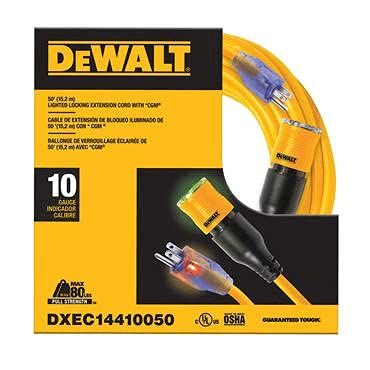
DEWALT 50 Foot Extension Cord Lighted Click-to-Lock 10/3 SJTW

LifeSupplyUSA 200ft 16/3 SJTW Extension Cord (Black)

Iron Forge Cable 50 ft Outdoor Extension Cord 16/3 (Pack of 2)

LifeSupplyUSA 50ft 10/3 SJTW Extension Cord (Yellow)

LifeSupplyUSA 100ft 14/3 SJTW Extension Cord (Black)

LifeSupplyUSA 200ft 14/3 SJTW Extension Cord (Orange)

LifeSupplyUSA 75ft 12/3 SJTW Extension Cord (Yellow)
A Closer Look At Each Pick
This cord sits at the top of the list because it solves two problems most cheap cords ignore: accidental disconnection and silent power loss. The male end clicks into a locking collar on the female end, so when you’re dragging it across a yard, the plug stays seated. For contractors and serious DIYers, that lock alone can save a tripped breaker or a stopped saw.
DEWALT pairs the locking feature with an LED indicator on the male plug that glows amber when current is flowing. On a busy jobsite, that’s the kind of small touch that tells you, at a glance, whether the outlet is live. The 10/3 SJTW jacket is thick enough to shrug off jobsite abrasion and weather, and the three-prong grounded plug fits standard household outlets.
What Stands Out
- The click-to-lock collar keeps the plug seated during heavy pulls, which matters when you’re running a miter saw or pressure washer across a yard.
- The amber LED on the male plug turns troubleshooting from guesswork into a two-second glance.
- 10-gauge wiring handles 15-amp tools without the voltage drop you’d see on thinner 14- or 16-gauge cords at this length.
- The SJTW jacket resists moisture, sunlight, and abrasion, so storing it outdoors in a damp garage is realistic.
Things To Consider
- The thicker 10-gauge jacket makes this cord noticeably heavier than the 16-gauge options further down the list.
- The locking collar only helps if your tool’s plug actually seats inside it; some bulkier plugs sit loosely even when locked.
Who It Suits Best
Contractors and homeowners running high-draw tools like table saws, air compressors, and pressure washers who want a cord that won’t quietly disconnect mid-cut.
Skip It When
The LifeSupplyUSA 50ft 10/3 SJTW Extension Cord (Yellow) is a simpler alternative for shoppers who don’t need the locking collar or LED indicator and want a lighter jacket.
At 200 feet, this cord handles situations where a 50-footer simply won’t reach, like running power to a far shed, lighting a long driveway for a party, or stringing holiday lights around a large home. The 16/3 gauge is the thinner end of the spectrum, so it’s built for low-to-moderate loads rather than heavy machinery.
Compared to the DEWALT locking cord up top, this one trades raw amperage capacity for sheer reach and flexibility. The SJTW jacket is rated for outdoor use and cold-resistant flex, so unrolling it on a chilly morning is less of a wrestling match. The three-prong grounded plug fits any standard household outlet.
A Favorable Mix
- 200 feet of reach covers large yards, driveways, and detached structures that a 50-foot cord can’t touch.
- The cold-resistant jacket stays pliable in lower temperatures, which helps when coiling it in an unheated garage.
- 16-gauge thickness keeps the cord light enough to manage without dragging a tangled mess across the lawn.
Worth Noting
- Rated for 6 amps, which means heavy-draw tools like space heaters or compressors will struggle at full length.
- Long runs of thin cord can lose voltage at the far end; for high-amperage tools, a thicker 12- or 10-gauge cord is the safer call.
- Storing 200 feet takes up real room in a garage or truck bed; the coil is bulkier than shorter picks.
Made For
Homeowners stringing holiday lights or powering low-draw yard tools across a big property who prioritize reach over raw power.
Reach For A Different Pick When
The DEWALT 50 Foot Extension Cord Lighted Click-to-Lock is the better match for anyone running actual power tools and who needs the locking plug instead of maximum length.
This bundle gives shoppers two 50-foot cords at once, which sounds modest until you imagine the typical weekend: one cord for the leaf blower out front, one for the hedge trimmer in the back. Iron Forge wraps the conductors in a vinyl jacket designed to resist moisture, sunlight, and corrosion.
Where the DEWALT cord leans toward jobsite abuse, this pair feels aimed at suburban homeowners. The 16/3 gauge handles everyday tools, and the grounded three-prong plug means no adapters needed. Having a spare also solves the annoying problem of running back inside because your single cord is already in use.
Notable Gains
- Receiving two cords at once covers both ends of a property and saves the trip inside to swap tools.
- The vinyl jacket handles weather exposure well enough for yard work and seasonal decoration.
- 16-gauge flexibility keeps each cord light and easy to coil when the work is done.
Trade Offs
- Two cords in a single pack means more storage space required in the garage or shed.
- 16-gauge wiring limits each cord to lighter tools; a heavy-duty table saw needs a thicker gauge.
Right Fit For
Suburban households juggling multiple outdoor tasks who appreciate having a backup cord already on hand.
Not Your Match When
The LifeSupplyUSA 50ft 10/3 SJTW Extension Cord (Yellow) is a better match for shoppers who need just one cord and want higher amperage capacity.
This LifeSupplyUSA cord skips the fancy locking collar of the DEWALT and focuses on raw electrical capacity. The 10/3 gauge is the thickest wire you’ll find in a household-friendly cord, and it’s rated for 15 amps at 125 volts, which covers most heavy tools without breaking a sweat.
The bright yellow jacket is the obvious visual cue: this is the cord to grab when the work is serious. In a yard full of leaves or a shop full of sawdust, the color helps prevent trip-hazard accidents. The SJTW rating again means hard-service thermoplastic that resists water, cold, and abrasion.
Everyday Advantages
- 10-gauge wire handles 15-amp tools comfortably, so voltage drop across 50 feet stays minimal.
- The yellow jacket improves visibility in grass, leaf piles, or dim garage corners, which can prevent trips and falls.
- Cold-resistant jacket flex stays manageable in chilly weather, an upgrade over older PVC-jacketed cords.
- The three-prong grounded plug fits standard 15-amp household outlets without an adapter.
A Few Limitations
- The thicker jacket makes the cord heavier than the 16-gauge options, so dragging it around gets tiring on long days.
- No lighted end or locking collar, so troubleshooting and accidental disconnection rely on the user noticing.
Best Suited To
Homeowners and tradespeople running high-draw tools like space heaters, miter saws, or pressure washers across a yard or driveway.
Look Elsewhere When
The DEWALT 50 Foot Extension Cord Lighted Click-to-Lock is a better fit for shoppers who want the locking plug and LED indicator built in.
The 100-foot length lands in an awkward middle ground that’s actually useful for a lot of real situations. It’s long enough to reach a backyard shed or detached garage from a house outlet, but not so long that coiling it becomes a chore. The 14/3 gauge is the everyday mid-thickness, handling 13 amps at 125 volts.
Compared to the heavier 10-gauge picks earlier in this list, this one is lighter to manage and easier to store. The SJTW jacket handles weather exposure well enough to leave the cord laid out across a yard for a project. The 5-15P plug on one end and 5-15R receptacle on the other are standard household configurations.
Advantages To Know
- 100 feet covers the gap between a 50-foot yard cord and a full 200-foot jobsite run.
- 14-gauge wire handles most household tools and small appliances without significant voltage drop.
- The cold-resistant jacket stays flexible in unheated spaces, which matters for winter projects.
- The black color blends with mulch and dark surfaces, which some shoppers prefer over bright safety yellow.
Possible Compromises
- The longer 100-foot length adds weight compared to the 50-foot options on this list.
- Thinner than 12- or 10-gauge cords, so very heavy-draw tools near the upper amperage limit may show voltage drop.
Who Should Grab It
Garage tinkerers and homeowners with mid-sized properties who want extra reach without committing to a 200-foot cord.
Consider Something Else When
The LifeSupplyUSA 75ft 12/3 SJTW Extension Cord (Yellow) is the better match for workshop owners who want heavier gauge at a shorter length.
The bright orange jacket is the first thing shoppers notice, and for good reason: on a busy jobsite, lawn, or workshop floor, an obvious cord is harder to trip over or run over with a wheelbarrow. At 200 feet, this cord is built for situations where the outlet is genuinely far from the work area.
The 14/3 gauge handles more amperage than the 16/3 cord further up this list, but it’s still a mid-thickness wire, not a heavy-duty workhorse. For low-to-moderate tools run at distance, it does the job. The SJTW jacket keeps the cord usable outdoors and in cold weather, and the three-prong grounded plug is the standard household configuration.
Strong Points
- 200 feet covers long driveways, large yards, and detached structures without needing an outlet extension.
- High-visibility orange reduces trip hazards and helps crews spot the cord in tall grass or leaf piles.
- 14-gauge wire carries more current than the 16-gauge 200-foot option, which is useful for slightly heavier tools.
Things To Watch
- At 200 feet of 14-gauge wire, very high-amperage tools will still see some voltage drop at the far end.
- The bright orange jacket may not appeal to shoppers who want their cord to blend in rather than stand out.
Perfect Match For
Contractors and homeowners running long cords across active work areas where visibility and safety are priorities.
A Better Fit Elsewhere
The LifeSupplyUSA 100ft 14/3 SJTW Extension Cord (Black) is a better option for anyone who doesn’t need the full 200 feet and wants something easier to store.
For workshop owners who run table saws, air compressors, or shop vacs across a garage or small shop, this 12-gauge cord hits a sweet spot. The wire thickness is heavier than the 14-gauge options but lighter and more flexible than the 10-gauge cords, so it handles real load without becoming a workout to coil.
At 75 feet, it’s longer than the 50-foot options earlier but short enough to keep on a wall-mounted reel without becoming a tangled mess. The yellow jacket stays visible on a shop floor, and the 5-15P/5-15R plug and receptacle configurations fit any standard 15-amp outlet.
A Strong Showing
- 12-gauge wire handles 15 amps comfortably, which is the typical ceiling for a household outlet.
- 75 feet is a versatile length that covers most garages and small workshops without excess slack.
- The SJTW jacket holds up to workshop conditions, including scrapes along concrete floors.
- Yellow color helps spot the cord quickly when working around power tools.
Softer Spots
- Heavier and stiffer than 14- or 16-gauge cords, which makes it less friendly for occasional light yard work.
- No lighted end or locking mechanism, so diagnostics and accidental disconnection rely on user awareness.
Whose Shelf It Belongs On
Workshop and garage owners running mid-to-heavy shop tools who want a cord that can stay coiled on a reel and survive daily use.
Swap It Out When
The DEWALT 50 Foot Extension Cord Lighted Click-to-Lock is the better match for anyone who values the locking plug and LED indicator more than the extra length.
Picking The Right Gauge And Length For The Job
Choosing the right 50 foot extension cord comes down to matching the cord’s capabilities to the tool you’re running, not just to the distance you’re covering. The two specs that matter most are wire gauge and amperage rating, and they have to align with both the tool and the length of the run.
Wire Gauge And What It Means For Power Tools
Wire gauge tells you how thick the copper conductor is inside the cord. Lower numbers mean thicker wire, which carries more current with less voltage drop. A 16-gauge cord is fine for a string of holiday lights or a small drill, but a table saw pulling 15 amps will perform poorly on thin wire over distance. Voltage drop is the silent killer of cord performance: your tool gets less power at the outlet than the cord is rated for, so it runs slower, runs hotter, and wears out faster.
For most household tools on a 50-foot run, a 12-gauge cord is a safe everyday choice, and a 10-gauge cord handles heavy tools without complaint. Going below 14-gauge makes sense only for low-amperage loads like lights and battery chargers.
Length, Reach, And The Voltage Drop Problem
Longer cords always introduce more resistance, which means more voltage drop, which means weaker tool performance at the far end. A 50-foot cord is a comfortable middle ground for most yards and driveways. Going to 75 or 100 feet adds reach but also adds weight and bulk, and the gauge needs to go up to compensate.
For runs beyond 100 feet, seriously consider a 10-gauge cord to keep performance acceptable. A 200-foot cord sounds generous, but if the gauge is too thin, the tool at the far end will feel sluggish.
Jacket Rating And Outdoor Durability
The “SJTW” rating you’ll see on these cords means the jacket is a hard-service thermoplastic rated for outdoor use and wet conditions, and the “W” specifically indicates weather and water resistance. Older cords with PVC jackets crack in cold weather and stiffen up, which is why a cold-flex rating matters for anyone storing cords in an unheated garage.
Plug Features And Safety Extras
The DEWALT cord on this list includes a click-to-lock collar that prevents the male and female ends from separating under tension. For shop work where a momentary disconnection can mean a tripped breaker or a dangerous kickback, that lock is genuinely useful. The LED indicator on the same cord is a smaller but appreciated detail for troubleshooting at a glance.
Key Considerations Across These Picks
Common Shopping Slip Ups
The most frequent mistake is buying a cord that’s too long for the actual run, because longer cords cost more, weigh more, and store awkwardly. Measure the distance from the outlet to where you’ll be working, then add a small buffer for routing around obstacles. Another common error is grabbing a thin 16-gauge cord for a high-draw tool because the price looks attractive; the tool will underperform and the cord may run warm under sustained load.
What The Higher Tier Buys
Stepping up from a basic 16-gauge cord to a 10- or 12-gauge cord isn’t just about handling more amps. The heavier jacket resists abrasion better on rough surfaces, the thicker conductors stay cooler under load, and the cord is more likely to last several years of jobsite abuse rather than a single rough season. For anyone running real tools on a regular basis, the upgrade pays for itself in tool performance and cord longevity.
Frequently Asked Questions
What does SJTW mean on an extension cord?
SJTW stands for hard-service junior thermoplastic, with the W indicating weather and water resistance. It’s the standard rating for outdoor-rated extension cords in this category.
Can I use a 50-foot extension cord with a space heater?
A space heater draws around 12 to 15 amps, which means a 12-gauge or 10-gauge cord is the safe call. A thin 16-gauge cord can overheat under sustained high load.
Is a longer extension cord always worse for tool performance?
Longer cords increase resistance and voltage drop, so tool performance does suffer at the far end. A thicker gauge compensates for the extra length.
What’s the difference between 10-gauge and 16-gauge cords?
The gauge number refers to wire thickness, and lower numbers mean thicker wire. A 10-gauge cord carries more current with less voltage drop than a 16-gauge cord of the same length.
How should I store an outdoor extension cord?
Coil loosely to avoid kinks, store indoors or under cover when possible, and keep the ends off the ground so moisture doesn’t wick into the plug. A simple wall-mounted reel keeps the cord tangle-free and ready to go.
Wrap Up
A 50 foot extension cord is one of those tools that’s easy to underestimate until you’re dragging a thin, kinked-up cord across a wet yard trying to run a pressure washer. The right pick depends on what you’re powering: holiday lights and yard tools can get by on lighter 16-gauge wire, while table saws and space heaters need the heavier 10- or 12-gauge build. Match the cord to the load, and the cord becomes something you stop thinking about and just use.
