

Picking a 48v to 12v converter gets easier once you match the output to the accessories you actually run. Headlights, radios, taillights, and other 12V add-ons all need steady step-down power, and the right unit keeps that setup tidy instead of temperamental.
This roundup focuses on golf carts, RVs, scooters, and a few workhorse use cases such as forklifts and solar setups. You get a clear look at current capacity, input range, mounting style, and the small trade-offs that matter in real ownership.
Quick Look At The Shortlist

Acridine DC-DC 36V 48V to 12V 20A 240W Step Down Converter

Pro Chaser DC-DC Golf Carts RVs 48V 36V Volt Voltage to 12V Step Down

KInuoxj 20A 240W DC-DC 24V 36V 48V Step Down to 12V Converter

Pro Chaser DC-DC Golf Carts RVs 48V 36V Volt Voltage to 12V Step Down

Pro Chaser DC-DC 72V 60V 48V Volt Voltage to 12V Step Down Voltage Reducer Regulator 360W 30A
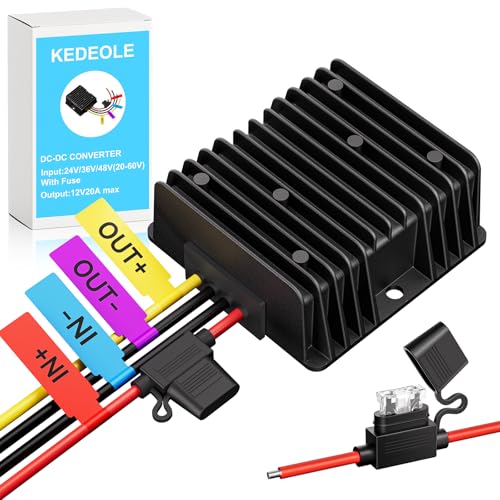
36V 48V to 12V 20A Step Down Converter-Golf Cart Voltage Reducer with Fuse
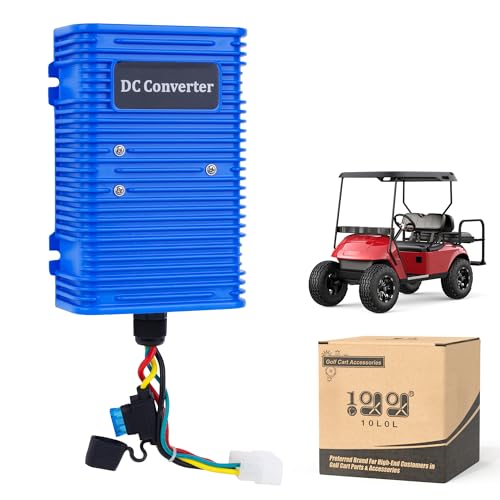
Universal Golf Cart Voltage Reducer DC Converter 36V or 48V to 12V 30 A 360W

Nilight 48V/36V to 12V DC Voltage Converter 360W 30A Waterproof
More Details On Our Top Picks
The Acridine unit lands in that useful middle ground where a 20A, 240W rating makes sense for everyday cart add-ons. In a busy garage or at a campsite, that gives you a tidy way to run lighting and small accessories without overbuilding the setup.
The wider input range, listed from 18V up to 58V or 60V depending on the source note, gives you some flexibility around different battery packs. The trade-off is simple, this is still a fixed-output step-down unit, so larger accessory stacks belong on a more capable pick like the Pro Chaser 30A model.
Strong Points
- 20A and 240W output suit modest 12V loads.
- Wide input range helps across several cart voltages.
- The included fuse adds a practical layer of circuit protection.
- Waterproof construction fits outdoor storage and damp conditions better than basic open-frame units.
Areas To Watch
- The output ceiling is sensible, not generous, so heavy accessory bundles need a bigger unit.
- Waterproof does not mean maintenance-free, so mounting and cable sealing still deserve care.
Feature Card
Who It Suits Best
You get the most from this one in a golf cart or small 48V project that needs straightforward 12V support without a lot of extra complexity.
A Better Fit Elsewhere
Pro Chaser DC-DC 72V 60V 48V Volt Voltage to 12V Step Down Voltage Reducer Regulator 360W 30A is the smarter call for larger accessory loads and more headroom.
Pro Chaser takes a broad-use approach, which helps when your setup shifts between a golf cart, an RV, or a small accessory bank. That wider remit makes it a sensible fit for people who want one step-down unit for lights, radios, or other modest 12V gear.
Compared with the Acridine pick, this one leans more into general versatility than listed protection details. The honest read is that you trade some detail on the spec sheet for a familiar, easy-to-place converter that suits everyday electrical upgrades.
What We Like
- Works across golf carts and RV-style setups.
- Useful for headlights, taillights, radios, and similar 12V accessories.
- The step-down design keeps the install concept simple.
Room For Improvement
- The listing gives less visible detail than some of the more clearly rated units here.
- Accessory planning still matters, since 12V loads can add up fast in a vehicle build.
Core Details
Who Will Love This
You suit this pick best when you want a general-purpose converter for cart or RV add-ons without chasing a long list of extras.
Skip It When
KInuoxj 20A 240W DC-DC 24V 36V 48V Step Down to 12V Converter makes more sense for setups that start from more than one battery voltage.
KInuoxj stands out for range first, because it accepts 20V to 60V input and still steps down to 12V at up to 20A and 240W. That makes it useful in carts, forklifts, or solar-adjacent projects where battery voltage can vary more than you expected.
Compared with the earlier 48V-only leaning options, this one gives you more installation flexibility, especially in mixed-voltage environments. You may find that broad range handy during a retrofit, though the 20A ceiling still keeps it in the moderate-load lane.
Highlights
- Input support spans 20V through 60V for wider compatibility.
- 12V, 20A, and 240W suit common accessory runs.
- Works well for carts, forklifts, and solar-system-related installs.
- The waterproof design helps in outdoor or damp mounting spots.
Softer Spots
- The listing centers on capacity rather than deep install guidance.
- One practical issue with any sealed unit is heat management, so placement still matters.
- Heavier accessory bundles may outgrow the 20A limit.
Details At A Glance
Built With In Mind
You get the most out of this converter in mixed-voltage projects where 24V, 36V, and 48V systems all come up in the same garage or shop.
Another Choice May Suit
Pro Chaser DC-DC 72V 60V 48V Volt Voltage to 12V Step Down Voltage Reducer Regulator 360W 30A is better for heavier accessory stacks that need more output headroom.
This Pro Chaser version is the more cart-focused sibling in the list, with an explicit fit for 36V and 48V golf carts that use six 6V batteries or six 8V batteries. That detail matters because cart owners often want a cleaner match than a broad, one-size-labeled converter.
It sits close to the earlier Pro Chaser model, but the intended battery-pack language makes the use case easier to read. In a normal cart setup, that can remove a little guesswork, which is worth plenty during installation.
Bright Spots
- Clear cart-specific compatibility is easy to understand.
- Works with both 36V and 48V pack setups.
- Useful for owners who want a no-frills step-down path.
Points To Note
- The listing centers on intended fit more than added hardware details.
- Cart wiring still needs careful planning, especially around accessory placement.
Feature Rundown
Perfect Match For
You fit this one best when your golf cart already follows a standard 36V or 48V battery layout and you want a direct step-down solution.
Where A Sibling Pick Shines
Pro Chaser DC-DC 72V 60V 48V Volt Voltage to 12V Step Down Voltage Reducer Regulator 360W 30A suits bigger accessory plans and broader voltage sources.
This is the higher-capacity option in the group, with 30A and 360W output for setups that need more breathing room. For carts with stronger lighting packages or extra accessories, that extra headroom can make the whole system feel less strained.
The included harness and butt connectors are a practical touch, especially for owners who want a cleaner path through the wiring stage. Compared with the 20A picks, this one asks for a little more planning, but it gives you more room before the load ceiling shows up.
Reasons To Buy
- 30A output gives you noticeably more load capacity.
- 360W suits larger accessory bundles.
- Harness and butt connectors simplify the first install.
- Useful for carts and some scooter or bicycle setups.
- The broader input range supports 48V to 72V source systems.
Honest Caveats
- The extra capacity is helpful, but it can be more converter than a basic cart setup needs.
- More output means your wiring and accessory choices deserve closer attention.
Technical Sheet
Whose Shelf It Belongs On
You suit this pick best when you know your cart or ride needs a stronger 12V supply than the smaller step-down units provide.
Look Elsewhere When
Acridine DC-DC 36V 48V to 12V 20A 240W Step Down Converter fits simpler accessory jobs that do not need the extra 30A ceiling.
KEDEOLE keeps the formula lean: 20A output, 240W capacity, and a protection-focused design for cart and utility use. That straightforward shape works well in tight mounting spots, where a smaller, cleaner converter can be easier to live with than a larger housing.
The multi-layer protection language is the main draw here, because it points to overload, short-circuit, over-current, and over-temperature cutoff support. The trade-off is that this pick is clearly aimed at sensible everyday loads rather than aggressive accessory expansion.
Plus Points
- 20V to 60V input support covers several common source systems.
- Protection focus is useful for regular cart ownership.
- 240W and 20A fit everyday lighting and accessory work.
- Waterproof construction is a good match for outdoor equipment storage.
Minor Gripes
- The feature list centers heavily on protection, so installation extras are light.
- Higher-draw accessory groups will want a larger capacity unit.
Quick Facts
Right Fit For
You fit this converter best in a cart or utility setup that needs compact protection and moderate 12V output, not a full accessory stack.
Swap It Out When
Pro Chaser DC-DC 72V 60V 48V Volt Voltage to 12V Step Down Voltage Reducer Regulator 360W 30A is better for heavier electrical loads.
9.99WORLD MALL is the broadest cart fit in this lineup, with support for EZGO, Club Car, and Yamaha along with a 30A, 360W output rating. That makes it a strong match for owners who want a more universal reducer instead of a cart-specific compromise.
The powder-coated aluminum housing adds a durability angle that matters in a vehicle bay, where vibration and dust are part of normal life. It also draws from the full battery pack and includes both constant and ignition-switched outputs, so you can separate always-on accessories from keyed power.
Best Bits
- Fits major golf cart brands with less guesswork.
- 30A and 360W support more demanding 12V use.
- Constant and ignition-switched outputs add flexibility.
- Powder-coated aluminum housing suits long-term cart use.
- Full-pack power draw helps balance load across the batteries.
Worth Noting
- The extra versatility can feel like more converter than a tiny accessory list needs.
- Dual-output behavior makes wiring a little more involved than a basic single-line unit.
Spec Overview
Who Should Grab It
You fit this one best when your cart is one of the major brands and you want a reducer that handles both day-to-day accessories and a stronger load profile.
Consider Something Else When
Pro Chaser DC-DC Golf Carts RVs 48V 36V Volt Voltage to 12V Step Down is simpler for smaller, more basic accessory needs.
Nilight combines a waterproof housing with a 30A, 360W output, which puts it in the same higher-capacity lane as the 9.99WORLD MALL option. The difference is the cleaner emphasis on weather resistance, a useful trait for carts, scooters, or outdoor builds that spend time exposed to the elements.
The listing also calls out accidental-damage-style coverage language, which may matter to some shoppers more than raw electrical wording, though the converter itself still needs sensible installation. For outdoor equipment setups, this feels like the polished choice, with the usual trade-off that sealing and mounting still need your attention.
Standout Traits
- Waterproof construction suits exposed mounting locations.
- 30A and 360W provide ample room for larger accessory sets.
- Works across 36V and 48V systems.
- Helpful for scooters and golf cart accessory wiring.
Small Caveats
- The stronger housing focus does not remove the need for careful wiring.
- More capacity than necessary can be overkill for a simple light setup.
Feature Snapshot
The Right Fit
You suit this converter best when your cart or scooter spends time outside and you want the case for stronger weather protection.
Where Shoppers Go Wrong
Acridine DC-DC 36V 48V to 12V 20A 240W Step Down Converter is better for a simpler, lighter accessory load with less housing emphasis.
How To Choose The Right 48v To 12v Converter
Match Voltage, Then Match Load
The first job is simple, your converter has to accept the voltage your system actually uses. A 36V cart, a 48V cart, and a 72V scooter need different input ranges, so the listing has to fit your source before anything else.
Output current matters just as much. A 12V, 20A unit suits smaller lighting and accessory jobs, while a 30A model gives you more breathing room for extra lamps, radios, or add-ons that stack up over time.
Think About Where It Will Live
Outdoor carts and utility rigs benefit from waterproof housings, powder-coated aluminum, or other sealed-style builds. Those details do not make wiring optional, but they do help the converter handle dust, splash, and everyday vibration a little better.
Mounting space matters too. A compact unit is easier to tuck into a tight bay, while a larger 30A converter usually asks for more careful placement and cable management.
Choose By Accessory Plan
Start with the devices you want to power now, then leave a little room for the next accessory you usually add later. That approach keeps you from buying too little capacity on the first pass.
For a basic light-and-radio setup, a 20A model is often enough. For a cart with multiple lights, charging accessories, or a fuller electrical stack, the 30A class is the safer fit.
Check Install Details Before You Commit
Included harnesses, butt connectors, and clear input-voltage notes make installation easier, especially during a retrofit. A fused or protection-focused design is also worth attention because it can reduce the odds of nuisance problems during everyday use.
Finally, look at the battery layout itself. Golf cart packs vary, and matching six 6V batteries or six 8V batteries is not the same as matching a broader 20V to 60V range.
Things Worth Knowing First
Traps First Timers Fall Into
Many people focus on the 12V output and ignore the input range. That mistake shows up fast in carts and RVs, because the converter has to match the source side before anything on the accessory side works properly.
Another common miss is underestimating total load. Small lights are easy, but a radio, signal lights, and charging gear can push a 20A unit closer to its ceiling than you planned.
The Upgrade Payoff
More expensive converters usually bring stronger output ratings, broader voltage support, and better housing materials. That extra spending often buys you less guesswork during installation and more breathing room for future accessories.
It also tends to buy cleaner day-to-day ownership. You may notice better cable kits, dual-output options, or more weather-ready construction, which matters once the unit lives in a vehicle bay instead of a tidy bench setup.
Frequently Asked Questions
What does a 48v to 12v converter do?
It steps higher battery voltage down to 12V for accessories that need standard low-voltage power. That keeps lights, radios, and similar gear in the right voltage range.
How do you choose the right amperage?
Match amperage to the total draw of the accessories you plan to run. A 20A unit fits lighter setups, while a 30A model gives more room for stacked loads.
Does a waterproof housing matter?
It helps in outdoor carts, scooters, and utility vehicles that face splash or dust. You still want sensible mounting and cable routing, because sealing does not replace good installation.
Can you use one converter for a golf cart and an RV?
Yes, as long as the input range and output capacity match the electrical system. The best fit depends on the pack voltage and how many accessories you want to run.
Why do some models list extra protection features?
Protection features such as fuses or cutoff circuitry help the unit handle stress more gracefully. They matter most in daily-use vehicles where vibration and changing loads are part of normal life.
Final Thoughts
The right 48v To 12v Converter feels invisible once it’s installed, and that’s the point. You want steady 12V power, a housing that suits your environment, and enough capacity for the accessories you actually use. For a simple golf cart setup, the 20A picks make a lot of sense. For broader or heavier use, the 30A options are worth the extra headroom. Choose the one that matches your pack, your load, and your mounting space, and the rest gets easier.
