

A good 4 pin relay is one of those small electrical parts you forget about until something stops working. I see it all the time with folks rewiring a trailer, swapping in a heavier fuel pump, or chasing down a dead accessory circuit in an older truck. The right relay protects switches, handles the current your wiring can’t, and quietly does its job for years. I’ve put together this roundup to help anyone shopping for replacement automotive relays or a sealed unit for harsher environments find a match that actually fits the job.
The Choices Worth Comparing

TEMCo 6V 30/40 Amp Bosch Style S Relay (SPDT)
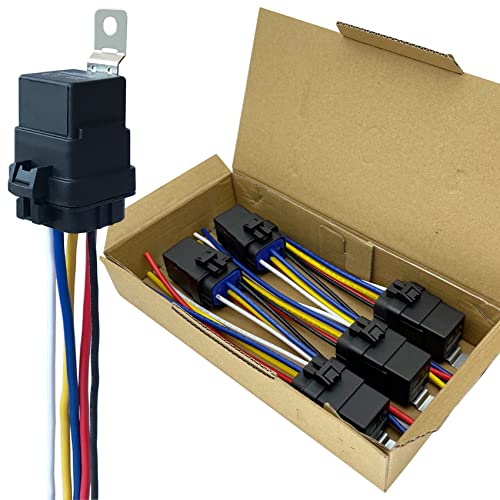
iRhapsody 5-Pin 40/30A 12V Waterproof Automotive Relay

iRhapsody 4-Pin 40/30A 12V Waterproof Automotive Relay

Weasch 12V 40A 4-Pin SPST Waterproof Relay with Harness

iRhapsody 120A 12VDC SPST 4-Pin High-Power Relay

Casalytics 896H-1CH-C-R1-U03 12VDC SPDT 5-Pin 50A Plug-in Relay (4-Pack)
GeegAcc 2-Pack 4-Pin Refrigerator PTC Starter Relay
A Deeper Look At The Lineup
The TEMCo Bosch-style relay is the kind of part that makes a classic-car owner smile. Most modern 4 pin relays run on a 12V coil, but this one is wound for 6 VDC, which matters if you’re keeping an older European roadster, vintage motorcycle, or pre-1980s truck electrically stock. I think of it as the rare relay that actually matches the system instead of forcing an adapter into the harness.
Inside, you get an SPDT contact set (Single Pole Double Throw, meaning the relay can flip a circuit between two outputs) rated at 30 amps normally and 40 amps inrush, plus a 1.8-watt coil. Dielectric strength (the maximum voltage the insulation can block between contacts) sits at 500 VAC across open contacts and 750 VAC between coil and contact, which is a healthy safety margin for a 6V system. Anyone chasing original-spec behavior on a vintage restoration will appreciate that the Bosch-style pin layout drops right in.
A Strong Showing
- 6V coil voltage matches vintage electrical systems without rewiring
- SPDT action allows flexible switching between two circuits
- 30/40A contact rating handles fuel pumps, horns, and lighting loads
- Bosch-style pin pattern fits common European and pre-1980s applications
Points To Keep In Mind
- Not sealed, so exposure to road splash or engine-bay moisture can shorten its life
- Modern 12V vehicles will need a different relay entirely
Who It Suits Best
Restorers and hobbyists maintaining 6V-equipped cars, motorcycles, and tractors where original-spec components matter more than modern sealing.
Consider Something Else When
Anyone running a modern 12V accessory circuit should reach for the Weasch 12V relay in pick 4 instead, since it’s purpose-built for sealed, harness-ready installs.
Stepping up to a 5-pin layout, the iRhapsody relay gives you an SPDT contact arrangement, which simply means one input can be routed to either of two outputs depending on coil state. For anyone wiring a dual-fan setup, a fuel-pump swap with a return line, or a backup-light circuit that needs polarity flipping, that extra pin is genuinely useful. Compared to the simpler 4-pin relays on this list, it adds a layer of control without much added bulk.
The sealed housing and heavy-duty pigtails make it a comfortable choice under the hood or on a trailer. The 1.8-watt coil pulls modest current, and contact ratings of 40A on the normally-open side give plenty of headroom for mid-sized accessories. You may find the 5-pin footprint annoying if your existing socket is a 4-pin, but the upgrade is worth it for circuits that genuinely need SPDT logic.
Features That Help
- SPDT design routes one signal to two possible outputs
- 40A contact rating covers cooling fans and fuel pumps comfortably
- Waterproof housing stands up to road grime and engine-bay splash
- Heavy-gauge pigtails simplify crimping and socket installation
Trade-Offs To Consider
- Five-pin footprint won’t drop into a standard 4-pin socket without rewiring
- Slightly larger than minimalist 4-pin options, so tight installs need planning
Built With In Mind
Installers running SPDT logic, dual-fan control, or polarity-switching accessory circuits in 12V vehicles who want a sealed unit with healthy current headroom.
Look Elsewhere When
Shoppers with simple on/off loads like a single light bar should pick the iRhapsody 4-pin relay in pick 3 instead, since the extra pin adds cost without benefit there.
The 4-pin sibling of the iRhapsody line is a workhorse. Where the 5-pin version gives you SPDT flexibility, this one strips down to a clean SPST contact set (Single Pole Single Throw, the simplest relay arrangement: on or off, one circuit). For a horn, an auxiliary light bar, a fuel-pump cut-off, or any straightforward on/off accessory, that simplicity is exactly what you want. It’s the relay I picture under the hood of a daily-driven truck or SUV.
The sealed housing shrugs off water intrusion, and the heavy-duty wire pigtails are color-coded for easy matching to standard Bosch-style sockets. With a 40A normally-open contact rating and a 1.8-watt coil drawing around 80 ohms of resistance, the electrical profile is familiar to anyone who’s worked on cars before. It’s not flashy, but the honest read is that this is a reliable, no-nonsense option.
Useful Touches
- 40A normally-open contact handles horns, lights, and pumps comfortably
- Sealed casing protects contacts from moisture and road debris
- Color-coded pigtails speed up socket identification and crimping
- 4-pin layout is the most universal relay format for automotive use
Honest Caveats
- SPST design means it can’t flip between two circuits like the 5-pin sibling
- Continuous loads should stay 10-15% below the 40A rating for longevity
Right Fit For
Daily drivers, weekend wheelers, and DIYers who need a sealed, dependable 4-pin relay for straightforward on/off 12V accessory wiring.
A Better Fit Elsewhere
Anyone needing higher continuous current for winches or split-charge systems should reach for the iRhapsody 120A relay in pick 5, which is built for those heavier demands.
The Weasch kit is the friendliest option on this list for first-time installers. It bundles the relay with a pre-wired 14AWG harness, so you’re not chasing down separate sockets, crimps, and wire. For someone wiring their first light bar or adding a fuel-pump relay to a vintage swap, that bundle removes a lot of small frustrations that usually stall a project halfway through.
The relay itself is a 12V SPST 4-pin unit with a 40A peak switching capacity and silver tin oxide (AgSnO2) contacts. Those contacts resist arc erosion better than standard silver alloys, which matters if the relay will be cycling often. The coil pulls 1.8 watts at 80 ohms, matching the other 12V automotive units here. The trade-off shows up in continuous load: staying 10-15% below the 40A peak keeps the contacts healthy long-term.
Points In Its Favor
- Bundled harness removes the guesswork from sourcing sockets and wire
- AgSnO2 contacts resist arc erosion in frequently cycled applications
- 14AWG pigtails handle the rated current without voltage drop concerns
- Waterproof design tolerates engine-bay and under-chassis mounting
Less Ideal Details
- SPST-only, so it can’t switch between two circuits
- 40A is a peak rating; real-world continuous loads should be lower
Who Should Grab It
First-time installers and hobbyists who want a relay plus matching harness in one box, especially for light bars, horn upgrades, and fuel-pump relays.
Reach For A Different Pick When
Pros running frequent installs in a shop environment may prefer the Casalytics 4-pack in pick 6, which delivers more relays per dollar for repeated service work.
Quick Facts
The 120A iRhapsody relay exists for circuits where the standard 40A automotive relay simply isn’t enough. Split-charge systems linking a starter battery to a house battery bank, high-output winches, and heavy inverter feeds all push past what ordinary 4-pin relays were designed to handle. I think of it as the relay you grab when the job description starts with the word “continuous duty”.
The 1.8-watt coil is the same draw as the smaller iRhapsody units, which is helpful if you’re controlling it from a sensitive switch or a low-current signal. The body is larger to dissipate heat from those high-current contacts, so you won’t tuck it behind a dashboard as easily. Best practice is to keep continuous loads 10-15% below the rated figure, just like the other units on this list, but with 120A of overhead, you have plenty of room for serious accessories.
What It Does Well
- 120A rating covers split-charge and winch circuits that overwhelm standard relays
- 1.8W coil stays compatible with sensitive control switches
- Continuous-duty design handles sustained high-current loads
- 4-pin SPST layout keeps wiring straightforward
Factors To Consider
- Larger footprint requires planning for under-hood or chassis mounting space
- Overkill for typical horn and lighting applications
The Right Fit
Overlanders, off-roaders, and van-lifers building high-current 12V systems that need a relay rated well beyond standard 30/40A automotive units.
Skip It When
Anyone working on a basic accessory circuit should save money and grab the Weasch 40A harness kit in pick 4, which is plenty for lights and horns.
The Casalytics 4-pack trades the single-unit focus of the earlier picks for raw shop utility. Coming with four 896H-series 5-pin relays, this is the kit a mechanic or fabricator keeps on the bench for service work, fleet repairs, and customer cars that show up needing anything from a fan relay to a fuel-pump swap. It’s also a smart buy if you’ve got a project vehicle with multiple identical relay circuits.
Each relay is rated at 50A at 12VDC with an SPDT contact arrangement, which means it sits between the iRhapsody 5-pin (40A) and the 120A heavy-duty unit in capacity. The plug-in format drops into standard automotive sockets without rewiring. If you’ve worked on cars for any length of time, you’ve seen the 896H footprint before, and that’s a feature, not a bug, because replacements stay easy to source down the road.
A Favorable Mix
- Four-pack suits repeated service work and multi-relay projects
- 50A rating sits comfortably above standard 40A automotive relays
- SPDT 5-pin layout handles dual-output switching circuits
- Industry-standard socket format simplifies future replacement
Where It May Fall Short
- Four-pack may be more than a one-off DIYer needs
- Continuous loads should still stay well below the 50A peak
Whose Shelf It Belongs On
Professional mechanics, fleet technicians, and dedicated hobbyists who burn through relays regularly and want a standardized, mid-current SPDT option on hand.
Swap It Out When
Someone tackling a single on/off accessory should save cash and grab the iRhapsody 4-pin relay in pick 3 instead, which handles basic loads just as well.
Feature Snapshot
The GeegAcc relay steps away from automotive 12V systems entirely and into the world of refrigerators and freezers. A PTC (Positive Temperature Coefficient) starter relay is the small component that helps a compressor motor get up to speed when your fridge starts its cooling cycle. When that relay fails, the compressor often just hums and clicks without ever starting, and folks assume the whole fridge is dead. This is the part that fixes that, in many cases.
The 2-pack format gives you a spare, which is genuinely useful because a compressor that has struggled under a failing relay can occasionally take the new relay with it. The unit is designed for 4-pin compressor configurations and pairs a PTC chip with an overload protector in a detachable housing. The honest read is that this is a niche part, but if your fridge or freezer matches its specifications, it’s a far cheaper fix than replacing the whole appliance.
The Practical Payoff
- 2-pack includes a spare for a compressor that may have damaged the first relay
- Detachable housing allows pairing the PTC chip with an existing starter base
- Restores cooling without replacing the compressor or the whole appliance
- Compact 4-pin design suits a wide range of refrigerator and freezer models
Soft Spots
- Not universal; compressor pin count and housing must match exactly
- Won’t help if the compressor itself has failed electrically
Best Suited To
Homeowners and appliance repair tinkerers diagnosing a refrigerator or freezer that hums but won’t start, where the starter relay is the most likely culprit.
Where A Sibling Pick Shines
Anyone working on a vehicle should ignore this entry and look at the Weasch harness kit in pick 4 or the iRhapsody 4-pin relay in pick 3 instead, which are built for 12V automotive systems.
What Matters Most Before Choosing 4 Pin Relays
Picking a relay starts with matching voltage to your system. The coil voltage (the low-power side that energizes the relay) must match whatever you’re running: 6V for vintage vehicles, 12V for nearly all modern automotive work, and the specific compressor rating for appliance parts. Mismatched coil voltage is the most common reason a “new” relay refuses to click.
Next, look at contact rating and contact action. The contact rating tells you how much current the high-power side can switch, and the action (SPST or SPDT) tells you whether the relay is a simple on/off switch or can route between two outputs. For lighting, horns, and basic pumps, SPST at 30 to 40 amps is plenty. For dual-fan control or polarity-flipping accessories, an SPDT 5-pin relay earns its place.
Finally, think about environment. Sealed or waterproof housings matter under the hood, on a trailer, or anywhere road splash reaches. In a clean interior panel or a dry appliance compartment, an unsealed relay like the vintage-fit TEMCo unit may actually run cooler and last longer. Match the housing to where the relay will live, not just to the rating.
Key Considerations Across These Picks
Wrong Turns To Avoid
A common mistake is grabbing the cheapest relay without checking coil voltage. A 12V relay on a 6V system won’t pull in reliably, and a 6V relay on a 12V system will burn out fast. The other trap is ignoring continuous versus peak current ratings. A 40A relay can handle 40A briefly, but sustained loads should stay 10-15% below that figure for the contacts to last. Finally, don’t substitute a 5-pin relay into a 4-pin socket or vice versa; the pin assignments won’t line up and you’ll chase ghost electrical faults for hours.
When Paying More Pays Off
Spending more usually buys heavier contact materials, sealed housings, and bundled harnesses that save installation time. On a daily-driver accessory circuit, a basic 40A relay is fine. For winches, split-charge systems, or frequently cycled industrial loads, the upgraded contact materials and higher current ratings of premium relays pay back in longer service life and fewer roadside surprises. The upgrade earns its keep when the relay sits in a hard-to-reach spot where replacement means pulling a dashboard apart.
Frequently Asked Questions
What’s the difference between 4-pin and 5-pin automotive relays?
A 4-pin relay is SPST, meaning it switches one circuit on or off. A 5-pin relay is SPDT, meaning it routes power between two possible outputs depending on whether the coil is energized.
Can I use a 12V relay in a 6V vehicle?
Not reliably. The coil is wound for a different voltage, so it may not pull in at all or it could overheat and fail. Use a relay whose coil voltage matches your system exactly.
How long do automotive 4 pin relays typically last?
Most sealed automotive relays are rated for around 100,000 electrical cycles under normal load. Heat, vibration, and moisture shorten that lifespan, so mounted location matters as much as the relay itself.
Do I really need a waterproof relay under the hood?
For most passenger vehicles, a sealed relay is a smart idea because engine-bay heat cycles and occasional moisture are unavoidable. In a dry interior location, an unsealed relay can run cooler and last just as long.
Is a higher amp rating always better?
Higher ratings give you headroom, but they also mean a larger body and a higher price. Match the rating to your actual load with a safety margin, rather than overbuying for a simple accessory circuit.
The Takeaway
The right 4 pin relay comes down to matching voltage, contact rating, and pin layout to your specific circuit. The workhorse iRhapsody 4-pin unit covers most everyday accessory needs, the Weasch kit makes first installs painless, and the heavy-duty 120A relay steps in for serious high-current work. Pick the one that fits the load, mount it where it stays dry and accessible, and it’ll quietly do its job for years.
