

Anyone wiring a battery bank, hooking up an inverter, or running power to a trolling motor eventually runs into the same wall. Standard wire just can’t carry the current, and thin cables turn into voltage drop nightmares the moment the load climbs. That’s where beefier cable comes in, and 4/0 gauge copper sits near the top of the food chain for serious mobile and off-grid work. I pulled together six solid options spanning automotive, marine, solar, and welding use cases so anyone juggling a big electrical project can find the right fit without burning hours on spec sheets.
The Essentials At A Glance
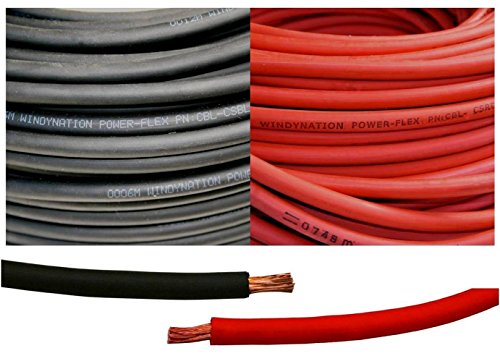
WindyNation 6 AWG Welding Battery Pure Copper Cable

EWCS 4 Gauge Premium Extra Flexible Welding Cable

MOOKEERF 4 Gauge Battery Cable OFC

TUOFENG 8 AWG Silicone Wire Red/Black

EWCS 4/0 Gauge 25Ft Red Welding Cable
EWCS 4/0 Gauge 20Ft Red Welding Cable
What Each Pick Brings To The Table
WindyNation’s 6 AWG Power-Flex cable lands as a versatile middle-ground option for automotive and light off-grid work. The fully annealed pure copper conductor stays pliable, which matters when routing around an engine bay or squeezing cable behind a battery compartment. Each cable is 20 feet of black plus 20 feet of red, giving a tidy package for most RV, inverter, and solar hookups at moderate distances.
For anyone stepping up from thin automotive wire, this gauge handles inverter loads and accessory circuits without the voltage sag that plagues smaller cable. Compared to the heavier 4/0 picks later in the list, this one trades raw current capacity for easier handling and a friendlier footprint in tight builds.
Where It Helps
- Fully annealed pure copper keeps the cable flexible for tight routing around batteries and bulkheads
- 20 feet of black and red provides ready-to-use runs for typical inverter and RV projects
- Compatible with solar, automotive, and welding accessory applications out of the box
- Easier to handle and terminate than heavier 4/0 gauge options
Things To Consider
- 6 AWG is not the right call for high-amperage inverter banks that demand 4/0 cable
- Owners commonly report the jacket can scuff during heavy installation work, so route carefully
Key Specs
Made For
DIYers running moderate inverter loads, RV owners adding solar, and anyone needing flexible automotive-grade cable without jumping to full 4/0 gauge.
Reach For A Different Pick When
High-amperage battery banks pushing serious current call for the EWCS 4/0 gauge cable in picks five or six instead.
The EWCS 4 gauge cable leans into flexibility with a 30-gauge copper strand count, which sounds technical but really just means it bends easily without kinking. Rated at 600 volts and built to resist both sunlight and water exposure, this cable suits workshop welding leads and outdoor power runs. Each order ships 25 feet of black plus 25 feet of red, coiled and ready to terminate.
For anyone replacing tired stinger and ground leads on a welder, the extra flexibility here pays off during long fabrication sessions. It sits between the lighter WindyNation 6 AWG and the heavier 4/0 picks, offering a sensible middle ground for medium-current projects that still demand durable insulation.
Positive Points
- 30-gauge copper stranding delivers serious flexibility for tight stinger lead bends
- Sunlight and water resistant jacket holds up in outdoor shop environments
- 600-volt rating covers most inverter and welding service applications
- Shipped as a coil to prevent kinks during shipping
Trade Offs
- 4 gauge still falls short for high-amperage 4/0 battery bank builds
- Coil memory means the cable may need straightening before final layout
Whose Shelf It Belongs On
Welders and fabricators building replacement leads, plus shop owners running mid-range power equipment outdoors.
Where A Sibling Pick Shines
Off-grid solar builds pushing heavy current fare better with the EWCS 4/0 cable in pick five.
MOOKEERF keeps things tight with a 3-foot red and 3-foot black pairing, perfect for short jumpers between batteries, bus bars, and inverter terminals. Oxygen-free copper (OFC) refers to copper refined to reduce oxide contamination, and that purity translates into lower resistance over the conductor’s length. The 469 strands of 0.24mm copper keep the cable supple enough for cramped engine bay work.
Where the longer WindyNation and EWCS options stretch across a vehicle, this one lives in the no-man’s-land between battery and equipment. It handles temperatures from -40°F to +221°F and resists most solvents, which makes installation in automotive and marine environments far less stressful.
The Practical Payoff
- Oxygen-free copper construction reduces resistance and improves long-term conductivity
- Compact 3-foot length fits battery-to-inverter or battery-to-bus-bar jumper applications
- Wide temperature range handles cold starts and hot engine bay conditions
- Solvent and fire resistant jacket adds durability in tight installations
Small Caveats
- Three feet is far too short for any solar array or trailer run
- Pre-cut length means there’s no extra slack for repositioning terminal hardware
Key Specs
Perfect Match For
Mobile installers wiring battery banks, marine battery trays, and generator tie-ins where shorter jumpers prevent cable clutter.
Skip It When
Long-distance solar runs are better served by the longer EWCS or WindyNation cables reviewed earlier.
TUOFENG’s silicone-jacketed 8 AWG wire targets the harsh temperature zones that standard PVC insulation can’t survive. The high-count tinned copper strands stay workable even when the jacket flexes in freezing conditions, which makes routing through tight engine bays or marine bulkheads far less frustrating. Operating range stretches from -60°C up to punishing heat, so it shrugs off under-hood environments that would cook other wire.
While the others on this list focus on heavy-gauge battery cable, this one fills the niche for secondary circuits, lighting runs, and signal wiring that still needs serious thermal headroom. It’s the right call when standard wire would age prematurely from heat cycles.
Standout Benefits
- Silicone insulation handles extreme cold and engine bay heat without cracking
- Tinned copper strands resist corrosion in marine and humid environments
- 20 feet of red and black covers most small accessory and lighting circuits
- Flexible jacket simplifies routing through tight marine and automotive paths
Honest Caveats
- 8 AWG is too thin for main battery runs; reserve it for accessory circuits
- Silicone insulation can be more vulnerable to abrasion than thicker PVC jackets, so add loom where it rubs against chassis metal
Who Will Love This
Hot rod builders, marine electricians, and off-road rig owners running accessory wiring through temperature-hostile zones.
Look Elsewhere When
Main battery and inverter runs need heavier gauge, so the WindyNation 6 AWG or EWCS 4/0 options fit better.
This is where the list steps into true heavy-current territory. 4/0 gauge refers to a cable roughly the diameter of a quarter, capable of carrying hundreds of amps without breaking a sweat. EWCS builds this cable for industrial welding service, rated from -50°C to 105°C at 600 volts, with a 0.720-inch outer diameter that signals serious copper content inside.
For solar battery banks, high-output inverters, and large winch installations, 4/0 is often the standard recommendation. Twenty-five feet gives enough slack for most vehicle or off-grid layouts, and the flexible stranding keeps installation manageable despite the hefty gauge.
The Value In It
- Full 4/0 gauge handles the highest current demands in solar, inverter, and winch applications
- Industrial 600-volt rating covers serious welding and power service work
- Wide -50°C to 105°C temperature tolerance for harsh outdoor and shop environments
- Flexible stranding keeps installation realistic despite the heavy gauge
Less Ideal Details
- Stiff cable and large diameter demand proper lugs and heavy-duty crimping tools
- Single-color 25-foot run means ordering matching black cable separately for complete polarity pairs
Key Specs
Built With In Mind
Off-grid solar builders, commercial welders, and anyone wiring high-output inverters or winches that demand serious current capacity.
A Better Fit Elsewhere
Smaller inverter projects can save money and weight with the WindyNation 6 AWG in pick one.
The shorter sibling to pick five, this EWCS 4/0 cable offers the same industrial-grade copper and insulation in a 20-foot length. Same 0.720-inch outer diameter, same 600-volt rating, same -50°C to 105°C operating range. For installations where extra length just creates slack to manage, the tighter 20-foot run keeps layouts clean.
Compact battery compartments, short inverter drops, and tight marine engine rooms often benefit from less cable clutter. The trade-off shows up when runs stretch beyond 20 feet, since heavier cable cannot be safely spliced with smaller gauge without proper marine-grade lugs and bus bars.
Everyday Wins
- Compact 20-foot length keeps tight battery compartments uncluttered
- Full 4/0 current capacity in a more manageable package
- Industrial 600-volt rating covers demanding welding and inverter service
- Flexible stranding for the gauge eases routing through tight access points
Practical Considerations
- Single-color 20-foot run requires a matching black cable for full polarity pairs
- 4/0 cable demands heavy-duty crimping tools and properly sized copper lugs at termination
Right Fit For
Compact high-amperage installs in tight engine rooms, boat battery bays, and short inverter drops where excess cable would just create slack.
Consider Something Else When
Longer solar or trailer runs are better matched to the 25-foot EWCS 4/0 in pick five or the lighter 6 AWG WindyNation cable.
Matching Cable To Your Current Demands
Gauge selection drives everything in a heavy-current install. Lower AWG numbers mean thicker cable, and 4/0 gauge is one of the largest standard sizes available, dwarfing the 4 AWG and 6 AWG options also covered here. For solar arrays pushing serious amperage over distance, the thicker cable prevents voltage drop that silently wastes energy and stresses inverters.
Conductor material matters just as much. Pure copper and oxygen-free copper (OFC) deliver higher conductivity than copper-clad aluminum, though they weigh more and cost more. For marine and outdoor installs, tinned copper strands resist corrosion from salt and humidity, extending service life in punishing environments.
Insulation type sets the working limits. PVC jackets handle everyday automotive temperatures, while silicone covers wider extremes from deep cold to under-hood heat. Voltage ratings above 600V are rarely needed for mobile and off-grid work, but the rating confirms the cable can handle surges without breakdown.
Length and flexibility round out the decision. Longer runs need extra copper to compensate for voltage drop, while high strand counts keep stiff cable manageable during installation. Coiled cable may also need straightening before final routing.
What To Watch For In Real-World Cable Selection
Wrong Turns To Avoid
Cable gauge gets misread constantly. Shopping lists often request “4 gauge” when the project actually needs “4/0 gauge,” and those are very different cables. Verify the slash and zero on any 4/0 specification before clicking. Length surprises show up too, since 20 feet of 4/0 cable is heavy and expensive, and a too-short run forces awkward splicing. Always measure the path from battery to equipment twice, accounting for bends around obstacles.
When Paying More Pays Off
Premium copper costs more, but the conductivity advantage compounds over long runs and high-amperage applications. Thicker jackets, better strand flexibility, and industrial temperature ratings protect the investment in environments where cheap cable would fail within a season. The upgrade pays off most clearly in marine settings, off-grid solar arrays, and commercial welding rigs where downtime from a failed cable is expensive.
Frequently Asked Questions
What does 4/0 gauge actually refer to?
4/0 gauge (pronounced “four-aught”) is an American Wire Gauge size representing roughly 212,000 circular mils of cross-sectional area, making it one of the thickest standard cables available for mobile and industrial use.
Can 4/0 copper cable be used for home electrical panels?
Yes, 4/0 copper cable is appropriate for service entrance cables and high-amperage subpanel feeds, though most residential branch circuits only require much smaller gauges like 6 AWG or 10 AWG.
How long can a 4/0 battery cable run be before voltage drop becomes a problem?
For 12-volt systems drawing high current, keep runs under 15 feet when possible to minimize voltage drop, and always calculate drop based on both cable length and amperage load.
Is oxygen-free copper worth the extra cost for automotive wiring?
For most automotive accessory circuits, standard pure copper performs well, but oxygen-free copper offers marginal gains in conductivity and corrosion resistance that matter in marine and precision audio installations.
What’s the difference between welding cable and battery cable?
Welding cable uses finer copper stranding for maximum flexibility and is rated for 600V welding service, while battery cable is typically stiffer but built for sustained DC current in automotive and solar applications.
Bottom Line
The right cable depends entirely on the current demands, distance, and environment of the project at hand. For tight battery jumpers, the MOOKEERF 4 AWG cable earns its place, and for full 4/0 builds, the EWCS options handle serious amperage with industrial-grade construction. Anyone running moderate inverter loads or RV solar will likely land on the WindyNation 6 AWG as the practical sweet spot.
