

Owning a 36V system, whether it’s a golf cart that hauls you around the neighborhood or an off-grid battery bank at a remote cabin, means living or dying by your charger. I’ve watched too many people grab the cheapest unit on the shelf and end up with batteries that never quite reach a full charge. The right 36v battery chargers protect your investment, top off safely, and quietly do their job without drama.
The Picks In Brief

FORM 36V Lithium LiFePO4 Battery Charger for Golf Carts (Ring Terminals)

Cloudenergy 36V 105Ah LiFePO4 Golf Cart Battery With 20A Charger
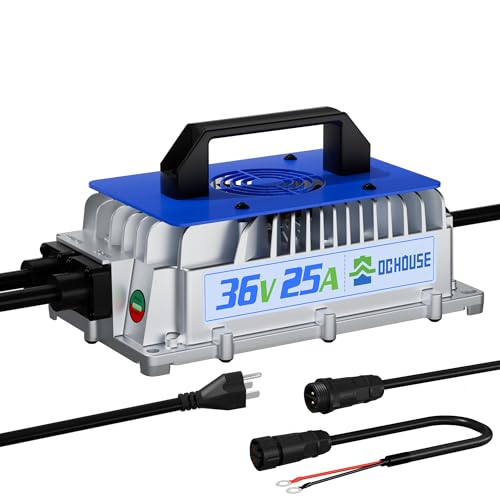
DC HOUSE 36V 25A Lithium Battery Charger, IP65 Waterproof, 43.8V Output

21 Amp 36 Volt Golf Cart Charger for EZGO Marathon with Anderson SB-50 Plug

FORM 36 Volt Golf Cart Battery Charger for Club Car, EZGO & Yamaha Golf Carts with Crowfoot Plug

21 Amp 36 Volt Golf Cart Charger for EZGO TXT Golf Carts with D-Style Plug

21 Amp 36 Volt Golf Cart Battery Charger for EZGO/Yamaha/Club Car with Crowfoot Plug
Meet The Standout Selections
The FORM onboard LiFePO4 charger is built for people who’ve already moved past lead acid and want a charger that speaks the same language as their batteries. The 18A output pairs cleanly with a 38.4V LiFePO4 pack, the ring terminal hookup keeps wiring tidy, and at roughly 80% lighter than the OEM charger it leaves room for other gear in the cart’s front compartment.
Mount it once and forget it, for the most part. Owners commonly use the maintenance mode to keep the pack topped during winter storage, and the unit is at home on solar or off-grid setups. For most lithium cart owners, this is the cleanest path to reliable daily charging.
A Favorable Mix
- Onboard design keeps cables tucked and the cart footprint uncluttered.
- Maintenance mode handles long-term storage without overcharging.
- Lightweight build makes mounting and removal easier for most DIYers.
- Compatible with Club Car, EZGO, and Yamaha carts that run LiFePO4 packs.
Things To Consider
- Built for lithium only, so lead acid owners will need a different unit.
- Ring terminals require basic wiring comfort during installation.
Key Specs
Who It Suits Best
LiFePO4 cart owners who want a permanent onboard setup with minimal fuss.
Consider Something Else When
Lead acid owners running an older EZGO Marathon should look at the YUANRI 21A SB-50 charger instead.
The Cloudenergy kit takes a different angle: instead of just a charger, you get a full 36V 105Ah LiFePO4 battery paired with a 20A charger. That’s the whole system in a single box, which spares you from matching a charger profile to a battery profile on your own. For someone replacing a tired lead acid bank, that’s a real timesaver.
Compared to the FORM onboard charger above, this is a chunkier upgrade path. You get more stored capacity, a slightly faster 20A charge rate, and the peace of mind that the charger was specced for the battery it ships with. In my view, anyone building a fresh LiFePO4 system should weigh bundles against piecing it together.
Everyday Perks
- Pre-matched chemistry removes the guesswork in picking a charger.
- 105Ah capacity suits most weekend rounds and neighborhood use.
- 20A charging rate trims downtime between sessions.
- Single-box delivery simplifies warranty conversations down the road.
Worth Noting
- Heavier and bulkier than a charger-only swap.
- Requires proper battery mounting hardware in most carts.
Made For
Owners replacing an aging battery bank who want a matched charger and pack out of the box.
Skip It When
Someone already running a healthy LiFePO4 pack should grab the FORM 36V onboard charger instead.
The DC HOUSE 25A unit is the fastest charger in this lineup, and it earns that title without flinching when the weather turns. Its IP65 rating means it shrugs off rain and dust, which matters if your charger lives in an open shed or under a tarp on the back patio. The 43.8V output tops out a 36V LiFePO4 pack the way the chemistry expects.
Where the FORM charger is a tidy onboard option, the DC HOUSE is more of a stationary workhorse. The wider 100V-240V input range and -20°C to 45°C operating window suit users who charge in unpredictable environments. If you want the shortest charge window in this list, this is the unit I’d point to.
The Helpful Details
- 25A output cuts charge time noticeably versus 18A units.
- IP65 sealing handles outdoor charging without extra shelter.
- Wide input voltage range suits generators and varied power sources.
- 0V activation can recover deeply discharged lithium packs.
Trade Offs
- Bigger and heavier than 18A onboard chargers.
- Lithium-only chemistry compatibility.
Feature Snapshot
Best Suited To
Outdoor charging setups where speed and weather resistance matter more than compact size.
Not Your Match When
Tight onboard installations in smaller carts favor the FORM 36V onboard charger instead.
This YUANRI charger solves a specific headache: older EZGO Marathon carts use the Anderson SB-50 plug, and most modern chargers assume something else. The 21A output with a precision crowfoot connection means a snug fit on that older socket without wiggle or heat buildup. Owners with a vintage cart will recognize this problem instantly.
The unit accepts 100V-240V input, claims up to 92% efficiency, and uses a fully automatic smart charging profile. Compared to the lithium-focused chargers earlier, this is firmly in lead acid territory. For a Marathon owner still running flooded cells, that’s exactly what you want.
Key Advantages
- Anderson SB-50 plug fits older EZGO Marathon carts directly.
- 21A output speeds up refill versus stock 10-15A units.
- Smart charging adjusts output based on pack condition.
- 92% efficiency keeps wall draw reasonable for most garages.
Points To Note
- Limited compatibility with newer EZGO TXT or lithium setups.
- Lead acid focus means no lithium profile.
Quick Facts
Who Will Love This
EZGO Marathon owners running lead acid packs who need a direct-fit replacement charger.
A Better Fit Elsewhere
Anyone with a newer EZGO TXT should consider the YUANRI 21A D-Style Plug charger instead.
The FORM lead acid charger carries the same lightweight philosophy as its lithium sibling but speaks to a much larger installed base. The Crowfoot plug fits Club Car, EZGO, and Yamaha carts that still run flooded or AGM lead acid packs. The 16-foot power cable is the kind of detail you only appreciate after wrestling with a stock 8-foot lead.
Compared to the YUANRI SB-50 unit above, this one trades specific plug fit for broader compatibility across three major cart brands. For most lead acid households with mixed cart fleets, that flexibility tends to matter more than specialty connectors.
Well-Handled Touches
- Crowfoot plug fits Club Car, EZGO, and Yamaha carts.
- Extended 16-foot cable reaches distant outlets without strain.
- 18A output balances speed and battery health.
- About 80% lighter than typical OEM lead acid chargers.
Honest Caveats
- No lithium charging profile for owners upgrading chemistries.
- Stock cooling fan noise may be noticeable in quiet garages.
The Right Fit
Lead acid cart owners across Club Car, EZGO, and Yamaha who value reach and portability.
Look Elsewhere When
LiFePO4 shoppers should look at the FORM 36V Lithium onboard charger from the same brand.
Where the SB-50 charger above handles Marathon carts, this YUANRI unit handles the newer EZGO TXT models with their D-style plug. Same 21A smart charging profile, same aluminum body for heat dissipation, same 100V-240V input flexibility. The auto-adjusting feature throttles amps as the pack nears full, which most owners appreciate for battery longevity.
The aluminum housing is a quiet upgrade from plastic shells, helping the unit shed heat during long charge cycles. In most garages, this combination of smart charging and rugged enclosure is exactly what newer TXT owners want.
Why It Works Well
- D-style plug fits EZGO TXT carts without adapter headaches.
- Aluminum body handles heat during extended sessions.
- Smart profile protects battery health over time.
- Up to 92% efficiency keeps electricity costs in check.
Potential Drawbacks
- Lead acid focused, with no lithium compatibility.
- Specific plug excludes older Marathon or lithium carts.
Perfect Match For
EZGO TXT owners who want a direct-fit lead acid charger with smart thermal management.
Reach For A Different Pick When
Owners with mixed fleets across brands should grab the FORM 36V Crowfoot charger instead.
The third YUANRI on this list swaps the D-style plug for a Crowfoot connector, opening the door to Yamaha and Club Car carts alongside EZGO. The headline feature is IP67 sealing, which is a step beyond IP65: dust-tight and able to handle temporary immersion. For a charger that lives in a wet shed or under a workbench, that extra protection pays off.
It’s the same smart charging DNA as the D-style sibling, but with a more rugged shell and broader brand fit. I see this as the safer bet for garages that aren’t climate controlled, especially in humid coastal or rainy regions.
Useful Touches
- IP67 sealing offers stronger water and dust resistance.
- Crowfoot plug fits EZGO, Yamaha, and Club Car carts.
- Aluminum body helps with sustained heat dissipation.
- Fully automatic profile prevents overcharging at full state.
Small Caveats
- Lead acid only, with no lithium charging curve.
- Slightly heavier than indoor-focused units.
Spec Overview
Whose Shelf It Belongs On
Garage or shed owners in humid, rainy, or dusty climates running lead acid carts across brands.
Swap It Out When
Cart owners ready to upgrade to lithium should pick the FORM 36V LiFePO4 onboard charger instead.
Choosing the Right 36V Charger for Your Setup
Match the Charger Profile to Your Battery Chemistry
A LiFePO4 pack and a flooded lead acid pack charge at completely different voltages and current curves. Using a lead acid profile on lithium can mean undercharging; using a lithium profile on lead acid can shorten cell life. Pick a charger whose manufacturer explicitly lists your chemistry. The FORM lithium onboard unit and the DC HOUSE 25A are lithium-focused, while the YUANRI and FORM Crowfoot models are lead acid through and through.
Check Plug Compatibility Before Anything Else
The single biggest reason a charger comes back is wrong connector fit. Anderson SB-50, D-style, and Crowfoot are all different worlds. Marathon carts want SB-50, TXT carts want D-style, and most Club Car, Yamaha, and modern EZGO carts want Crowfoot. Verify your cart’s existing port before clicking through to a listing.
Size the Output to Your Pack
A 100Ah lead acid bank on a 10A stock charger takes ten-plus hours; a 21A unit cuts that meaningfully. For LiFePO4 owners, 18A to 25A hits a sweet spot between speed and battery stress. Consider how often you actually drain the pack: weekend riders can live with slower units, while daily drivers benefit from higher amperage.
Think About Where the Charger Lives
A charger that lives indoors has different needs than one that lives outdoors. IP65 and IP67 ratings protect against rain and dust, while aluminum housings handle heat in unventilated sheds. The DC HOUSE and the YUANRI IP67 unit both earn their place in rougher environments.
Key Considerations Across These Picks
Common Shopping Slip Ups
The mistake I see most often is grabbing a charger that physically fits but charges the wrong chemistry. Lead acid owners eyeing lithium prices should double-check that the unit supports their bank, and lithium owners shouldn’t assume a “36V” label means LiFePO4 compatibility. Connector type is the other trap: SB-50, D-style, and Crowfoot look similar in photos but won’t interchange.
Where the Extra Money Goes
Higher-tier models typically buy faster charging, broader chemistry support, and tougher enclosures. The DC HOUSE 25A and the YUANRI IP67 unit both cost more because they handle rough environments and refill packs faster. For casual weekend riders, the value tier often makes more sense; for daily drivers and outdoor setups, the upgrade usually pays for itself in saved time and longer battery life.
Frequently Asked Questions
Can I use a 36V lithium charger on a lead acid battery?
No, the voltage profiles and termination logic differ enough that you risk undercharging or damaging the pack. Match the charger’s stated chemistry to your bank.
How do I know which plug my cart needs?
Look at the existing charging port on the cart, not the battery. Marathon carts typically use Anderson SB-50, TXT carts use D-style, and most Club Car, Yamaha, and modern EZGO carts use Crowfoot connectors.
What’s the difference between an onboard and a portable charger?
Onboard chargers mount permanently in the cart and stay connected; portable chargers live in the garage and get plugged in when needed. Onboard models free up garage space but require initial wiring.
How fast will a 21A charger fill my pack?
For a typical 100Ah lead acid bank, expect roughly five to seven hours from a full discharge, depending on pack age and temperature. Lithium packs charge faster because they accept higher sustained current.
Is IP65 or IP67 important for a garage charger?
For a climate-controlled garage, basic splash protection is usually enough. For sheds, carports, or coastal environments, IP65 or IP67 helps the unit survive humidity, dust, and the occasional spill.
Bottom Line
The right 36V charger comes down to your battery chemistry, your cart’s plug, and where you do most of your charging. Lithium owners with a Club Car, EZGO, or Yamaha should start with the FORM onboard LiFePO4 unit. Lead acid shoppers across the major brands will find the FORM Crowfoot or YUANRI IP67 models cover most everyday needs. Match the spec to the use, and the rest tends to take care of itself.
