

I live in a region where summer storms knock the grid offline a few times a year, and I’ve learned the hard way that a quiet, fuel-efficient inverter is the difference between a comfortable outage and a miserable one. Homeowners, RV travelers, and tailgaters all want the same thing: clean power for sensitive electronics without the drone of a traditional genset. This roundup covers a solid mix of inverters, full-size dual-fuel generators, and protective covers worth adding to any kit.
Your Options, Compared

Renogy P2 1000W Pure Sine Wave Inverter 12V DC to 120V AC

Renogy P2 2000W Pure Sine Wave Inverter 12V DC to 110V AC

Champion Weather-Resistant Storage Cover for 3000W+ Inverter Generators

PowerSmart 2500W Portable Inverter Generator for Camping

Porch Shield Generator Cover for 3000-4500W
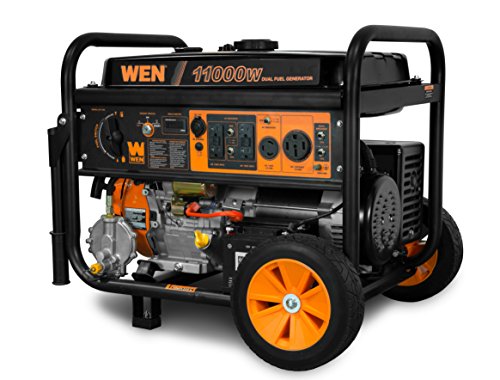
WEN DF1100T 11,000W Dual Fuel Portable Generator
A Breakdown Of The Leading Choices
The Renogy P2 1000W is the kind of small inverter that lives happily in a truck cab or a weekend camper shell. It takes 12V DC from a battery bank and turns it into clean 120V AC, which matters because pure sine wave output is what laptops, CPAP machines, and modern chargers actually want to see. Compared to the bigger Renogy P2 2000W below, this model trims weight, cost, and peak surge capacity in equal measure.
For someone building a modest solar setup or adding AC outlets to an overlanding rig, this is the sensible starting point. Owners commonly pair it with a 100Ah lithium bank for a weekend of low-draw electronics. You may find the 1000W ceiling limiting the moment you want to run a microwave or a hairdryer, but for charging and lighting duty, it’s plenty.
A Strong Showing
- Pure sine wave output is safe for sensitive electronics like laptops and CPAP units.
- Built-in 5V/2.1A USB port charges phones without needing a wall adapter.
- Compact form factor fits under a seat or in a small cargo bay.
- Hardwire terminals let a careful installer tie it into a small sub-panel.
Things To Consider
- 1000W continuous rating caps the appliance list well below a 3000W inverter.
- No internal battery; runtime depends entirely on the connected bank.
- Cooling fan noise under heavy load is noticeable in a quiet cabin.
Who It Suits Best
Newcomers to off-grid power who need clean AC for small electronics and want a forgiving learning curve.
Reach For A Different Pick When
Heavier household loads point to the Renogy P2 2000W, which doubles the headroom for mid-size appliances.
Stepping up to the Renogy P2 2000W means roughly twice the continuous output of its 1000W sibling, which opens the door to induction cooktops, small power tools, and a more ambitious solar array. It still delivers pure sine wave output, the smooth grid-like waveform that electronics actually expect, so the same charging caveats apply. The jump from 1000W to 2000W also doubles peak surge, which is the brief burst a motor needs to spin up.
In a vehicle or a small cabin, this unit gives breathing room that the entry-level Renogy simply can’t. For shop-vac runs, projector use at a tailgate, or short microwave bursts, it sits in a useful middle ground. I think of it as the bridge pick between portable solar setups and a full home backup solution.
The Good Stuff
- 2000W continuous handles small kitchen appliances and shop tools.
- Pure sine wave keeps laptops, TVs, and audio gear happy.
- Remote controller lets you mount the inverter out of sight and still cycle it.
- Hardwire port plus USB port covers both permanent and grab-and-go charging.
Worth Noting
- Demands a stout battery bank; a small car battery will deplete quickly under load.
- Heat output rises with sustained 2000W draws, so airflow around the unit matters.
Key Specs
Made For
Cabin owners and RV travelers with mid-size battery banks who want pure sine power for tools and small appliances.
A Better Fit Elsewhere
The PowerSmart 2500W is a quieter, all-in-one engine option when an off-grid battery system isn’t part of the plan.
A good generator cover is one of those accessories you forget about until the first rainstorm catches your unit outside. Champion’s weather-resistant cover is sized for 3000W to 5500W inverter generators, which covers the heart of this roundup’s output class. The tough vinyl exterior shields against UV, rain, snow, and the kind of grime that builds up on a tailgate pad.
An elastic base pulls the cover snug around the frame so a stiff breeze won’t balloon it off. For homeowners parking an inverter on a side patio or in an open carport, this is the kind of low-cost insurance that pays for itself in preserved finish. You may find the fit forgiving rather than custom-tailored on some models, so check the listed dimensions before committing.
Useful Touches
- Vinyl exterior blocks sun, rain, snow, and dust.
- Elastic base holds the cover in place during gusty weather.
- Compatibility spans the popular 3000-5500W inverter range.
Minor Gripes
- Fit may run loose on smaller 3000W units, depending on frame shape.
- Vinyl can stiffen in prolonged sub-freezing temperatures.
Best Suited To
Owners who leave a mid-size inverter outside between uses and want to keep the housing from fading or rusting.
Swap It Out When
Wet, windy climates demand the Porch Shield cover, whose 600D polyester and taped seams handle harsher weather.
The PowerSmart 2500W is the portable engine option for campers and tailgaters who’d rather not hear their generator all weekend. It produces 2500 peak watts and 1900 rated watts with a clean power output (THD under 3%), which is the threshold most sensitive electronics tolerate happily. Compared to the Renogy P2 2000W inverter, this is a self-contained gas engine, no battery bank required.
A 1.06-gallon fuel tank gives roughly eight hours at quarter capacity, enough for an overnight of lights and phone charging. At 52 dBA from 23 feet, it’s library-quiet relative to open-frame generators. For RV sites with quiet hours or a backyard movie night, that noise floor is the whole ballgame.
Well-Handled Touches
- Clean THD output keeps phones, tablets, and laptops safe.
- Low 52 dBA operation suits campgrounds with noise restrictions.
- Compact portable form factor fits in a trunk or truck bed.
- Up to 8-hour runtime at 25% load covers an overnight stay.
Trade Offs
- Gasoline engine means oil changes, fuel stabilizer, and exhaust ventilation.
- 2500W peak leaves little headroom for air conditioners or large microwaves.
- No dual-fuel flexibility the way the WEN DF1100T offers.
Feature Snapshot
Whose Shelf It Belongs On
Campers, tailgaters, and homeowners who want plug-and-play AC without managing a battery bank.
Where Another Pick Suits Better
Whole-home backup needs push toward the WEN DF1100T, which delivers much higher wattage on gasoline or propane.
The Porch Shield cover is the more rugged cousin of the Champion option, built for generators that live outside year-round. The 600D polyester shell with a water-resistant laminated undercoating shrugs off driving rain and dust far better than thin vinyl. Sealed seams and double stitching reinforce the edges where cheaper covers fray first.
At 24 by 18 by 18 inches, it targets the popular 3000-4500W class and fits most mid-size inverter frames. For coastal climates, snowy winters, or any spot where the cover sees real punishment, this is the one I’d lean on. You may find the heavier fabric slightly harder to fold for stowing in a small shed, but that’s the trade for tougher protection.
Benefits That Matter
- 600D polyester with laminated undercoating for serious weather resistance.
- Taped seams block water from wicking through stitch holes.
- Double-stitched edges resist tearing at stress points.
Room For Improvement
- Heavier fabric is less convenient to fold for tight storage spaces.
- Black color absorbs heat, which can matter in direct summer sun.
The Right Fit
Owners in wet or windy climates who need year-round protection for a 3000-4500W inverter.
Consider Something Else When
Occasional use in mild weather makes the Champion cover a lighter, lower-cost alternative worth a look.
The WEN DF1100T sits well above the 3000W class, but it’s the right reference point when “more power” is the actual goal. With 11,000 watts of output and the ability to run on gasoline or propane, it covers a fridge, a sump pump, and a few room circuits at once. The included wheel kit and electric start turn it into a roll-it-out, push-a-button solution during an outage.
Switching between 120V and 240V opens up well-pump and dryer-style loads that smaller inverters can’t touch. Compared to the PowerSmart 2500W, this is a serious home-backup tool rather than a camping companion. For most people, this is too much machine for a tailgate, but storm-prone homeowners may find the dual-fuel flexibility worth every cubic foot of garage space.
Everyday Wins
- 11,000W output handles most essential household circuits at once.
- Dual fuel design lets you choose gasoline or propane on the fly.
- Electric start removes the pull-cord struggle in cold weather.
- Wheel kit and frame make repositioning manageable despite the size.
Points To Note
- Far heavier and louder than a portable inverter; not a campsite pick.
- Open-frame design exposes the engine to weather without a cover like the Porch Shield.
At A Glance
Built With In Mind
Homeowners in storm-prone regions who want whole-circuit backup and the option to run cleaner-burning propane.
Skip It When
Light camping or RV duty makes the PowerSmart 2500W a quieter, lighter, more fitting choice.
What To Weigh Before Picking Your Inverter Setup
Output class matters more than brand name. A 3000W inverter comfortably handles a fridge, a small window AC, and a few charging outlets, while a 2500W camping unit sticks to lights and electronics. Match the watt rating to the largest single appliance you expect to run, then add 20-30% headroom for surge current at startup.
Pure sine wave output is the spec to insist on for modern electronics. Modified sine units cost less but can make laptops and audio gear hum or run hot. If your household includes CPAP machines, gaming PCs, or anything with a sensitive power supply, the clean-wave form is non-negotiable.
Fuel type drives long-term ownership. Dual-fuel models like the WEN DF1100T give you a propane option that stores longer and burns cleaner, while pure gasoline engines need fuel stabilizer if they sit for months. Battery-driven inverters sidestep fuel entirely but require a solar array or shore charging.
Portability and storage tie everything together. Smaller inverter generators earn their keep at campsites; full-size units belong on a wheeled frame under a Porch Shield or Champion cover between uses. Noise also varies widely, and a quiet unit opens up more places you can actually run it.
Key Considerations Across These Picks
Wrong Turns To Avoid
First-timers often grab the cheapest inverter they can find, only to discover it can’t run a hair dryer or a space heater. That’s the classic under-spec trap. The honest read is to list your top three loads, add their running watts, and choose an inverter with comfortable headroom above that number.
The other common slip is buying a generator without a plan for storage. Outdoor-stored units deteriorate fast without a cover, and indoor-stored units need a cool, dry spot away from living space. Either match the unit to your storage reality, or budget for a cover like the Champion or Porch Shield at the same time.
Where The Extra Money Goes
Higher-tier models earn their premium through quieter enclosures, lower THD output, and dual-fuel flexibility. The WEN DF1100T costs more than a basic open-frame unit, but the electric start, wheel kit, and propane option pay off the first time you use it during a multi-day outage. For shorter, lighter use cases, the upgrade is harder to justify.
Frequently Asked Questions
How long can a 3000W inverter generator run on a full tank?
Run time depends on the fuel tank size and the load percentage. Most units in this class run 7-10 hours at 25% load, which covers an overnight of essential appliances with fuel to spare.
Is a pure sine wave inverter necessary for sensitive electronics?
Yes. Pure sine wave output closely matches grid power, while modified sine can cause laptops, CPAPs, and modern TVs to run hot or behave erratically. Clean power is the safer default.
Can I run a window air conditioner on a 3000W inverter generator?
Most 8000-10000 BTU window units pull 500-900W running with a higher startup surge, which fits a 3000W inverter comfortably. Larger central AC systems exceed what any portable inverter in this class can handle.
What size battery bank do I need for a 2000W pure sine inverter?
Plan for at least 200Ah of lithium capacity for short bursts, and double that for sustained 2000W draws. Lead-acid banks need roughly twice the rated capacity to deliver the same usable energy.
Do inverter generators need a cover for outdoor storage?
Yes, even weather-resistant models benefit from a fitted cover. UV, rain, and dust degrade paint and corrode fasteners over time, and a Champion or Porch Shield cover slows that wear significantly.
The Takeaway
The right inverter setup depends on whether you need clean AC for a battery bank, a quiet engine for a campsite, or whole-home backup during an outage. For light off-grid duty, the Renogy P2 1000W or 2000W covers the essentials. For travel and tailgating, the PowerSmart 2500W delivers quiet, clean power in a self-contained package. Storm-prone homeowners get the most from the WEN DF1100T, paired with a Porch Shield or Champion cover to keep everything protected between uses. Pick the watt class that matches your heaviest expected load, and the rest of the decision follows.
