

I spend a lot of time thinking about 12V and 24V electrical setups, whether in a workshop, a boat console, or a weekend overlanding rig. The right 300 amp panel acts like the central nervous system for accessory circuits, battery isolation, and clean power distribution. This list focuses on panels and bus bars that actually solve real wiring headaches: branch-circuit protection, tidy negative returns, and safe main-battery cutoffs. Pick the style that matches how you build, then wire it once and forget about it.
The Leading Options At A Glance
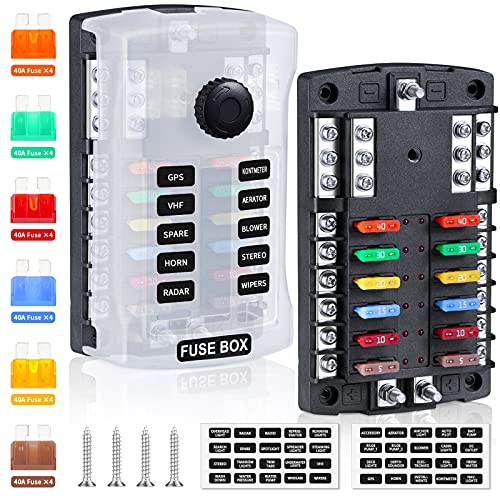
ELECTOP 12-Circuit Blade Fuse Block w/ LED Indicator

LiTime 300A Bus Bar, 4×M8 Studs Distribution Block
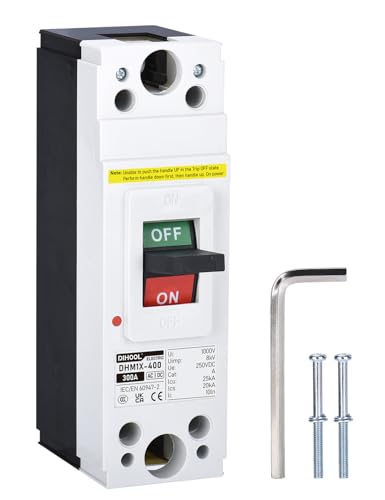
DIHOOL 300A Heavy-Duty Battery Disconnect Switch

Ampper 300A Marine Bus Bar, 3 M10 + 10 M4 Studs
More On The Choices That Made The List
I tend to reach for a fused distribution block whenever a build sprouts more than three accessories, and this ELECTOP panel handles exactly that kind of chaos. It accepts standard ATC/ATO blade fuses (the middle-sized automotive type, the same ones in your fuse box at home) across twelve circuits, so you can run lighting, a fridge, a compressor, and a comms radio from one tidy panel instead of a tangle of inline holders.
The two positive power inputs let you bring in feed from a battery and an alternator or a second battery bank, and the negative bus keeps returns consolidated. Compared to a bare bus bar like the LiTime below, this is the friendlier choice for anyone who wants individual circuit protection rather than a single shared feed.
Everyday Advantages
- Twelve fused ATC/ATO circuits mean you can stop daisy-chaining cheap inline holders
- Built-in LED warning indicator lights up the blown fuse so you troubleshoot faster in a dark engine bay
- Dual positive inputs accept two separate feeds, handy for house-and-start battery setups on overlanders
- Integrated negative bus cleans up return wiring that would otherwise sprawl across the chassis
- 40A per circuit ceiling covers most 12V accessories without nuisance trips
Things To Consider
- Requires standard ATC/ATO fuses, which you may need to source separately if your build uses mini or low-profile blades
- The 60V DC ceiling is generous, but you still need to keep high-amperage starter cables off this panel
- Owners commonly report that labeling the supplied stickers takes patience on a cramped install
Key Product Details
Made For
Truck, overland, and work-truck owners running multiple 12V accessories who want individual fused protection instead of one shared feed.
Skip It When
You only need a main-battery cutoff, in which case the DIHOOL disconnect switch below does that job in a much smaller footprint.
Where the ELECTOP panel handles many small accessory circuits, this LiTime bus bar does the opposite job: it consolidates a few heavy feeds into one clean junction. With four M8 threaded studs (M8 is an 8mm bolt size, common on mid-gauge battery cables), it suits anyone consolidating a battery bank, an inverter feed, and a solar controller output without crowding the install.
It’s noticeably more compact than the Ampper marine bar below, which makes it appealing for tight engine bays and compact battery boxes where every centimeter counts. The 48V DC ceiling also opens the door to mid-voltage solar arrays, a meaningful step up from a pure 12V setup.
What Earns Its Place
- Four M8 studs handle the typical battery-plus-inverter-plus-charge-controller trio with room to spare
- Compact footprint fits where longer bars simply will not mount
- 48V DC ceiling supports modern solar arrays and larger inverter systems
- Solid copper construction keeps resistance low under sustained 300A loads
Worth Noting
- Only four studs means no room for smaller accessory taps; pair with a fused block like ELECTOP’s for branch circuits
- M8 only, so you’ll need ring terminals sized accordingly; smaller gauge wires will not land on these studs cleanly
Who Will Love This
Compact camper-van and off-grid solar owners who need a clean, small-footprint junction between battery, inverter, and charge controller.
Where Another Pick Suits Better
Boaters who need both heavy studs and smaller accessory screws in one bar should pick the Ampper marine bus bar instead.
Distribution panels and bus bars move power around, but they don’t actually stop it. That’s why a main disconnect belongs on every boat, trolling-motor rig, or stored ATV: it lets you kill the entire system with one twist before you walk away or pop the hood. The DIHOOL switch is built around a thermal-magnetic trip design (an internal mechanism that opens the circuit on overload or short), which means it doesn’t just disconnect manually; it also trips on its own if a fault occurs.
Unlike the bus bars above, this is a single in-line device mounted between the battery and the rest of the system. Anyone servicing a marine or RV electrical system regularly will recognize the value of having a hard cutoff that meets common sense safety habits.
Standout Benefits
- Thermal-magnetic trip adds automatic protection beyond a simple manual switch
- Wide operating voltage range covers 12V automotive and 24V trolling-motor systems
- Silver-content contact design resists pitting and wear over many cycles
- Compact panel-mount form factor drops into existing cutouts on marine dashes
Points To Keep In Mind
- This is a cutoff, not a fuse panel, so you’ll still need branch protection like the ELECTOP block for accessory circuits
- Panel-mount install requires a properly sized cutout and reachable mounting location
Best Suited To
Boat owners and ATV/trailer users who want a single hard cutoff between battery and load, with the bonus of automatic fault tripping.
Look Elsewhere When
You need to split one feed into many fused branches; the ELECTOP 12-circuit fuse block handles that much more elegantly.
The Ampper bar answers a question the LiTime bar can’t: how do you mix heavy battery feeds with smaller accessory wires on the same block? Three M10 studs (a thicker 10mm bolt for the heaviest cables) handle the main battery, inverter, and charge controller, while ten M4 screws pick up smaller gauge wires like LED runs and bilge pumps. That dual layout makes it especially useful in marine switch panels where space is at a premium and you don’t want two separate blocks.
The included protective cover is a nice touch for boats, where corrosion is the slow enemy of every copper connection. Nickel-plated brass construction (a thin nickel coating over a brass base for corrosion resistance) helps the bar shrug off salt spray better than bare copper would.
The Practical Payoff
- Mix of 3 heavy studs and 10 smaller screws covers both main feeds and accessory taps in one bar
- Included cover shields connections from accidental shorts and salt spray
- Nickel-plated brass resists corrosion in marine environments
- 7-inch length gives you usable spacing between studs without dominating the bulkhead
Honest Caveats
- Larger footprint than the LiTime 4-stud bar, so measure your mounting area first
- M4 screws are sized for smaller wires only; oversized ring terminals will not fit cleanly
Right Fit For
Boat and solar-bank owners who want a single corrosion-resistant block that handles both battery feeds and small accessory returns.
Reach For A Different Pick When
Your build needs individual fused branch protection, in which case the ELECTOP 12-circuit fuse block is the better starting point.
What Matters Most Before Choosing 300 Amp Panels
Start with the actual job. A bus bar simply ties cables together with no protection, while a fuse block adds per-circuit protection through ATC/ATO fuses, and a disconnect switch adds a manual and automatic cutoff. Decide which of those three functions your build is missing before you fall in love with a particular block.
Match the rating to your worst-case draw. A 300A panel ceiling only helps if your wiring, lugs, and downstream fuses are sized accordingly. For most 12V accessory builds, per-circuit limits between 30A and 40A cover lights, pumps, and fridges comfortably.
Material matters more than people expect. Bare copper carries current beautifully but corrodes in marine environments. Nickel-plated brass costs a little more and shrugs off salt spray. Stainless hardware and an included cover, like on the Ampper bar, are worth it on any wet install.
Mounting space dictates the form factor. Measure twice before ordering. Compact 4-stud bars squeeze into tight engine bays, while a 7-inch marine bar wants a dedicated bulkhead or battery-box wall. Leave room to route fat battery cables without sharp bends, which stress copper over time.
Key Considerations Across These Picks
Pitfalls First Timers Hit
The most common mistake is treating a bus bar like a fuse panel. A bus bar has no internal circuit protection, so a downstream short becomes a melted-cable problem in seconds. Pairing a bus bar with the ELECTOP fused block solves that.
Another trap is undersizing the wire gauge to match a big-looking panel. A 300A rating on the block does not magically upgrade 10-gauge wire to 4-gauge performance. Match the cable to the panel, not the other way around.
Where The Extra Money Goes
Higher-priced 300 amp panels typically spend the budget on conductor material, plating, and protective covers rather than raw amp rating, which is broadly similar across this category. The Ampper bar’s nickel plating and cover, for example, are the difference between a part that lasts one salt-heavy season and one that lasts many.
Premium thermal-magnetic disconnects like the DIHOOL unit add automatic fault tripping on top of manual cutoff. That’s the upgrade worth paying for in any install where a stuck switch could leave you stranded or damage sensitive electronics.
Frequently Asked Questions
What is a 300 amp panel used for?
A 300 amp panel acts as the central hub in a 12V, 24V, or 48V DC electrical system, tying battery feeds, inverters, charge controllers, and accessory circuits together. It’s most common in vehicles, boats, RVs, and off-grid solar banks.
Can a 300 amp panel handle a 3000W inverter?
A 3000W inverter at 12V draws roughly 250A at full load, which sits comfortably under a 300A panel ceiling. At 24V the same inverter draws about half that, so the panel has even more headroom.
Do I need a fuse block or just a bus bar?
You need both if you have multiple accessory circuits. A bus bar consolidates heavy cables, while a fuse block protects each individual branch. Many serious builds use a bus bar for main feeds and a fuse block like the ELECTOP 12-circuit panel for accessories.
Are marine-rated panels worth the extra cost?
In any saltwater or humid environment, yes. Marine-rated components like the Ampper bus bar use corrosion-resistant plating and protective covers that meaningfully extend service life compared to basic parts.
How do I know what wire gauge to use with a 300 amp panel?
Wire gauge depends on cable length and continuous current, not just panel rating. For a typical 10-foot run at 200A continuous, 2/0 AWG cable is a common starting point. Always consult an ampacity chart for your specific run.
Closing Thoughts
The right 300 amp panel for your build depends on whether you need to split power into many protected branches, consolidate a few heavy feeds, or add a hard main-battery cutoff. Match the form factor to your install space, the material to your environment, and the protection scheme to how you actually use the system. Wire it well once, and it’ll disappear into the background where it belongs.
