

When you need AC power from a 12V system, the details matter fast. A solid inverter can keep a laptop, small tools, or campsite gear running without turning your setup into a guessing game. The eight picks below cover modified sine wave and pure sine wave options, plus different outlet and display setups for cars, RVs, trucks, and off-grid rigs.
Quick Look at the Shortlist

K KRIËGER 2000 Watts Power Inverter

POTEK 2000W Power Inverter 3 AC Outlets

2000W Pure Sine Wave Inverter
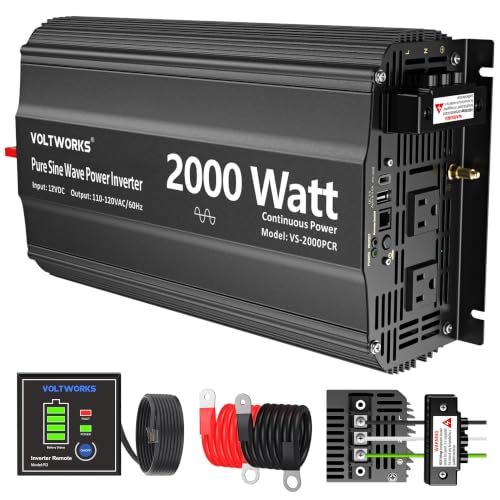
2000 Watt Pure Sine Wave Inverter

3000W Pure Sine Wave Inverter

1000Watt Pure Sine Wave Inverter

2000 watt Inverter 12V to 110V/120V

1500W Pure Sine Wave Inverter
More Details On Our Top Picks
That dual-outlet layout keeps the K KRIËGER model straightforward, which is handy in a glove box kit or a weekend tow setup. It uses modified sine wave output, meaning the AC shape is simpler than the pure sine wave options later in the list, so it suits common gear better than sensitive electronics.
The included installation kit helps make the setup feel less pieced together, and the twin 110V outlets give you enough space for two basic devices without hunting for adapters. For most daily drivers, that’s a sensible balance, though you may want a cleaner output style for laptops or audio gear.
Strong Points
- Two AC outlets let you run a pair of everyday devices at once.
- The included install kit lowers the guesswork around getting it mounted.
- Modified sine wave output keeps the design simple for basic road use.
- It fits a practical carry-along role in cars, trucks, or backup kits.
Worth Noting
- Modified sine wave output is less suited to delicate electronics than pure sine wave models.
- Owners who want a polished power readout will prefer one of the LCD-equipped picks below.
- Cleaning and storage stay simple, but the wired install means you’ll want a neat mounting spot.
Feature Snapshot
Who It Suits Best
Drivers who want a no-nonsense inverter for travel gear, small accessories, or emergency backup power will get the most from this one.
Where A Sibling Pick Shines
Belttt’s 2000W Pure Sine Wave Inverter makes more sense for you if your setup includes laptops, audio equipment, or other sensitive electronics.
Three AC outlets make the POTEK model feel more flexible than the dual-outlet K KRIËGER pick above. That extra socket matters in a family car, a work van, or any setup where you want to power a charger, a small appliance, and one more item without juggling plugs.
The 2A USB port is a nice practical touch for phones or compact devices, especially during long drives. It leans into convenience rather than refinement, so the honest read is that it suits everyday mixed-use power more than a carefully tuned electronics setup.
Highlights
- Three AC outlets give you more plug space than the first pick.
- The 2A USB port helps keep small devices charged without an extra adapter.
- The black housing keeps the look plain and easy to tuck into a vehicle setup.
- It fits well in busy cars where several devices need power at once.
Points To Note
- Its feature set leans practical, so it lacks the cleaner power profile of the pure sine wave choices.
- The housing is straightforward rather than premium, which is fine for utility use.
- You’ll want to keep the cord run tidy in a cramped vehicle so the layout stays manageable.
Core Details
Who Should Grab It
Commuters, road-trippers, and van users who need extra outlet space in a simple package will appreciate this one.
Swap It Out When
VOLTWORKS’ 2000 Watt Pure Sine Wave Inverter fits better for you if your gear includes electronics that deserve cleaner output.
This BELTTT pick shifts the conversation from basic vehicle use to cleaner output for more demanding equipment. Pure sine wave means the AC waveform is closer to what household power looks like, which matters for many laptops, chargers, and electronics in RVs or solar builds.
Dual AC sockets, a 20A socket, a 5V 2.1A USB port, a hardwire port, and a remote controller make it feel built for a more permanent setup. The trade-off is that it asks for a bit more planning, but that usually pays off in an RV or truck cab where you want control close at hand.
Bright Spots
- Pure sine wave output is better suited to sensitive gear than the modified wave options.
- The hardwire port supports cleaner installation in more fixed setups.
- A remote controller makes it easier to manage power from the cabin or living area.
- The 20A socket adds another practical connection point for compatible equipment.
- Dual AC sockets plus USB create a flexible layout for mixed charging needs.
Areas To Watch
- More features can mean more setup planning, especially in a vehicle or off-grid build.
- The richer feature set may be more than you need for a simple weekend charging kit.
- Hardwire use makes installation feel more involved than a plain plug-in unit.
Details At A Glance
Best Suited To
RV owners, solar users, and truck setups with electronics that benefit from cleaner AC power will get the best fit here.
Look Elsewhere When
POTEK’s 2000W Power Inverter makes more sense for you if you want a simpler, more casual vehicle setup with extra outlet space.
VOLTWORKS takes the same 2000-watt class and pushes it toward a more installation-friendly build. The UL fuses and 20A AC hardwire terminal are the detail that stands out, especially for you if the inverter is going into an RV, a truck, or a fixed off-grid setup.
It also supports lithium battery compatibility, which gives it broader appeal in modern battery systems. Compared with the BELTTT 2000W unit above, this one feels a little more anchored around the actual install path, not just the outlet count.
Upsides
- Pure sine wave output is a strong fit for many modern electronics.
- UL fuses add a clear installation detail that matters in powered setups.
- The 20A hardwire terminal suits mounted use better than a loose portable layout.
- Lithium battery compatibility broadens the range of systems it can serve.
- It works well for owners who want a more permanent power station feel.
Small Caveats
- Hardwire-style setup takes more planning than a basic plug-and-play inverter.
- It is aimed more at RV and off-grid installs than casual car charging.
- Cleaning and storage are easy, but the mounted use case makes placement matter more.
Feature Card
Whose Shelf It Belongs On
RV owners and off-grid users who want a cleaner installation path will get the most from this pick.
A Better Fit Elsewhere
BELTTT’s 2000W Pure Sine Wave Inverter is the better match for you if you want a remote controller and a more feature-packed connection set.
Belttt’s 3000W model is the step up for setups that need more breathing room than the 2000W units can offer. That extra wattage matters in a home backup rig, a larger RV, or a truck build where a couple of larger loads may run together.
Like the 2000W BELTTT inverter, it includes dual AC, a 20A socket, USB, a hardwire port, and a remote controller, but the added 23-foot cable gives the remote more placement freedom. The trade-off is clear, it’s more inverter than many casual road users need, so the value shows up best in higher-demand systems.
Reasons To Buy
- 3000 watts gives you more headroom than the 2000W picks.
- Pure sine wave output stays friendly to sensitive equipment.
- The 23-foot remote cable helps in larger rigs and longer layouts.
- Dual AC, USB, and a 20A socket make the connection set flexible.
- The hardwire port supports a more permanent power install.
Room For Improvement
- The higher capacity can be more than needed for light travel use.
- Installation takes more planning than a small plug-in inverter.
- Storage is less convenient than with a compact portable unit.
Quick Facts
Who Will Love This
Owners of larger RVs, off-grid cabins, and work vehicles with heavier power needs are the right match for this one.
Another Choice May Suit
VOLTWORKS’ 2000 Watt Pure Sine Wave Inverter fits better for you if your system needs less output and a simpler install path.
This BELTTT unit sits in a lighter-duty lane than the 2000W and 3000W picks, which is exactly why some setups will prefer it. The 1000W output, dual AC socket, 5V 2.1A USB port, and intelligent LCD make sense for smaller RV loads, truck charging, or solar backup use where you want a simpler footprint.
The 2000W peak rating gives a little buffer for brief surges, and the LCD helps you keep an eye on the system without adding much bulk. That said, the lower continuous capacity is the real story, so this works best when you know your loads stay modest.
Best Bits
- Smaller size makes it easier to fit into tighter vehicle or solar spaces.
- The intelligent LCD gives you a clearer read on the unit’s status.
- Dual AC sockets plus USB cover the basics for light-duty use.
- Pure sine wave output keeps it aligned with the more sensitive-friendly picks.
Softer Spots
- Its 1000W continuous output is less suited to heavier loads than the 2000W and 3000W models.
- The compact format is handy, but it leaves less room for future expansion.
- Depending on your setup, the lower ceiling may make you manage appliance choice more carefully.
At A Glance
Made For
Campers, light RV users, and truck owners with modest electronics needs will find this size easier to live with.
Where Shoppers Go Wrong
K KRIËGER’s 2000 Watts Power Inverter is the better fit for you if your setup needs a stronger continuous output instead of a smaller package.
Yinleader leans into the convenience side of the category with an intelligent LCD display, dual AC outlets, and dual USB charging ports. That combination works well for travel kits and backseat charging setups, especially when you want a quick status read without adding a more complicated install.
Compared with the POTEK inverter, this one feels more display-focused, while still keeping the core 2000W vehicle-converter role intact. The 12V to 110V/120V range also gives it a broader output description on paper, which is useful for shoppers who want a bit more flexibility in the listing language.
Standout Traits
- The LCD display gives you a clearer, faster read on the unit’s state.
- Dual AC outlets and dual USB ports support several common charging needs.
- It suits RV, truck, and laptop-oriented travel setups.
- The feature mix feels well matched to day-to-day mobile use.
Honest Caveats
- Its value leans more on convenience features than on a heavy-duty install path.
- The listing language is busy, so you may want to check the fit of your exact devices before settling on it.
- It is a practical travel unit, not the most installation-focused model in the group.
Technical Sheet
Right Fit For
Travelers and vehicle users who want quick status feedback plus simple charging flexibility will appreciate this design.
Reach For A Different Pick When
Belttt’s 2000W Pure Sine Wave Inverter is the better choice for you if cleaner output matters more than the extra display features.
This BELTTT 1500W model sits between the light-duty 1000W unit and the fuller 2000W options, which makes it a sensible middle ground for moderate systems. Dual AC sockets, a 5V 2.1A USB port, a smart LCD display, and a 3000W surge rating give it a balanced feature set for RVs, trucks, and small solar backups.
You may find this size easier to live with than the bigger 2000W and 3000W units, especially in tighter mounting spaces. The trade-off is simple, it leaves less room for larger appliance loads, so it’s best when your setup stays in the midrange.
Best Bits
- The 1500W capacity lands in a useful middle zone for many setups.
- Pure sine wave output suits a wide range of electronics.
- The smart LCD display helps with quick status checks.
- Dual AC sockets plus USB make everyday charging more flexible.
- A 3000W surge rating adds extra headroom for brief startup demand.
Minor Gripes
- It won’t give you the same load room as the 2000W or 3000W picks.
- The middle-ground capacity may still feel tight for heavier appliances.
- In a larger rig, you may end up wanting more expansion headroom later.
Feature Rundown
The Right Fit
People who want a middle-ground inverter for moderate travel or off-grid loads will find this one easy to justify.
What The Higher Tier Buys
Belttt’s 3000W Pure Sine Wave Inverter is the better move for you if your setup needs more output headroom and a longer remote cable.
How To Choose The Right 2000w Power Inverters
Wave Form Matters More Than Many Shoppers Expect
Modified sine wave units are simpler and often suit basic loads, which is why a model like K KRIËGER can make sense for everyday vehicle accessories. Pure sine wave output is cleaner and better aligned with laptops, certain chargers, and other sensitive electronics.
The trade-off is cost and complexity. More buyers in RVs, truck cabs, and solar setups end up preferring pure sine wave because the output behaves more like standard household power.
Think About How You’ll Mount It
Portable use favors simple outlet layouts and a compact body. Hardwire terminals, remote controllers, and fuse details matter more when the inverter lives in a fixed spot.
That’s where the VOLTWORKS and BELTTT models pull ahead for installed systems. If the inverter sits in one place for months, better cable planning and access usually matter more than a flashy display.
Match Output Capacity To Real Loads
2000W works well for many mixed-use setups, but it does not mean every appliance belongs on the same circuit. Startup demand can be higher than steady running power, which is why surge ratings and headroom still deserve attention.
A 1500W or 1000W inverter can be the smarter fit for light-duty travel, while 3000W makes sense once you start stacking larger devices. The safest choice is the one that leaves room without pushing your system too hard.
Pay Attention To Ports And Displays
USB ports, LCD screens, and extra AC outlets make daily use easier in the cab or camper. Those extras do not change the core power class, but they do change how smoothly the unit fits into your routine.
For road use, a clear display saves a lot of guesswork, and multiple sockets can cut down on adapters. In practice, convenience features are worth more to you when the inverter is part of everyday travel, not just a backup tool.
Things Worth Knowing First
Mistakes Worth Dodging
One common misstep is matching the inverter to the device label without leaving room for startup demand. Another is choosing modified sine wave for gear that really wants cleaner output, then wondering why the setup feels touchy.
You also want to think about mounting, cable length, and where heat can escape. A tidy install usually lasts longer in daily use than a cramped one.
What The Higher Tier Buys
Higher-tier units tend to add cleaner output, hardwire support, remote control, and more thoughtful display options. Those features cost more because they help the inverter fit into actual living space, not just a power math chart.
The upgrade makes the most sense in RVs, off-grid cabins, and work rigs where the inverter gets used often. For occasional phone charging, the simpler units are easier to justify.
Frequently Asked Questions
What does a pure sine wave inverter do differently?
Pure sine wave output is shaped more like standard household electricity. That makes it a better fit for many electronics and chargers.
Can a 2000W inverter run a microwave?
That depends on the microwave’s running and startup demand. The label alone does not tell the whole story, so the appliance’s own power draw matters.
Why do some models include a remote controller?
A remote controller lets you manage the inverter from farther away. That helps in RVs, trucks, and mounted installs.
Are USB ports enough for mobile charging?
USB ports work well for phones, earbuds, and similar gear. Larger devices still need the AC outlets.
Is a bigger inverter always the smarter move?
Not always, because larger units can be more than you need for light travel use. The right size depends on your actual loads and installation space.
Closing Thoughts
Your best match comes down to how you plan to use the inverter, not just the wattage on the listing. For simple vehicle backup, K KRIËGER and POTEK keep things straightforward. For RVs, solar setups, and sensitive electronics, the pure sine wave BELTTT and VOLTWORKS options make a stronger case. Choose the unit that fits your space, your devices, and the way you actually travel, and the whole setup feels a lot easier to live with.
