

Picking a 125 amp breaker isn’t just a parts-bin decision. It sits at the heart of how safely a subpanel, an EV charger, a workshop, or a backyard cottage handles heavy loads. I’ve put together a shortlist that covers common residential and light commercial situations, from plug-in panel replacements to DIN-rail miniature breakers and a complete indoor load center. The goal here is simple: match the right form factor and trip behavior to the wiring you actually have.
A Snapshot Of The Selections

CHTAIXI AC Miniature Circuit Breaker 32 Amp 2 Pole

CHTAIXI AC Miniature Circuit Breaker 125 Amp 2 Pole

Siemens Q2125 125-Amp Double Pole QP Breaker
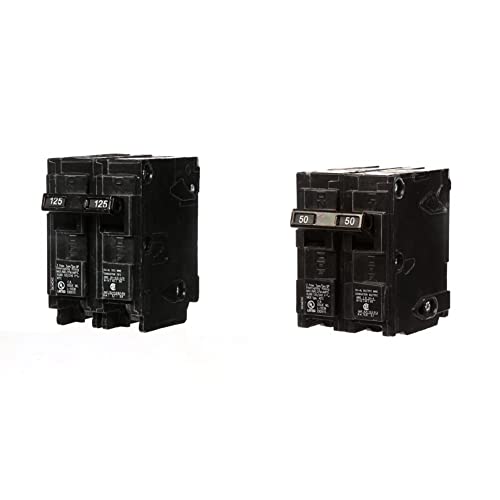
Siemens Q2125 and Q250 Double Pole QP Breakers

CHTAIXI AC Miniature Circuit Breaker 20 Amp 1 Pole
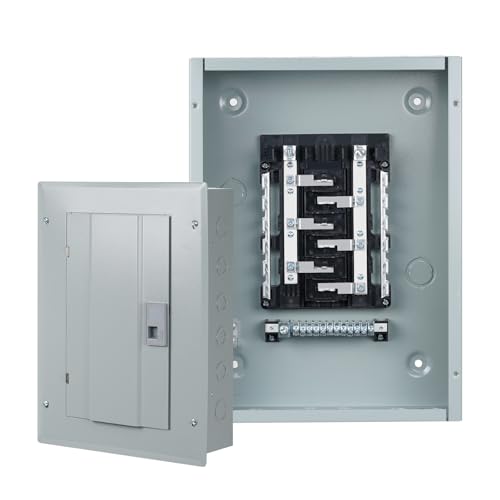
JINDOUZI 125A 12-Space Indoor Load Center
A Breakdown Of The Leading Choices
Miniature circuit breakers like this CHTAIXI 32A 2-pole unit live in a different world than the residential breakers inside your main panel. Instead of clipping onto a bus bar (the metal strip that carries power along the back of a load center), it snaps onto a 35mm DIN rail (a standardized metal mounting track common in industrial and solar equipment) inside an enclosure. That’s the form factor you’d typically find in an off-grid inverter cabinet, a small solar AC disconnect box, or an RV’s AC distribution panel.
The thermal-magnetic trip design (a mechanism that reacts to both steady overload heat and sudden short-circuit surges) gives it two layers of protection, and the C-curve trip characteristic means it tolerates the brief inrush current that motors and transformers pull at startup. For a homeowner adding a small solar AC disconnect or wiring a detached studio, this kind of breaker is often the only one that physically fits the gear already on the wall.
A Few Highlights
- DIN-rail mounting fits standard industrial and solar enclosures
- Two-pole design handles 120V/240V loads from a single device
- C-curve trip curve suits motor and transformer inrush
- Compact footprint saves space inside small combiner boxes
Things To Consider
- At 32 amps it can’t serve as a true main 125A breaker; it’s a sub-circuit device
- Needs a compatible DIN-rail enclosure, which adds to install cost
- Confirm screw-clamp wire sizes match your conductor gauge before ordering
Who Should Grab It
Anyone wiring a small solar AC disconnect, an RV subpanel, or a 50/60Hz auxiliary cabinet who needs DIN-rail hardware rather than a residential plug-in breaker.
Swap It Out When
You actually need full 125A capacity at the main feed, in which case the CHTAIXI AC Miniature Circuit Breaker 125 Amp 2 Pole is the closer match.
This is the same DIN-rail family as the first pick, but scaled up to a genuine 125A rating for 120V/240V circuits. Where the 32-amp unit handles branch loads, this version is sized for subpanel feeders, small workshop mains, or the AC side of a larger solar array. The two-pole configuration trips both legs simultaneously, which matters for any 240V circuit where a partial fault could leave one energized.
In practice, homeowners shopping in this category are usually building out a garage, a barn, or an outbuilding where the existing main panel doesn’t have spare slots. A DIN-rail breaker inside a separate enclosure gives you a clean main disconnect without ripping open the existing load center. You may find the C-curve trip behavior a touch slow for very high inrush loads, but for most residential and light commercial scenarios it’s a sensible default.
The Value In It
- True 125A capacity in a compact DIN-rail body
- Doubles as both protection and a local disconnect switch
- Flame-retardant shell around silver-alloy internal contacts
- Works on standard 50/60Hz AC systems at 120V or 240V
Worth Noting
- Requires a properly sized DIN-rail enclosure rated for the full 125A
- Not a direct replacement for plug-in residential breakers in a Siemens or Square D panel
- Heavier gauge wiring means larger lugs, so check terminal dimensions before install
Feature Snapshot
Best Suited To
DIYers and contractors building a subpanel feed, garage main, or solar AC disconnect who need a DIN-rail device rather than a plug-in breaker.
A Better Fit Elsewhere
If you’re swapping a breaker inside an existing Siemens QP load center, the Siemens Q2125 125-Amp Double Pole QP Breaker is the safer direct match.
The Q2125 is the kind of breaker electricians reach for when they’re swapping a known-bad unit inside a Siemens PL or ES series load center. It’s a thermal-magnetic breaker rated for 125 amps at 240V, with a 10,000 AIC interrupting rating (the maximum fault current the breaker is rated to safely interrupt without failing catastrophically). That second number matters because it tells you how much short-circuit current the device can safely clear without failing.
The QP plug-in format means it clips directly onto the bus bar in compatible Siemens panels, no DIN rail or external enclosure required. That’s the whole reason these breakers exist: clean, code-friendly replacement parts for a system that’s already on the wall. For most homeowners replacing a tripped or worn main, this is the path of least resistance, assuming their panel is genuinely Siemens-branded.
Everyday Advantages
- Direct plug-in fit for Siemens PL and ES load centers
- 10,000 AIC interrupting rating handles most residential fault levels
- Thermal-magnetic trip gives both overload and short-circuit protection
- Common form factor, widely understood by inspectors
Points To Note
- Only fits Siemens QP-style panels; mixing brands can cause bus-bar rejection issues
- Verify your existing panel’s compatibility before ordering, since some older models differ
- Common-lifetime parts still require professional installation in many jurisdictions
Made For
Homeowners and electricians doing a like-for-like replacement in a Siemens-branded residential load center.
Not Your Match When
You’re building a new subpanel from scratch and need both a 125A and a 50A breaker, in which case the Siemens Q2125 and Q250 Double Pole QP Breakers bundle makes more sense.
Where the previous Siemens entry is a single-breaker replacement, this listing bundles a Q2125 (125A, double pole) with a Q250 (50A, double pole) in one package. That pairing comes up constantly in real panel work: a 125A feed for the main subpanel plus a 50A breaker for an EV charger, a hot tub, a welder circuit, or a small detached structure.
Both units share the same thermal-magnetic trip design and QP plug-in profile, so they install the same way in any compatible Siemens load center. The 10,000 AIC rating on the Q2125 carries the higher fault-current clearing capability that the main deserves. For a homeowner planning a multi-circuit upgrade, bundling often beats sourcing each breaker separately.
A Few Strong Suits
- Matched pair from one listing simplifies multi-circuit upgrades
- Same QP plug-in form factor across both breakers
- Q2125’s 10,000 AIC handles typical residential fault levels
- Compatible with Siemens PL and ES series enclosures
Honest Caveats
- Two-pole devices eat four bus spaces each, so older 12-space panels fill quickly
- Q250 is 50A, which suits smaller 240V appliances but won’t cover a 60A EVSE
- Panel brand must genuinely be Siemens; the breakers will physically reject other buses
The Right Fit
Anyone doing a multi-circuit panel upgrade in a Siemens load center who needs both a heavy main feed and a mid-sized 240V branch.
Look Elsewhere When
You only need a single 125A replacement and nothing else, since the solo Siemens Q2125 125-Amp Double Pole QP Breaker is the cleaner order.
This 20-amp, single-pole unit is the smallest breaker in the lineup, but it earns its place because most real-world DIN-rail cabinets need at least one branch-circuit protector alongside the main. It uses the same CHTAIXI family as the 32A and 125A models, so physical dimensions and terminal layouts stay consistent across the system.
Where it shines is in tight enclosures where you don’t have room for a full residential breaker chassis. A small solar AC combiner, a control cabinet for an off-grid inverter, or an RV’s interior AC distribution panel all benefit from a 35mm DIN-rail device that takes up a single module width. The C-curve trip characteristic handles the brief inrush of small transformers and motor loads without nuisance tripping.
Practical Pluses
- Single-module width leaves room for additional circuits in crowded panels
- Shares form factor with the larger CHTAIXI breakers for consistent installs
- Works across 110V to 230V AC systems at 50/60Hz
- Suitable as an AC disconnect for individual solar branch circuits
Small Caveats
- At 20A it can’t serve as a main breaker; it’s strictly a branch device
- Single-pole design means it’s only for 120V circuits, not 240V loads
- Screw-clamp terminals need to be torqued to spec to avoid hot spots
Whose Shelf It Belongs On
Off-grid enthusiasts and RV owners building compact AC distribution panels where DIN-rail hardware is the only practical option.
Consider Something Else When
You need a true 125A main in DIN-rail form, where the CHTAIXI AC Miniature Circuit Breaker 125 Amp 2 Pole is the obvious next step up.
The last pick shifts gears entirely. Instead of a single breaker, JINDOUZI offers a complete 12-space indoor load center rated for 125 amps at 120V/240V. That’s the whole enclosure: the steel box, the bus bars, the main lugs, and the slots for individual breakers. It’s the kind of panel you’d mount in a garage, a basement, or an addition when the existing main panel has run out of room.
The NEMA 1 steel enclosure (an indoor-rated cabinet that keeps fingers and large debris away from live parts) is built for dry, indoor environments, which covers most accessory dwelling and garage builds. With twelve spaces, you can grow into the panel over time, adding branch circuits as the shop or the EV charging setup expands. For anyone staring at a wall with no spare slots, this is often the cleanest answer.
What It Does Well
- Complete 125A panel rather than just a single breaker
- Twelve spaces allow for future circuit expansion
- Steel enclosure rated for indoor residential and light commercial use
- Main lug design accepts a separate upstream breaker or feed
Factors To Consider
- NEMA 1 rating means dry indoor locations only, no garages with moisture exposure
- Individual breakers for the slots are typically sold separately
- Local code may require specific listing marks; confirm with your inspector before install
Perfect Match For
Homeowners adding a garage subpanel, an accessory structure, or a finished basement who need a complete distribution box rather than a single swap.
Reach For A Different Pick When
You only need to replace one breaker inside an existing Siemens load center, in which case the Siemens Q2125 125-Amp Double Pole QP Breaker is the simpler choice.
Key Things To Weigh Before Buying
Match the breaker to your panel brand. Plug-in breakers like the Siemens QP family only work in matching enclosures. Forcing an off-brand unit onto a bus bar (the metal bar inside the panel that distributes power to each breaker slot) can lead to poor contact, overheating, and failed inspections. Check the panel label before ordering.
Mind the AIC interrupting rating. This number tells you how much fault current the breaker can safely interrupt. Most residential panels are fine with 10,000 AIC, but some service equipment pushes higher. Match or exceed the available fault current at your location.
Decide between plug-in and DIN-rail form factors. Residential load centers use plug-in breakers. Solar combiners, RV subpanels, and industrial cabinets use DIN-rail. They are not interchangeable, even when the amp rating looks similar.
Account for environment and enclosure rating. A NEMA 1 indoor enclosure won’t survive a damp garage or an outdoor install. If the panel lives anywhere wet, you’ll need a higher NEMA rating or a weatherproof housing.
Picking The Right Configuration For Your Project
Mistakes Worth Dodging
The single biggest trap is buying a breaker without confirming the panel brand and bus style. A Siemens QP unit won’t seat properly in a Square D Homeline, and a generic DIN-rail breaker won’t clip into a residential load center at all. Always cross-check the panel label inside the door.
Another common slip is ignoring conductor size. A 125A breaker needs wire sized for that current, and undersized wiring turns the breaker into a fire risk instead of a safety device. Pair the breaker spec with the correct wire gauge from the start.
Where The Extra Money Goes
Higher-tier breakers earn their cost in three places: tighter trip curve tolerance, more robust internal contacts, and stronger interrupting ratings. For most home projects, a standard 10,000 AIC breaker is plenty. The upgrade matters when the available fault current at your service is unusually high, or when you need a brand-specific fit for an existing premium panel.
Frequently Asked Questions
What does “125 amp” actually mean on a breaker? It means the breaker is designed to carry up to 125 amps continuously under standard conditions and to trip before that current causes damage to the wiring.
Can a 125 amp breaker replace a 100 amp main? In most cases yes, as long as the panel bus and the service entrance conductors are rated for 125 amps. The wire gauge, the panel label, and local code all need to agree.
Is a higher AIC rating worth the cost? For typical residential services, 10,000 AIC covers the available fault current. You only need higher AIC ratings when the utility feed or transformer setup produces unusually high fault current.
Do DIN-rail breakers work in a home load center? No. Residential load centers use a plug-in bus design that physically rejects DIN-rail hardware. You need a DIN-rail enclosure for those breakers.
How often should breakers be inspected? A yearly visual check is sensible. Thermal-magnetic breakers rarely wear out, but loose connections at the lugs (the screw terminals where wires attach) can cause heat buildup that should be caught early.
Bottom Line
The right 125 amp breaker depends entirely on where it needs to live: a Siemens QP panel, a DIN-rail solar cabinet, or a brand-new indoor load center. Match the form factor first, then the trip characteristics, and you’ll land on the right pick. Trust the install to a licensed electrician whenever local code requires one.
